En esta página
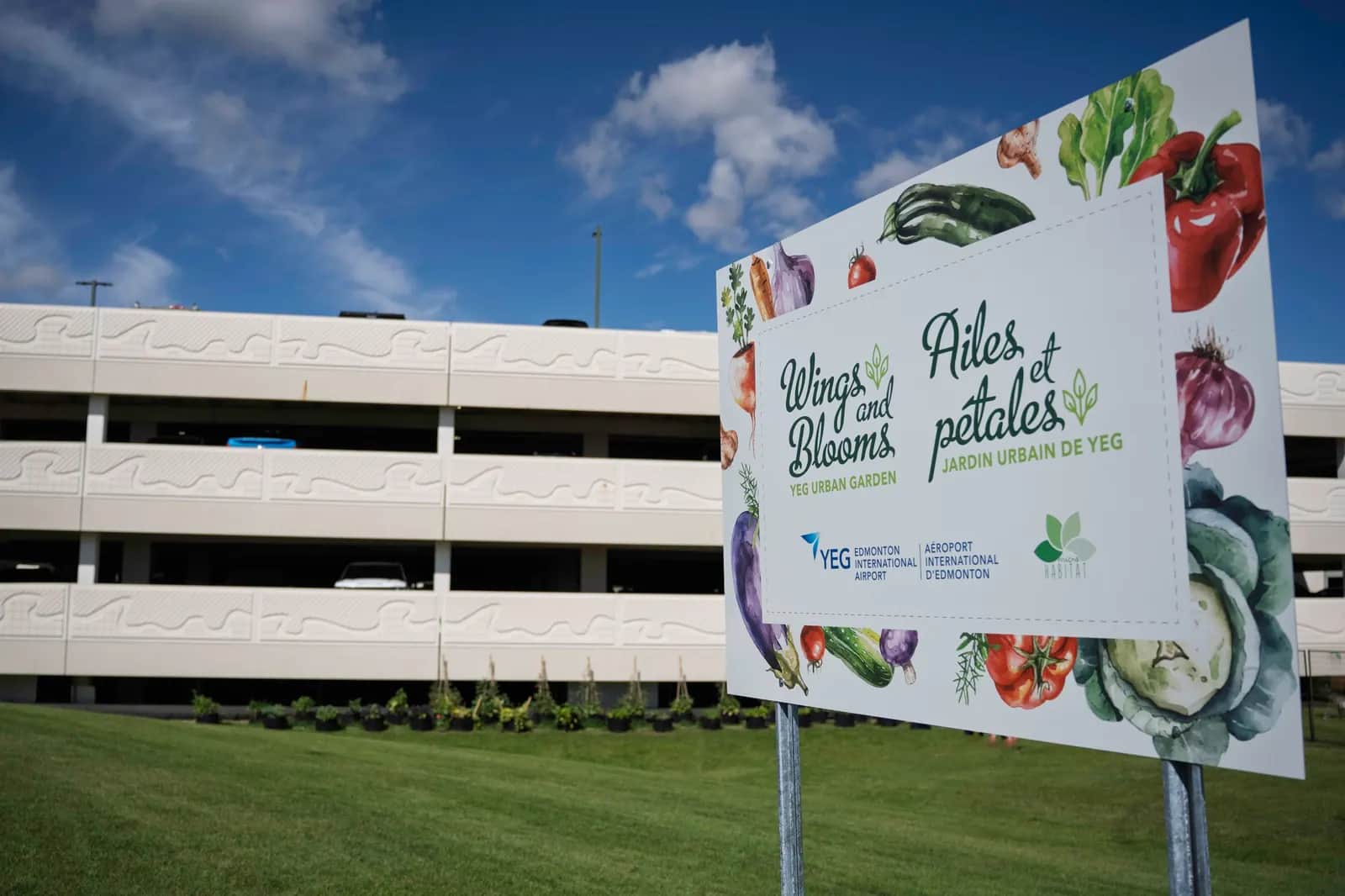
At a glance: Edmonton International Airport (YEG) grows an urban garden of 30 fabric pots on a sunny lawn at the airport. It opened in 2025. MicroHabitat plants and tends it, an urban farmer visits every week, and the harvest goes to two Edmonton organizations: YESS and Edmonton's Food Bank. Every visit is posted to the garden's public MyUrbanFarm farm feed.
- Where: Edmonton International Airport (YEG), Alberta
- What: 30 fabric pots in a row on a lawn, in full sun
- Seasons: first season in 2025; the 2026 garden was planted in June and closed for winter after the first frost at the end of September
- Harvest: donated to Youth Empowerment & Support Services (YESS) and Edmonton's Food Bank
- Follow it: weekly photos on the Edmonton International Airport farm feed
A garden in full sun at the airport
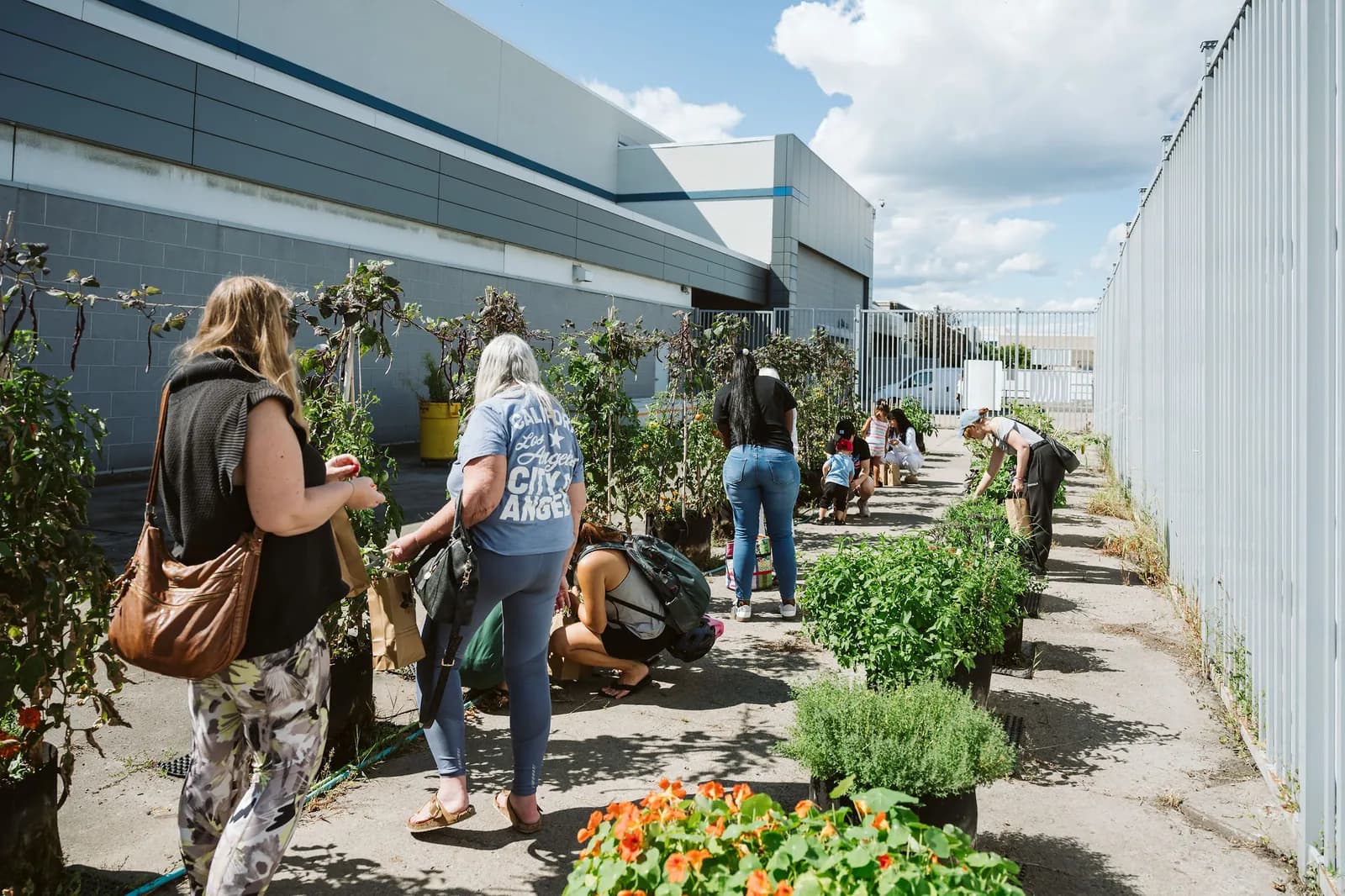
Airports have something most downtown buildings don't: open ground and open sky. The YEG garden is one long row of fabric pots on the grass beside an airport building. In midsummer it gets more than eight hours of direct sun a day, and it was one of the strongest-growing gardens MicroHabitat tended in Edmonton this year.
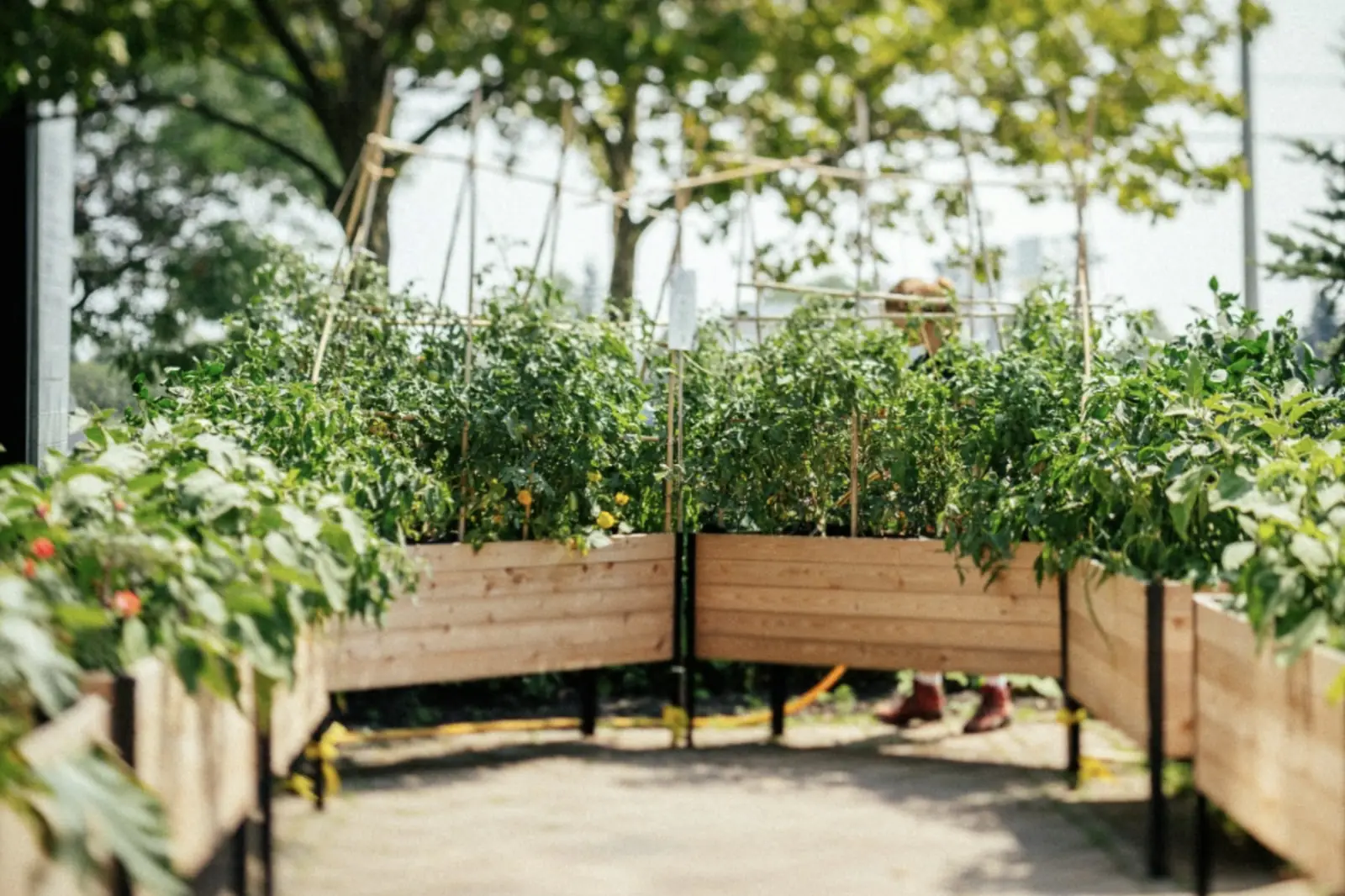
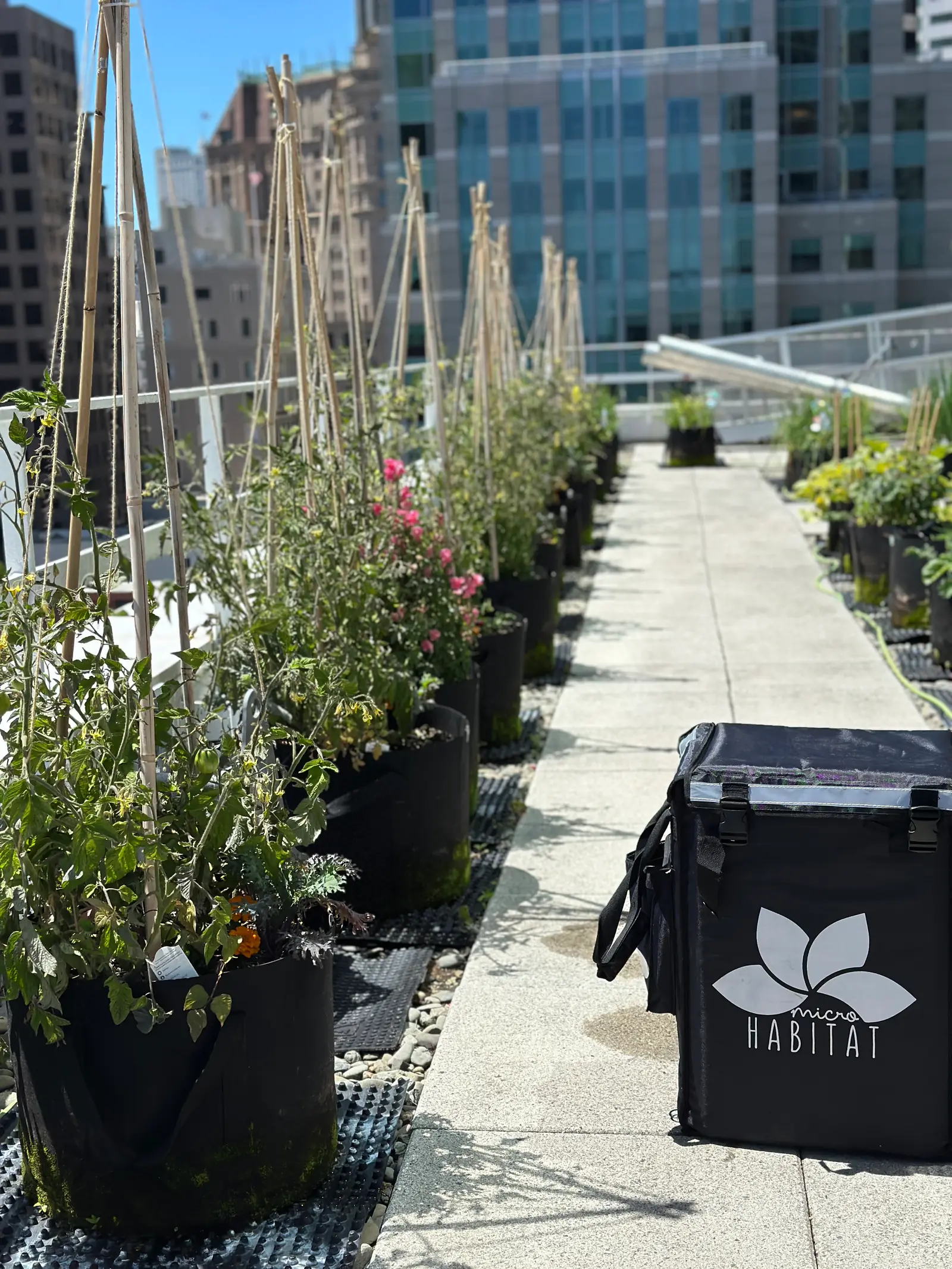
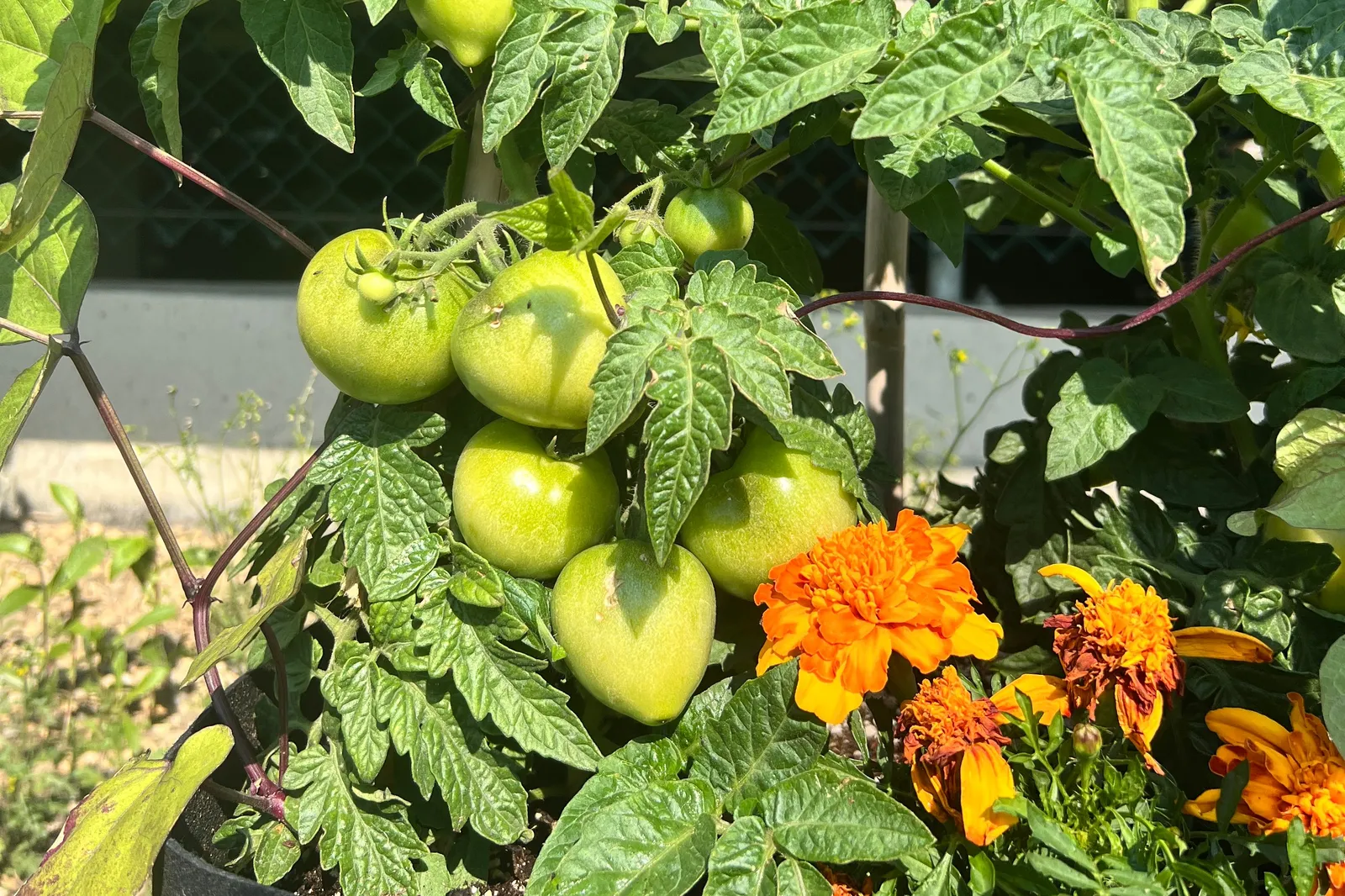
Growing on the ground suits the site. There is no roof to reach and no roof load to plan around. Tomatoes and beans climb bamboo stakes and twine, and marigolds and nasturtiums fill the pots between the vegetables.
What grew in 2026
The weekly posts and visit logs show what each visit brought in:
- Tomatoes, red, orange and yellow; one weighed half a pound in August
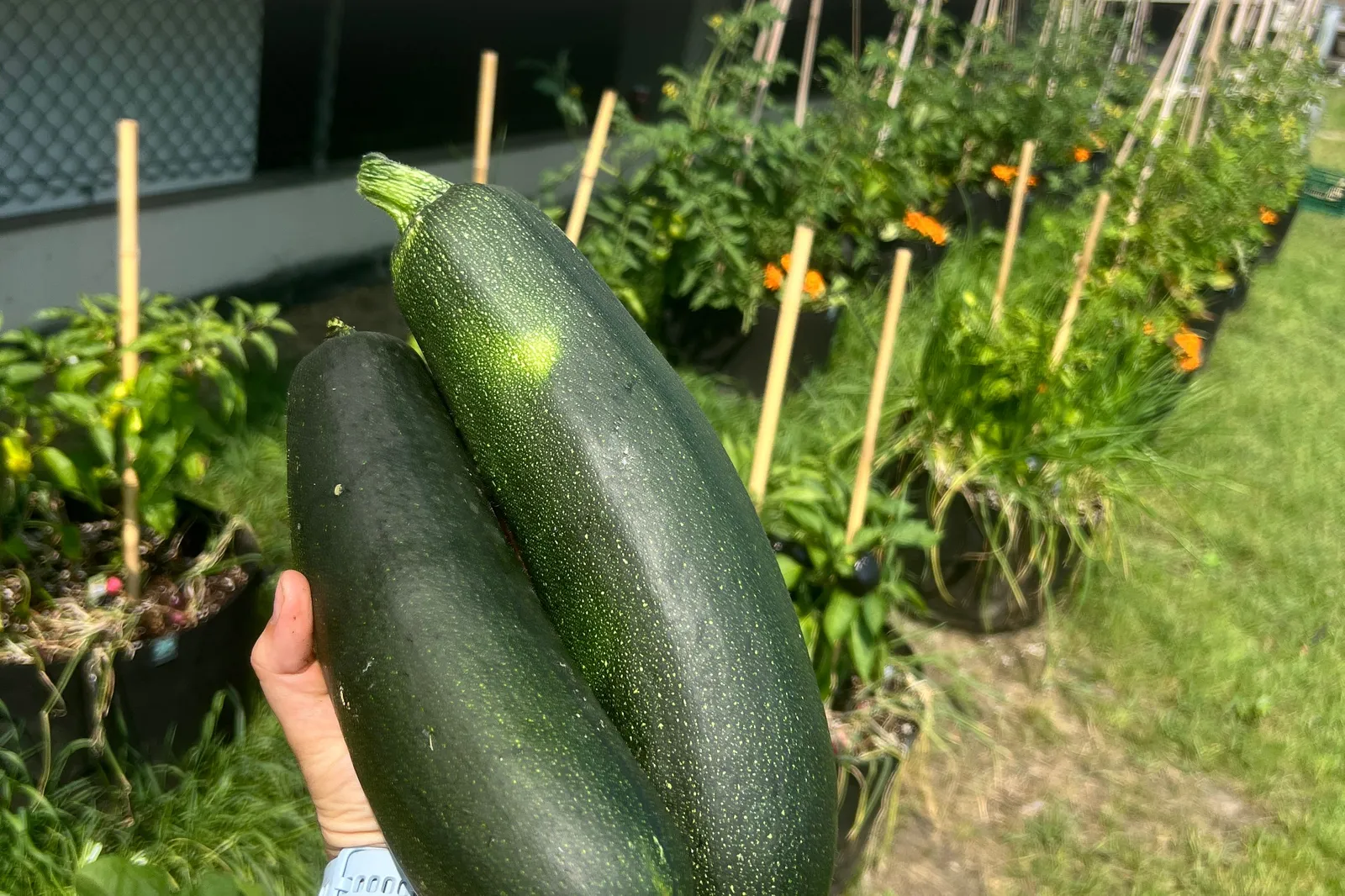
- Zucchinis, which grew to four times their size in a single week of July
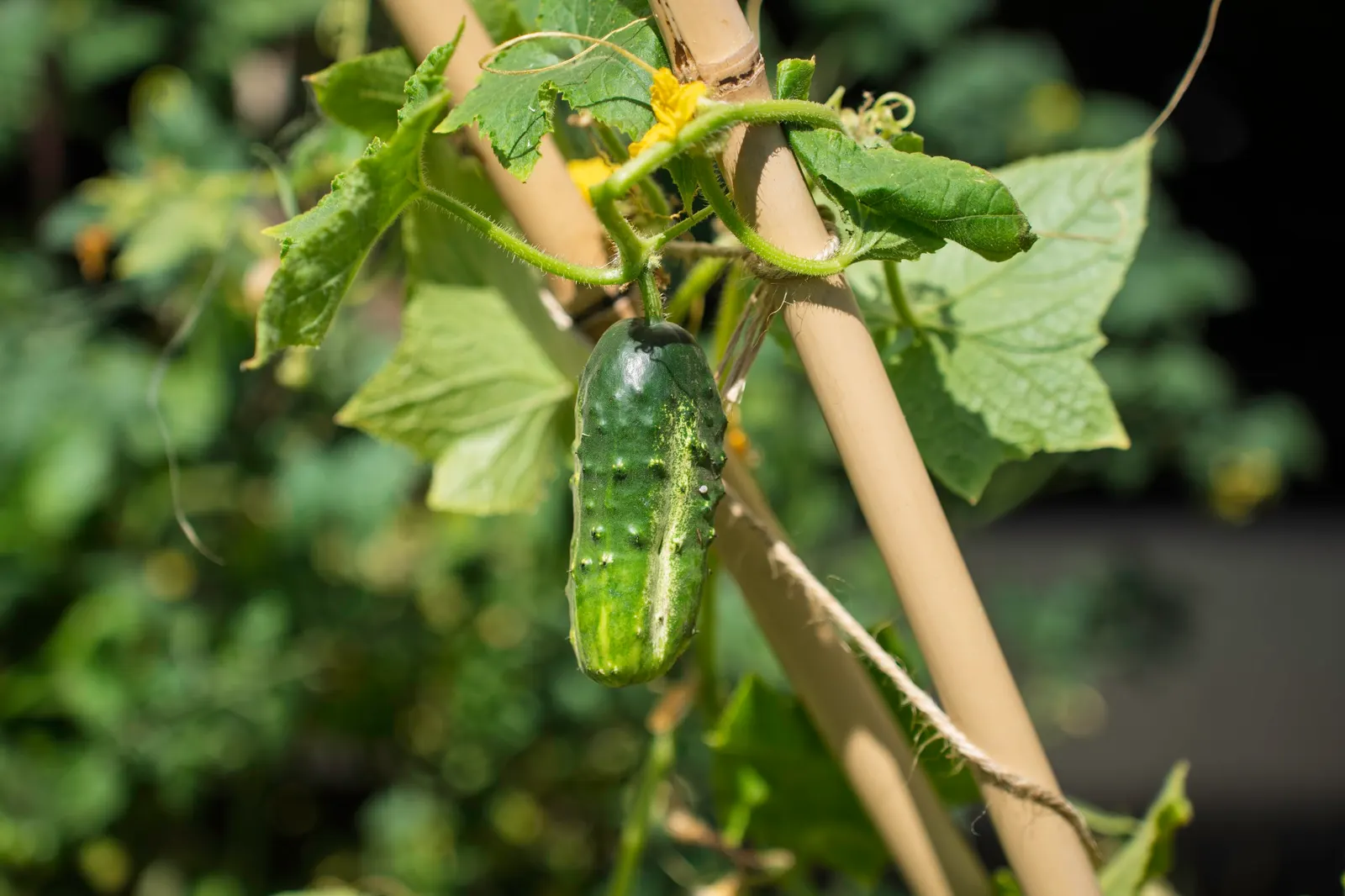
- Cucumbers, so vigorous that nets went up to let them climb out of the pots instead of sprawling across the grass
- Eggplants, long and purple, plus sweet peppers and beans
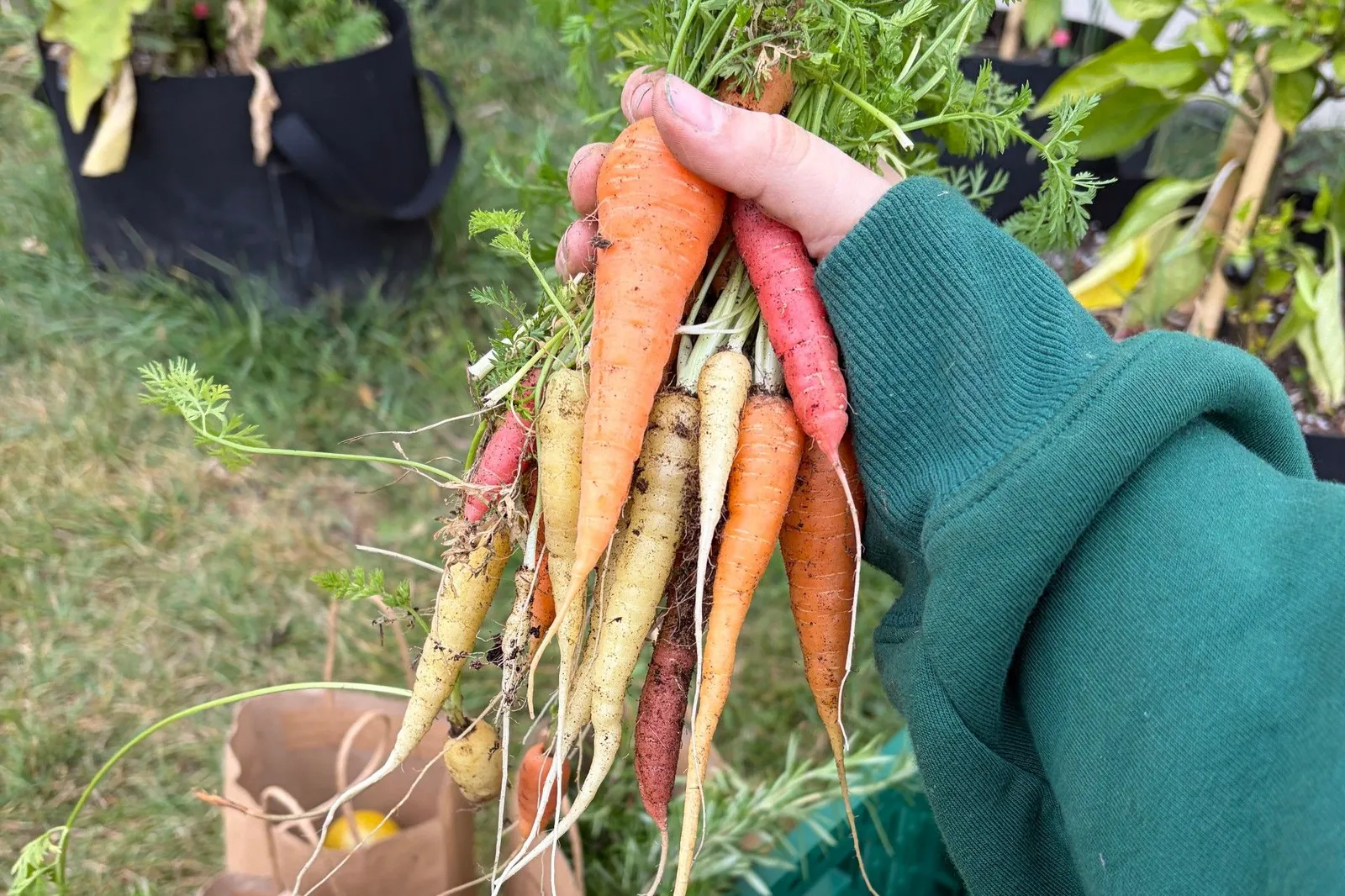
- Carrots, radishes, kale and onions, and strawberries early in the season
- Herbs: basil, chives, mint, oregano, rosemary and thyme
A prairie summer, start to finish
The 2026 season began wet. Heavy rain at the end of June gave way to sunshine, and by early July the peppers were setting fruit, the nasturtiums were spilling out of their pots and the strawberries were ripening. July brought the storms prairie summers are known for. The pots did not move, and the plants kept growing.
August was the peak, with the first cucumbers and sweet peppers ready to eat. Harvests picked up again in September as the nights cooled. When the first morning frost arrived at the end of September, everything still on the vines was picked. Over the following days the garden was closed for the season and its soil covered for the winter.
Harvests that feed Edmonton
The produce is weighed on site and delivered to two local organizations. Youth Empowerment & Support Services (YESS) offers shelter, housing and support to young people aged 15 to 24 in Edmonton. Edmonton's Food Bank gets food to people in need across the city.
The visit logs record each delivery. On September 18, more than three pounds of produce went to YESS. On September 24, 11.5 pounds of vegetables and herbs went to Edmonton's Food Bank.
A garden the airport team uses
The garden is not only for looking at. On July 22, airport staff joined our urban farmer for the garden's first workshop of the season: plant propagation and harvest bouquet making. Staff made their own bouquets from the garden, for each other and for people at home. A second bouquet workshop followed in August.
Through the summer, members of the airport team offered to help bring in the big tomato harvests and sent their garden questions by email. A garden people have worked in with their own hands is one they come back to.
A stop for pollinators, too
Marigolds and nasturtiums are planted among the vegetables on purpose. They draw in pollinators, and pollinators set the fruit. On September 1, our urban farmer watched a ladybug shed its old skin and spotted pollinators never seen on the site before, a sign of a healthy garden. Ladybugs earn their place: they eat the insects that would otherwise eat the crops.
Follow the garden on MyUrbanFarm
Every visit to the airport garden ends up on its farm feed: what was planted, what was picked and where the harvest went. Anyone can open it, and anyone can subscribe to get updates by email. The airport team can share it with staff and travellers, and use it in its own sustainability reporting.
Bringing a garden to your property
Airports, office campuses and public buildings often have a sunny strip of lawn like this one. If you manage one, see how MicroHabitat works with corporations and commercial real estate, from the first site visit to the weekly farm feed. We also run urban farms across Edmonton.