On this page
Here’s a quiet test for any workplace garden. Forget the ribbon-cutting and the crowd at the opening, and picture an ordinary Tuesday instead. Can someone step outside for ten minutes without asking permission, missing a meeting or feeling watched? If not, the garden is still mostly decoration.
World Mental Health Day falls on 10 October 2026, and its focus on lived experience is a good place for employers to begin. Before deciding what a break should look like, ask the people who would take it what would make it possible.

A garden can’t fix a heavy workload
It helps to be honest about this from the start. The WHO guidelines on mental health at work look at how work is organized, not only at the support offered to people. A garden is not a treatment. A planting workshop does nothing about harassment, unsafe conditions or a workload no one could carry, and those responsibilities stay with the employer.
What nature can offer is smaller and still worth having: a pleasant place to pause, to talk with a colleague, or to get your hands busy with something living. Offered that way, without any promise of a clinical result, it’s easier to design well and easier to talk about truthfully.
What gets in the way
A short, voluntary survey or a few informal conversations will surface things no design rendering shows. Some people would rather sit quietly than join a group activity. Others are looking for a reason to meet people outside their own team. The night shift will never see a lunchtime workshop. And someone who uses a wheelchair needs a step-free route and an equally good experience, not a warm invitation followed by a staircase.
A handful of questions usually gets to the heart of it:
- When can people realistically step away from their desks or stations?
- Is the route there clear, safe and accessible?
- Can someone join in without touching soil, standing for long or being photographed?
- What happens when it rains, or in heat, cold or poor air quality?
- Can people say no without having to explain why?
Notice that none of these asks about anyone’s health. You don’t need private medical information to discover that a door is locked at noon, or that a session clashes with a shift change.
Give people more than one way in
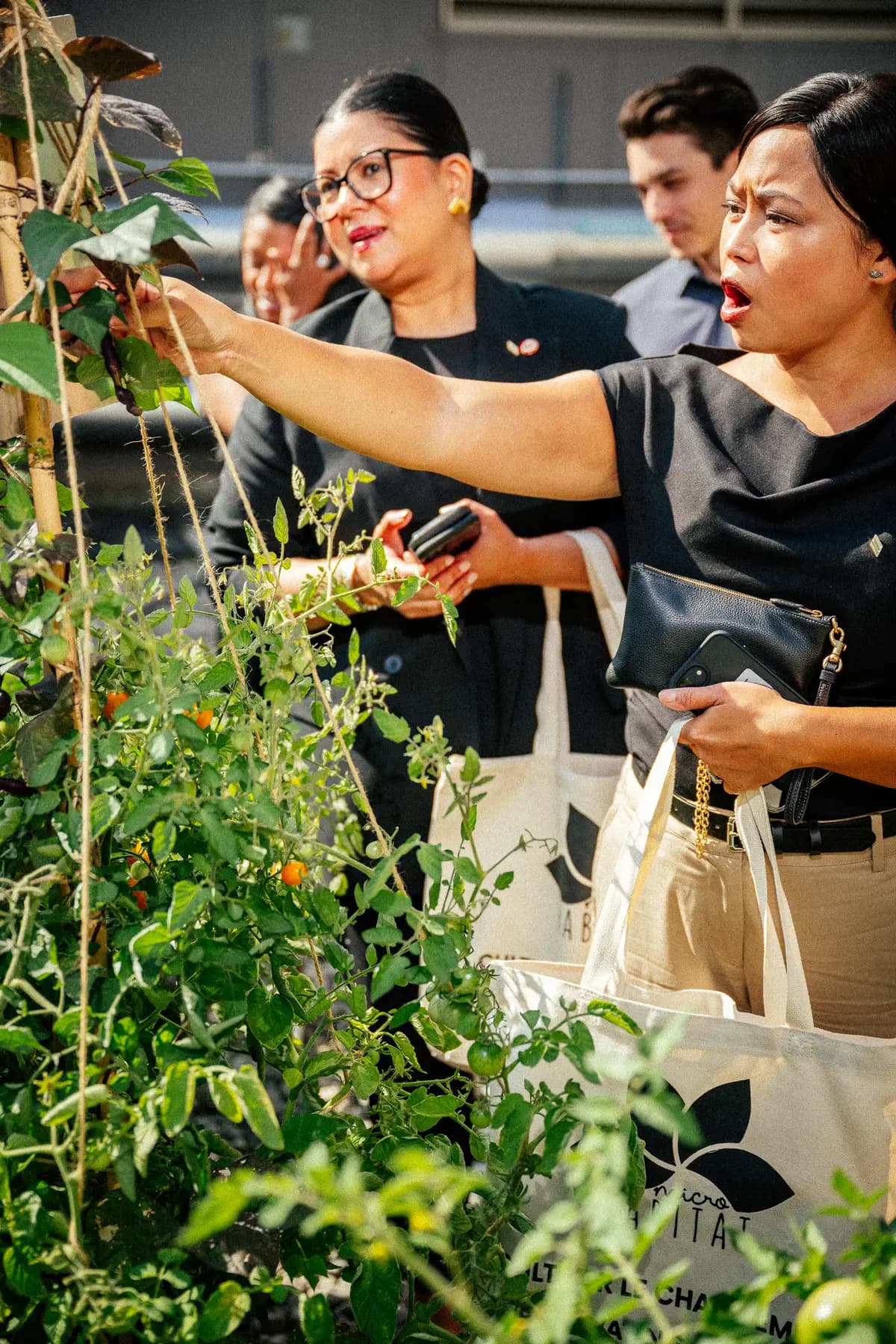
The programs that last look less like a single mandatory event and more like a small menu. One person loves a ten-minute walk with the farmer to see what’s ripening. Another just wants a bench near the planting. A third joins the harvest whenever their calendar allows. Say up front how long each activity takes, and make leaving early feel completely normal.
This is also where professional care matters. If the garden depends on employees rescuing wilted plants at the end of a long day, it has quietly become one more task. A named urban farmer, clear access arrangements and a realistic seasonal schedule keep the work of farming separate from the pleasure of taking part.
Learn what’s working without watching anyone
Start with simple questions about the program itself. Did the session happen? Could people get to it? Would they come back? Use optional, anonymous feedback and look at attendance in aggregate. Resist the temptation to read mental-health gains into a photo or a sign-up sheet, and never connect participation to performance reviews.
After a short pilot, change one thing at a time. If the timing kept people away, move the session. If people asked for quiet access, open some up where the site allows. A modest program that listens and adjusts will do more good than a packed calendar nobody asked for.
An invitation people can believe
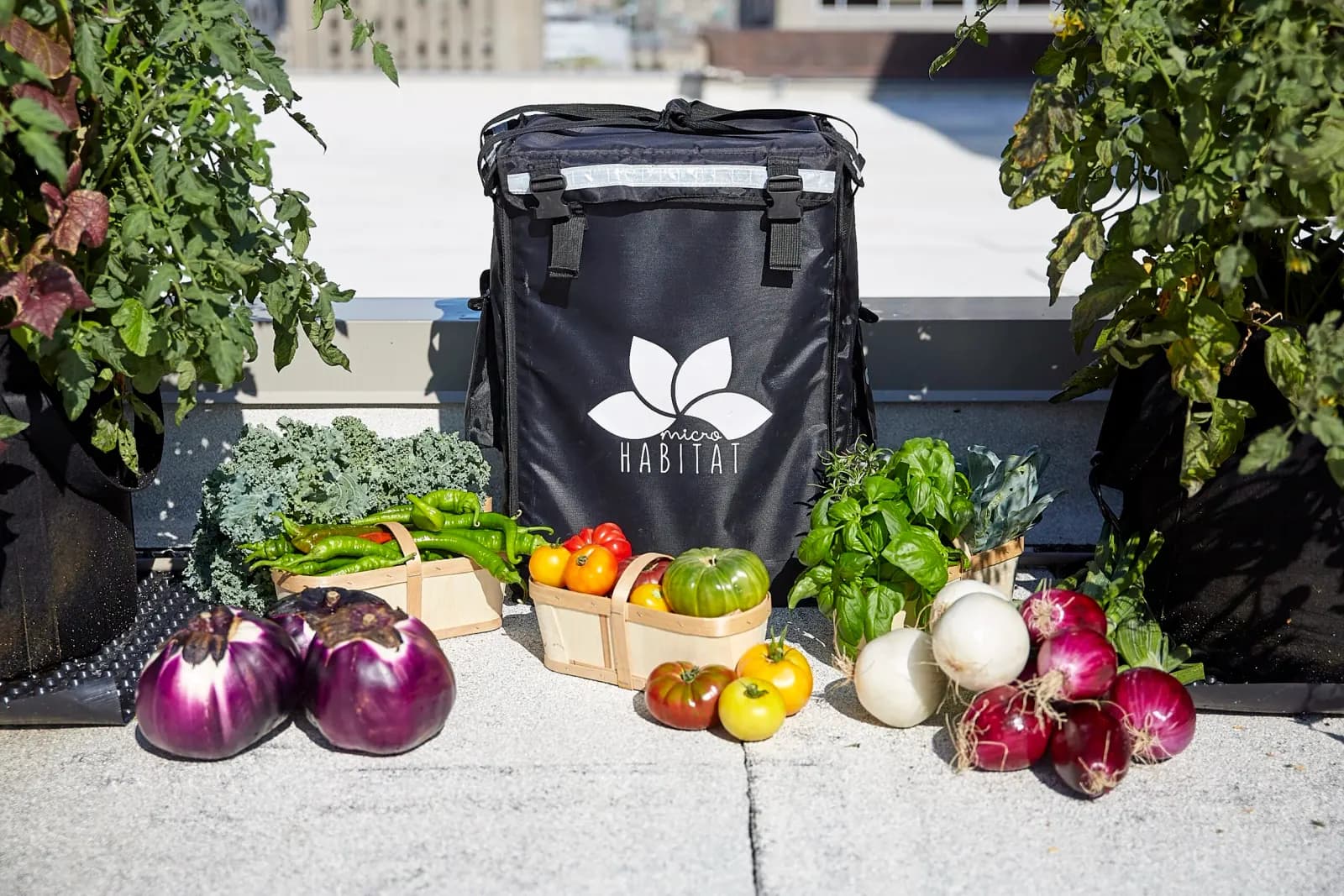
For property managers and employers, an urban farm offers something real: a living place that changes through the season and gives people a reason to look up from a screen. MicroHabitat can bring the farming and the educational activities. The employer still owns the conditions that let people actually take part. Our guide to nature-based workplace wellness goes further into what that looks like in practice.
So this October, the best announcement may also be the simplest. Here’s the space. Here’s when it’s open. Here’s how to join in, or just sit and enjoy it. And here’s how to tell us what should change. That last line is the one that turns an amenity into something built for the people who use it.