Nature-Based Workplace Wellness Programs: The Complete Guide
How to build a nature-based workplace wellness program: the evidence, program types, stress relief, return to office, measuring impact and how to start.
Quick answer: A nature-based workplace wellness program gives employees regular contact with living things during the workday: plants and green views, short breaks outdoors, hands-on growing workshops and shared harvests. Research links time in nature to lower stress, and field experiments in offices link plants to better concentration. A good program is easy to join, follows a regular calendar and is judged by who takes part, who comes back and how people say they feel.
Most companies already offer a workplace wellness program. Fewer offer one that employees actually use. App subscriptions and step challenges are easy to buy, but offering access is not the same as getting people to take part. Nature-based wellness takes a different route: it puts something living in the workplace and invites people to take part. This guide is the hub for that approach. It covers what nature-based workplace wellness is, what the research shows, the program types, how nature fits stress reduction, return to office and sustainability goals, how to measure impact and how to start. Each section links to a deeper guide.
On this page: What it is · The evidence · Program types · Stress · Return to office · Sustainability and team building · Measuring impact · Getting started
Nature-based workplace wellness
Four ways employees meet nature at work
From a glance to a shared harvest. Each step asks a little more of people and gives them more to take part in.
See it
Asks: a glanceWork near plants, green walls and views of a garden
A calmer, more pleasant place to concentrate
Step into it
Asks: a breakTake a short break outdoors or join a garden visit
Recovering from a stressful morning
Grow with it
Asks: a sessionPlant, prune, save seeds and harvest in a workshop
Learning something new with colleagues
Share it
Asks: a team dayRun a harvest day or donate produce to a food bank
Connection, purpose and a visible contribution
What is nature-based workplace wellness?
Nature-based workplace wellness is a wellness strategy that uses regular contact with nature at work as its main tool for supporting employee wellbeing. It sits alongside benefits such as mental health coverage and flexible hours. It does not replace them.
The physical side already has a name. Biophilic design brings natural elements into buildings: our guide to biophilic design in the workplace covers the design patterns, and the science behind biophilic design at work reviews the evidence for them. A wellness program adds what design alone cannot: a schedule, an invitation and people. A green wall is a feature. A monthly harvest that employees help pick is a program.
The figure above shows four steps a program can draw from. Seeing nature asks almost nothing of employees. Stepping into it asks for a break. Growing with it asks for a session. Sharing it, through a harvest day or a donation to a food bank, asks for a team's time and is designed for connection and purpose.
What does the research say about nature and employee wellbeing?
Research links contact with nature to lower stress and better attention, and field experiments in real offices point the same way. The case starts with the size of the problem. The World Health Organization estimates that 12 billion working days are lost every year to depression and anxiety, at a cost of US$1 trillion in lost productivity. WHO recommends that employers improve working conditions, train managers and workers in mental health, and help individuals build skills to manage stress, including through physical activity in their free time.
Two studies show what nature can add to that mix:
- Plants in real offices. Nieuwenhuis and colleagues ran three field experiments in large commercial offices in the Netherlands and the UK, published in 2014. They compared bare, lean offices with offices enriched by plants, looking at perceived air quality, concentration, workplace satisfaction and productivity. In all three experiments, the offices with plants produced better outcomes.
- Short nature breaks and stress hormones. Hunter, Gillespie and Chen (2019) followed 36 city residents (92% of them women) who spent at least 10 minutes in nature three or more times a week for eight weeks, choosing when, where and for how long. Measured by salivary cortisol, the stress benefit per minute was greatest between 20 and 30 minutes, and cortisol fell 21.3% per hour beyond its normal daily decline.
Keep the claims in proportion. These studies measure plants and time outdoors, not any particular program, and results vary with the setting and the person. For the everyday benefits employees describe, see our posts on the benefits of biophilic design in offices and nature in the workplace.
Which nature-based wellness programs can a company run?
A company can choose from six types of nature-based wellness program, and many programs combine two or three. The right mix depends on your space, your people and how much time employees can give during the week.
| Program | What employees do | Designed for | Go deeper |
|---|---|---|---|
| Office plants and green walls | Work near living plants and green views | A more pleasant place to concentrate | Keeping office plants alive |
| Nature breaks and garden visits | Step out to a roof, terrace or garden on site | Recovering from stress | Stress reduction programs |
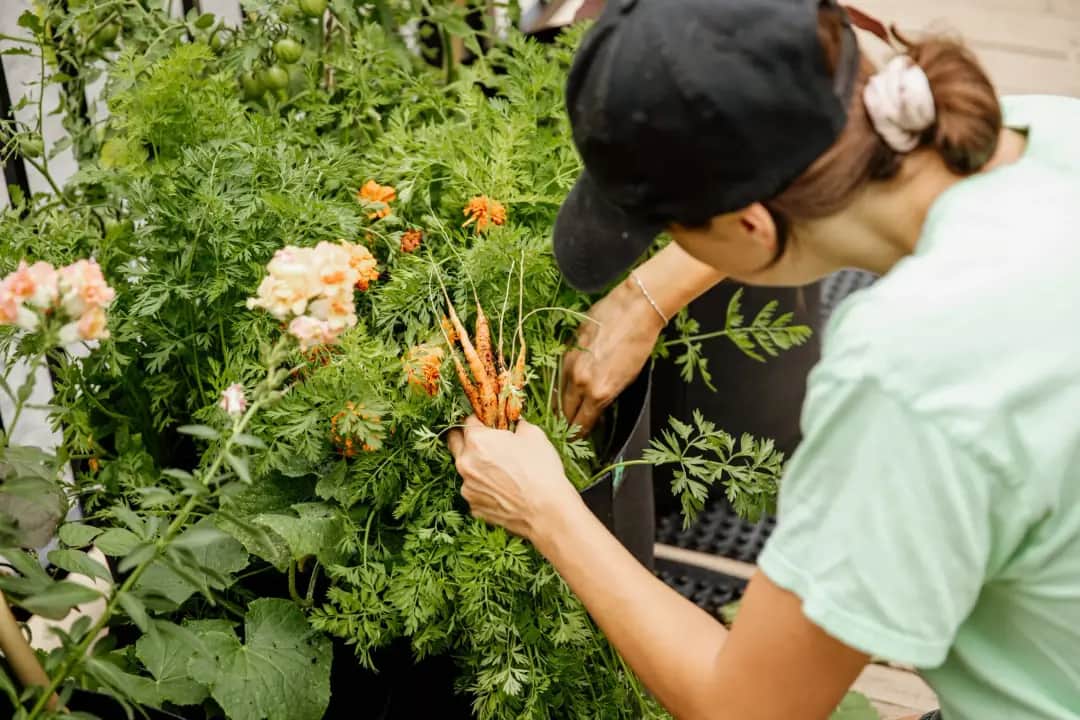
| Growing workshops | Plant, prune, save seeds or harvest with an urban farmer | Learning something new with colleagues | Wellness program ideas |
| Fresh produce | Taste or take home vegetables and herbs grown on site | Eating more fruit and vegetables | Why 5 a day matters |
| Purpose-driven team days | Plant, harvest or donate produce to a food bank as a team | Connection and purpose | Team building with purpose |
| Managed office garden | Any of the above, run through the season by a specialist | A program that outlasts its first champion | Office garden programs |
Indoor and outdoor options follow different calendars. An outdoor farm peaks in the growing season, while an indoor farm grows year-round in a lobby or cafeteria. Indoor greenery has small practical side benefits too, which we cover in bringing nature inside to reduce static electricity.
How does nature help reduce employee stress?
Nature helps reduce employee stress by giving people short, regular recovery breaks in a setting that asks nothing of them. The Hunter study suggests the most efficient nature break lasts about 20 to 30 minutes, which fits inside a lunch hour. So the practical questions are simple: is there somewhere green to go, and does anyone invite people to go there?
Three details decide whether a stress program gets used. It has to be close: a roof or terrace in the same building beats a park across town. It has to be predictable, like a garden visit on the same day each week. And it has to be optional and free of pressure: a garden break should feel like a break, not another scheduled class. Nature is one part of stress reduction, not all of it, and WHO's guidance puts working conditions and manager training alongside individual support. Our guide to employee stress reduction programs compares nature with the other approaches the evidence supports.
Can a nature program support return-to-office plans?
A nature program can support return-to-office plans by giving people something at the office they cannot get at home: a harvest to share, a workshop to join and colleagues to do it with. It works as an invitation, not a mandate.
Timing is the lever. Schedule workshops, harvest days and garden visits on the days you most want people in, and announce them early so they become a reason to plan the commute. Share photos and updates between visits so colleagues working from home see what is growing. A program will not rescue a policy people disagree with, and it should not be sold internally as if it could. What it can do is make office days feel different from home days. Our guide to return-to-office incentives compares it with the other options companies use.
How does nature-based wellness connect to sustainability and team building?
Nature-based wellness connects to sustainability and team building because the same garden grows local food, gives pollinators a habitat and gives teams shared work with a visible result. It also makes the company's environmental goals visible, so one program can serve several agendas.
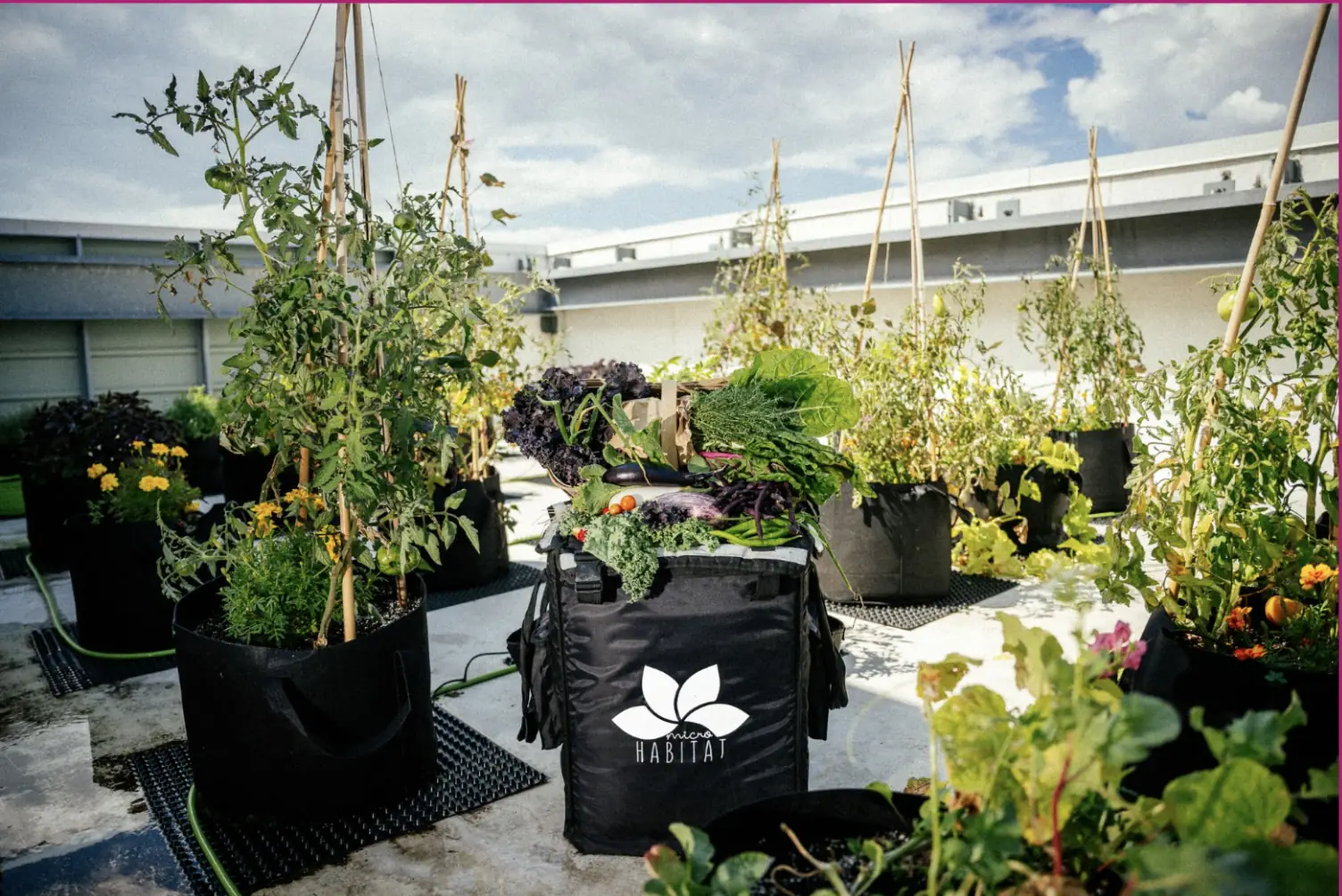
Sustainability teams are often asked to turn targets on paper into something employees do. A pollinator workshop, a seed-saving session or a harvest given to a local food bank turns a commitment into a lunchtime activity. MicroHabitat partners with 35+ food banks for produce donations. Our guide to corporate sustainability employee engagement shows how to build that participation, and team building with purpose covers planting, harvest and donation days that leave something behind.
For facilities and real estate teams, the same green space is part of a wider move toward buildings that support biodiversity. Our guide to nature-positive buildings explains how on-site habitat is measured and reported.
How do you measure the impact of a workplace wellness program?
Measure a nature-based workplace wellness program the way you would any other: by who takes part, who comes back and whether people report feeling better, compared with a baseline taken before launch. Choose a few measures you can collect every season rather than a long survey nobody finishes.
- Reach. The share of employees who join at least one activity, garden visit or harvest in a season.
- Return. The share who come back a second and third time. Repeat attendance is what separates a program from a one-off event.
- Wellbeing. A short pulse survey before launch and at season end, using a validated scale such as the WHO-5 Well-Being Index, plus one question about stress.
- Office attendance. If return to office is a goal, compare attendance on program days with similar days without an activity.
- Sustainability results. Harvests, produce donated and workshops held, which also feed ESG and CSR reporting. A managed provider should supply these in an end-of-season report.
- Stories. Photos and quotes from participants. They give leaders something concrete to share alongside the numbers.
Be careful about what these numbers can prove. Wellbeing scores that rise in the season a program launches are encouraging, not proof that the program caused the change. Report them that way, and the program stays credible when budgets are reviewed.
How do you start a nature-based wellness program?
Start a nature-based wellness program by choosing one goal, confirming your space and running one full season before you scale. A managed service keeps the growing work off your team, so the company's job is access, decisions and communication.
- Set one goal. Stress, return to office, sustainability engagement or team connection. The goal decides which measures matter.
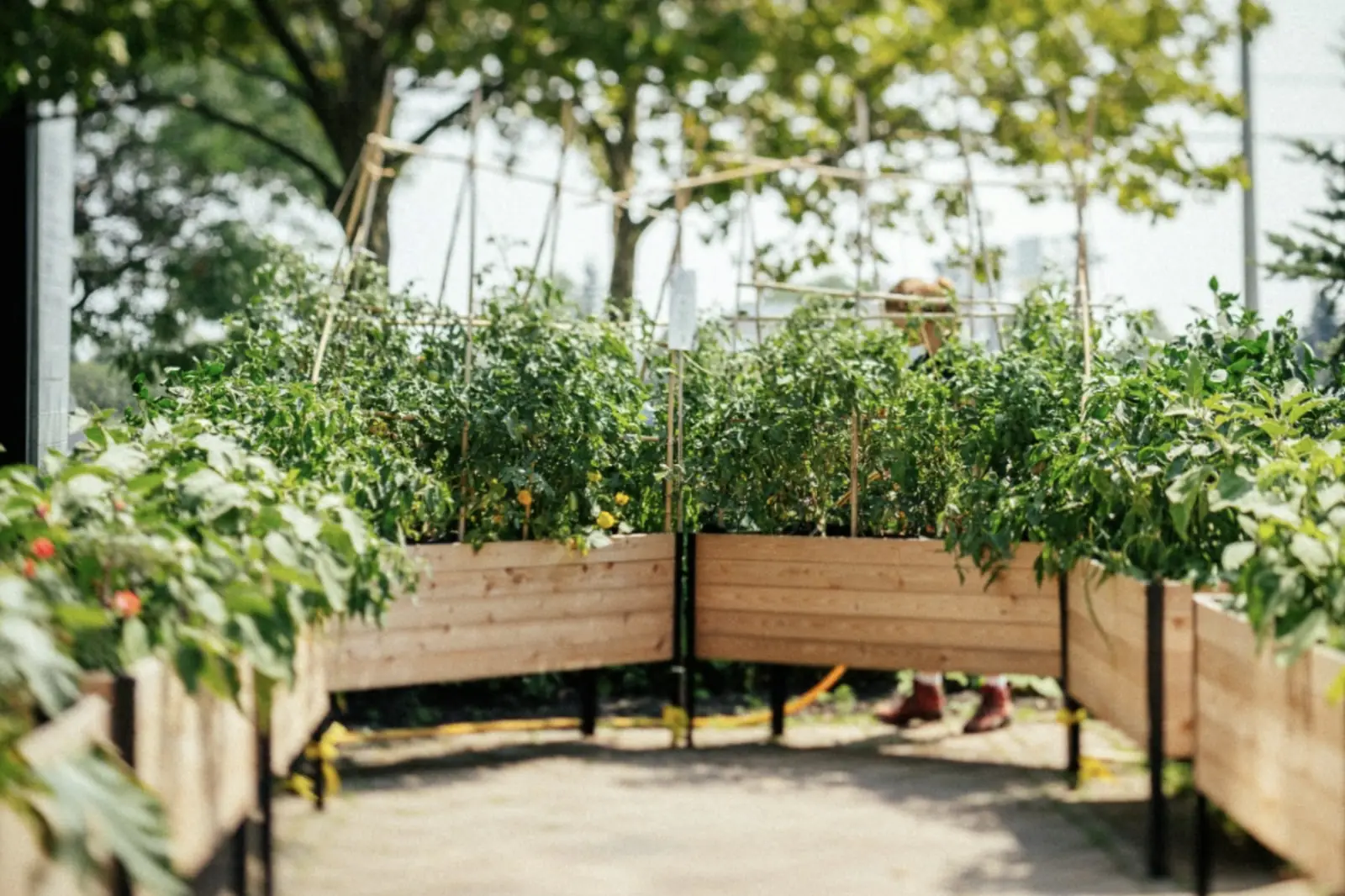
- Check your space. An outdoor farm needs a sunny roof, terrace or ground-level area with water nearby. An indoor farm needs a lobby, cafeteria or common area with adequate lighting.
- Take a baseline. Run the pulse survey and note current attendance before anything is installed.
- Plan the calendar. Pick workshops, garden visits and harvest days, and line them up with the days you want people in.
- Launch and invite. Announce the program, say who to ask, and share updates between activities.
- Review at season end. Compare results with your baseline, keep what people used and plan the next season.
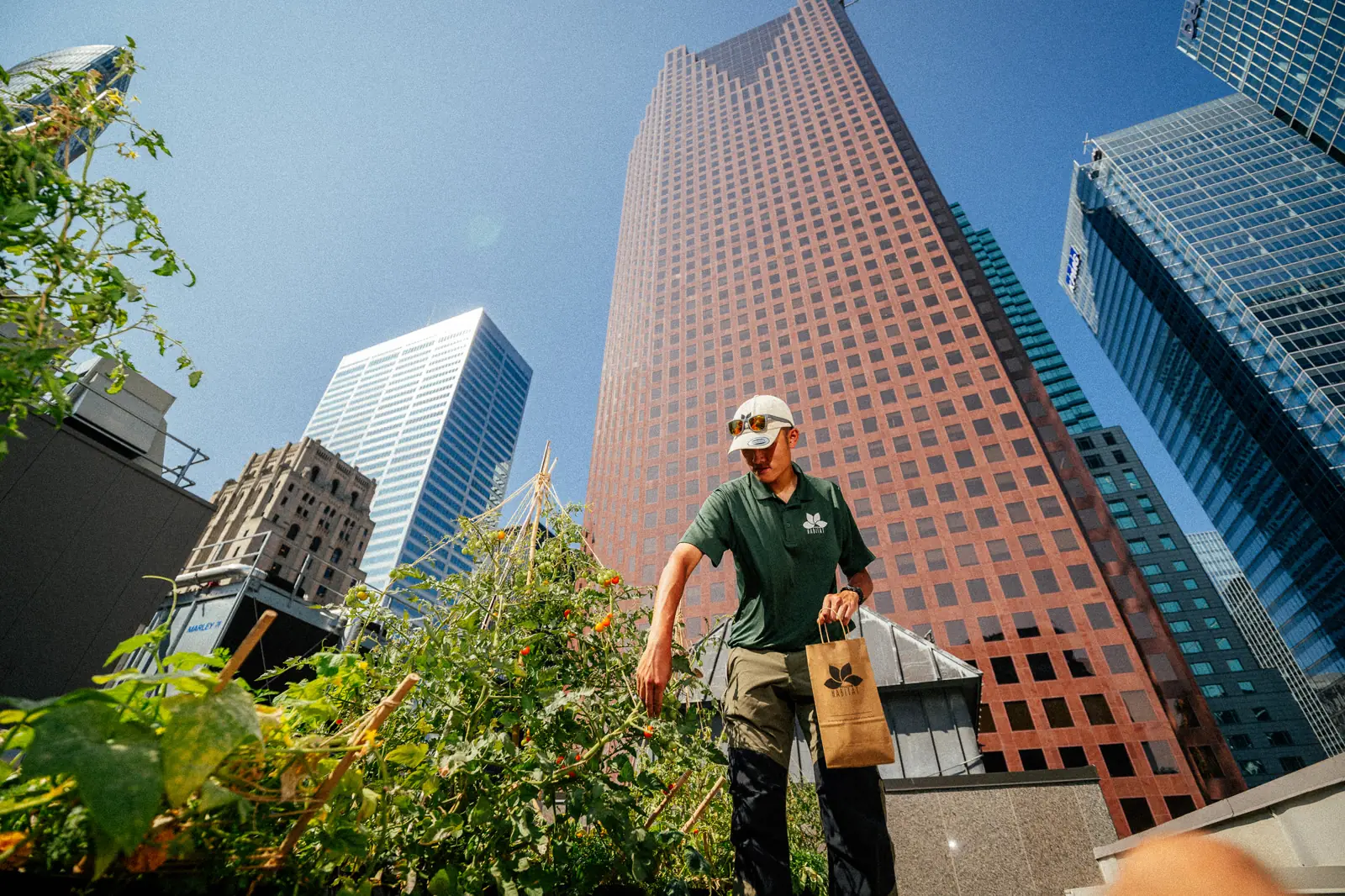
MicroHabitat runs 250+ urban farms in 20+ cities across North America and Europe. We design and install outdoor farms and indoor farms, and local urban farmers handle the weekly care and lead educational activities for employees. For the full operating model, see our guide to office garden programs.
Dig deeper: corporate wellness program ideas, employee stress reduction programs, return-to-office incentives, office garden programs and biophilic design in the workplace.
Ready to give your team a wellness program they can see, taste and take part in? See how urban farming works for corporations, then contact us to scope a program for your workplace.