Biophilic Design in the Workplace Guide
Biophilic design workplace strategy goes beyond desk plants. Learn the proven patterns, the wellbeing and productivity evidence, and how to apply them.
On this page
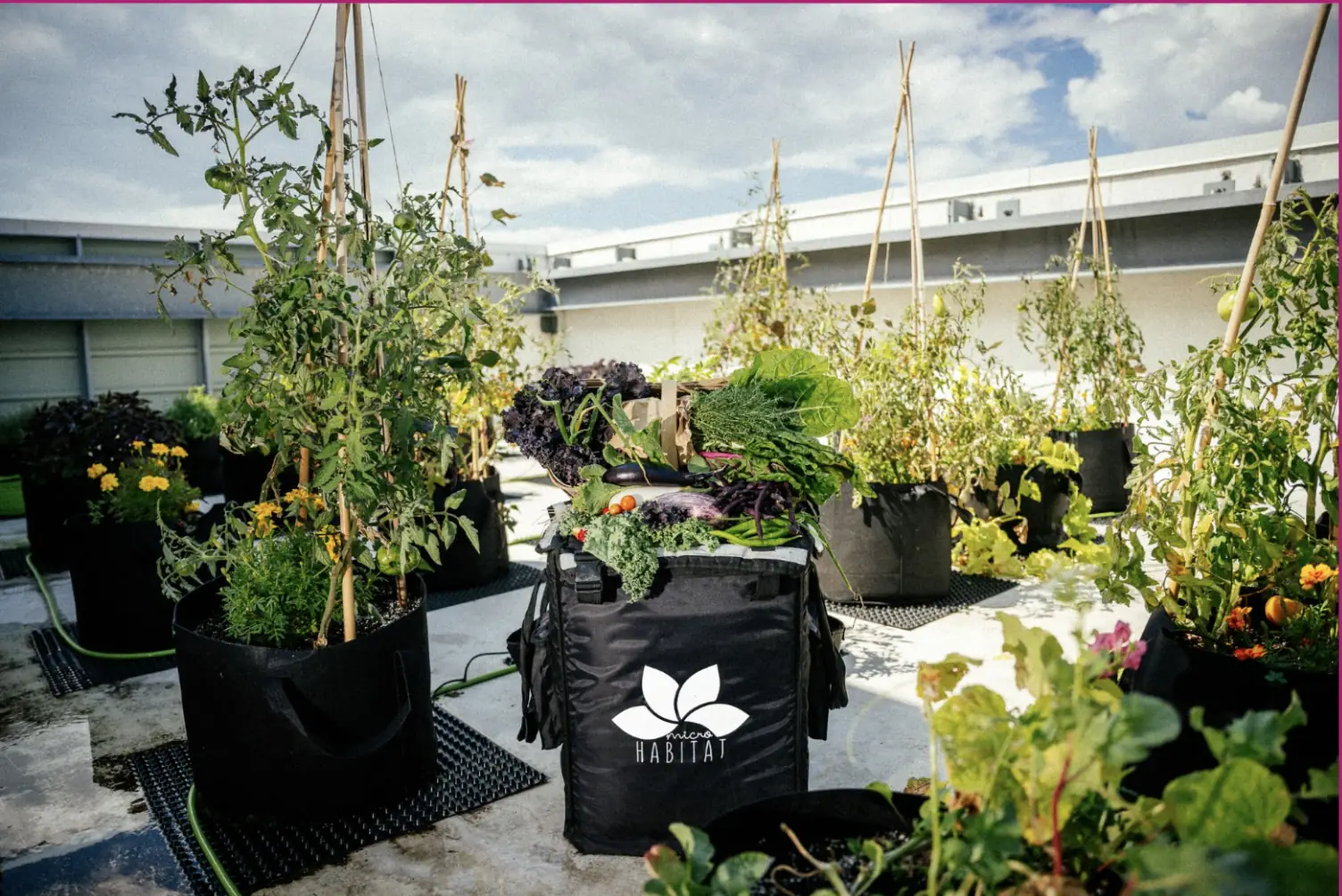
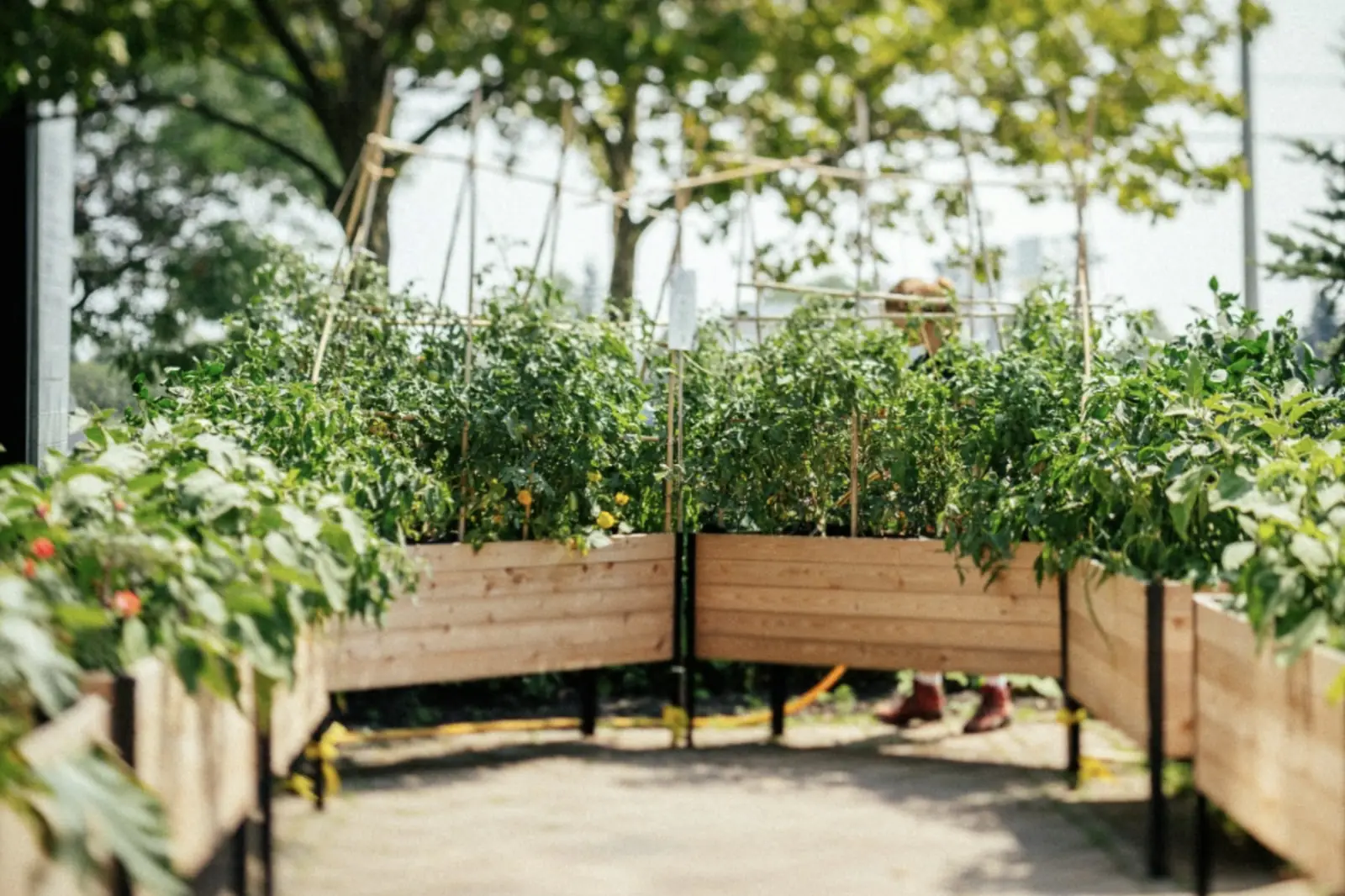
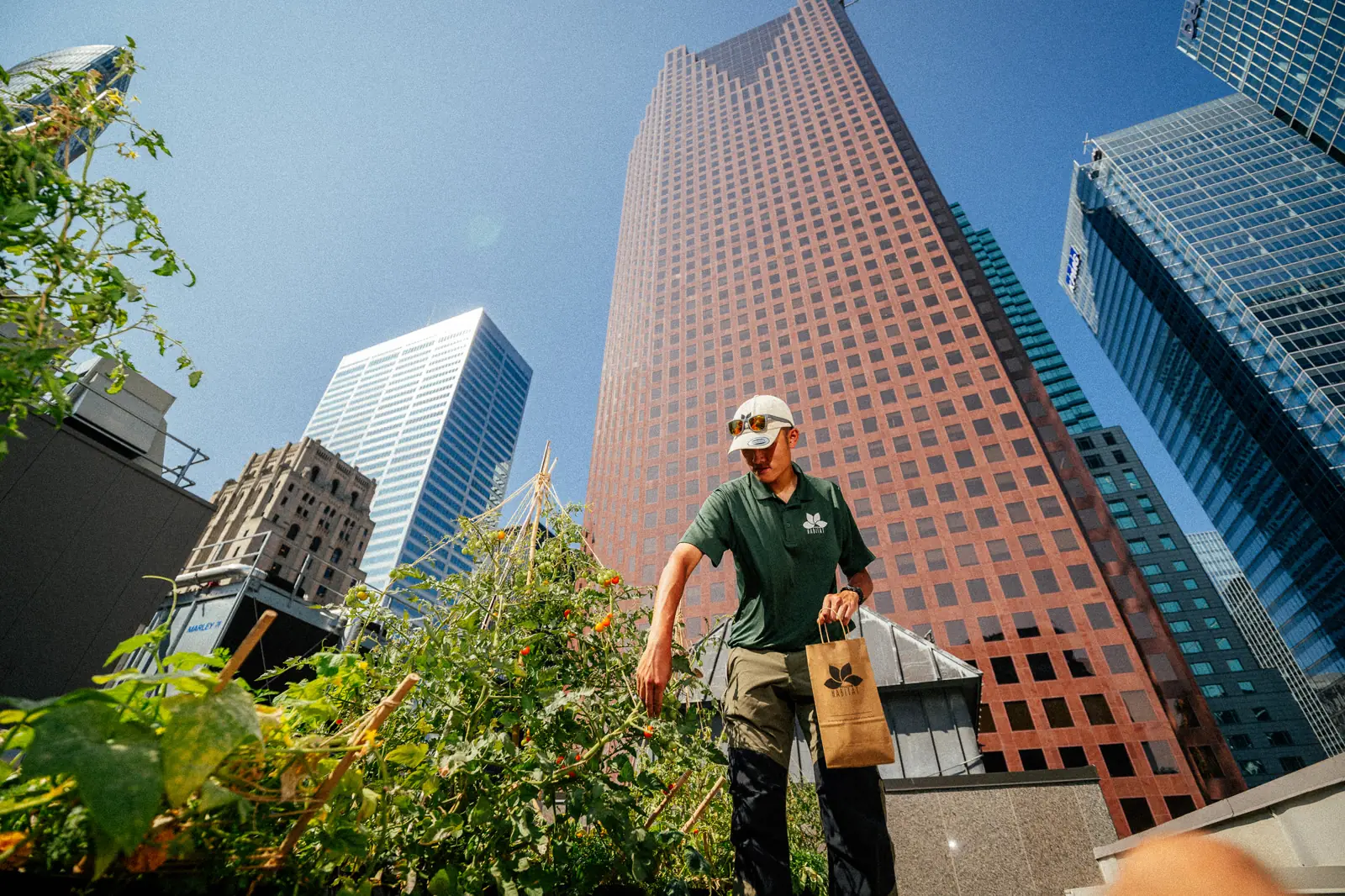
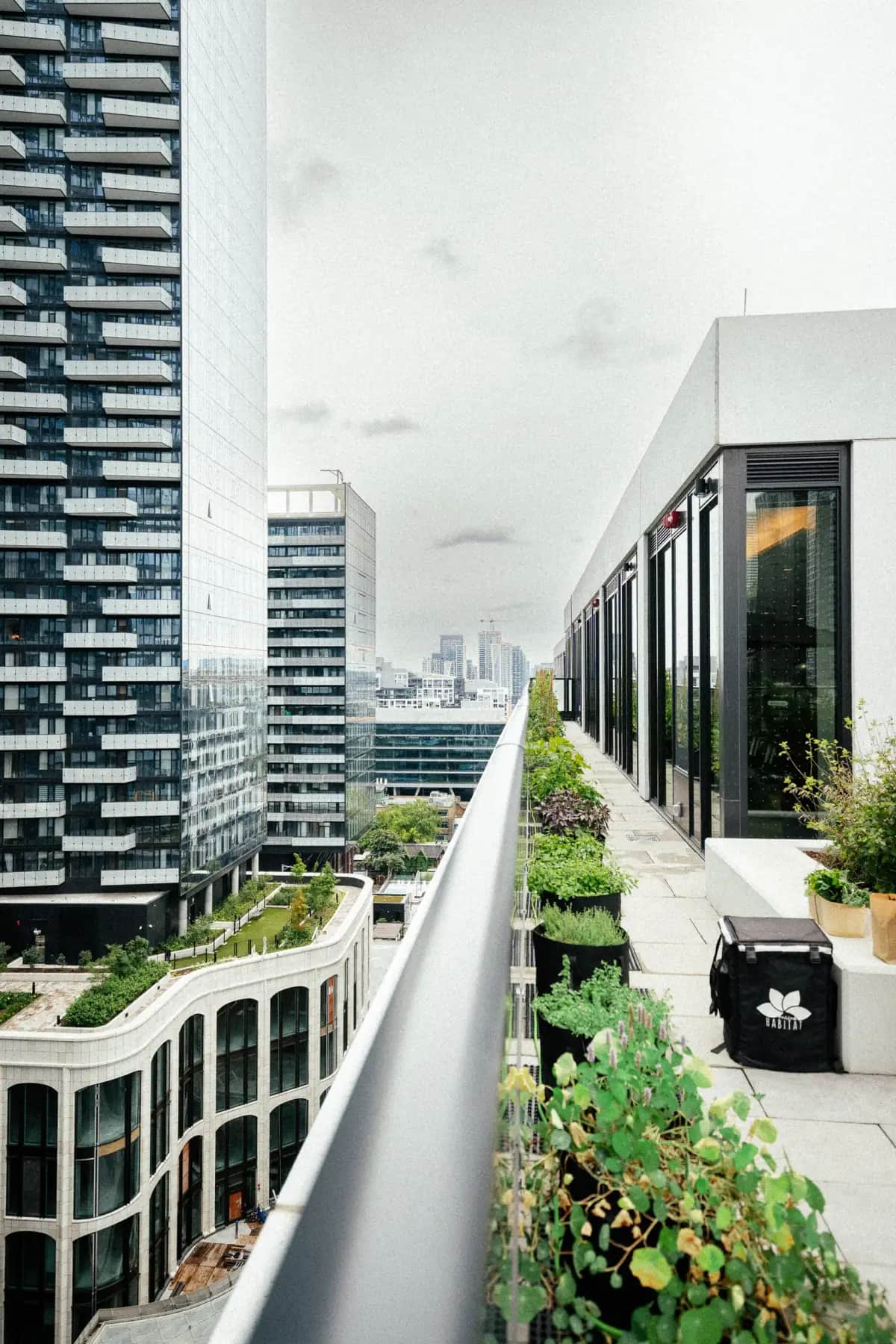
Quick answer: A biophilic design workplace connects people to nature through the built environment to improve wellbeing and performance. It goes well beyond desk plants — incorporating natural light, greenery at scale, natural materials, and direct nature engagement such as an on-site farm that gives employees a genuine, hands-on connection to growing food.
Part of our guide: Nature-Based Workplace Wellness Programs: The Complete Guide.
For property managers and sustainability officers, biophilic design in the workplace has moved from a wellness nicety to a measurable lever on occupant health, tenant retention, and ESG performance. The discipline rests on a recognized body of patterns and a growing evidence base, not on intuition — which is what makes it defensible in a capital request and a leasing pitch alike. This guide explains what biophilic design actually means, summarizes the wellbeing and productivity evidence, lays out the recognized patterns and how to apply each one, and shows where an on-site farm fits as the most active form of nature engagement. For the wider strategy, see our pillar guide to ESG-aligned urban farming.
What is biophilic design, and what does it really mean for a workplace?
Biophilic design is the deliberate integration of nature and natural systems into the built environment to satisfy the human need for connection to the living world. The term builds on biologist E.O. Wilson's "biophilia hypothesis" — the idea that humans carry an innate affinity for nature — and translates it into architecture and interiors through measurable design moves. In a workplace, that means treating daylight, views, vegetation, natural materials, water, and natural shapes not as decoration but as functional inputs to how people feel and perform.
Crucially, biophilic design is not the same as "adding plants." A pot of pothos on a credenza is the most superficial expression of the idea; genuine biophilic design works at the scale of the floorplate and the building. It governs where you place desks relative to windows, how daylight reaches the core, whether occupants can see greenery from where they sit, what the surfaces are made of, and whether the building offers any direct, sensory engagement with living systems. The distinction matters for ESG and certification, because frameworks reward implemented, measurable interventions — not gestures.
Does biophilic design improve productivity and wellbeing?
Yes — a substantial body of peer-reviewed and industry research links biophilic design to improved wellbeing, cognitive performance, and reduced stress, though effect sizes vary by study and intervention. The foundational evidence is older than the term's popularity: Roger Ulrich's 1984 study in Science found that surgical patients with a window view of trees recovered faster and needed less pain medication than those facing a brick wall. That finding — that mere visual contact with nature has a physiological effect — underpins much of what followed.
In workplace settings specifically, the evidence has accumulated from several named sources:
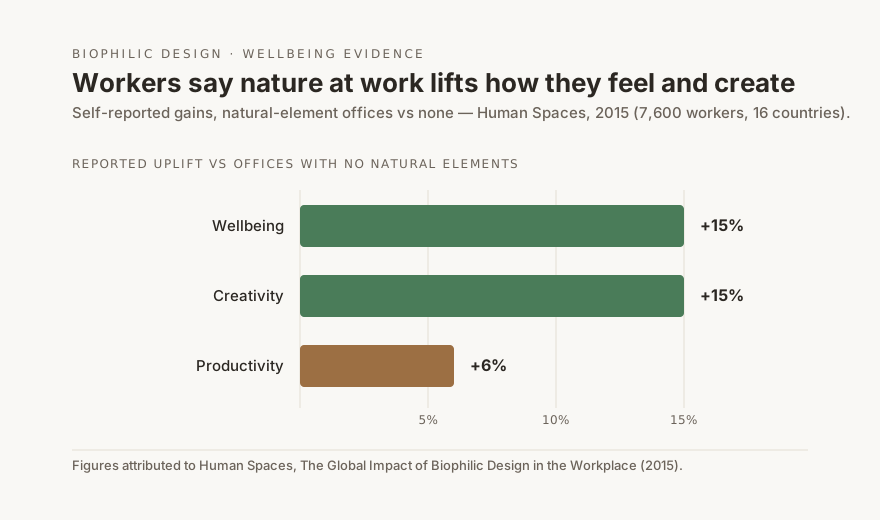
- Human Spaces (2015), a global report surveying 7,600 office workers across 16 countries, found that those in environments with natural elements such as greenery and sunlight reported 15% higher wellbeing, 6% higher productivity, and 15% higher creativity than those in environments with none.
- Knight and Haslam (2010), published in the Journal of Experimental Psychology: Applied, found that "green" offices enriched with plants lifted productivity by up to 15% compared with lean, plant-free spaces, alongside higher concentration and workplace satisfaction.
- Ulrich (1984) remains the canonical demonstration that nature views shorten hospital recovery and reduce analgesic use — evidence routinely cited in workplace and healthcare design briefs.
These figures are attributable to specific studies and should be cited as such rather than rounded into a single sweeping claim. The consistent direction across them — better mood, sharper cognition, lower stress — is what makes biophilic design a credible wellbeing investment, and increasingly a point of evidence under standards like the WELL v2 nourishment feature set and WELL's Mind concept.
What are the patterns of biophilic design?
The patterns of biophilic design are a structured framework for putting the concept into practice, most authoritatively codified by Terrapin Bright Green as the 14 Patterns of Biophilic Design. Terrapin organizes the patterns into three groups — Nature in the Space (direct contact with living systems), Natural Analogues (representations and materials evoking nature), and Nature of the Space (spatial configurations the brain reads as natural habitat). The table below maps each pattern to a concrete workplace application so design and facilities teams can translate theory into a brief.
| Biophilic pattern (Terrapin) | Group | Workplace application |
|---|---|---|
| Visual Connection with Nature | Nature in the Space | Sightlines to greenery, plantings, or an on-site farm from work areas |
| Non-Visual Connection with Nature | Nature in the Space | Natural sounds, scents of herbs or soil, tactile natural materials |
| Non-Rhythmic Sensory Stimuli | Nature in the Space | Movement of foliage, dappled light, occasional birdsong near terraces |
| Thermal & Airflow Variability | Nature in the Space | Operable windows, fresh-air zones, subtle temperature variation |
| Presence of Water | Nature in the Space | Water features, irrigation elements, visible rainwater systems |
| Dynamic & Diffuse Light | Nature in the Space | Daylight harvesting, circadian lighting, glare-controlled perimeters |
| Connection with Natural Systems | Nature in the Space | Visible seasonal change — a farm that flowers, fruits, and is harvested |
| Biomorphic Forms & Patterns | Natural Analogues | Organic shapes in furniture, ceilings, and wayfinding |
| Material Connection with Nature | Natural Analogues | Real wood, stone, and natural-fiber finishes over synthetics |
| Complexity & Order | Natural Analogues | Layered, fractal-like patterns in textiles and façades |
| Prospect | Nature of the Space | Open views across the floorplate and to the outdoors |
| Refuge | Nature of the Space | Sheltered, enclosed nooks for focus and restoration |
| Mystery | Nature of the Space | Curved paths and partial reveals that invite movement |
| Risk/Peril | Nature of the Space | Controlled exhilaration — glass floors, height with safety |
Most workplaces will not deploy all fourteen, and they shouldn't try. The practical approach is to choose a handful that suit the building's constraints and occupant needs, then implement them well enough to be felt and documented. Patterns in the Nature in the Space group — direct contact with living systems — tend to deliver the strongest occupant response, which is where an on-site farm becomes uniquely valuable.
How does an on-site farm count as active biophilic engagement?
An on-site farm is the most active form of biophilic engagement available to a workplace because it converts passive nature contact into direct, hands-on participation with living systems. Where a planter offers a Visual Connection with Nature, a working farm delivers that plus Connection with Natural Systems — the pattern Terrapin describes as awareness of seasonal and temporal change — and Non-Visual Connection with Nature through the scent of herbs, the feel of soil, and the act of harvesting. Few interventions satisfy this many patterns at once.
This active engagement is also what makes a farm count toward certification rather than reading as decoration. WELL's Mind concept rewards nature contact and restorative design through dedicated Biophilia features (Feature 88, Biophilia I, and Feature 100, Biophilia II), and an operating farm produces exactly the kind of implemented, occupant-accessible nature program those features credit. The same installation generates fresh produce, workshops, and harvest sessions — engagement that an annual desk-plant refresh cannot match. Understanding how on-site urban farms work operationally is the first step to mapping a single program onto multiple biophilic patterns and certification features.
Across Microhabitat's installations in North America and Europe, the occupant response to a hands-on farm consistently exceeds that of static greenery, because people return to a space they can tend, harvest, and watch change through the seasons. That sustained engagement is the difference between a one-time design feature and a living amenity occupants use.
How do you build a biophilic design workplace, step by step?
Build a biophilic design workplace by following a sequence — audit, prioritize patterns, layer interventions from passive to active, and document the result — rather than buying plants and hoping for an effect. The most effective programs are deliberate about which patterns they pursue and how they will be measured. Use these numbered steps as a working method:
- Audit the baseline. Map daylight, views, existing greenery, and material finishes across the floorplate. Identify where occupants sit relative to windows and what they can see.
- Prioritize a handful of patterns. Select from the 14 patterns based on the building's constraints and your wellbeing or ESG goals — typically a mix of daylight (Dynamic & Diffuse Light), views and planting (Visual Connection with Nature), and natural materials (Material Connection with Nature).
- Layer from passive to active. Start with views, daylight, and natural finishes; add planting at scale; then introduce a direct-engagement element — an on-site farm, terrace, or interior growing system — for the strongest Connection with Natural Systems.
- Tie it to a framework. Align the interventions to WELL's Mind and Nourishment concepts, or to your ESG reporting, so the work produces credit and documentation, not just ambiance.
- Measure and document. Capture occupant surveys, participation in farm or greenery programming, and date-stamped evidence — the same artifacts that support certification and a leasing narrative.
The business case strengthens when biophilic design is framed beyond wellbeing alone. The same daylight, greenery, and active farm amenity that lift occupant satisfaction also support tenant attraction and asset positioning — our analysis of do urban farms increase property value covers how these interventions translate into leasing and valuation outcomes. For the authoritative pattern definitions and the underlying research, consult Terrapin Bright Green's 14 Patterns of Biophilic Design and the International WELL Building Institute's Mind concept directly before finalizing your design brief.
Ready to bring active biophilic design to your workplace with an on-site farm? Book an ESG consultation with Microhabitat to scope a program built for occupant wellbeing and your certification goals.