Urban Farming: The Complete Guide
Urban farming explained: what it is, how rooftop and on-site farms work, the benefits for buildings and cities, and where to start — the complete guide.
Quick answer: Urban farming is the practice of growing food inside cities — on rooftops, terraces, and unused built space — to supply fresh produce close to where people live and work. For buildings, urban farming adds green space, tenant amenity, biodiversity, and measurable sustainability value, delivered as a turnkey managed service rather than a tenant responsibility.
Urban farming has moved from a fringe idea to a mainstream strategy for commercial real estate, corporate workplaces, and city planners alike. This guide is the hub: it defines what urban farming is, breaks down the main farm types, explains the benefits for buildings and tenants, walks through how a managed on-site farm actually operates, and connects each topic to a deeper resource. Whether you manage a property portfolio, lead a sustainability program, or are simply curious how food can grow eleven stories above a parking lot, start here.
Use the jump links below to navigate:
- What is urban farming?
- What are the types of urban farms?
- What are the benefits of urban farming for buildings, tenants, and cities?
- How does a managed urban farm service work?
- How does urban farming support sustainability reporting?
- How do I find an urban farm for my building?
What is urban farming?
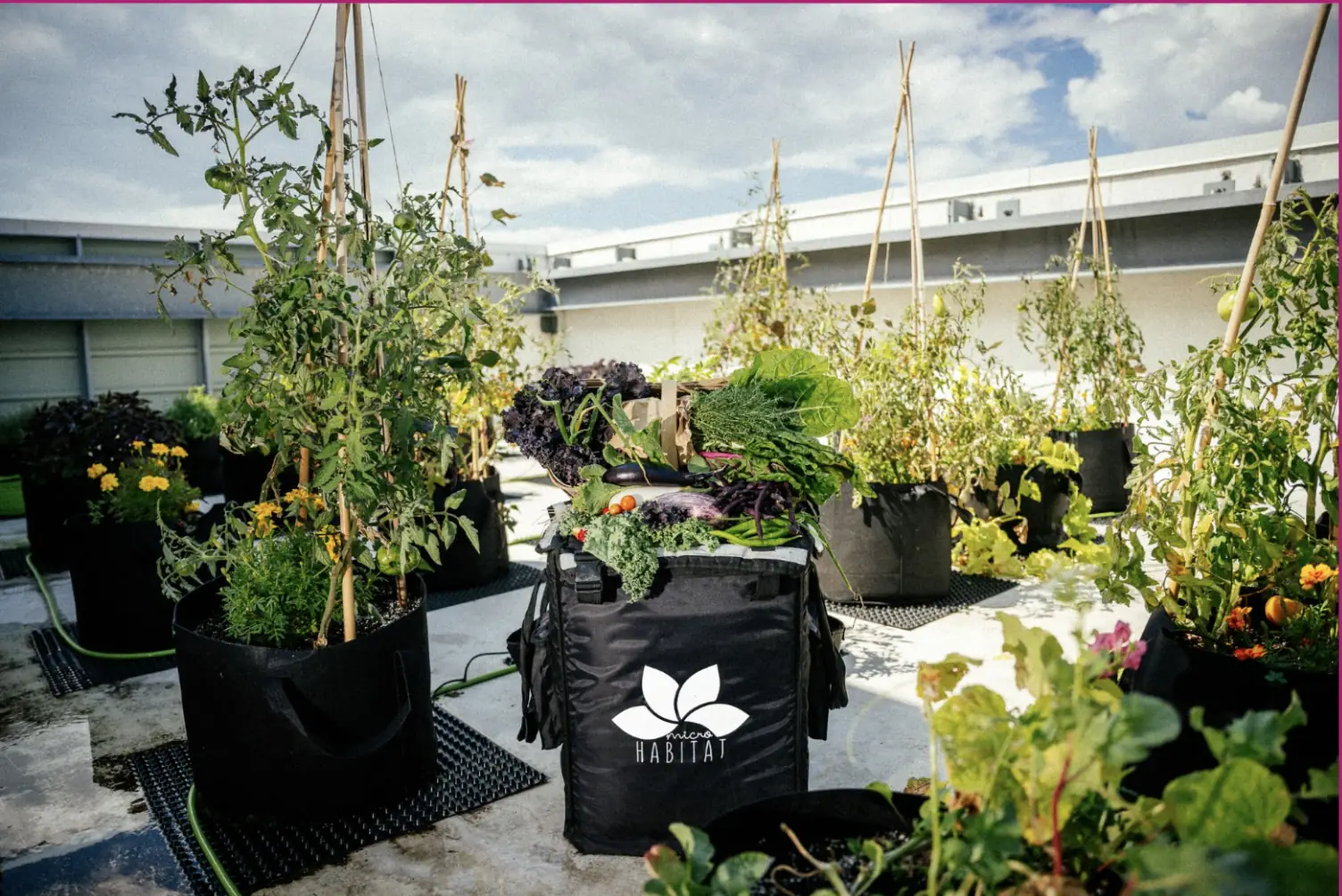
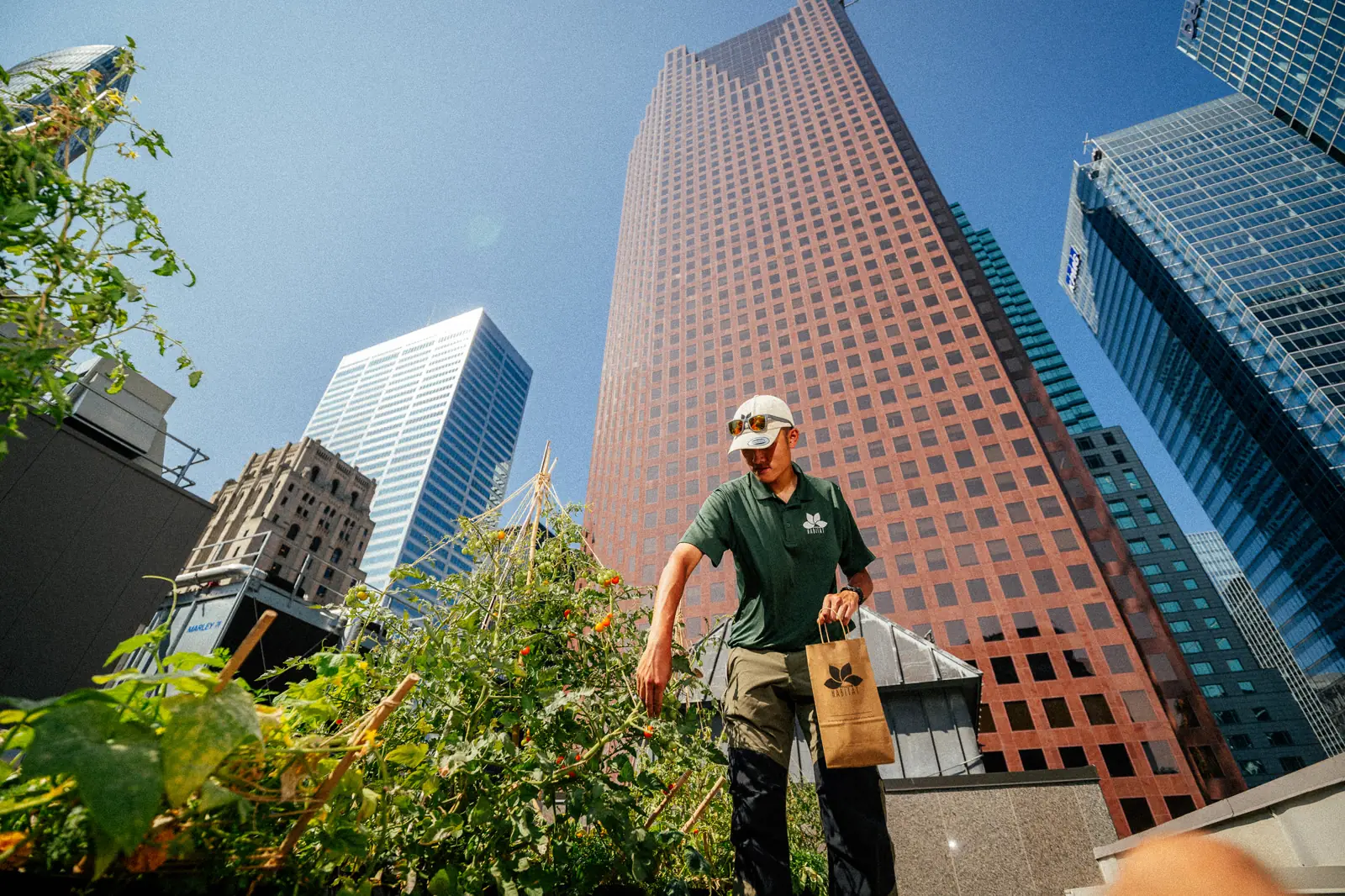
Urban farming is the cultivation, processing, and distribution of food within and around cities, using spaces such as rooftops, terraces, courtyards, balconies, and repurposed indoor areas. It differs from rural agriculture mainly in scale, location, and integration: instead of open fields, urban farms work within the built environment, often on surfaces that would otherwise sit empty. The goal is to produce fresh food close to consumption — shortening supply chains and bringing nature back into dense neighborhoods.
The terms can blur, so it helps to separate them. Urban agriculture is the broad umbrella covering all food production in cities, from backyard plots to commercial operations. Urban farming typically refers to the more intentional, productive end of that spectrum — managed growing with consistent yields. Rooftop farming is urban farming specifically on building roofs, and vertical farming stacks growing layers to maximize output per square foot, often indoors. A useful framing for property owners is the distinction between an urban farm versus a community garden: a community garden is volunteer-run and recreational, while a managed urban farm is a professionally operated amenity with predictable results and clear accountability.
The U.S. Department of Agriculture, through its Office of Urban Agriculture and Innovative Production, formally recognizes urban agriculture as a category worth dedicated programs, grants, and research — a signal of how seriously food-in-cities is now taken at the policy level. Globally, the Food and Agriculture Organization of the United Nations runs a Food for the Cities Programme precisely because cities now consume the majority of the world's food and are central to building resilient food systems.
What are the types of urban farms?
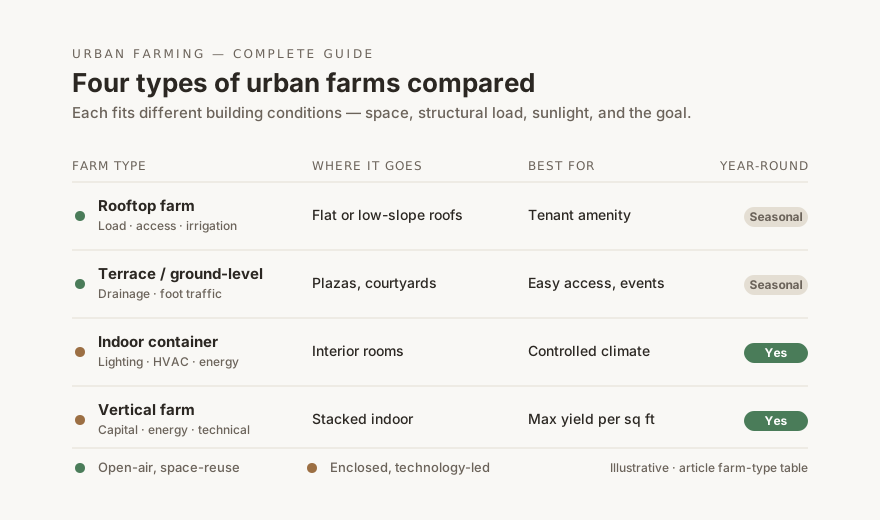
The main types of urban farms are rooftop farms, terrace and ground-level farms, indoor container farms, and vertical farms — each suited to different building conditions, climates, and goals. Choosing among them comes down to available space, structural load capacity, sunlight, budget, and what you want the farm to deliver: tenant amenity, maximum yield, year-round production, or visible green space.
Here is how the core types compare:
| Farm type | Where it goes | Best for | Key considerations |
|---|---|---|---|
| Rooftop farm | Flat or low-slope building roofs | Tenant amenity, biodiversity, visible green space, sustainability credentials | Roof load capacity, access, irrigation, sun exposure |
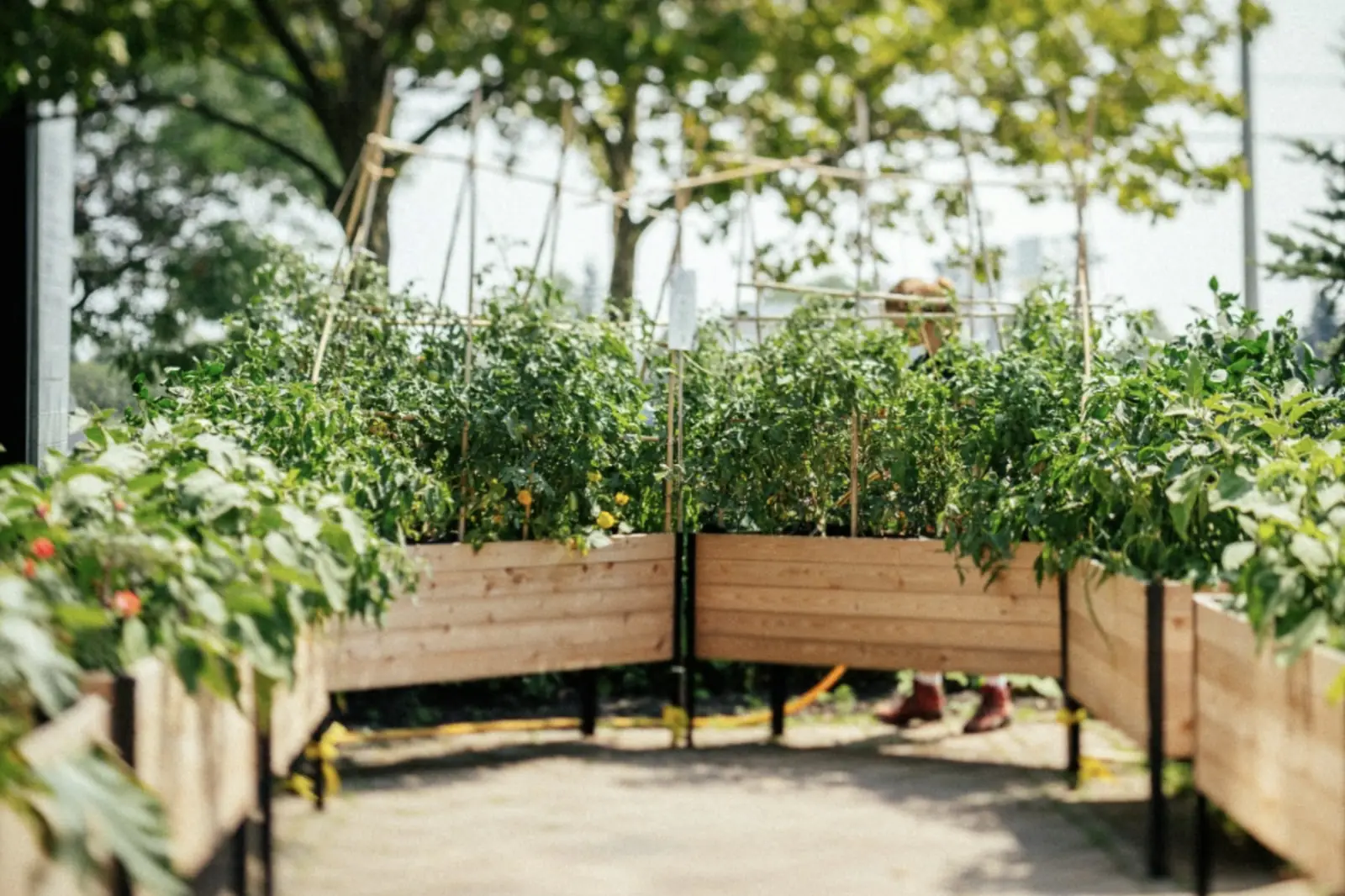
| Terrace / ground-level farm | Plazas, courtyards, unused grounds, setbacks | Easy access, events, larger footprints | Soil or container quality, foot traffic, drainage |
| Indoor container farm | Interior rooms, basements, shipping containers | Year-round growing, controlled climate, leafy greens & herbs | Lighting and energy use, HVAC, upfront equipment cost |
| Vertical farm | Indoor stacked systems or wall-mounted growing | Maximum yield per square foot, dense city sites | Capital intensity, energy demand, technical operation |
Most commercial properties start with rooftop or terrace farms because they use space that already exists, require no specialized building, and produce a striking, visible amenity that tenants and visitors immediately understand. Indoor and vertical systems shine where land is scarce, climate is harsh, or consistent year-round supply matters more than open-air green space. The right answer is rarely "the most advanced technology" — it is the type that fits your building, your climate, and the experience you want to create.
What are the benefits of urban farming?
The benefits of urban farming span three audiences — buildings, the people who use them, and the surrounding city — making it one of the few amenities that delivers environmental, social, and commercial value at once. For a property, that combination is what turns an underused roof into a strategic asset rather than a maintenance line item.
For buildings and owners, urban farming converts dead space into a differentiating amenity. It supports green-building certifications, contributes to biodiversity and stormwater goals, and can strengthen leasing and tenant-retention conversations. Owners frequently ask whether urban farms are profitable — the honest answer is that the return shows up less as direct produce sales and more as tenant attraction, brand value, certification points, and reduced turnover, which is why the model is usually framed around total value rather than a vegetable-stand P&L.
For tenants and employees, an on-site farm is a tangible wellness and engagement perk. It provides fresh produce, hands-on workshops, harvest events, and a calm green space in the workday — exactly the kind of biophilic, nature-forward feature that research consistently links to wellbeing and satisfaction. It is a benefit people can see, touch, and taste, which makes it unusually memorable compared with abstract sustainability commitments.
For cities, urban farming adds green infrastructure that helps manage stormwater, cool urban heat islands, and support pollinators. The U.S. Environmental Protection Agency describes green infrastructure — including green roofs and vegetated spaces — as a cost-effective way to manage wet weather and deliver community benefits, and productive rooftop farms are a working example. Multiply a single farm across a district and the cumulative effect on biodiversity, local food access, and climate resilience becomes meaningful. Across Microhabitat's installations in North America and Europe, this three-way payoff — building, people, and city — is the consistent reason properties keep their farms year after year.
How does a managed urban farm service work?
A managed urban farm service handles the entire lifecycle — design, build, planting, weekly maintenance, harvest, and tenant programming — so the property owner gets the amenity without taking on the agricultural work. This turnkey model is the key difference between a professional urban farm and a DIY planter project: the building provides the space, and a specialized operator provides the expertise, labor, and accountability.
A typical engagement follows clear stages:
- Site assessment. The operator evaluates the roof or grounds for load capacity, sun exposure, water access, and safe entry, then confirms what is feasible.
- Design and proposal. A layout is designed around the building's conditions and goals — amenity, yield, certifications — with a defined scope and seasonal plan.
- Installation. Growing beds, containers, irrigation, and pathways are installed, turning the space into a working farm without structural disruption.
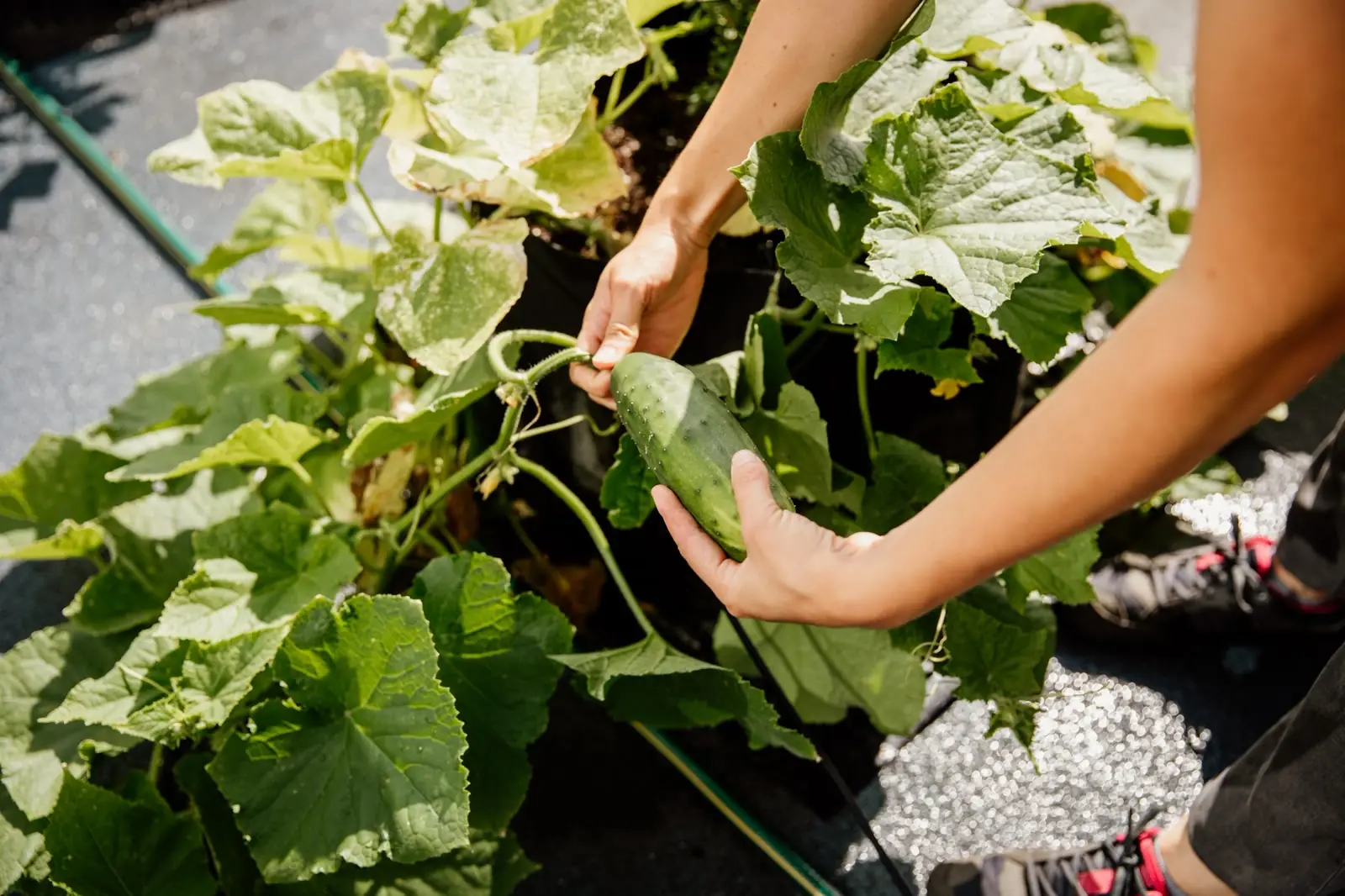
- Ongoing maintenance. Trained urban farmers visit on a regular schedule to plant, tend, water, monitor, and harvest, so the farm always looks and performs its best.
- Harvest and programming. Produce is distributed to tenants, donated, or used on-site, and the operator runs workshops, tastings, and harvest events that bring people to the space.
- Reporting. The operator tracks outcomes — what was grown, harvested, and donated — giving the owner data to share with tenants, leadership, and sustainability teams.
This service model also creates real green careers, from agronomists to seasonal field staff; if that side interests you, see the guide to urban farming jobs. Because the operator owns the day-to-day work, the building's facilities team is never asked to become farmers — they simply gain a managed, professionally run amenity on a surface that used to do nothing.
How does urban farming support sustainability reporting?
Urban farming supports sustainability reporting by producing nature-positive, social, and environmental outcomes that map directly onto recognized green-building and ESG frameworks. An on-site farm is not just a feel-good feature — it generates documentable contributions to biodiversity, community wellbeing, stormwater management, and tenant engagement that property teams can cite in disclosures and certification submissions.
Concretely, a managed urban farm can contribute to credits and indicators across systems such as LEED, BREEAM, WELL, and BOMA BEST, and it strengthens the narrative behind frameworks like GRESB sustainability reporting, where real-estate portfolios are scored on environmental and social performance. The farm provides exactly the kind of verifiable, on-the-ground initiative these frameworks reward: a physical intervention with measurable inputs (space converted, species supported, produce grown) and social outputs (events held, tenants engaged, food donated). For deeper, framework-by-framework detail on how on-site farming earns points and supports disclosure, our ESG and green-building cluster breaks each standard down individually.
The credibility matters because reporting frameworks increasingly demand evidence, not intentions. The USDA's National Agricultural Library urban agriculture resources reflect the growing research base behind urban food production, and that evidence base is what lets a property defend its claims. A farm that is measured, maintained, and reported on becomes a durable asset in an ESG story rather than a one-time press release.
How do I find an urban farm for my building?
To find an urban farm for your building, start by confirming where Microhabitat operates and what your site can support, then request a site assessment to turn an idea into a concrete plan. The first practical questions are simple: do you have a flat roof, terrace, or unused grounds; is there water and safe access; and what do you most want the farm to deliver — amenity, biodiversity, certification support, or all three?
From there, the path is straightforward. A site assessment confirms feasibility, a design tailors the farm to your building, and a managed service keeps it running so you capture the benefits without the workload. Many owners also want to understand budget early — our breakdown of how much a rooftop garden costs sets realistic expectations on installation and ongoing service before you commit. Cost scales with size, farm type, and ambition, but the model is designed to fit standard property budgets and to deliver value that compounds over multiple seasons.
Urban farming works best as a partnership: your space, an expert operator, and a shared goal of bringing food and green life into the city. If your property has an underused roof or ground floor, it likely has the makings of a productive farm — and the only way to know for sure is to look at the specifics of your site.
Go deeper by cluster: biophilic design in the workplace and ESG-aligned urban farming and certifications.
Ready to bring urban farming to your property? Find Microhabitat in your city and request a site assessment to see what your roof or grounds can grow.