On this page
From Stormwater Management to "Productive Sponges"
The central pillar of the Rain City strategy is the "Sponge City" concept, which aims to capture and clean 90% of rainfall to prevent urban flooding.
Part of our guide: Commercial Real Estate.
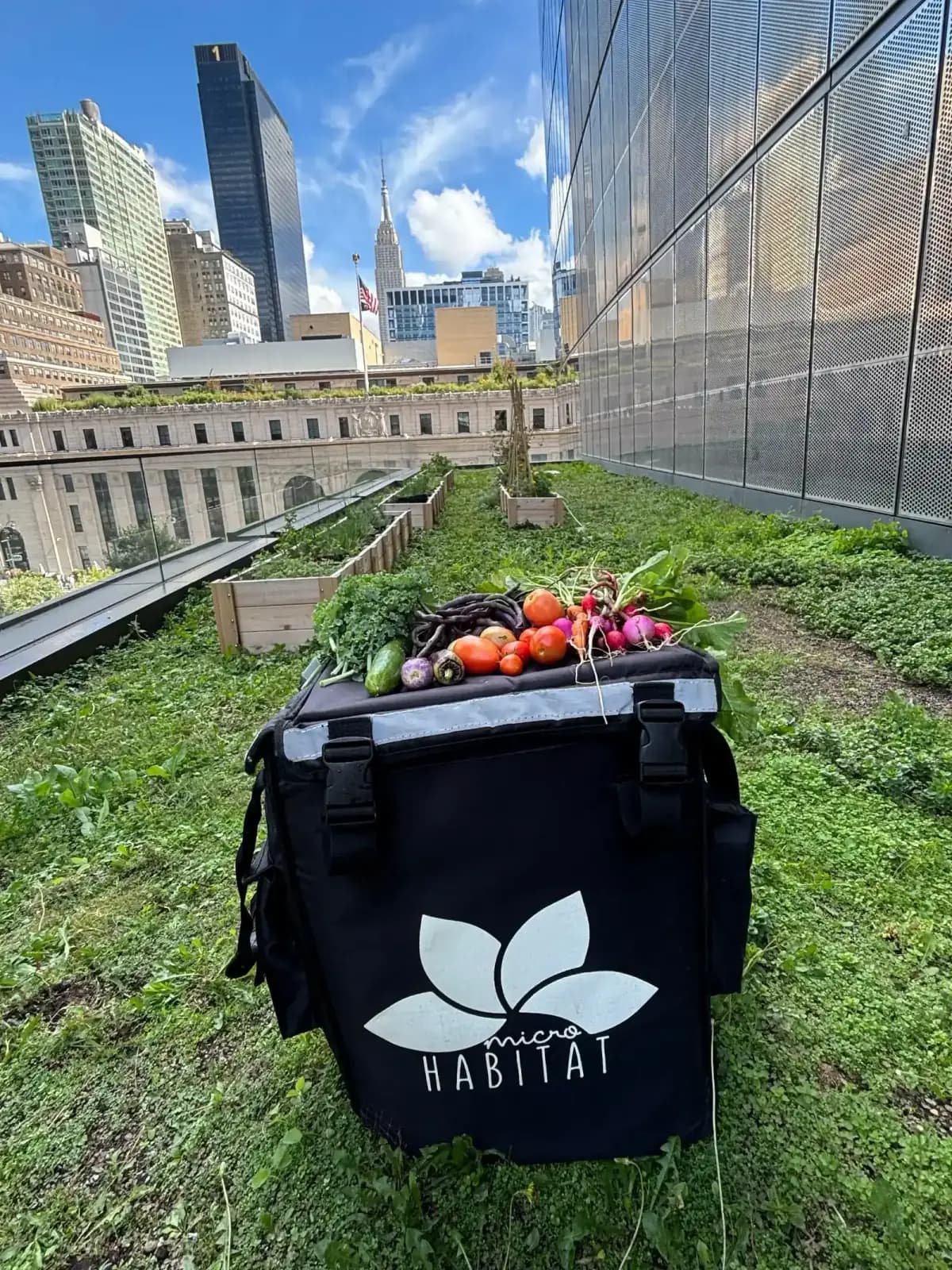
How MicroHabitat Fits: We transform a passive drainage layer into a high-performance "productive sponge." Our urban farming modules utilize deeper, nutrient-dense organic growing mediums that retain significant water. By choosing MicroHabitat, a building doesn’t just "manage" stormwater; it redirects that resource into the production of thousands of pounds of fresh food. We turn a city utility into a tangible yield, effectively closing the loop on urban water cycles.
Solving the Structural "Weight vs. Yield" Paradox
One of the primary technical hurdles mentioned in the Vancouver guide is the structural load. For many existing buildings, the "intensive" green roofs required for vegetable gardening are simply too heavy, requiring prohibitive structural reinforcements.
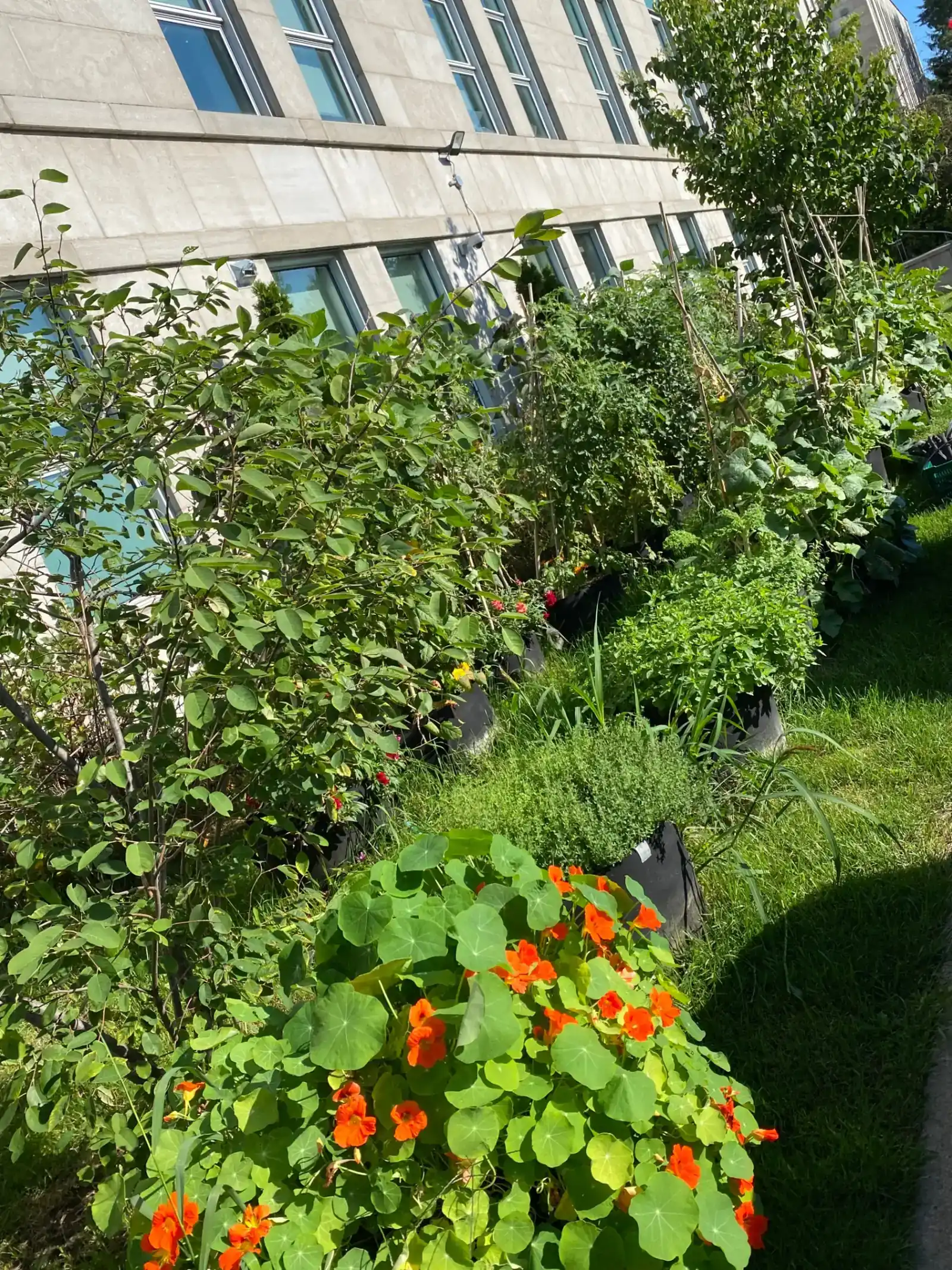
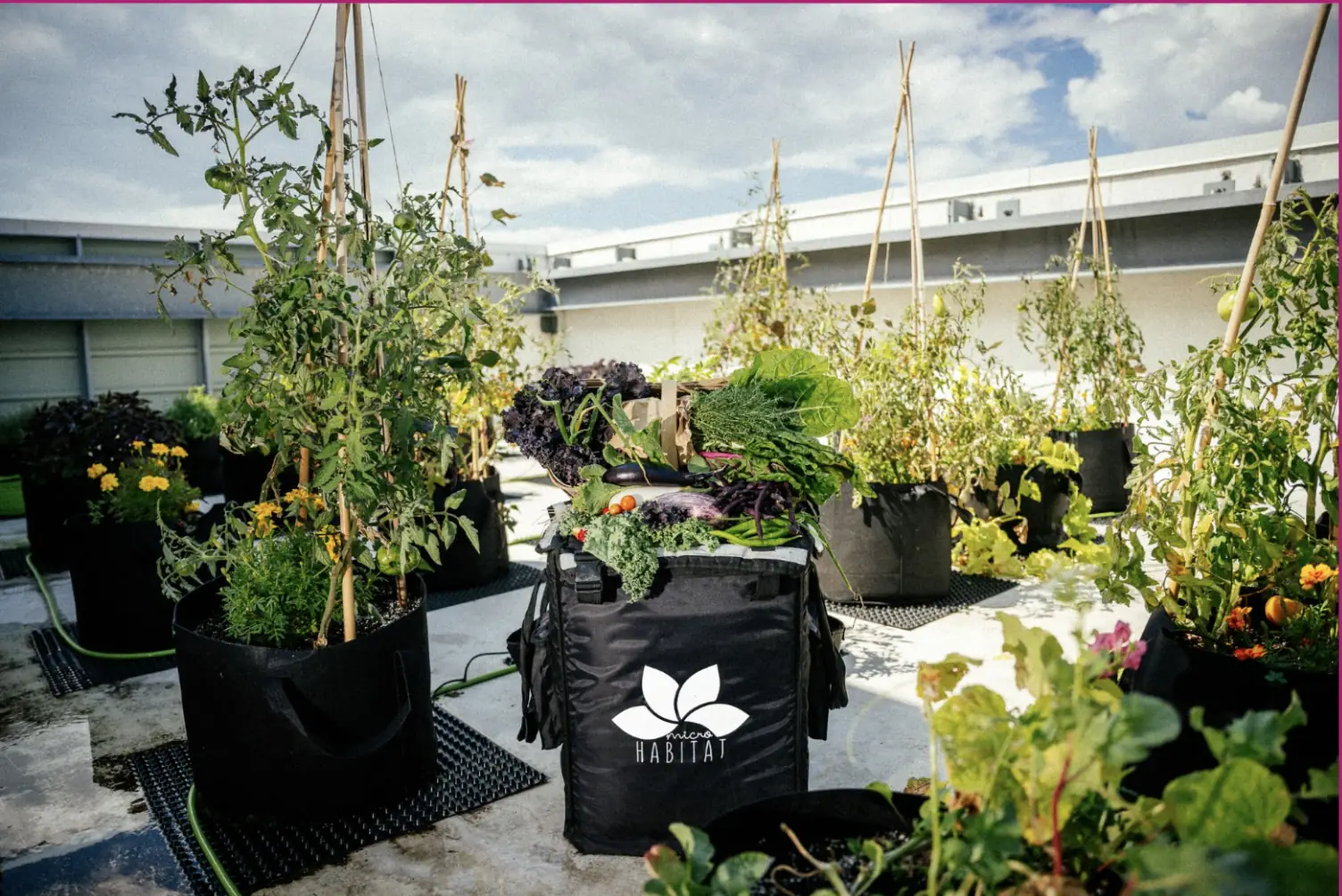
How MicroHabitat Fits: MicroHabitat is the global leader in modular, lightweight agricultural technology. Our proprietary geotextile containers and aerated soil blends are engineered to provide the root depth necessary for complex crops—like heirloom tomatoes, kale, and peppers—at a fraction of the weight of traditional landscaping. We have engineered out the "weight barrier," making the global standard of rooftop farming accessible to buildings that were previously told it wasn’t possible.
Elevating Biodiversity Beyond "Green Space"
The Rain City guide emphasizes the creation of "stepping stone" habitats—a network of rooftops that allow birds, bees, and butterflies to navigate the urban core.
How MicroHabitat Fits: We don’t just plant greenery; we cultivate diverse, seasonal agro-ecosystems. By rotating crops and strategically planting melliferous (pollinator-friendly) flowers, we create high-density refueling stations for urban pollinators. We work with local ecosystems, allowing them to define our planting varieties. We use species that are naturally adapted to the growing conditions found on exposed rooftops to maximize biodiversity and provide high-impact ecosystem services tailored to the specific urban landscape.
Professionalizing the "Lifecycle" of the Roof
A recurring theme in global best practices is that a green roof is only as effective as its maintenance plan. Without expert care, irrigation systems fail, invasive species take over, and the environmental benefits (like the "Urban Heat Island" cooling effect) disappear.
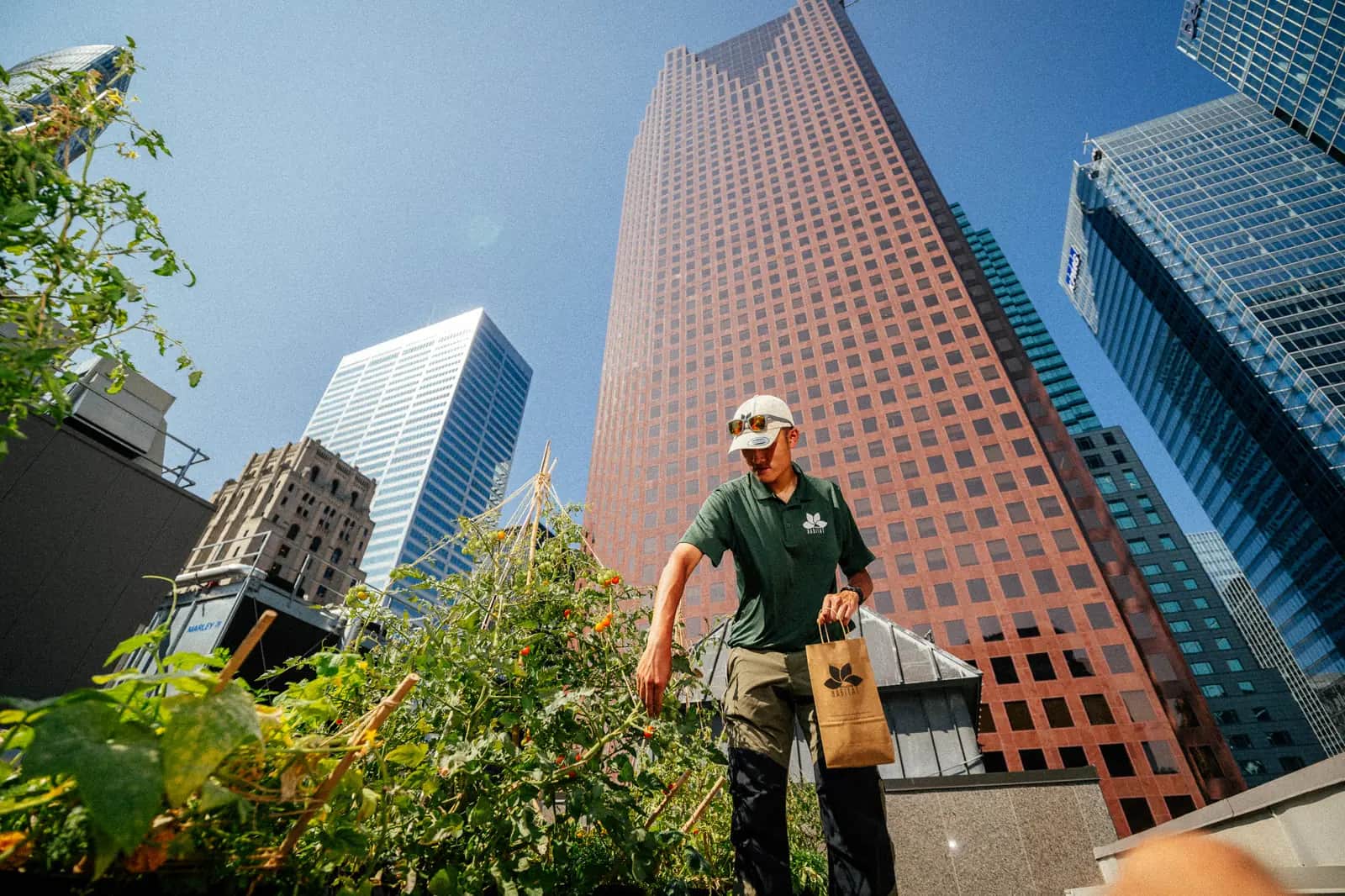
How MicroHabitat Fits: MicroHabitat provides the operational "missing link." We are a full-service, turn-key partner. Our professional Urban Farmers are on-site, managing every technical aspect from irrigation calibration to soil health monitoring. We take the "Best Practice" off the page and put it into the hands of experts, ensuring that your roof performs at its peak environmental capacity for decades, not just seasons.
Integrating the Social Pillar: Urban Solidarity
The City’s guide discusses the human element, emphasizing how green infrastructure can offer learning opportunities and foster a connection between people and nature. The Vancouver guide also touches on food security, but few companies have the infrastructure to deliver on it.
How MicroHabitat Fits: This is where MicroHabitat stands alone as a global leader. We have built Urban Solidarity and education into our core operational DNA. Every degree of heat mitigated by our farms results in fresh, organic produce that is donated directly to local food banks. We educate the community on ecological urban farming, sharing our expertise and giving people resources and knowledge to grow nutrient-rich food at home. We transform the technical performance of your building into a powerful social narrative, proving that a "Best Practice" roof can feed a neighbourhood while building resilience in the city.
The Leading Partner for a Resilient Future
The Rain City guide outlines the "What" and the "Why" behind the buildings of tomorrow. MicroHabitat addresses the "Who" and provides the "How." We take the complex, technical requirements of the world’s most advanced urban policies and package them into a high-visibility, high-impact solution that requires zero heavy lifting from the property owner. For global organizations looking to lead in sustainability, MicroHabitat is the engine that transforms a policy requirement into a world-class landmark.
Ultimately, the global transition toward resilient, "sponge-like" cities requires more than just policy — it requires a proven, scalable engine of change. MicroHabitat is that engine. By bridging the gap between standards and the living heartbeat of urban agriculture, we offer the world’s most sophisticated turnkey solution. We aren’t just installing gardens; we are deploying high-performance ecological infrastructure that cools our climate, manages our water, feeds our citizens, and reduces food insecurity. From Montreal to Paris and beyond, MicroHabitat stands as the definitive global key to unlocking the untapped potential of our cities, transforming every vacant rooftop into a landmark of sustainability and a beacon of social solidarity.
Let’s build the future of our cities from the top down.