How to Market a Sustainable Building: Proof, Story, Content
How to market a sustainable building: gather proof, turn it into stories people can see, publish content that converts and avoid vague green claims.
Quick answer: How to market a sustainable building comes down to three steps, in this order. First, gather proof: certifications, ratings, measured data and third-party reports. Second, turn that proof into stories people can see, such as a rooftop farm, a harvest day or a donation to a local food bank. Third, publish those stories in the formats each audience already uses, from leasing brochures to short social video. Keep every claim specific and backed by evidence, because regulators in the United States, Canada and the European Union all warn against vague green claims.
Sustainability is now part of how buildings compete for tenants, and it gives a property marketing team two jobs at once: set the building apart, and make sure every green claim holds up when a tenant, a broker or a regulator asks for the evidence. This guide explains how to market a sustainable building step by step: the proof to collect, how to turn it into stories, the content formats and channels that suit each audience, and the claims to avoid. It is part of our complete guide to urban farms as a tenant amenity.
On this page: Proof first · What to gather · Stories · Formats and channels · Avoiding greenwashing · Measuring results
Why does marketing a sustainable building start with proof?
Green claims are easy to check, so the proof has to exist before the story does, or the story becomes a liability.
Tenants' sustainability teams, leasing brokers, lenders and investors can all ask for the documents behind a claim. A tour that mentions a certification invites the next question: which rating, which level, what year, what scope? A post that calls the building "green" invites a harder one: green compared with what?
That is also the opportunity. Proof is the one part of sustainability marketing a competitor cannot match with better copy. The order that works is proof first, then stories built on that proof, then content that carries those stories to each audience.
Sustainability marketing
Proof, then stories, then content
Each layer rests on the one before it. Skip a layer and the next one is exposed.
Step 1
Proof
- Answers
- Is it true?
- Examples
- Certifications and ratings, with level, year and scope
- Measured energy, water and waste data
- Third-party reports and benchmark results
- Dated operating records
- Who checks it
- Certifiers, auditors and investors
Step 2
Stories
- Answers
- Can people see it?
- Examples
- A rooftop farm through the season
- Planting and harvest days
- Donations to a local food bank
- The farmer and the tenants who take part
- Who checks it
- Tenants, visitors and brokers on a tour
Step 3
Content
- Answers
- Will the right people find it?
- Examples
- Leasing brochure and tour stop
- Tenant newsletter and event recaps
- Photo series and short video
- ESG reporting and case studies
- Who checks it
- Your audiences, and regulators once it is public
Proof answers "is it true?" Stories answer "can people see it?" Content answers "will the right people find it?" Skip the first layer and the other two are exposed. Skip the second and the proof sits in a PDF nobody opens.
What proof should you gather before you publish?
Gather anything a third party can verify: certifications and ratings, benchmark results, measured performance data, formal reports and dated operating records.
- Certifications and ratings. Record the rating system, level, version, year awarded and scope: the whole building, an interior fit-out or a single credit. A logo on its own is decoration. "Certified [system and level] in [year], covering [scope]" is proof.
- Benchmark results. Portfolio and fund results, such as a GRESB submission, with the reporting year attached.
- Measured performance. Energy, water and waste data from meters and utility bills, kept year over year so a trend can be shown rather than asserted.
- Third-party reports. Certification reports, verification letters and audits that would survive a reviewer's questions.
- Operating records for visible features. For an on-site farm, that means planting and harvest logs, donation records, workshop and event attendance, and dated photos.
Not sure which ratings matter for your asset? Start with which certification frameworks apply to your building, then check what an audit-ready certification report contains before you quote from one.
One habit saves most of the rework: keep a single evidence file per building, with each claim you plan to make listed next to the document that supports it. Marketing, leasing and sustainability teams then work from the same source, and a claim with no document beside it does not get published.
How do you turn proof into stories people remember?
Pair each proven fact with something people can see, touch or take part in, and tell it through the people involved.
Many sustainability upgrades are invisible. A more efficient chiller can matter a great deal to operating costs, but it is hard to photograph and harder to show on a tour. Visible amenities give people something to look at and something to do, which is why they stand out among the office building amenities tenants actually use.
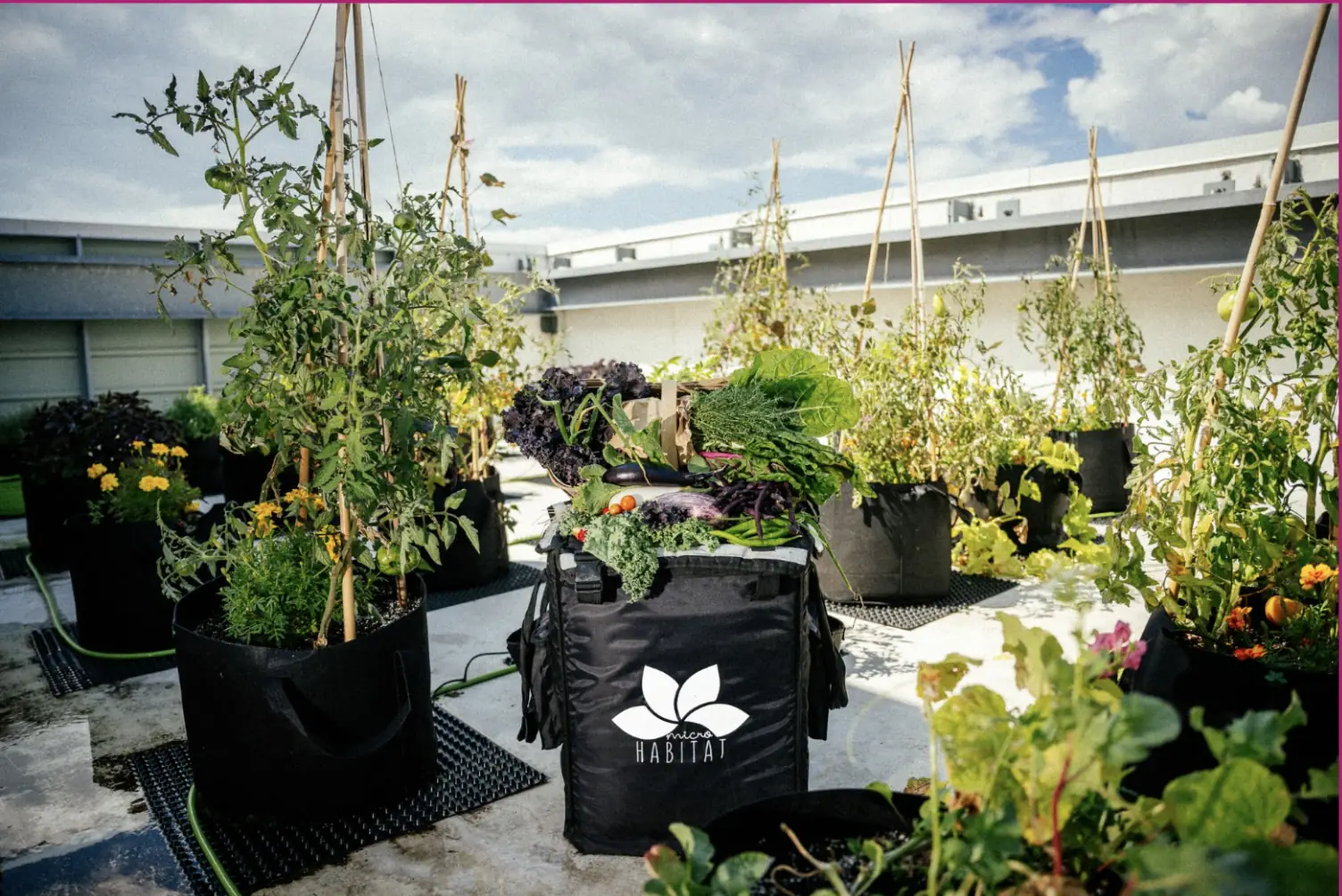
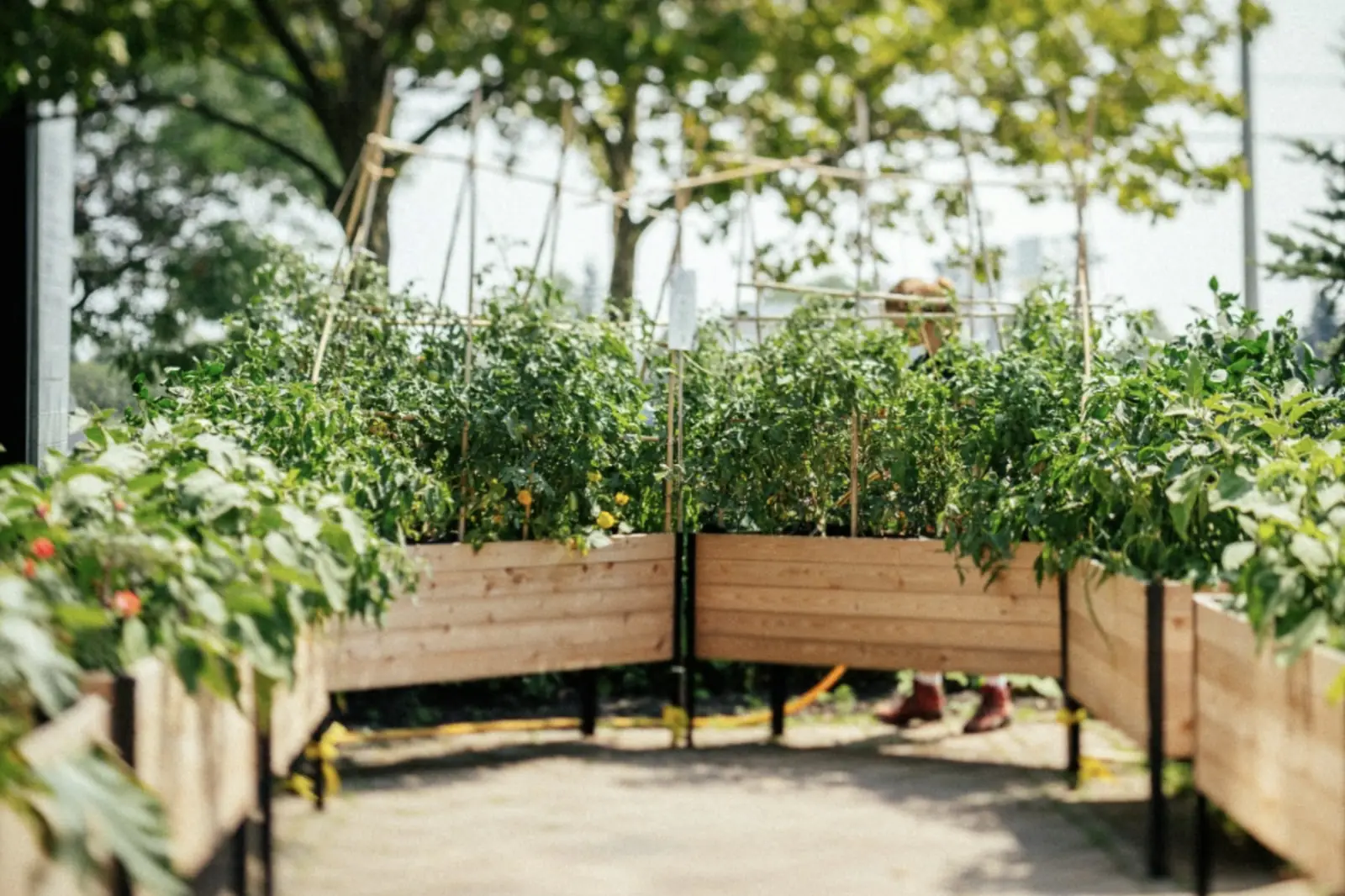
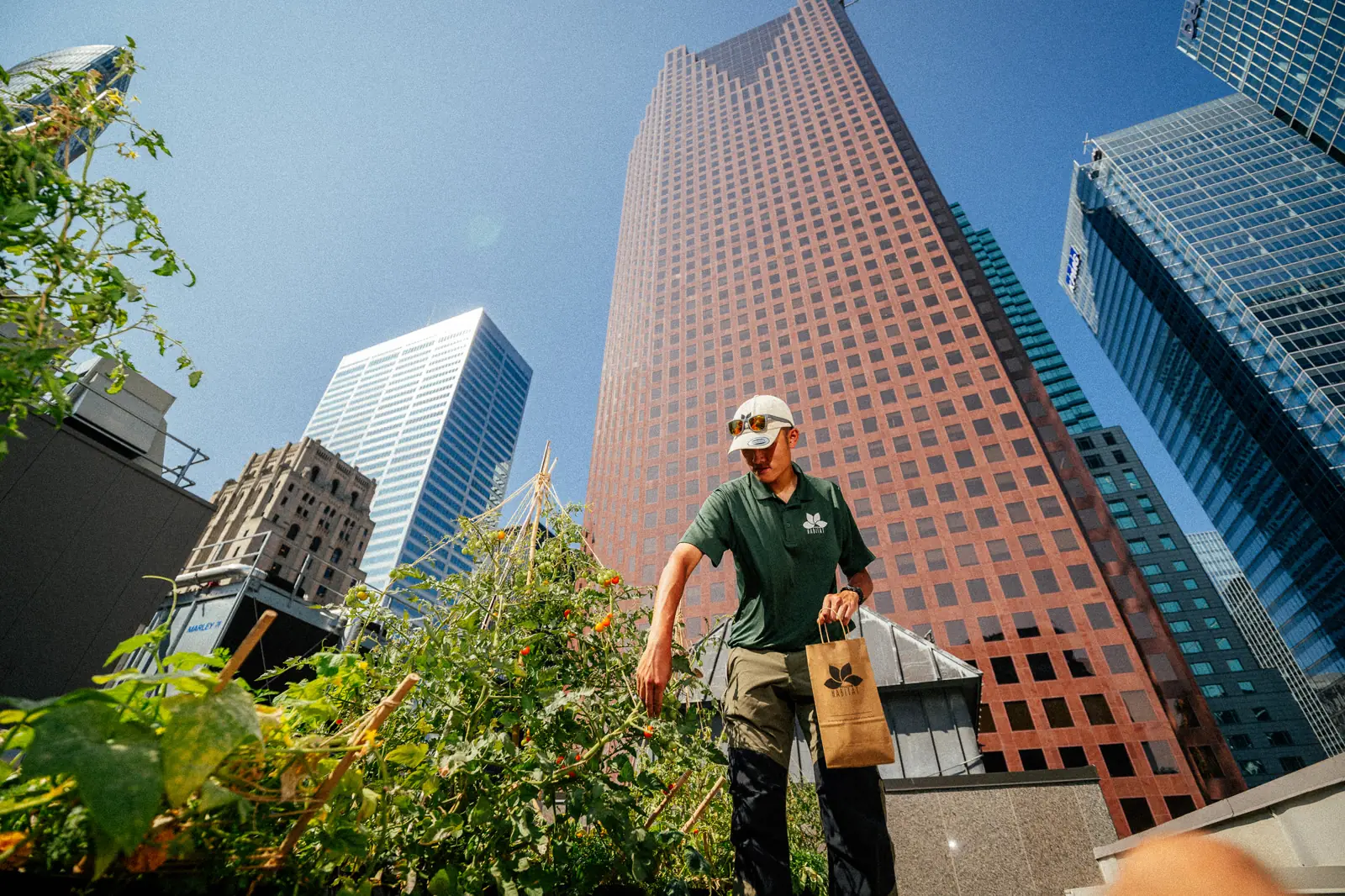
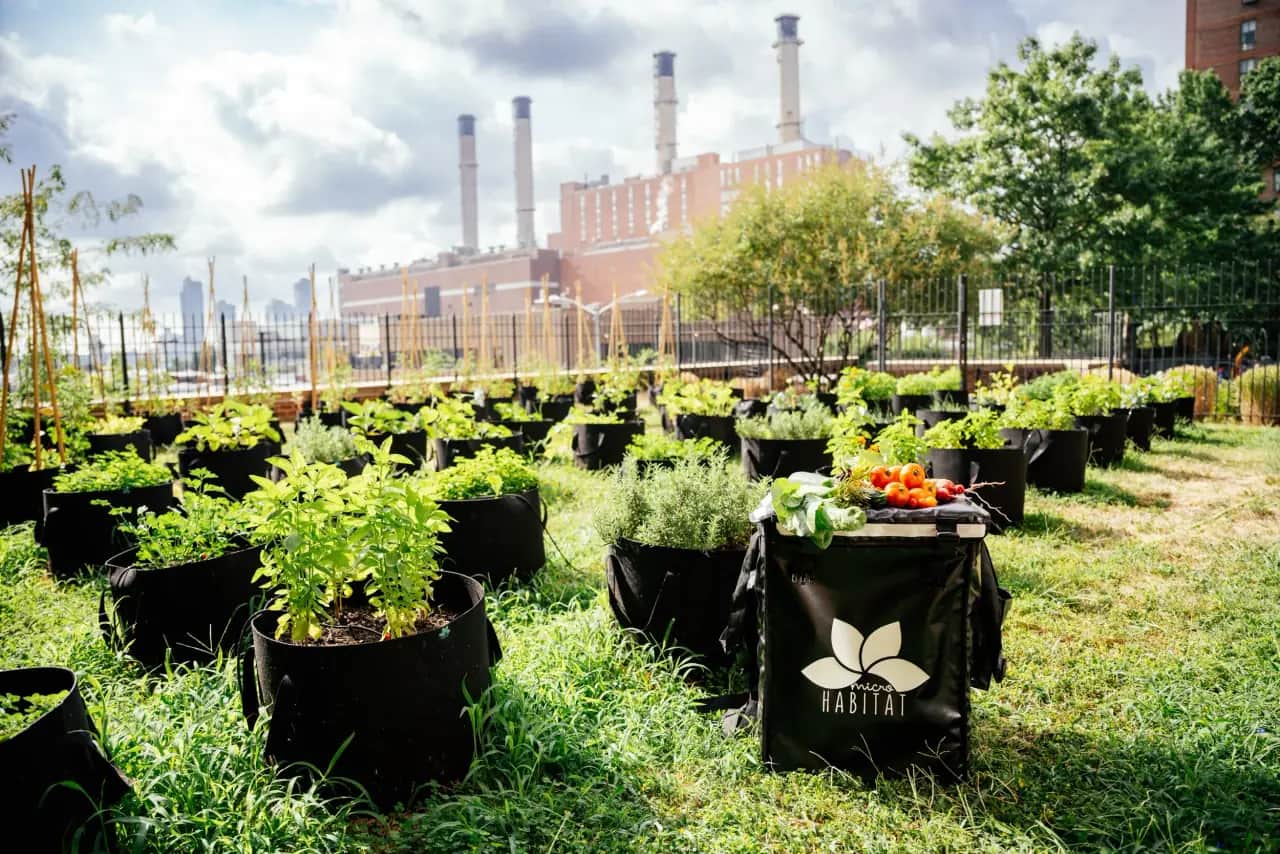
An on-site urban farm is a strong example because it keeps producing new material. It changes through the season, it involves real people, and it creates moments a building can share: the first planting, the first harvest, a lunchtime tour, a donation to a local food bank. MicroHabitat runs 250+ urban farms in 20+ cities across North America and Europe, and its harvests support 35+ partner food banks. A donation logged with its date and the food bank that received it is a story and a piece of proof at the same time.
A story that works in a leasing deck, a newsletter and a social post usually has three parts:
- A place. Where in the building it happens: the roof, the lobby, the courtyard.
- People. The farmer who runs the program, the tenants who joined in, the food bank that received the harvest.
- A result you can prove. The date, who took part, and what was planted, harvested or donated.
For more ways to create these moments, see our tenant engagement ideas for commercial properties and the season-by-season rooftop farm events calendar. For how a shared online platform keeps the program visible between events, read MyUrbanFarm and tenant engagement.
Which content formats and channels work best?
The formats that work best are the ones each audience already uses, so plan content by audience first and by channel second.
- Prospective tenants and brokers. A brochure page that states the proof in plain words, an amenity stop on every tour, and a one-page evidence summary a broker can forward.
- Current tenants. Newsletter items, lobby screens, event invitations, and a short recap with photos after each event.
- Social audiences. Photo series and short video in the growing season, and behind-the-scenes posts with the farmer. Use LinkedIn for occupiers, brokers and investors, and visual channels for the wider community.
- Investors and lenders. The ESG section of investor reporting, benchmark submissions, and a short case study with dates and scope.
- Press and industry awards. A case study built from the evidence file, with approved quotes and photos.
Plan the calendar around the season. A rooftop farm offers spring planting, summer harvests, autumn donations and winter planning, so every month has a natural reason to publish. Reuse is where the efficiency comes from: one harvest day can become a newsletter item, a social series, a tour talking point and a paragraph in the ESG report.
Content can support renewals as well as new leases: tenants who have watched the program run all season have something concrete to point to when renewal talks begin. Our guide to tenant retention strategies for commercial real estate covers that side.
How do you avoid greenwashing claims?
Avoid vague claims, say exactly what a certification covers, and publish a claim only once you hold the evidence for it.
In the United States, the Federal Trade Commission's Green Guides advise marketers not to make unqualified general environmental benefit claims, because such claims are hard to interpret and almost impossible to substantiate. Using a certifier's name or seal can count as an endorsement, a seal should convey the basis for the certification, and third-party certification does not remove the marketer's own duty to back up the claim. The Guides also cover business-to-business marketing, so leasing materials are in scope.
In Canada, the Competition Bureau's guidance on environmental claims and the Competition Act, published in June 2025, reads like a checklist: be truthful, test performance claims properly, be specific in comparisons, avoid exaggeration, be clear rather than vague, and back claims about the future with a clear plan. A March 2026 amendment removed the requirement that claims be supported by an internationally recognized methodology, but false or misleading claims made to promote a product or business interest are still prohibited.
In the European Union, Directive (EU) 2024/825 requires EU countries to apply its rules from 27 September 2026. It bans generic environmental claims such as "eco-friendly" or "green" unless the trader can demonstrate recognised excellent environmental performance, and it bans sustainability labels that are not based on a certification scheme or set by a public authority. It covers marketing to consumers, not deals between businesses, so it applies most directly to homes let or sold to households. It is still a useful bar for any building that markets itself to the public.
Most risky claims can be rewritten into stronger ones:
| Claim type | Risky version | Stronger version | Evidence to keep |
|---|---|---|---|
| General benefit | "An eco-friendly building" | "Certified [system and level] in [year], covering the whole building" | Certificate and scorecard |
| Certification | A certification logo with no detail | The logo with the system, level, version, year and scope beside it | Certificate showing scope and date |
| Performance | "Low energy use" | "Energy use per square foot has fallen each year since [baseline year], based on metered data" | Meter or utility data and the method used |
| Amenity | "A farm-to-table building" | "An on-site rooftop farm that grows produce for tenant events and a local food bank" | Harvest logs and donation records |
| Future goal | "A net-zero building" | "Targeting [goal] by [year], with interim milestones published" | The written plan and progress against it |
| Comparison | "Greener than other buildings" | Name what is compared, against which buildings, on what data | The comparison data set |
One feature should never stand in for the whole building. This is general guidance, not legal advice: check a specific claim with counsel before it runs.
How do you know your marketing is converting?
Track the leasing and tenant actions your content is meant to cause, not only views and likes.
- Inquiries that mention sustainability or the amenity. Ask every new lead how they heard about the building and log the answer in your CRM.
- Tour-to-proposal rate. Compare tours that include the amenity stop with tours that do not.
- Evidence requests. Brokers and tenants asking for the evidence summary shows the proof is being used in real decisions.
- Tenant participation. Event sign-ups, attendance and repeat attendees across the season.
- Renewal conversations. Note when the program comes up in renewal talks, and what tenants say about it.
- Engagement from the right people. Saves, shares and clicks from occupiers, brokers and investors matter more than total reach.
Review these every quarter alongside the evidence file, and retire content that draws attention without moving anyone closer to a lease or a renewal. To weigh an amenity against the alternatives, see amenity ROI for commercial buildings.
Dig deeper: the complete guide to urban farms as a tenant amenity, how much more sustainable buildings earn, tenant engagement ideas, how urban farming helps build a sustainable brand, and what's in an audit-ready certification report.
For property teams, an on-site farm is a visible amenity with records behind it. See how MicroHabitat runs urban farming in commercial real estate.
Want a sustainability story your building can prove? Book a demo and we'll walk you through the records and content an on-site farm produces for your marketing team.