Rooftop Farm Events: A Season-by-Season Programming Calendar
Tenant event ideas for every month: a building event calendar around a rooftop farm, with who runs each event, what to budget and how to count attendance.
Quick answer: A rooftop farm gives a building a full year of tenant events that follow the growing season. In spring, introduce the farmer, launch MyUrbanFarm and hold a planting day. In summer, run a weekly harvest kiosk, lunchtime tours and a pollinator workshop. In fall, host a harvest festival, a food bank donation drive and a seed-saving workshop. In winter, move indoors: indoor-farm sessions, next-season planning and a winterization update. Put every date on one calendar, give each event a named owner, and count attendance the same way every time.
For property marketing and tenant experience teams, the hard part of a building event calendar is rarely the first event. It is the eighth one, in a quiet February, when the ideas have run out and half the budget is gone. A farm on the roof or in the lobby solves that in a way a lounge or a gym cannot, because it changes every few weeks on its own. This guide lays out a full year of tenant event ideas built around an urban farm as a tenant amenity, season by season. It then covers who runs each event, what to budget for, and how to show the program is working. For the formats themselves, see our educational activities.
On this page: Why a calendar · Spring · Summer · Fall · Winter · Staffing and budget · Measuring attendance
Programming calendar
Twelve months of rooftop farm events
Something on the calendar every month, following the growing season.
Spring
Mar
- Meet your farmer
Apr
- MyUrbanFarm launch
May
- Planting day
Summer
Jun
- Pollinator workshop
- Lunchtime tours
Jul
- Lunchtime tours
- Weekly harvest kiosk
Aug
- Lunchtime tours
- Weekly harvest kiosk
Fall
Sep
- Harvest festival
- Weekly harvest kiosk
Oct
- Food bank donation drive
Nov
- Seed-saving workshop
Winter
Dec
- Winterization update
- Indoor farm sessions
Jan
- Indoor farm sessions
Feb
- Next-season planning
- Indoor farm sessions
Why do building events need a calendar?
Building events need a calendar because a published schedule turns one-off gestures into a program tenants learn to expect, and that expectation is what brings people back. A single rooftop party earns a photo. Twelve months of events, announced in advance and repeated at the same times, earn a habit.
A calendar solves three practical problems as well. It spreads spending across the year instead of loading it all into a launch. It lets you book people early, which matters when your farmer, your caterer and your building operations team all have other commitments. And it shows gaps before they happen: a calendar with nothing between October and April is visible in September, while there is still time to fill it.
The growing season is the natural backbone. Crops set the pace — seedlings in spring, peak harvest in summer, the last pick and the cleanup in fall — so the farm gives you a reason to gather at every stage. MicroHabitat runs 250+ urban farms in 20+ cities. The calendar at the top of this guide assumes a cold-climate city in the Northern Hemisphere, where most outdoor farms rest over winter. In a milder city, move each event a few weeks earlier and stretch the harvest months.
What rooftop farm events work in spring?
Spring events work best when they introduce the farm and the people behind it: a meet-your-farmer session, the MyUrbanFarm launch, and a planting day.
- Farmer introduction. Early in spring, hold a short lobby or lunchtime session where the urban farmer assigned to the building explains what will grow this year, when the harvests come, and how tenants can take part. Putting a face to the farm makes it feel like the tenants' own.
- MyUrbanFarm launch. Every MicroHabitat client gets access to MyUrbanFarm, the platform that shows the farm's progress, harvest schedules and educational resources. Launch it a few weeks before planting day, with a QR code on lobby signage and a note in the tenant newsletter, so people have a reason to check in between events.
- Planting day. The first hands-in-the-soil event of the year, held in late spring once the risk of frost has passed. Tenants plant seedlings alongside the farmer and come back in summer to see what they started. Keep groups small and rotate them through short time slots so the roof never feels crowded.
Publish the whole calendar at the farmer introduction, not piece by piece, so tenants can plan around the summer tours and the fall festival.
What rooftop farm events work in summer?
Summer events should be short, frequent and easy to join: a weekly harvest kiosk, lunchtime farm tours, and a pollinator workshop timed to Pollinator Week.
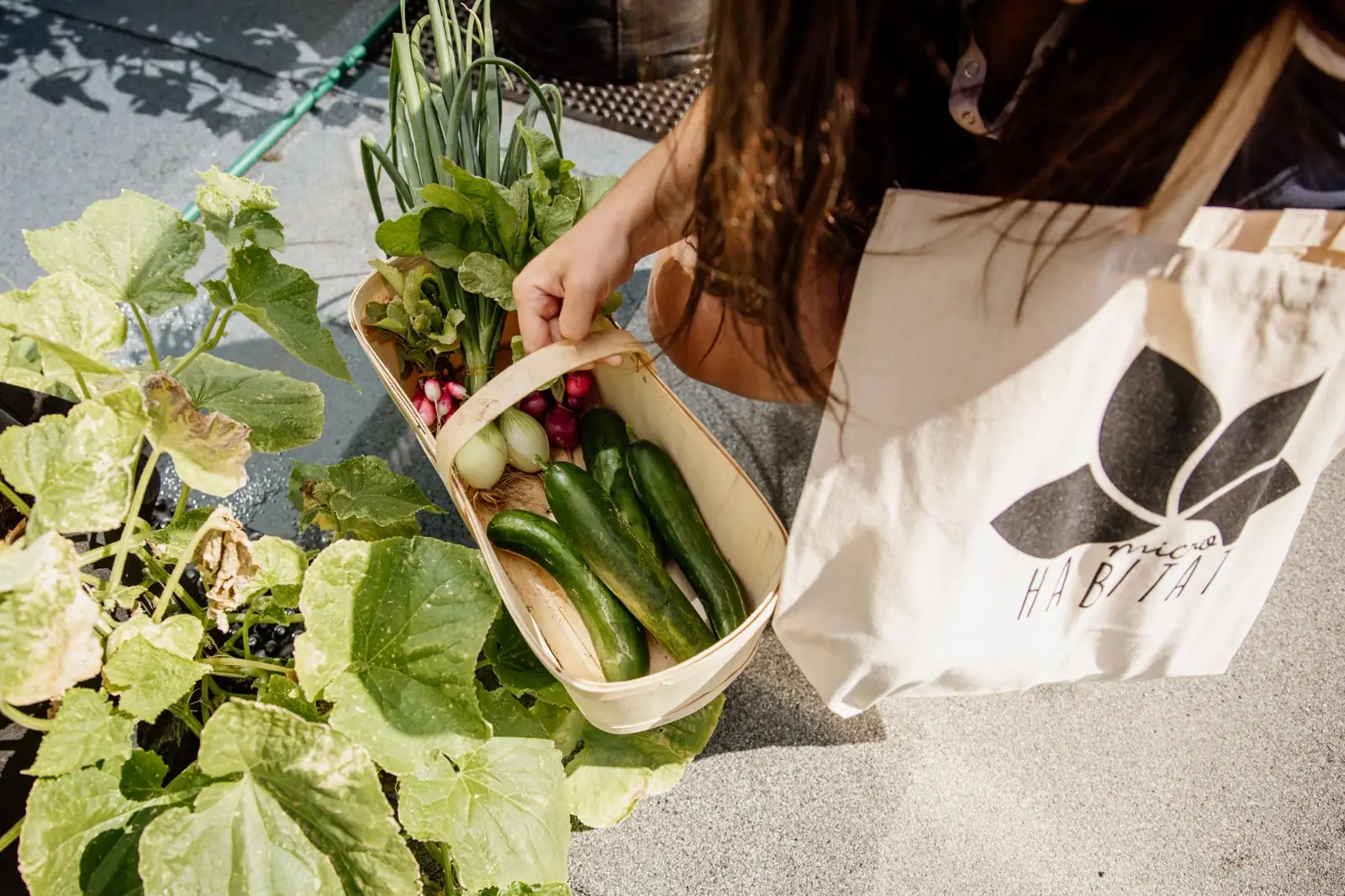
- Weekly harvest kiosk. A table in the lobby with the week's harvest and a few recipe cards. Time it to the farmer's weekly visit so someone can answer questions. It works because it meets tenants where they already are, on the way in or out, and because it happens at the same time every week.
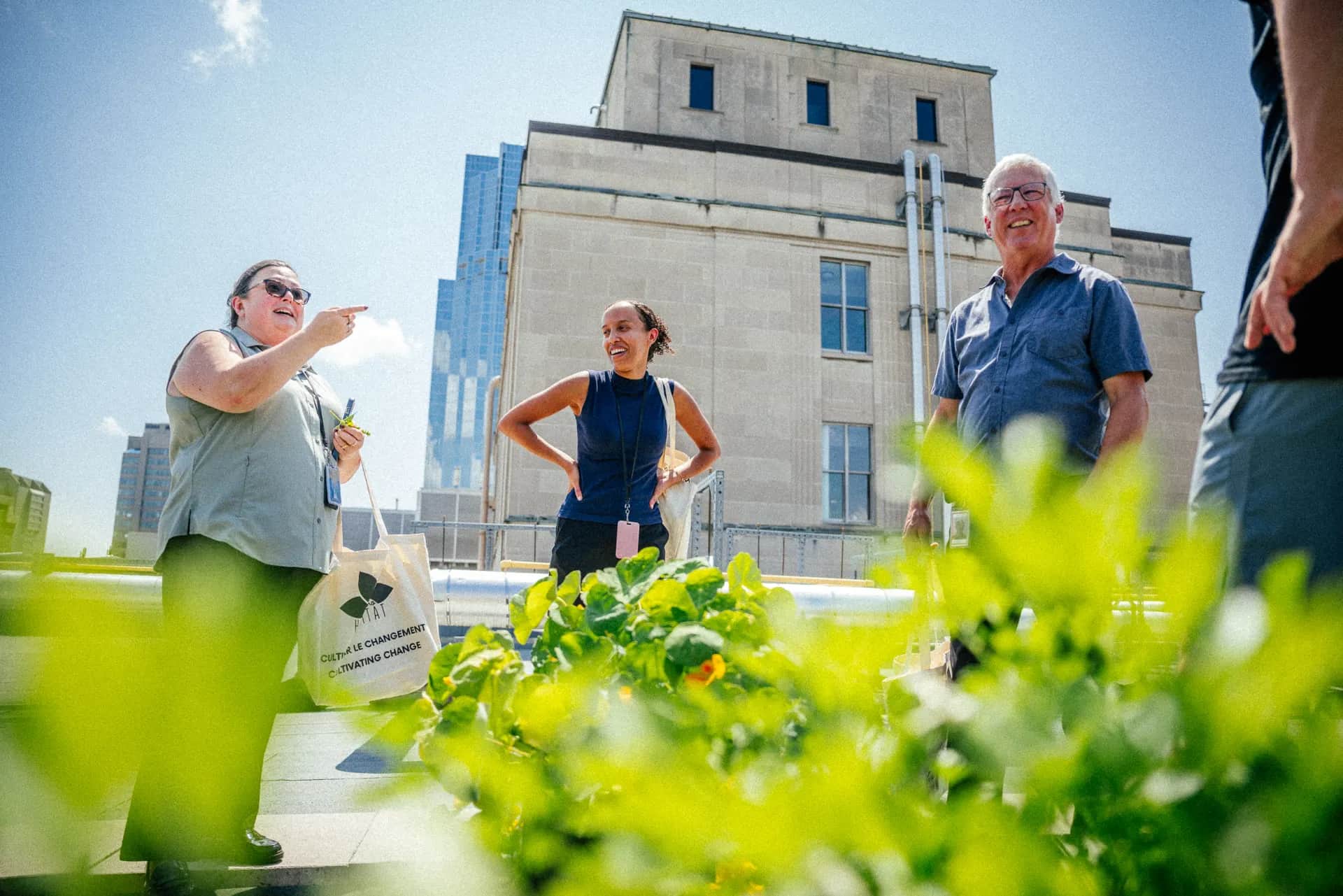
- Lunchtime tours. Twenty- to thirty-minute guided visits, capped at a group size the roof can handle safely. Offer them on your busiest office days. Kastle Systems, whose Back to Work Barometer tracks office attendance, reported that the peak typically falls on Tuesday or Wednesday, that Monday and Friday are the two low days, and that in February 2024 peak-day attendance reached 63.1% against a weekly average of 53.0% (Kastle, March 2024). A Friday tour is working against the building's own traffic.
- Pollinator workshop. A hands-on session on bees, beneficial insects and the flowers that feed them. Pollinator Week is an annual celebration of pollinator health managed by Pollinator Partnership; in 2026 it ran June 22–28, and activities now take place beyond the United States (Pollinator Partnership). Tying your workshop to that week gives tenant communications a ready-made hook.
What rooftop farm events work in fall?
Fall events celebrate the season and share some of it: a harvest festival, a food bank donation drive, and a seed-saving workshop that carries the farm into next year.
- Harvest festival. The headline event of the year, and the one that deserves the biggest share of the budget. Tastings of what the farm grew, a guided walk, a short talk from the farmer and a photo moment on the roof. Invite tenants' teams rather than individuals, so people can come with colleagues.
- Donation drive. Pair the last harvests with a drive for a local food bank. The need is real: Food Banks Canada counted nearly 2.2 million visits to food banks in Canada in March 2025, the highest number on record (HungerCount 2025). MicroHabitat already works with 35+ food banks and has donated 59,400 lbs of produce, so a building drive can plug into an existing partner instead of starting from scratch. Our community engagement programs explain how those partnerships work.
- Seed-saving workshop. Tenants learn how to collect, dry and store seeds from the season's plants. It fits a meeting room as well as a roof, and people leave with something to take home.
What do you run in winter, when the farm is resting?
Winter is when the program moves indoors and tells the story of the farm at rest: indoor-farm sessions, next-season planning, and a winterization update.
- Indoor farm sessions. An indoor farm keeps growing year-round, so it can host the tastings, short workshops and kiosk moments the roof cannot offer in January. For buildings without one, take-home growing kits do a similar job.
- Next-season planning. Ask tenants what they want grown and which events they would attend. A short session or a two-question survey in February feeds straight into the spring calendar and gives tenants a stake in the program.
- Winterization update. Show what happens to the farm in the cold months: beds cleared and protected, soil prepared, equipment stored. A short photo update in the newsletter or on MyUrbanFarm keeps the farm visible while nobody is going up to the roof.
| Season | Events | What tenants take away | What the building gets |
|---|---|---|---|
| Spring | Farmer introduction, MyUrbanFarm launch, planting day | A name, an app, and a plant they put in the ground | A launch story and a published calendar |
| Summer | Weekly harvest kiosk, lunchtime tours, pollinator workshop | Fresh produce and a reason to stop by every week | The most frequent contact with tenants all year |
| Fall | Harvest festival, food bank donation drive, seed-saving workshop | A celebration and seeds to keep | Donation figures and a community story |
| Winter | Indoor farm sessions, next-season planning, winterization update | A say in next year's program | Continuity while the roof is resting |
How do you staff and budget it?
Staff each event with one named owner on the property side and let the farm operator run the farming content; budget by event type rather than by month, and keep the largest share for the harvest festival.
A clear split of roles keeps the calendar running when everyone is busy:
| Role | Owns | Typical tasks |
|---|---|---|
| Tenant experience or property marketing lead | The calendar and the invitations | Dates, room and roof bookings, newsletter copy, RSVPs, photos |
| Urban farmer (MicroHabitat) | The farming content | Planting, tours, workshops, kiosk produce, the winterization update |
| Building operations | Access and safety | Roof access, group size limits, weather calls, lobby setup |
| Sustainability or ESG lead | The record | Attendance and donation figures, and where they get reported |
For the budget, think in lines rather than one total, because the mix differs by building: the farm program itself, event materials such as recipe cards, kits and signage, refreshments for the larger gatherings, promotion, and any donation logistics. MicroHabitat's turn-key programs include educational activities and marketing tools alongside installation, maintenance and harvests, so part of the calendar is already covered by the program rather than paid for event by event. The rooftop garden cost guide breaks down the farm side of the number.
Two habits save money: reuse formats, since a kiosk kit built for July works again in August and September, and announce events a season at a time rather than one campaign per event.
How do you measure attendance?
Measure attendance by counting the same things the same way at every event — sign-ups, check-ins and repeat visitors — and pair those counts with a few outcome figures, such as produce handed out and pounds donated.
- Count sign-ups and check-ins separately. The gap between the people who registered and the people who came tells you whether the time slot or the reminder is the problem.
- Track repeat attendance. A tenant who comes to three events in a year matters more than three tenants who each come once. A simple sign-in sheet or QR check-in is enough to see it.
- Record outcomes, not just headcount. Produce handed out at the kiosk, seed packets taken home and pounds delivered to the food bank are concrete numbers tenants and investors understand.
- Schedule against occupancy. Compare attendance with the days your building is busiest. If a Friday tour draws half the Tuesday tour, move it rather than promoting it harder.
- Ask one question afterwards. A one-line survey — "Would you come again?" — gives you a trend over the year without wearing people out.
Keep the figures in one place all year. Sustainability benchmarks ask about community engagement, and a dated record of events, attendance and donations is far easier to report than one rebuilt from memory in December. Our guide to how urban farming supports a GRESB score shows where that evidence can go.
Dig deeper: the complete guide to urban farm tenant amenities, 12 tenant engagement programs, how MyUrbanFarm supports tenant engagement, and our educational activities and community engagement programs.
For property teams, on-site farms are a practical lever for urban farming in commercial real estate.
Want a full year of tenant events built around your own farm? Book a demo with MicroHabitat and we will map a programming calendar to your building.