Urban Farms as Tenant Amenities in Commercial Real Estate
A property team's guide to tenant amenities in commercial real estate: how an urban farm compares, its role in engagement and retention, and how to start.
Quick answer: An urban farm tenant amenity is a working farm on a building's roof, terrace or amenity floor that a specialist grows, maintains and programs for the people who lease there. Among tenant amenities in commercial real estate, it is one of the few that change every week. It gives tenants planting days, harvests and workshops, gives marketing a new story each season, and produces dated evidence for certifications and ESG reporting. A managed program asks the property team for access, water nearby and a sunny space suited to the building. The operator runs the rest.
Tenant amenities in commercial real estate now help decide which buildings people choose, use and stay in. For property marketing and tenant experience teams, the question is which amenities earn their space. This guide is the hub for urban farms: what the amenity is, how it compares, what it does for engagement, marketing, retention and value, and how a managed program runs.
On this page: What it is · Why now · What tenants use · How it compares · Engagement · Marketing · Retention · Green premium · How a managed program works · How to start
Tenant amenity program
One urban farm, five jobs for the building
What a managed farm gives each property goal, and the record that shows it is working.
Tenant engagement
- What the farm provides
- Planting days, harvests, tours and workshops that follow the season
- What to track
- Sign-ups, attendance and repeat visitors
Marketing the building
- What the farm provides
- A story that changes every week, from seedlings to food bank donations
- What to track
- Posts, photos, leasing-tour stops and press mentions
Retention
- What the farm provides
- A shared reason for tenants to use the building and meet their neighbours
- What to track
- Participation by tenant company, next to satisfaction scores
Certification and ESG
- What the farm provides
- Dated evidence for WELL, LEED, GRESB and nature reporting
- What to track
- Harvest and donation records, photos and activity logs
Green premium
- What the farm provides
- A sustainability feature that prospects and valuers can see
- What to track
- Certifications held, occupancy and rents against comparable buildings
What is an urban farm tenant amenity?
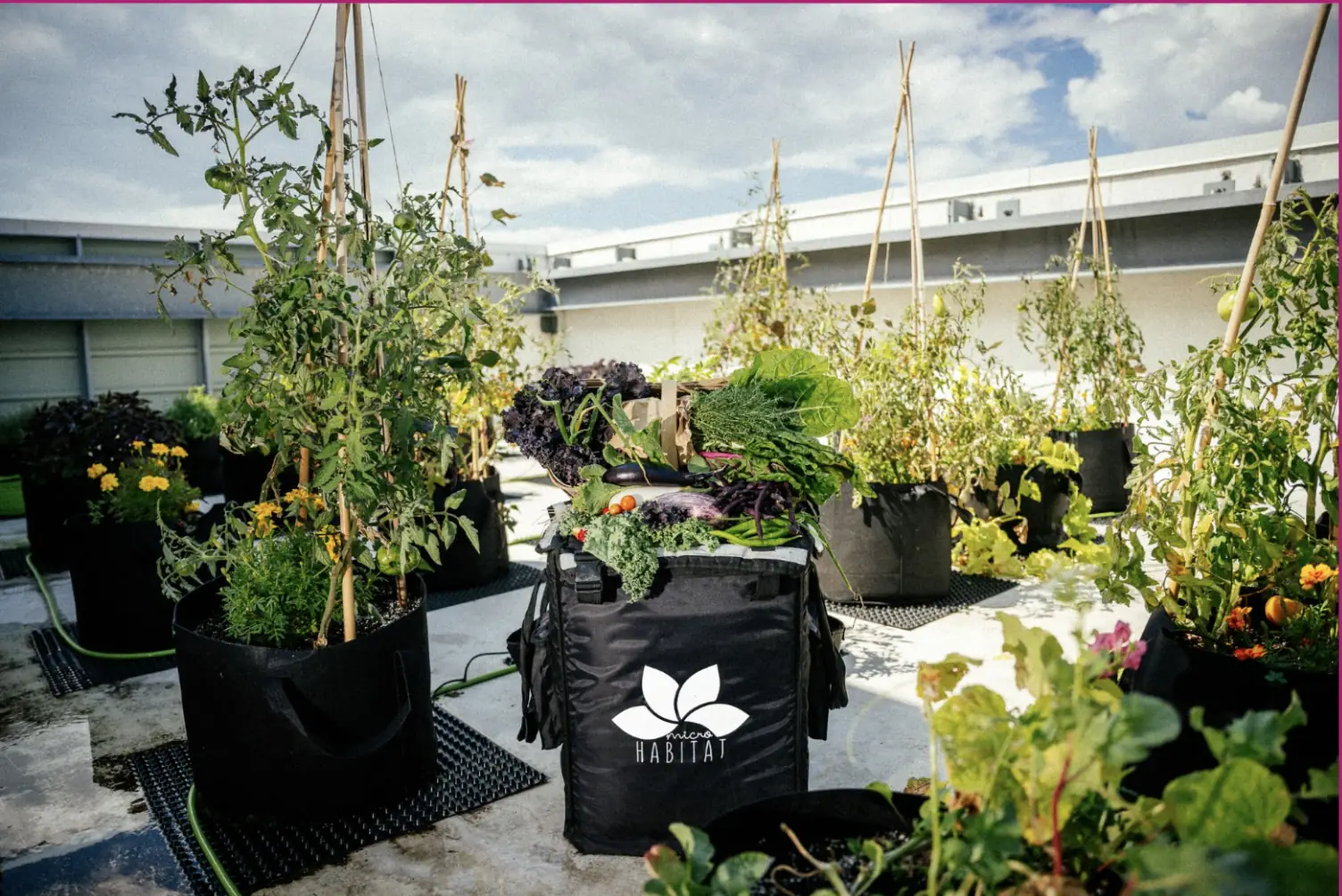
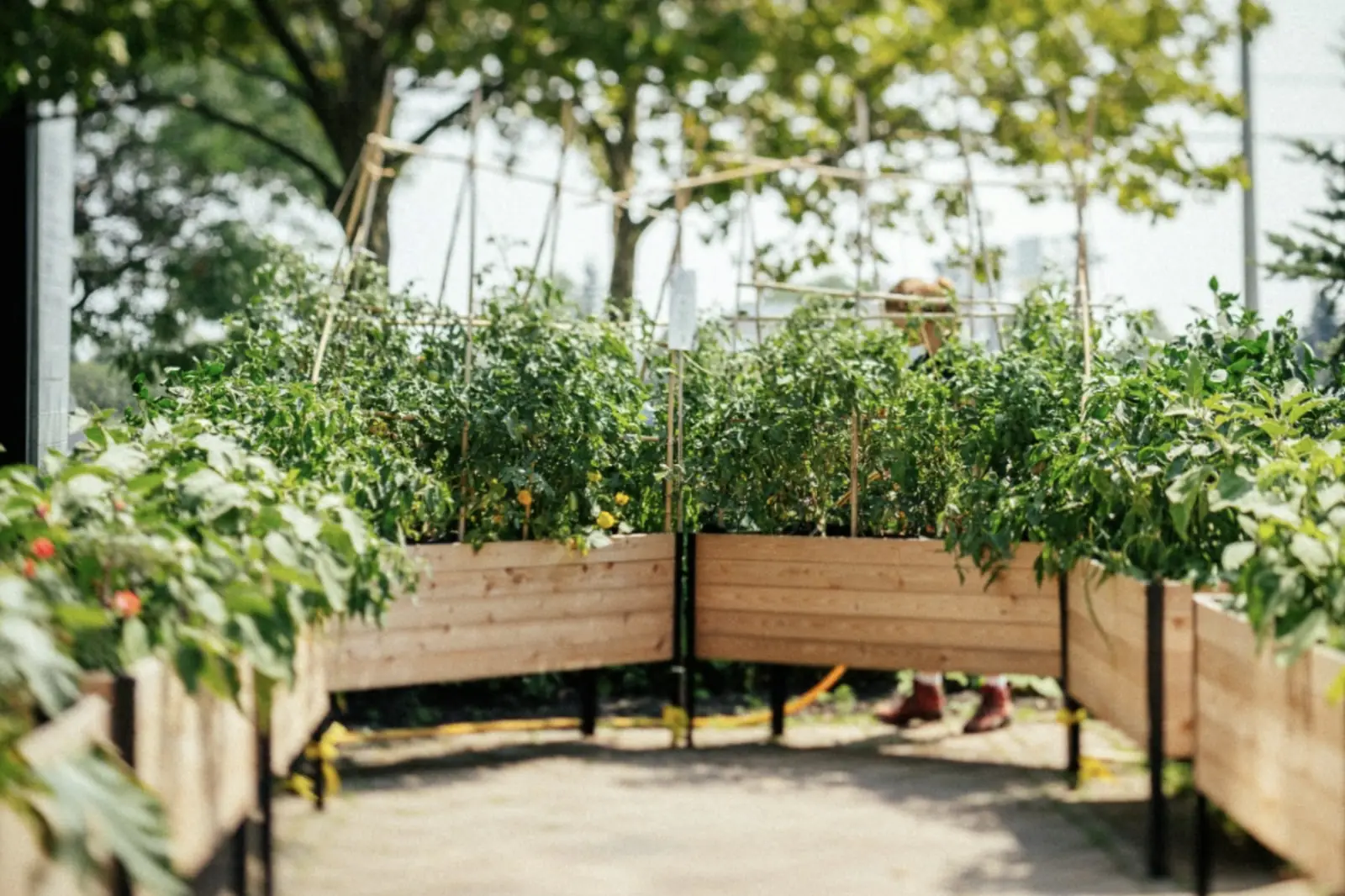
An urban farm tenant amenity is a food-growing space on a commercial property, run as a service for the building's occupants rather than as a garden the building has to look after. It sits on a roof or terrace, in a courtyard or indoors, and grows vegetables, herbs and edible flowers for the people in the building.
Three things set it apart from landscaping. It produces food that tenants can see, taste and take home. It comes with programming, such as tours, workshops and harvest days, so tenants take part instead of walking past. And it creates records: harvests, donations, photos and activity logs that sustainability and marketing teams can use. An outdoor farm follows the growing season, while an indoor farm keeps producing all year. Urban farming amenities in new developments follow the same idea.
Why do tenant amenities matter in commercial real estate now?
Tenant amenities matter now because occupiers treat them as a requirement when they choose space, and because people come in more often to buildings that give them a reason to. In its 2026 Americas Office Occupier Sentiment Survey, CBRE reports that the top factors limiting office attendance are an inconvenient location (62%) and a lack of amenities (53%). The same survey calls sustainable building operations and building amenity space table stakes, with rent discounts when they are missing.
Attendance data points the same way. Kastle Systems' Back to Work Barometer recorded weekly average occupancy of 78.8% in A+ class buildings in the week of December 8, 2025. Across all office buildings it was 56.3%, itself the highest weekly average since early 2020. People come in most to top-tier buildings, which compete on quality and amenities. Demand for green space is part of the same shift, in Canada and in the United States.
Which amenities do tenants actually use?
Tenants use the amenities that fit a weekly routine or give them a reason to gather: food, fitness, outdoor space and shared social space. CBRE's 2026 survey found that fitness facilities and outdoor amenities command the strongest premium over market rates, which shows what occupiers will pay for, not how often your tenants will use each one. A farm can reach tenants across the building, because a harvest day or a lunchtime tour asks for a lunch break, not a change of clothes. Our guide to the best office building amenities covers what tenants use and how to measure it.
How does an urban farm compare with other amenities?
An urban farm stands out on visibility, differentiation and certification value, while a fitness centre leads on daily routine and a rooftop lounge on hosting.
| Amenity | Who it reaches | How often it changes | What it gives marketing | Certification evidence |
|---|---|---|---|---|
| Urban farm | Anyone who joins a harvest, tour or workshop | Every week, with the season | A new story each week | WELL food production, LEED Sustainable Sites credits, nature records |
| Rooftop lounge | People who book it or attend events | Rarely; busiest in good weather | A strong hero image that looks the same each year | Little, unless it is planted |
| Fitness centre | Occupants who already exercise at work | Rarely | An expected line on the amenity list | WELL physical activity features |
The options can work together: a farm can share a roof with a lounge and make the space people already use greener. Our amenity ROI comparison scores all three on usage, visibility, cost, differentiation and ESG value, with a scorecard you can reuse. For build costs, see what a rooftop garden costs.
How does an urban farm support tenant engagement?
An urban farm supports tenant engagement by giving the building a calendar of events that follows the growing season, so there is always a next thing to invite tenants to. Planting day opens the season, weekly harvests carry the summer, a harvest festival and a food bank donation drive close the fall, and indoor sessions keep winter from going quiet.
The formats that work best ask tenants to take part: farm tours, workshops and take-home growing kits, volunteer harvests, and donation days with local food banks through our community engagement programs. Between events, MyUrbanFarm keeps the farm in view with live camera feeds, growth dashboards, harvest tracking and weekly stories from the farmers, as described in how MyUrbanFarm connects communities. For more formats, see our tenant engagement ideas. For dates and owners, use the season-by-season events calendar.
How does an urban farm help market the building?
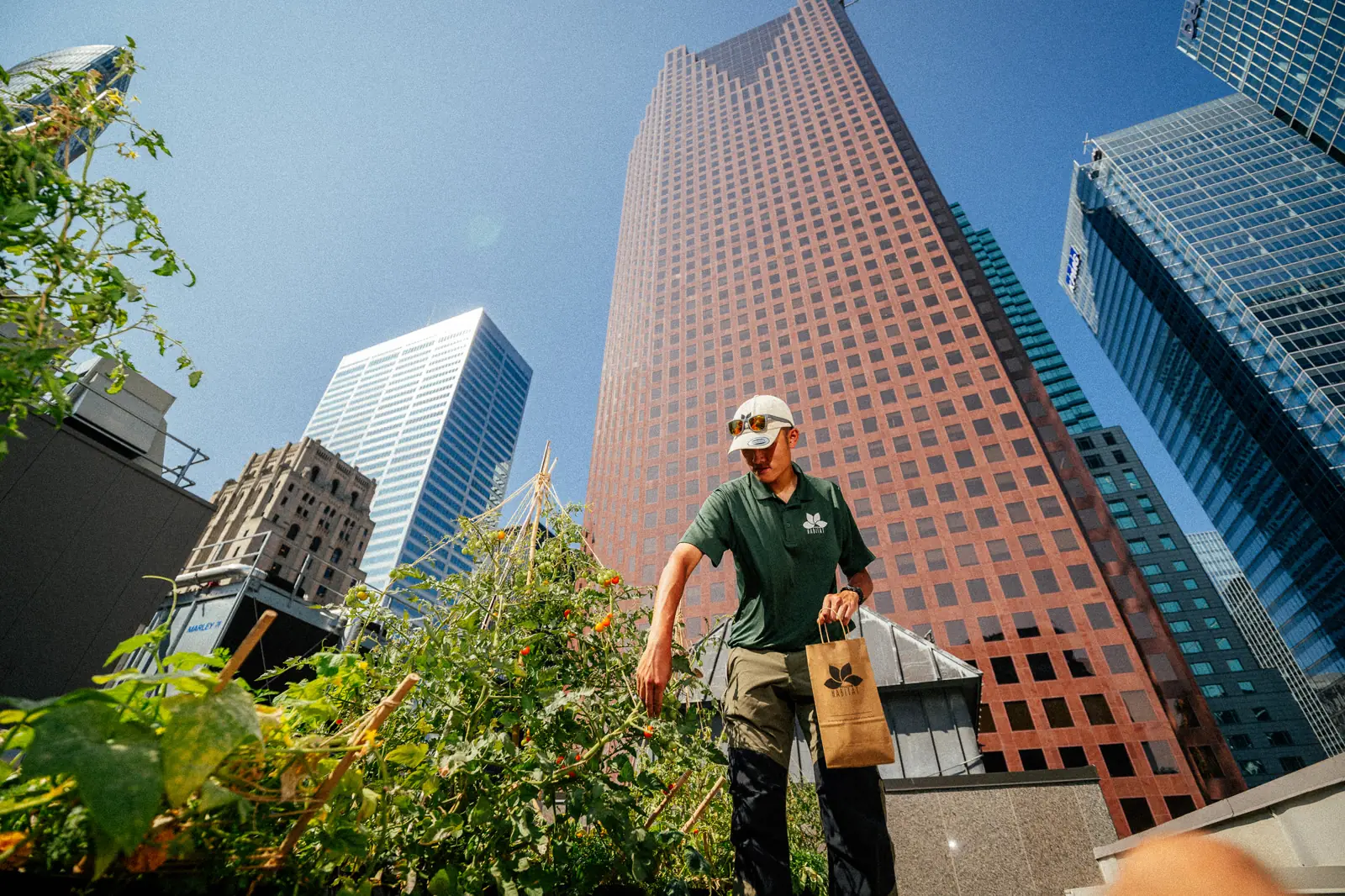
An urban farm helps market a building by giving the marketing team proof it can show, instead of claims it has to make. A sustainability statement in a leasing brochure reads like every other building's. A photo of tenants harvesting on the roof, a post about produce given to a local food bank and a stop on the leasing tour show the commitment at work.
The farm also supplies content on its own schedule: seedlings in spring, the first harvest, pollinators in summer, the season's donations in fall. Across the network, the story is larger than one building. MicroHabitat runs 250+ urban farms in 20+ cities across North America and Europe, works with 35+ food banks and has donated 59,400 lbs of produce. Our guide on how to market a sustainable building covers the proof, stories and content that turn prospects into tenants.
Can a tenant amenity improve retention?
A tenant amenity can support retention when tenants actually use it, because renewals are decided by people who either feel at home in a building or do not.
The practical move is to connect the amenity to the renewal conversation. Track participation by tenant company, share the season's results with each tenant's office manager, and invite decision-makers to the events their teams already attend. Retention has many causes, from rent to service quality, so measure the amenity alongside tenant satisfaction rather than claiming it keeps a lease on its own. Our guide to tenant retention strategies for commercial real estate sets out nine moves that shift renewals.
Does an urban farm add to the green premium?
An urban farm can strengthen a building's case for a green premium, but the premium comes from the building's certified sustainability performance, not from any single feature. A widely cited study, by Eichholtz, Kok and Quigley and published in the American Economic Review, compared green-rated office buildings with nearby conventional ones across some 10,000 buildings. It found rents roughly 3% higher per square foot, effective rents more than 6% higher and selling prices about 16% higher.
Those are averages across many buildings, not a figure any one asset can count on, and later studies report different premiums by market and year. Our guide to the green premium in commercial real estate lays them out. Where a farm helps is evidence. It can count toward the certifications behind the premium, through LEED Sustainable Sites credits and the WELL food production feature, and it is a sustainability feature that prospects and valuers can see. See which certification frameworks apply to your building and whether urban farms raise property value.
How does a managed urban farm program work?
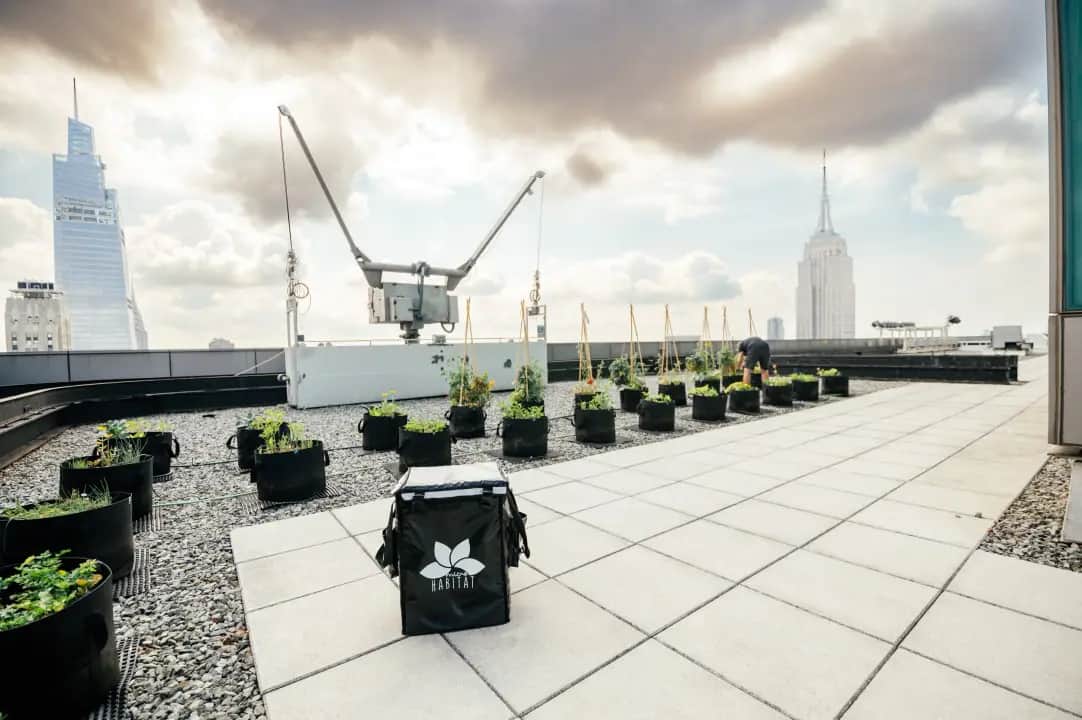
A managed urban farm program works like any other building service: the operator designs, installs, farms and programs the space, and the property team provides access and invites tenants. At MicroHabitat the sequence is a demo to discuss your goals, a free site assessment, a custom proposal with timeline and investment, installation with no permanent changes to the building, and then ongoing service.
Ongoing service is what separates a managed program from a garden the facilities team inherits. Urban farmers visit every week to plant, water, manage pests, harvest and rotate crops, and the program includes activities and reporting. The work usually splits like this:
- MicroHabitat handles design and installation, weekly maintenance, harvesting and produce delivery, tours and workshops, and MyUrbanFarm updates and reporting.
- The property team provides accessible space with six or more hours of direct sun a day, sized to the building and confirmed at the site assessment (see the outdoor farm requirements), or an indoor spot for an indoor farm; a water source nearby; safe access for the maintenance team; and a host who invites tenants and shares results.
Internal approval usually comes down to showing a decision-maker that the building gains an amenity without gaining a workload. Our guide on how to convince your boss to get an urban farm helps you make that case.
How do you start an urban farm amenity program?
You start by tying the amenity to a goal, confirming the space, and planning the first season's calendar before the farm goes in.
- Name the goal. Decide whether the farm is mainly for engagement, marketing, retention or certification, so you know what to measure.
- Check the space. Note the size of the roof or terrace, its sun, water and access, or pick an indoor location.
- Book a site assessment. A specialist confirms the space and recommends an outdoor farm, an indoor farm or both.
- Compare the cost. Use the planning ranges in our rooftop garden cost guide and the ROI calculator.
- Plan the first season. Set dates for planting day, harvests and a donation day, and decide how you will count attendance.
- Report back. Share results with tenants mid-season and with leasing and ESG teams at season end.
Dig deeper: the amenities tenants actually use, 12 tenant engagement programs, amenity ROI compared, tenant retention strategies and the green premium.
For property teams, on-site farms are a practical lever for urban farming in commercial real estate.
Planning your building's amenity program? Book a demo and we will show you what an urban farm would give your tenants, your marketing and your ESG reporting.