Best Office Building Amenities in 2027: What Tenants Use
Office building amenities ranked by what tenants actually use: occupier survey and vacancy data on transit, food, outdoor space, fitness and urban farms.
Quick answer: The office building amenities tenants rely on most are the ones that fit an ordinary workday: getting to the building, getting food, stepping outside and meeting colleagues. In CBRE's 2025 occupier survey, 53% of respondents said they would reject a building without access to public transportation, 52% without parking and about 40% without food and beverage options. Outdoor amenities or terraces were the most-cited experience feature in rent discussions, at 44%, ahead of fitness facilities at 32%. An urban farm sits in that outdoor tier and brings its own weekly program. The amenities that sit empty are the ones that serve a small group, copy what the street already offers, or have no one running them.
Office building amenities in 2027 are judged by one test: do people use them on an ordinary workday? This guide ranks the common ones by use, drawing on occupier surveys and vacancy research rather than brochure appeal. It then shows where an urban farm fits and what to leave out. For the full case for a farm on your property, see our guide to urban farms as a tenant amenity.
On this page: What tenants use · The 2027 ranking · Why amenities sit empty · Where a farm fits · What to avoid · Testing demand
Which office building amenities do tenants actually use?
Tenants rely most on the amenities that make a normal office day easier: transit and parking to get in, food to get through the day, outdoor space to take a break, and shared rooms to meet. That is the clearest pattern in recent occupier research.
The strongest recent evidence comes from occupiers themselves. CBRE's 2025 Americas Office Occupier Sentiment Survey covers companies across the U.S., Canada and Latin America. It asked which missing features would make them reject a building. More than half named access to public transportation (53%) or parking (52%). About 40% said they would reject a building without food and beverage options.
The same survey asked which experience features shape rent discussions. Outdoor amenities or terraces came first at 44%, followed by building amenity spaces at 42% and fitness facilities at 32%. Separately, 43% said sustainable building features and operations would influence their negotiations over rent.
Office workers point the same way. Gensler's Global Workplace Survey 2026 polled 16,459 full-time office workers in 16 countries between July and September 2025. Asked about the future workplace, workers consistently prioritized wellness and access to nature, including outdoor spaces and natural light.
One caution before you rank anything. Surveys tell you what occupiers weigh when they choose a building, not how many people walk through a given door each week. Treat the ranking below as a starting point, then check it against your own counts.
How do office building amenities rank in 2027?
Ranked by everyday use, office amenities fall into four tiers: everyday essentials, weekly draws, amenities that serve some people some of the time, and amenities to leave out. The figure and table below place the common options, based on our reading of the occupier surveys and vacancy research in this guide.
Amenity ranking
Office amenities, ranked by everyday use
Four tiers, from what people use every office day to what to leave out.
Tier 1: Every office day
Used by almost everyone
- Transit access
- Parking
- Food and beverage
Evidence: CBRE 2025
Tier 2: Most weeks
Brings people back
- Outdoor space and terraces
- Building amenity spaces
- Urban farm with a program
Evidence: CBRE 2025 · Gensler 2026
Tier 3: Some of the time
Serves a smaller group
- Fitness facilities
- On-site day care
Evidence: CBRE 2025 · Chicago Fed 2025
Leave out
Little use after launch
- Showpieces with no program
- Copies of the neighbourhood
- Niche rooms that take leasable space
Why: no program, no clear audience or no running budget
| Tier | Amenity | Who uses it | What the evidence says |
|---|---|---|---|
| 1. Every office day | Transit access and parking | Almost everyone, every day they come in | 53% (transit) and 52% (parking) of occupiers would reject a building without them (CBRE 2025) |
| 1. Every office day | Food and beverage, on site or nearby | Most people, most days | About 40% would reject a building without them (CBRE 2025) |
| 2. Most weeks | Outdoor space and terraces | Many people, weather permitting | The most-cited experience feature in rent discussions, at 44% (CBRE 2025); workers prioritize access to nature (Gensler 2026) |
| 2. Most weeks | Building amenity spaces | Teams, meetings and events | Cited by 42% as shaping rent discussions (CBRE 2025) |
| 2. Most weeks | Urban farm with a program | Tenants who join harvests, workshops and tours | Sits in the outdoor tier; use depends on the program that comes with it |
| 3. Some of the time | Fitness facilities | A steady group of regular users | Cited by 32% as shaping rent discussions (CBRE 2025); space with an on-site fitness centre had higher vacancy than the office sector overall (Chicago Fed 2025) |
| 3. Some of the time | On-site day care | Parents of young children | Not enough on its own to bring office vacancy down (Chicago Fed 2025) |
| Leave out | Showpieces with no program | Few people after launch week | No one runs them, so nothing brings people back |
Two things stand out. The top tier is not glamorous: it is getting in and getting lunch. And the amenities that do best in the middle tier are the ones that give people a reason to come back, whether that is a view, an event or a harvest.
Why do some office amenities sit empty?
Office amenities sit empty when they serve only a small group, copy what the neighbourhood already offers, or open without anyone assigned to run them. Better furniture fixes none of these, because each one is a mismatch between the amenity and how people spend their day.
Vacancy data adds a caution: an amenity alone does not fill a building. In Do Amenities, Building Age, and Floor Plans Affect Office Vacancy Rates? (March 2025), the Federal Reserve Bank of Chicago analysed CoStar data for U.S. office space. Both before and after the start of the pandemic, office space with an on-site fitness centre had a higher vacancy rate than the office sector overall. Its conclusion: free parking and more recent construction seem to have the largest impact on vacancy rates, while on-site fitness or day care centres are not game changers for filling office space.
The study compares vacancy rates without proving cause, so it does not make a gym a bad idea. It means an amenity's appeal on a leasing tour is not the same as its pull on a Tuesday. Three patterns are worth checking:
- They serve a narrow group. A gym mostly serves people who already exercise at work. Everyone else walks past it.
- They copy the street. A lobby café on a block with ten cafés, or a fitness room next to a commercial gym, competes with options people already use.
- Nobody runs them. A lounge or roof deck with no events, no bookings and no named owner has nothing to bring people back after launch week.
The flip side is the opportunity. An amenity with a program, a clear audience and something new each week keeps earning its space.
Where does an urban farm fit among office amenities?
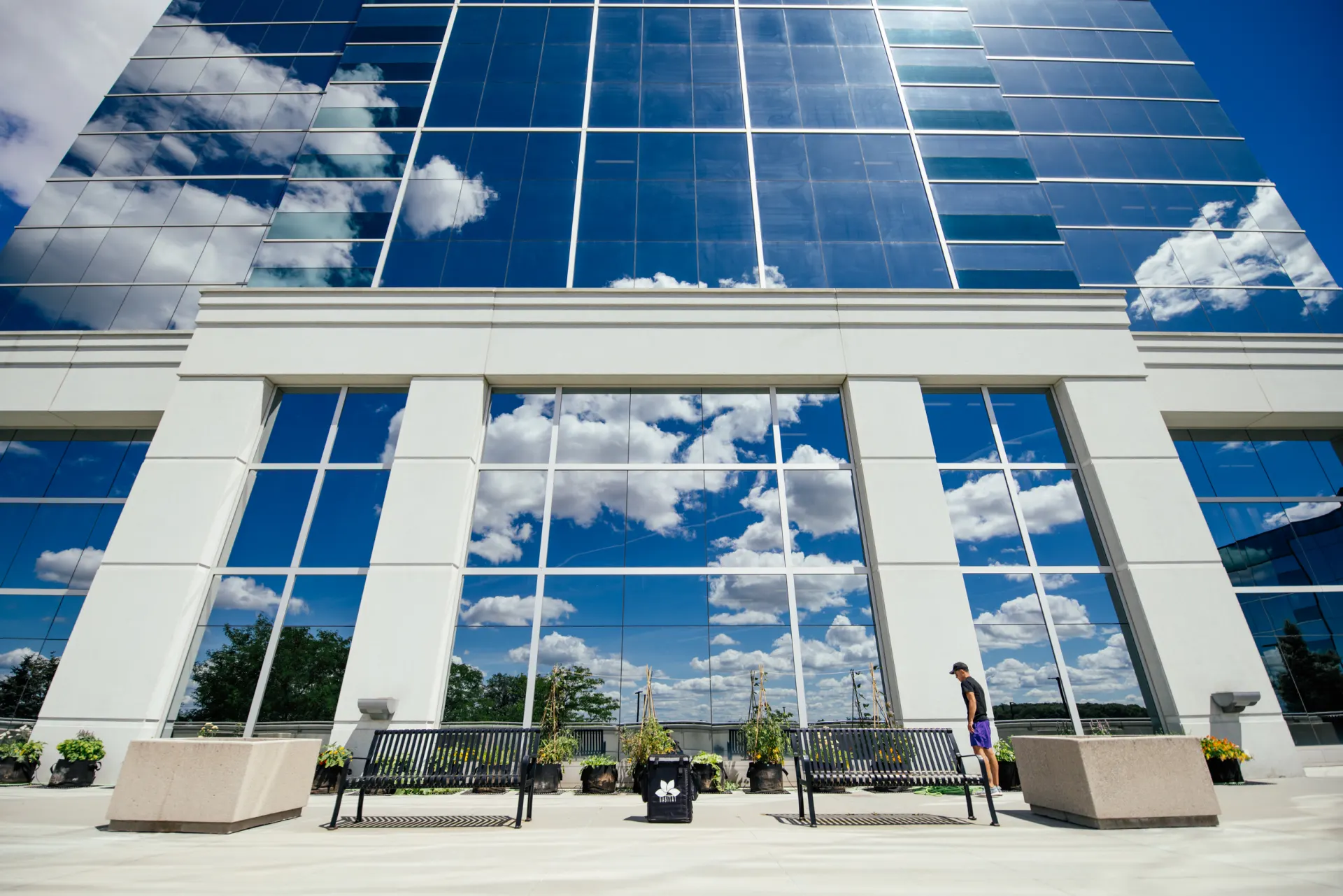
An urban farm fits in the weekly tier, next to outdoor space and terraces, and it brings what most amenities lack: a program that changes every week. It turns roof or terrace space into somewhere people go, and gives them a reason to go back.
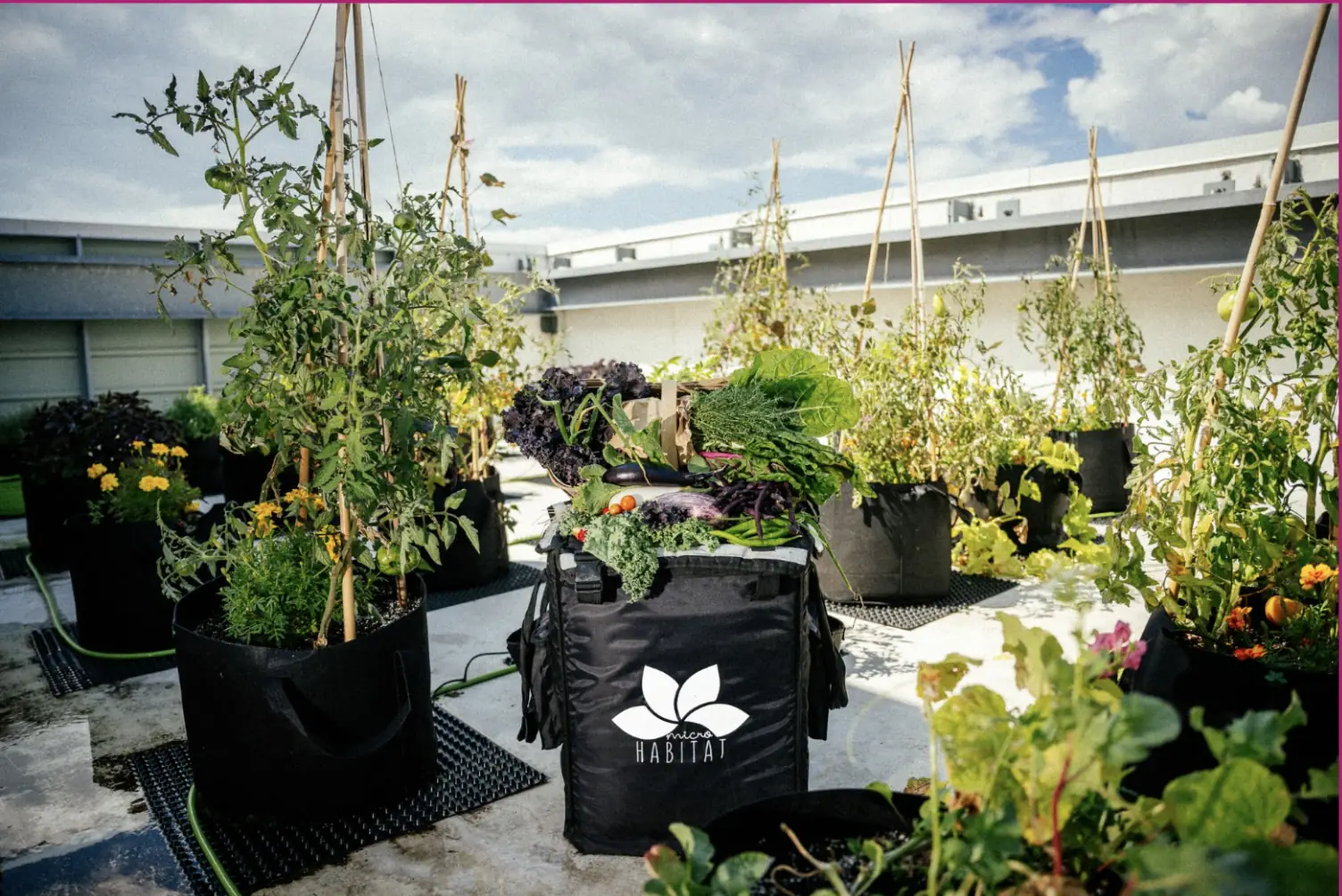
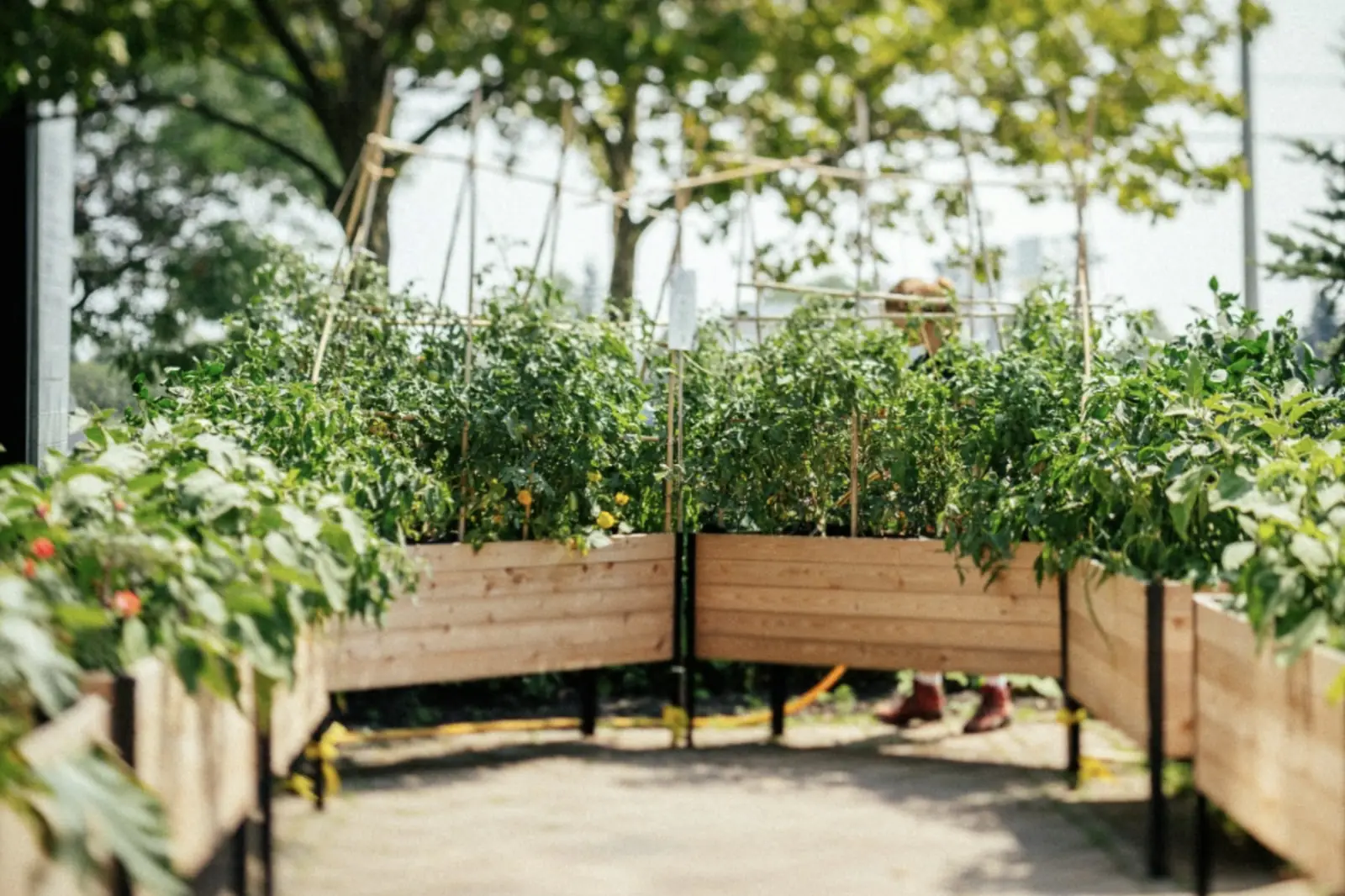
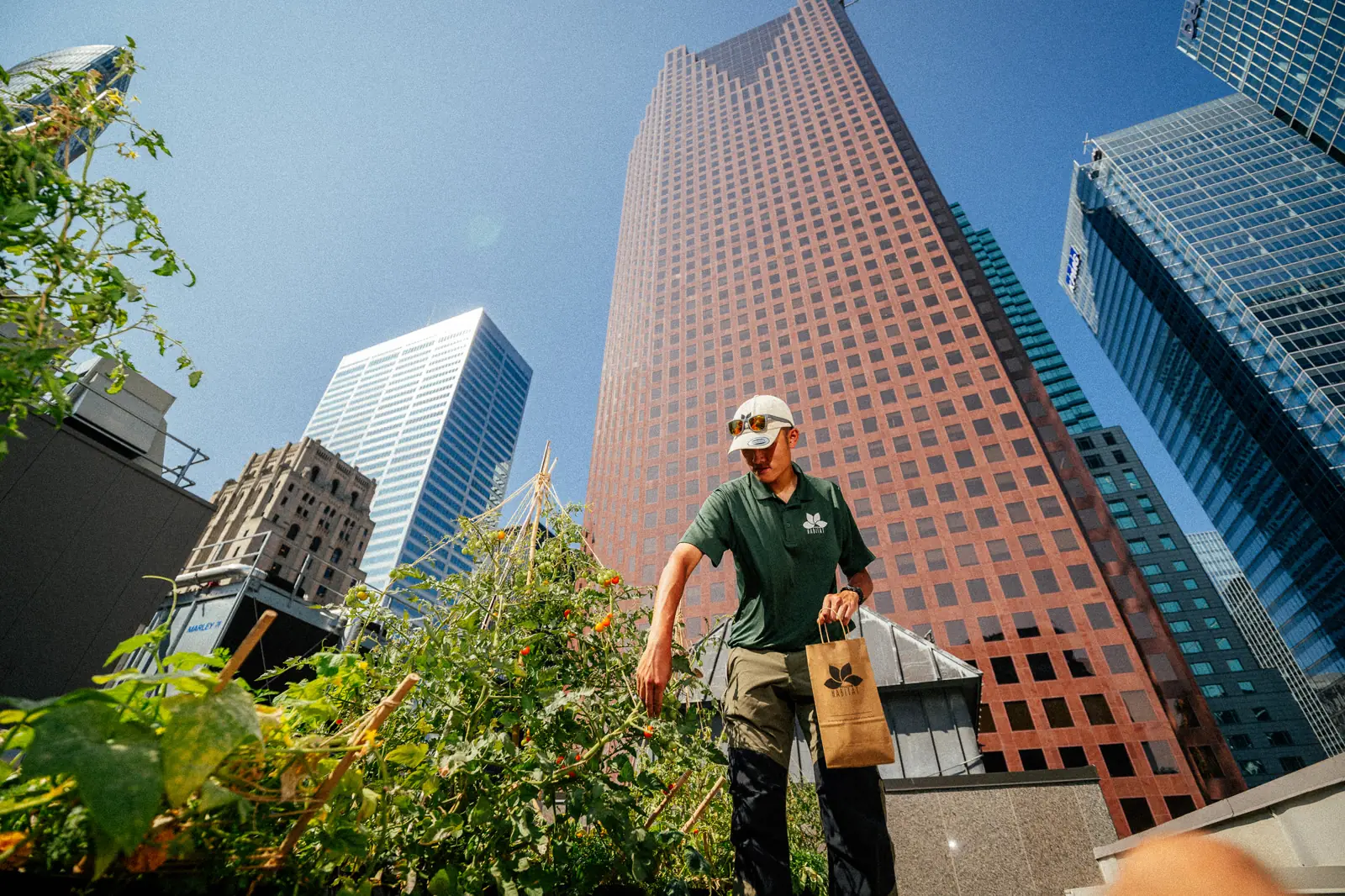
That matters because outdoor amenities are the experience feature occupiers mention most in rent discussions, and workers keep asking for access to nature. A farm answers both on the same roof. A professional urban farmer plants, maintains and harvests it on a set schedule, so the space looks different in May, July and September. Tenants can join harvest days, workshops and lunchtime tours, and see the produce shared in the building or donated. Across MicroHabitat's 250+ urban farms in 20+ cities, the network has partnered with 35+ food banks and donated 59,400 lbs of produce.
Three practical choices decide whether a farm gets used:
- Put it where people already are. A terrace off the amenity floor is easier to visit than a roof reached by a service stair.
- Fill the calendar before the first seedling. Harvest days, workshops and tours are what turn a planted roof into a weekly habit. Our season-by-season events calendar lays one out.
- Plan for winter. Outdoor farms follow the growing season. An indoor farm keeps the program going year-round.
A farm also works beyond the visit. It gives the marketing team new photos and stories every week, which is the raw material for marketing a sustainable building, and it keeps dated records that sustainability reporting can use. For how a farm scores against a rooftop lounge and a fitness centre on cost, use and ESG value, see our amenity ROI comparison. For the evidence on asset value, see whether urban farms raise property value.
Which office amenities should you avoid adding?
Avoid adding amenities that nobody will run, that copy what tenants can already reach on foot, or that take leasable floor area for a small group of users. The same budget does more in the tiers people actually use.
- Showpieces with no program. Game rooms, podcast studios and themed lounges photograph well at launch. Without events or bookings behind them, nothing brings people back after the first visit.
- Copies of the neighbourhood. Map what is within a short walk first. If the block already has good food and a gym, spend on what it lacks, such as outdoor space.
- Niche rooms that take leasable space. A room that serves a few dozen people a week has to justify the rent that space could earn.
- Amenities with a build budget and no running budget. A roof deck or garden that nobody maintains looks worse every season, and tenants notice.
- Anything you cannot count. If there is no way to log visits, bookings or sign-ups, you will not know whether it works, and neither will your tenants.
Getting the basics right comes first. In the Chicago Fed analysis, free parking and newer construction appeared to matter more for filling space than on-site fitness or day care, so fix access and food before adding the next room.
How do you find out which amenities your tenants will use?
You find out which amenities your tenants will use by counting what they use now, asking them directly, and piloting a new amenity with a program before you commit capital. A season of your own data is worth more than any national survey.
- Count current use. Pull access-control, booking and event sign-up data for every existing amenity over at least one full season.
- Ask tenants about their workday. Survey office managers and employees on how they arrive, where they eat and where they take a break.
- Map the block. List the food, fitness and outdoor space within a short walk, and cross off amenities the street already covers.
- Pilot with a program. Launch the new amenity with a calendar attached, such as a farm season with monthly workshops, and count attendance the same way every time.
- Report use back. Share the numbers with tenants and put them in leasing materials. An amenity people visibly use is easier to market and easier to build renewals around.
Programming is what keeps the numbers climbing after launch. Our tenant engagement ideas cover twelve programs that build community in commercial properties, and our tenant retention strategies show how the amenities people use feed into renewals.
Dig deeper: the complete guide to urban farms as a tenant amenity, the amenity ROI comparison, tenant engagement ideas, tenant retention strategies, and how MyUrbanFarm supports tenant engagement.
For property teams, on-site farms are a practical lever for urban farming in commercial real estate.
Planning the amenity mix for your building? Book a demo and we'll show you where an urban farm fits your roof, your tenants and your events calendar.