Urban Farmer Jobs Spring 2027: Cities Hiring, How to Apply
Urban farmer jobs for spring 2027: the cities MicroHabitat hires in, what a May-to-mid-October season looks like, the weekly work and how to apply.
Quick answer: Urban farmer jobs for spring 2027 are posted on the MicroHabitat careers page from January, set-up roles start in spring, and the growing season runs from May to mid-October, though dates vary by posting. For the 2026 season, MicroHabitat posted urban farming roles across Canada, the United States and Europe, from Montréal, Toronto and Vancouver to New York, Chicago, London and Paris. Apply between January and March, before spring crews are set.
If you want to grow food for a living without leaving the city, spring 2027 hiring starts sooner than most people expect. Urban farms are staffed in winter, built in spring and harvested through summer and fall, so the people who land the best seasonal contracts are the ones who apply before the first warm week. This guide covers where MicroHabitat hires, what a season looks like month by month, what the work involves each week, and how to put together an application that gets read. Every open role is listed with its city on our careers page. For the wider picture of the field, start with our urban farming jobs guide.
On this page: Cities hiring · The season · Weekly work · How to apply
Which cities are hiring urban farmers in 2027?
MicroHabitat hires urban farmers in the cities where it runs farms, across Canada, the United States and Europe, and each 2027 opening is posted on the careers page with its city. That live list is the only reliable one: farms are added as new clients sign on, so a city can gain roles from one season to the next. The best preview of 2027 is where we hired for 2026. These are the cities where urban farming roles were posted for the 2026 season:
- Canada: Montréal, Québec City, Ottawa, Toronto, London (Ontario), Calgary, Edmonton, Vancouver and Victoria.
- United States: New York City and Holbrook (New York), Chicago, Columbus, Dallas, Denver, Los Angeles, San Francisco, Seattle, Tampa and Washington, DC.
- Europe: Amsterdam, Berlin, Birmingham, London, Manchester, Paris, Zurich, Zug and Łódź.
The mix of roles differs by city. Montréal, Toronto, Vancouver and New York posted the widest range, including urban farmers, installation crews and a chief urban farmer. Most other cities posted an urban farming coordinator and an installation team. Urban farmer roles were also posted in Calgary, Québec City, Ottawa, London (Ontario), Victoria and Holbrook. MicroHabitat runs 250+ urban farms in 20+ cities.
A 2026 posting is not a promise of a 2027 opening, so treat the list as a map of where we work rather than a guarantee. If your city is not on it, you still have two options. Apply to the nearest city and say how far you can travel, or send your résumé through the careers page to be considered for future roles. Keep travel in mind either way: urban farmers work across several farms in a city, and the 2026 urban farmer and coordinator postings asked for a valid driver's licence.
What does an urban farming season look like?
The growing season runs from May to mid-October: roles are posted from January, farms are set up and planted in spring, the busiest months are June to August, and the last harvests come in September and the first half of October. That rhythm is not unique to cities. The U.S. Bureau of Labor Statistics notes that many agricultural workers have seasonal schedules, with longer stretches of work at planting and harvest. Here is how it plays out on a MicroHabitat farm.
Season timeline
One urban farming season, month by month
Roles are posted from January. The growing season runs from May to mid-October.
Apply
January – March
Seasonal roles are posted and interviews begin.
Set up and plant
Spring (March – May)
Installation crews build and reopen farms, and the first crops go in.
Peak season
June – August
Daily crop care, steady harvests and workshops on site.
Final harvests and close
September – mid-October
Last harvests, donations and deliveries, then beds are put to rest.
- January to March: hiring. Seasonal roles are posted and interviews begin. The strongest contracts fill before the first warm week, so this is when to apply.
- Spring: set-up and planting. Installation crews build new farms and reopen existing ones; the 2026 Montréal installation team posting asked for availability from early May, then weekdays for three to four weeks. Beds are prepared, irrigation is set and the first crops go in. Hours often start lighter and build as the weather warms.
- June to August: peak season. This is when the most people are needed. The work is daily crop care, steady harvests and workshops for the people who work or live in each building.
- September to mid-October: final harvests and close. The last crops come in and produce goes out to clients and donations, through MicroHabitat's partnerships with 35+ local food banks. Beds are then put to rest for the winter, and closure events mark the end of the season.
The exact dates move with each city's climate and each role. Some contracts reach beyond the growing season: in 2026, an assistant chief urban farmer posting in Toronto ran approximately March to November and the Holbrook urban farmer posting ended on October 30, while most other postings left start and end dates to be confirmed. Read the dates on the posting before you plan a lease, a move or a school term around the job. Students should check the end date in particular, because a contract that runs into October overlaps the fall term.
What do urban farmers actually do each week?
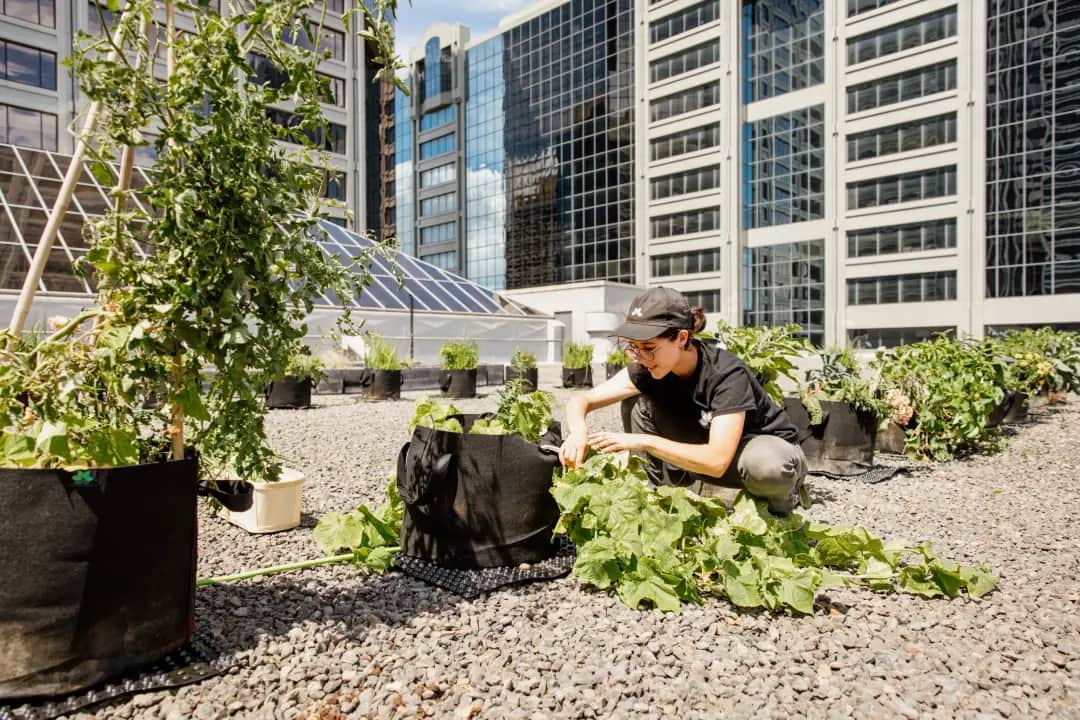
Each week, an urban farmer moves between several farms on rooftops and office grounds and splits the time between growing food and working with the people in each building. The 2026 urban farmer postings describe the work in plain terms. Working under a chief urban farmer, you are responsible for:
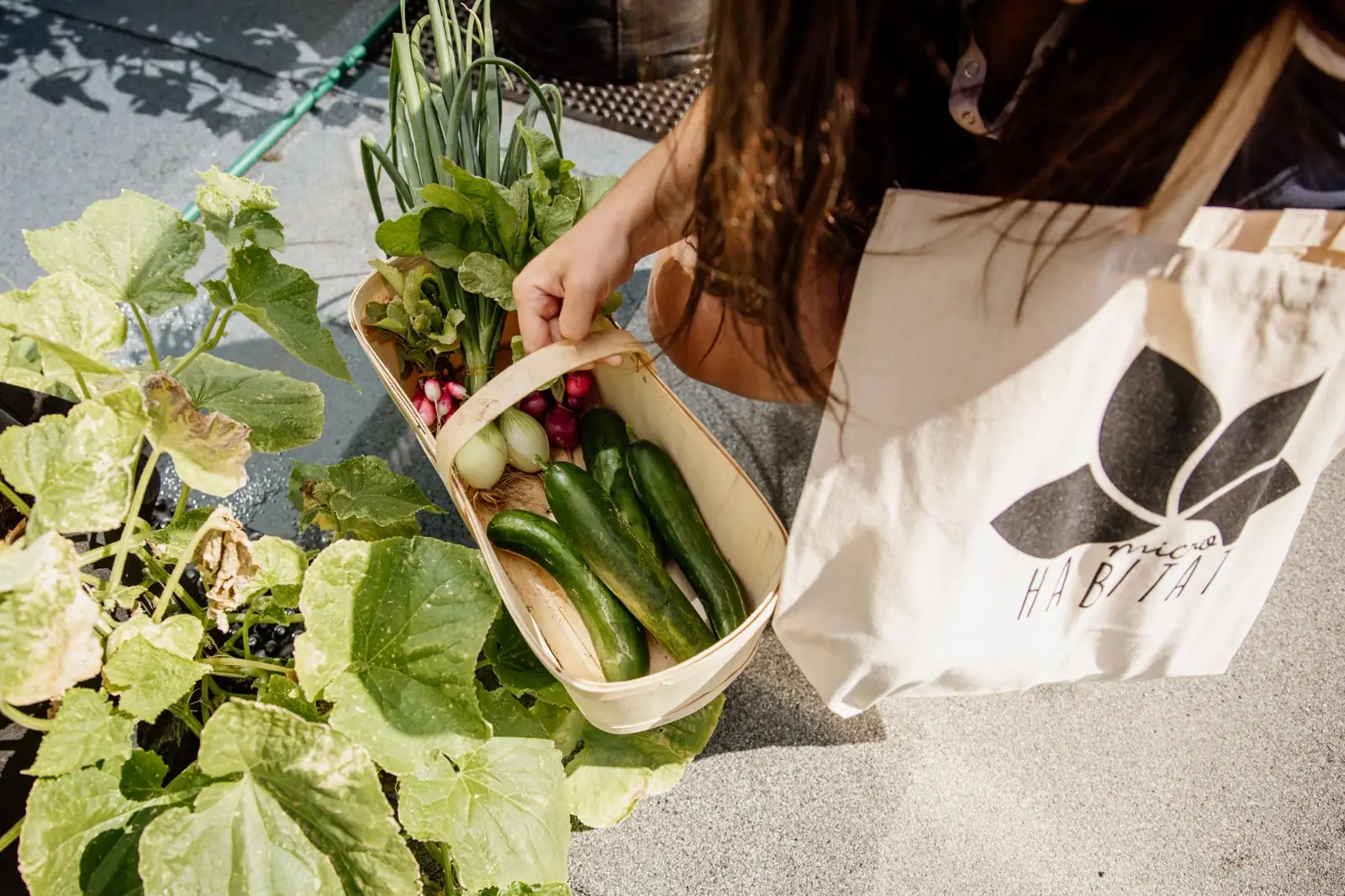
- Crop care: harvesting, propagating, watering, tying tomato plants, and pest and weed control.
- Harvest and delivery: cleaning the harvest and delivering produce.
- Workshops: educational activities and growing advice for the people in each building.
- Site reports: quality checks and a written record of what was done on each farm.
- Set-up and supplies: preparing materials for installations, buying supplies and looking after tools.
- Meetings: team meetings and meetings with partners.
The hours look more like a regular working week than a farm's dawn start. Most 2026 urban farmer postings listed standard hours of Monday to Friday, 8 am to 5 pm, varying with meetings. The London (Ontario) posting listed three days a week, and Victoria, Holbrook and a part-time New York role listed about one day a week. Coordinator postings said the number of days a week depends on the number of projects and farms. The work is physical: the 2026 posting for an assistant chief urban farmer in Toronto asked for the ability to lift 25 kg, stay on your feet for long periods and work outdoors in sun and rain.
Not every role has the same week. The table below compares the urban farming roles MicroHabitat posted for 2026, so you can pick the right way in.
| Role | Contract in 2026 postings | What the week involves | A good fit if you |
|---|---|---|---|
| Installation team | Temporary contract for the spring installation period | Building and setting up farms in spring, supervised by the urban farming coordinator or chief urban farmer | Want a first contract and like hands-on building work |
| Urban farmer | Mostly fixed-term contracts; a few part-time or full-time | Crop care, harvests, deliveries, workshops and site reports, under the chief urban farmer | Have grown food before and can commit to a full season |
| Urban farming coordinator | Mostly seasonal contracts; full-time in a few US cities | Running the farms in a region: client accounts, installations, workshops, reports and hiring the installation team | Have farm experience and like organizing people and schedules |
| Assistant chief urban farmer | Seasonal in Toronto, full-time in Montréal | Workshops and client contact, crop care, and mentoring coordinators and seasonal staff | Have two or more years of growing experience and enjoy teaching |
| Chief urban farmer | Full-time | Leading a city's farms: installations, hiring and supervising teams, client satisfaction and off-season work | Want a year-round role running a city's farms |
Pay is set per role and city, and each posting states it. As an outside benchmark, the Bureau of Labor Statistics reports that agricultural workers in the United States earned a median of $17.25 an hour in May 2025. In Canada, Job Bank lists general farm workers in harvesting at $16 to $25 an hour, with a median of $18. For how pay changes as responsibility grows, see our guide to urban agriculture roles and salaries.
How do you apply for a 2027 urban farming job?
Apply on the careers page between January and March: choose a role and a city, show that you have grown food and can commit to a full season, and state the dates you are available. You do not need years of experience for an entry role, but you do need to show that you can do the work. Follow these steps:
- Check the careers page from January. 2027 roles are listed there by city and department as they open. Look again every week or two, because new roles can be added at any time.
- Pick your way in. An installation team contract suits a first season: the 2026 postings asked for an interest in agriculture or gardening, good physical shape and reliable transportation. Urban farmer postings asked for work or study in agriculture, horticulture or a related field. A coordinator role suits someone who has already run a garden, a crew or a program. Use the table above to match your experience to a role.
- Show proof that you can grow. A community garden plot, a volunteer shift, an internship or a past season all count. Photos of a harvest and a short growing log say more than a line on a résumé. If you are starting from zero, read how to become an urban farmer or look at urban agriculture internships first.
- Answer the practical questions up front. Say when you can start and finish, whether you hold a driver's licence, and which languages you speak. The 2026 urban farmer postings in Montréal, Québec City and Ottawa required both French and English. Check eligibility too: every 2026 urban farmer posting in Canada required applicants to live in Canada.
- Apply early, then follow up. Send your application before spring crews are set. If there is no role in your city, send your résumé through the careers page so you are considered when one opens.
Treat the first season as the start of a path. One 2026 posting, for an assistant chief urban farmer in Toronto, said seasonal roles can lead to year-round work as the company expands, and the roles in the table build on each other, from installation team and urban farmer to coordinator and chief urban farmer. Staying for the whole season, learning the crops and handling client questions well puts you in a good position when a longer contract opens. Our guide to seasonal urban farm jobs covers how to turn one season into the next. If you want to search beyond one employer, Canada's Job Bank lists natural resources, agriculture and related production jobs by category, and our guides to agronomy jobs in Canada and green jobs in commercial real estate map the wider field.
Dig deeper: the urban farming jobs guide, roles and salaries, seasonal urban farm jobs, internships, how to become an urban farmer, agronomy jobs in Canada and green jobs in commercial real estate.
Ready for your first season? See open urban farming roles → and apply before spring crews are set.