Best Plants for Rooftop Gardens
What plants grow best on rooftops? A clear selection guide to sun, wind and weight, with the most reliable edibles and ornamentals to plant on any roof.
On this page
Quick answer: The plants that grow best on rooftops are hardy, wind- and heat-tolerant species suited to shallow growing systems — herbs like rosemary, thyme and mint, leafy greens, tomatoes, peppers, and resilient ornamentals such as sedums and grasses. Rooftop conditions are harsher than ground level, so match every plant to sun exposure, wind, and your system's weight limits.
Choosing what plants grow best on rooftops is less about a magic list and more about matching the plant to the place. A roof is a fundamentally tougher environment than a backyard: more sun, more wind, faster-drying soil, and a hard ceiling on how much weight the structure can hold. Get the match right and a rooftop becomes one of the most productive growing surfaces in a city. Get it wrong and you replace plants every few weeks. This guide gives you the conditions that decide success, the most reliable edibles and ornamentals to plant, the species to avoid, and a plant-selection table you can use to spec your own roof. It is the same logic that drives how urban farms work on commercial rooftops across North America and Europe.
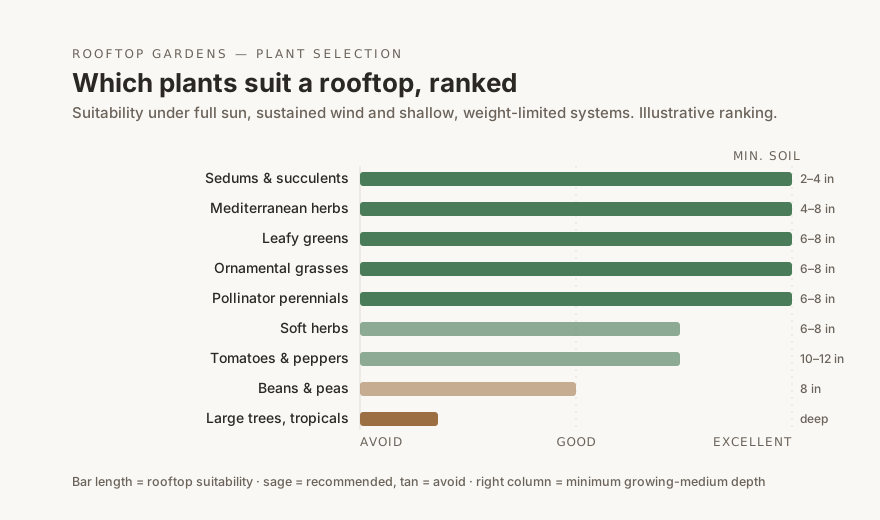
What plants grow best on rooftops depends on conditions (sun, wind, weight)
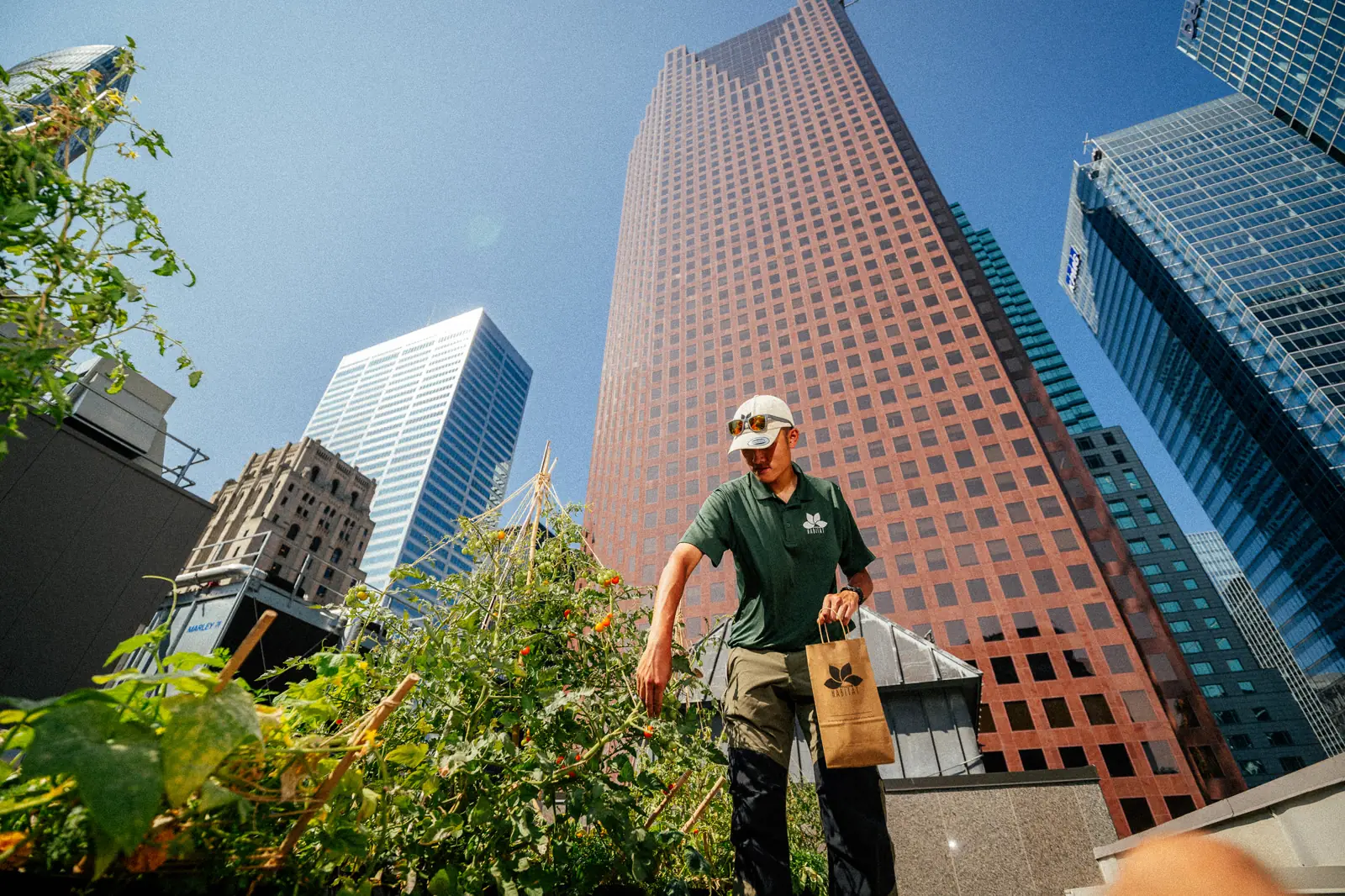
What plants grow best on rooftops depends first on the site's conditions — rooftops have full sun, strong sustained wind, high heat, and strict weight limits, four factors more extreme than ground level that together decide which plants survive. A roof is exposed on all sides, so wind hits plants harder and dries out soil faster, while reflected heat from membranes and surrounding walls can push container temperatures well above the air temperature. Every plant choice has to start here.
Three conditions matter most. Sun: most roofs get six or more hours of direct light, which is ideal for fruiting vegetables and Mediterranean herbs but punishing for shade-lovers. Wind: sustained wind desiccates leaves, snaps tall stems, and increases watering needs, so low, sturdy, flexible plants outperform tall brittle ones. Weight: this is the hard constraint a backyard never has. Saturated soil, containers, water, and plants add up fast, and the roof's structural load limit caps how deep your growing medium can be — which in turn caps which plants you can grow. Shallow systems favor herbs, greens, and shallow-rooted ornamentals over deep-rooted shrubs or trees.
A fourth factor sits underneath all of this: your climate zone. Use the USDA Plant Hardiness Zone Map — the standard by which growers determine which perennials are likely to thrive in a location, based on average annual extreme minimum winter temperature — to confirm which perennial herbs and ornamentals will overwinter where you are. On a roof, exposure can effectively make conditions feel one zone colder in winter and one zone hotter in summer, so choose with a margin.
What vegetables and edibles grow best on a rooftop?
The best edibles for rooftops are leafy greens, herbs, tomatoes, peppers, beans, and fast-growing root crops — compact, productive plants that tolerate heat and handle shallow growing systems. These crops give the highest yield per square foot under rooftop conditions and recover quickly from wind and heat stress, which is why they dominate productive urban rooftop farms.
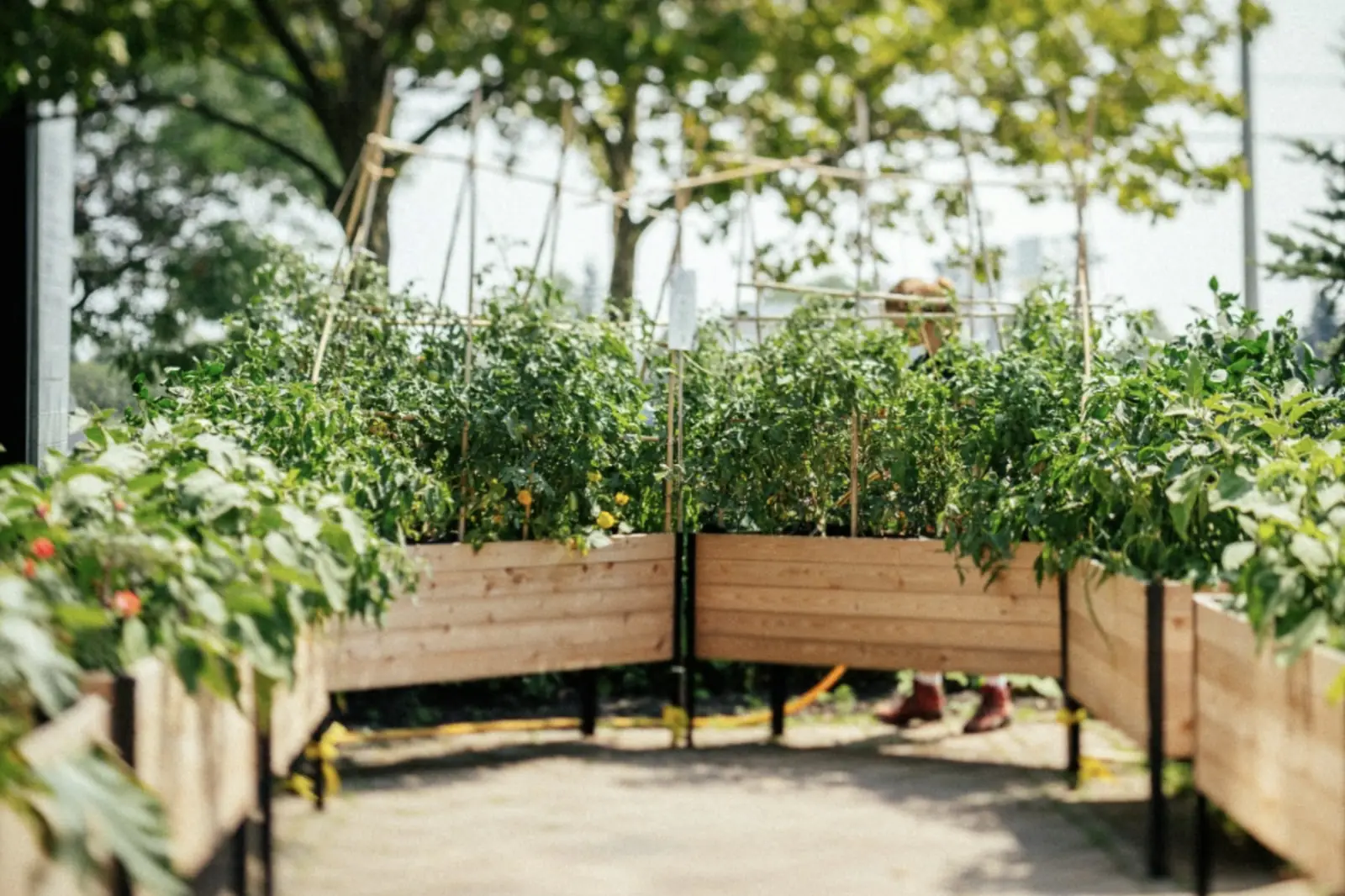
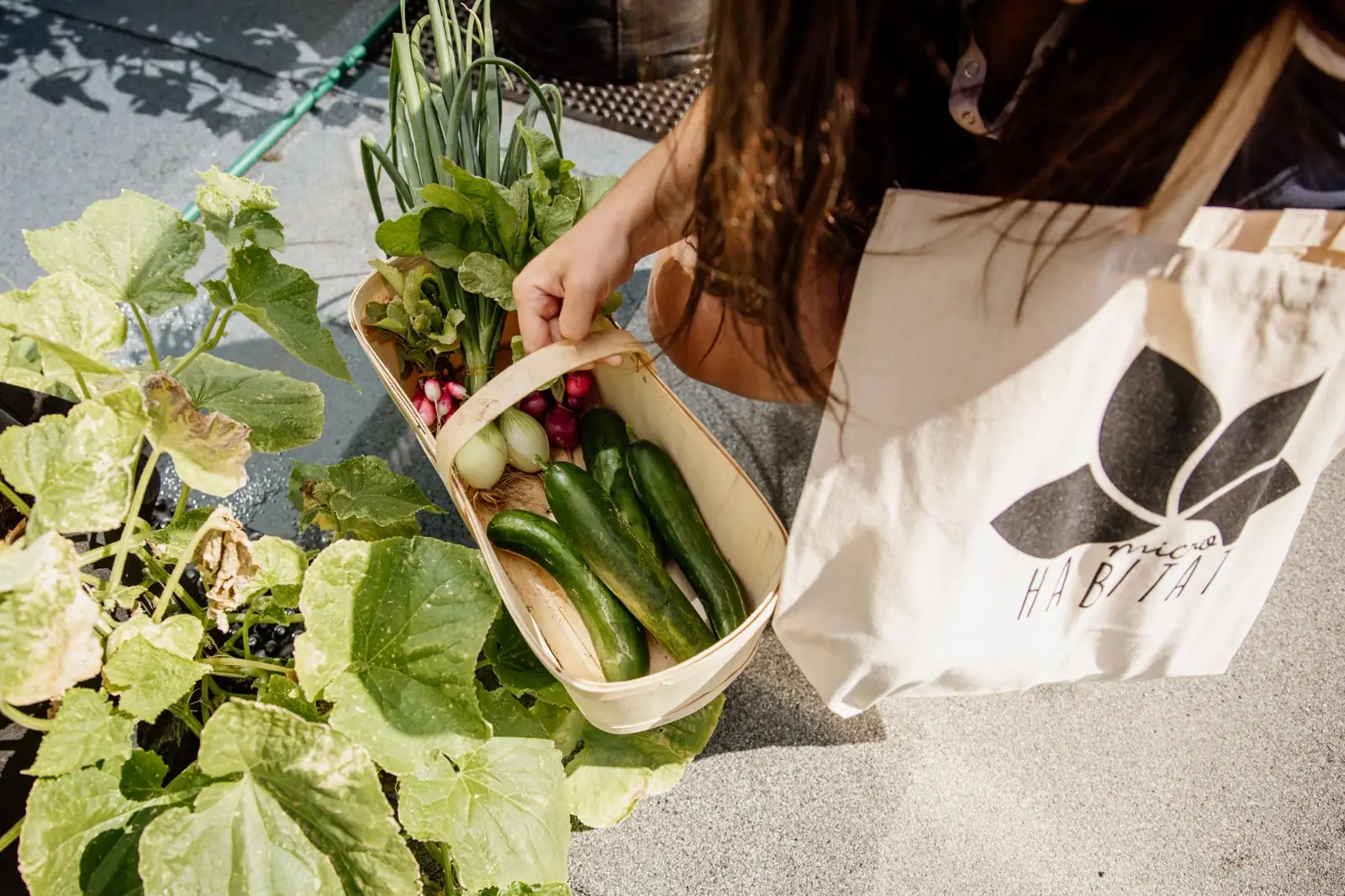
Lead with the proven performers. Leafy greens — lettuce, kale, chard, spinach, and arugula — are ideal because they have shallow roots, grow fast, and can be harvested repeatedly through a season. Herbs are the most rooftop-friendly group of all: rosemary, thyme, oregano, sage, and chives are Mediterranean plants that actually prefer hot, dry, breezy conditions, while basil, mint, and parsley thrive in full sun with steady water. Fruiting vegetables like tomatoes, peppers, chillies, and eggplant love the heat and light a roof provides, though tall tomatoes must be staked or caged against wind. Beans and peas climb a trellis and fix their own nitrogen. Fast root crops — radishes, beets, and short carrots — work where the growing medium is deep enough (roughly 8 inches or more).
Yes, you can grow tomatoes on a rooftop, and they are one of the most rewarding rooftop crops — the abundant sun produces excellent fruit — provided you choose sturdy or determinate varieties, give them a deep enough container, support them against wind, and water consistently so the heat does not stress them. The same goes for peppers and herbs, which are arguably the single best return on a rooftop because they are compact, productive, and built for sun and wind.
What ornamental and pollinator plants work best on rooftops?
The best ornamental and pollinator plants for rooftops are drought-tolerant, wind-resistant species — sedums, ornamental grasses, lavender, yarrow, coneflower, and other tough perennials — that hold up in exposure and feed bees and butterflies. These plants give a rooftop year-round structure and color while asking for very little water, making them the backbone of low-maintenance and green-roof plantings.
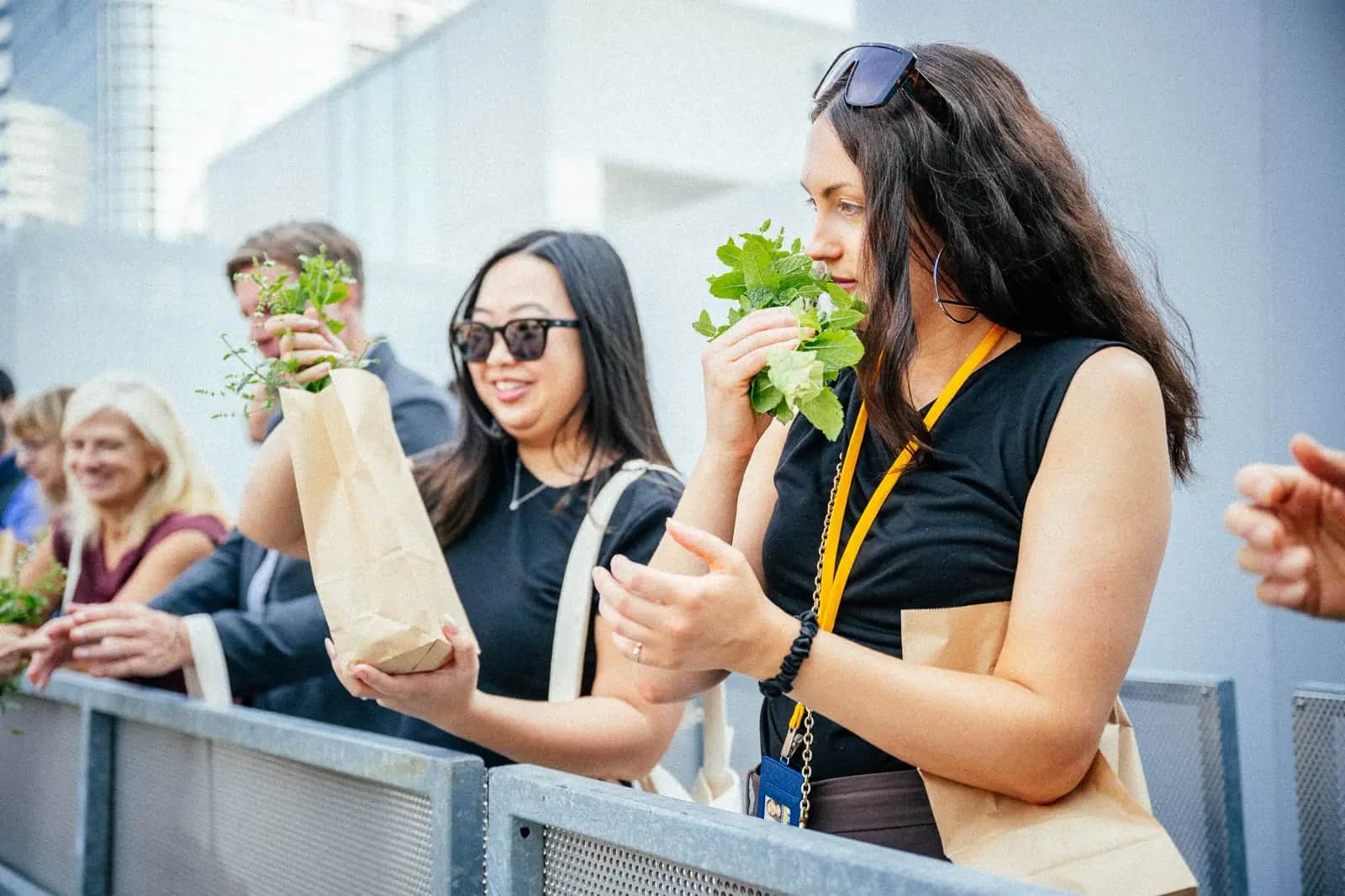
Sedums are the classic rooftop ornamental: they store water in their leaves, shrug off heat and drought, root in very shallow medium, and are the standard choice for extensive green roofs precisely because they survive where almost nothing else will. Ornamental grasses — fescue, switchgrass, and similar — move with the wind instead of fighting it, so they rarely break, and they add movement and texture. For pollinators, lavender, yarrow, coneflower (echinacea), salvia, sedum, and herbs left to flower draw bees and butterflies, turning a roof into genuine habitat — a meaningful biodiversity gain in a dense city. Hardy perennials and some compact shrubs can work too, as long as their mature size and root depth fit your weight budget. Pairing edibles with pollinator ornamentals is also practical: the flowers improve fruit set on tomatoes, peppers, and beans.
What plants should you avoid on a rooftop?
Avoid tall, top-heavy, deep-rooted, and thirsty plants on a rooftop — large trees, big shrubs, broad-leafed plants that catch wind like sails, and any species that needs constant moisture or deep soil to survive. These plants fight the roof's core conditions instead of working with them, and they either fail, demand unsustainable watering, or exceed safe structural load.
Specifically, steer clear of: large trees and big woody shrubs, whose weight, root depth, and wind load are almost always beyond what a roof can safely carry; tall brittle plants that snap in sustained wind; broad, soft, large-leafed plants (many tropicals and tender ornamentals) that shred and desiccate in exposure; moisture-dependent and bog plants that wilt the moment the shallow medium dries; and deep-rooted vegetables like full-size carrots, parsnips, or potatoes where the growing medium is too shallow to support them. The recurring theme is simple: anything tall, thirsty, deep-rooted, or fragile is a poor rooftop bet. When in doubt, choose lower, tougher, and shallower-rooted. For a clear sense of how these constraints shape budget and design — and how much a rooftop garden costs once you account for system weight and structure — plant choice and system depth are the two biggest levers.
How do you match plants to your rooftop's conditions?
You match plants to your rooftop by assessing four things in order — structural weight limit, sun hours, wind exposure, and your climate zone — then selecting species that fit all four rather than choosing favorites first. Start with what the roof can hold, because weight caps soil depth and soil depth caps your plant palette; only then optimize for sun, wind, and hardiness. The table below maps the right plants to each condition.
Rooftop plant selection guide — plant → conditions → suitability:
| Plant group | Best conditions | Min. soil depth | Wind tolerance | Suitability |
|---|---|---|---|---|
| Sedums & succulents | Full sun, hot, dry | Shallow (2–4 in) | High | Excellent — best for shallow / green roofs |
| Mediterranean herbs (rosemary, thyme, oregano, sage) | Full sun, hot, breezy | Shallow–medium (4–8 in) | High | Excellent — thrive in exposure |
| Leafy greens (lettuce, kale, chard, arugula) | Full to partial sun | Medium (6–8 in) | Medium | Excellent — fast, repeat harvest |
| Soft herbs (basil, mint, parsley) | Full sun, steady water | Medium (6–8 in) | Medium | Very good — need consistent watering |
| Tomatoes, peppers, eggplant | Full sun, hot | Deep (10–12+ in) | Low–medium (stake them) | Very good — must support against wind |
| Ornamental grasses | Full sun, windy | Medium (6–8 in) | Very high | Excellent — flex in wind |
| Pollinator perennials (lavender, yarrow, coneflower) | Full sun, dry | Medium (6–8 in) | High | Excellent — adds habitat |
| Beans & peas | Full sun, with trellis | Medium (8 in) | Medium (trellised) | Good — climbing saves space |
| Large trees & shrubs | — | Deep | — | Avoid — weight and wind |
| Tropicals & broad-leaf tender plants | Sheltered, humid | Variable | Very low | Avoid — shred and dry out |
Work the table top to bottom against your own roof. If your structure allows only shallow medium, your palette is sedums, Mediterranean herbs, greens, and grasses — already a rich, productive roof. If you have more depth and load capacity, you can add fruiting vegetables and pollinator perennials for a fuller farm. Because these decisions hinge on engineering as much as horticulture, productive rooftop farms are usually professionally designed — which is also the core difference in an urban farm vs community garden comparison, where the farm is built around yield, structure, and maintenance from day one. For more on growing in the city, our urban farming FAQ answers the questions that come up most.
How Microhabitat selects rooftop plants
Across Microhabitat's installations in North America and Europe, plant selection always starts with the building's structural limits and local climate, then layers in the right edibles and pollinator species for each roof — the exact method this guide describes. The result is rooftops that are productive, resilient, and low-maintenance season after season, growing genuine food and habitat in the middle of dense cities. This approach reflects the same priorities the USDA promotes through its Urban Agriculture initiative, which supports growing food in urban and suburban spaces. The takeaway for any roof is consistent: pick hardy, wind- and heat-tolerant plants in shallow-friendly systems, and match every choice to sun, wind, and weight.
Planning a rooftop? See the cost breakdown and explore our outdoor farm installations.
Thinking about turning your roof into a productive farm? Contact us for a quote → and Microhabitat will design a rooftop planting matched to your building's conditions.