Urban Farm vs Community Garden
The key differences in purpose, ownership, scale and output, plus how to choose the right model for your space or building.
On this page
Quick answer: In the urban farm vs community garden comparison, an urban farm is a managed, production-oriented operation built for consistent food output and often commercial or institutional use, while a community garden is a shared space where individuals tend their own plots for personal use. The core differences are purpose, ownership and scale: production and management versus participation and community.
The terms get used interchangeably, but the difference between an urban farm vs community garden is real and it matters — especially if you manage a building, a campus, or a corporate property and you're deciding which one belongs on your roof or your grounds. One is run for people as a managed service that delivers a reliable harvest and reporting; the other is run by people as a shared amenity where neighbors grow their own food. They overlap in spirit — both bring food production into the city — but they differ sharply in who runs them, who eats the output, how much they yield, and what they cost to operate. This guide lays out those differences in a side-by-side table, answers the questions people ask most, and helps you pick the model that fits your goals.
What is the difference between an urban farm and a community garden?
The core difference between an urban farm and a community garden is purpose and management: an urban farm is a managed operation designed to produce food consistently and at scale, while a community garden is a shared, participatory space divided into individual plots where members grow food for themselves. Put simply, an urban farm is about production, and a community garden is about participation.
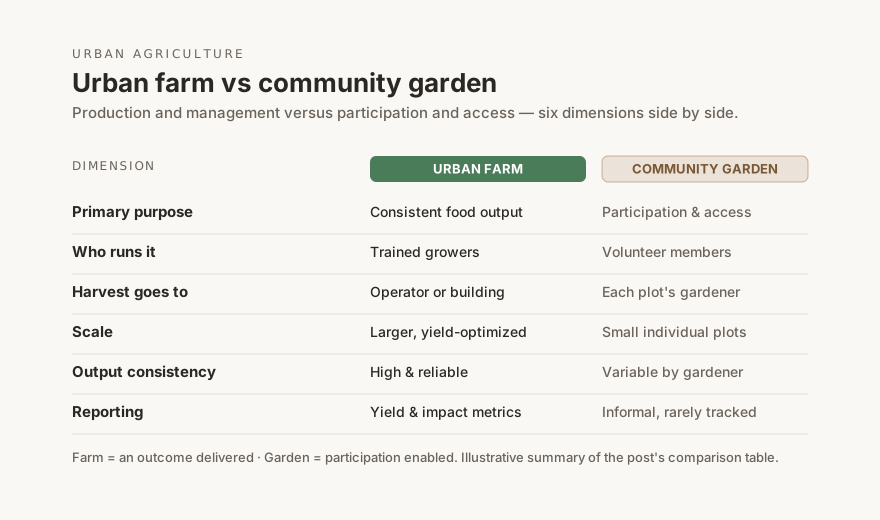
Both fall under the broader umbrella of urban agriculture — the practice of growing food within and around cities — alongside formats like rooftop farms, vertical farms, allotments, and edible landscapes. What separates them is intent. A farm exists to generate output: a measurable, repeatable harvest, usually managed by trained growers and often tied to a commercial, institutional, or tenant-facing goal. A community garden exists to give people access to growing space; the harvest belongs to whoever planted each plot, and success is measured as much in engagement and neighborhood connection as in pounds of produce. The table below makes the contrast concrete.
| Dimension | Urban farm | Community garden |
|---|---|---|
| Primary purpose | Consistent food production and output | Participation, access, and community building |
| Who runs it | Trained growers / a managed service | Volunteer members and a garden committee |
| Ownership of harvest | The operator, building, or program | Each member keeps their own plot's yield |
| Scale | Larger, optimized for total yield | Small individual plots, varies by member |
| Management | Professional, planned, often data-tracked | Self-organized and shared among gardeners |
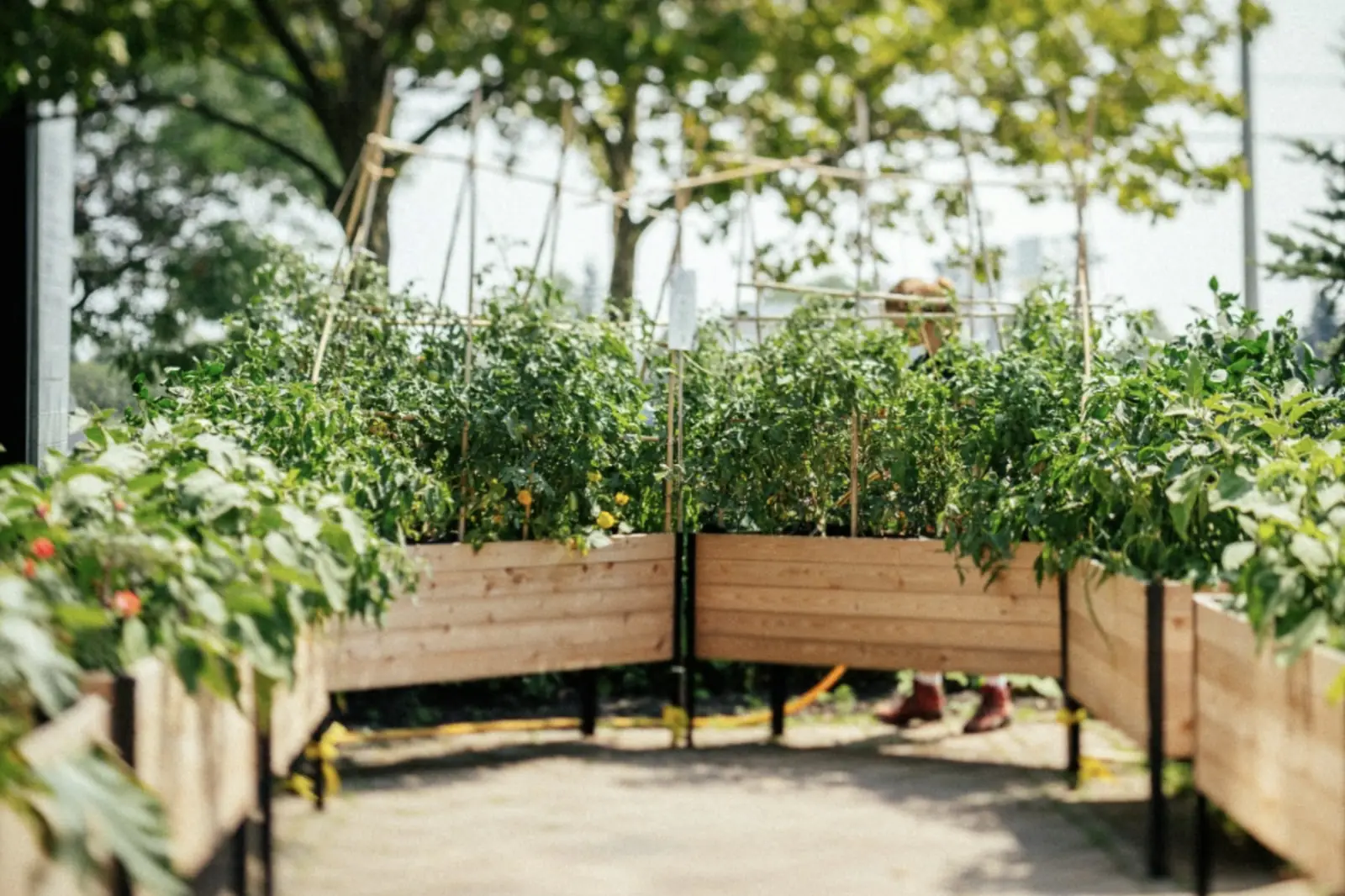
| Typical setting | Rooftops, corporate grounds, institutions | Vacant lots, parks, shared neighborhood land |
| Consistency of output | High — designed for reliable harvests | Variable — depends on individual gardeners |
| Reporting / accountability | Yield, engagement, and impact metrics | Informal; rarely formally reported |
If you want the deeper mechanics of the managed model — site assessment, growing systems, and seasonal operation — our overview of how urban farms work breaks down each stage in detail.
What is a community garden and who is it for?
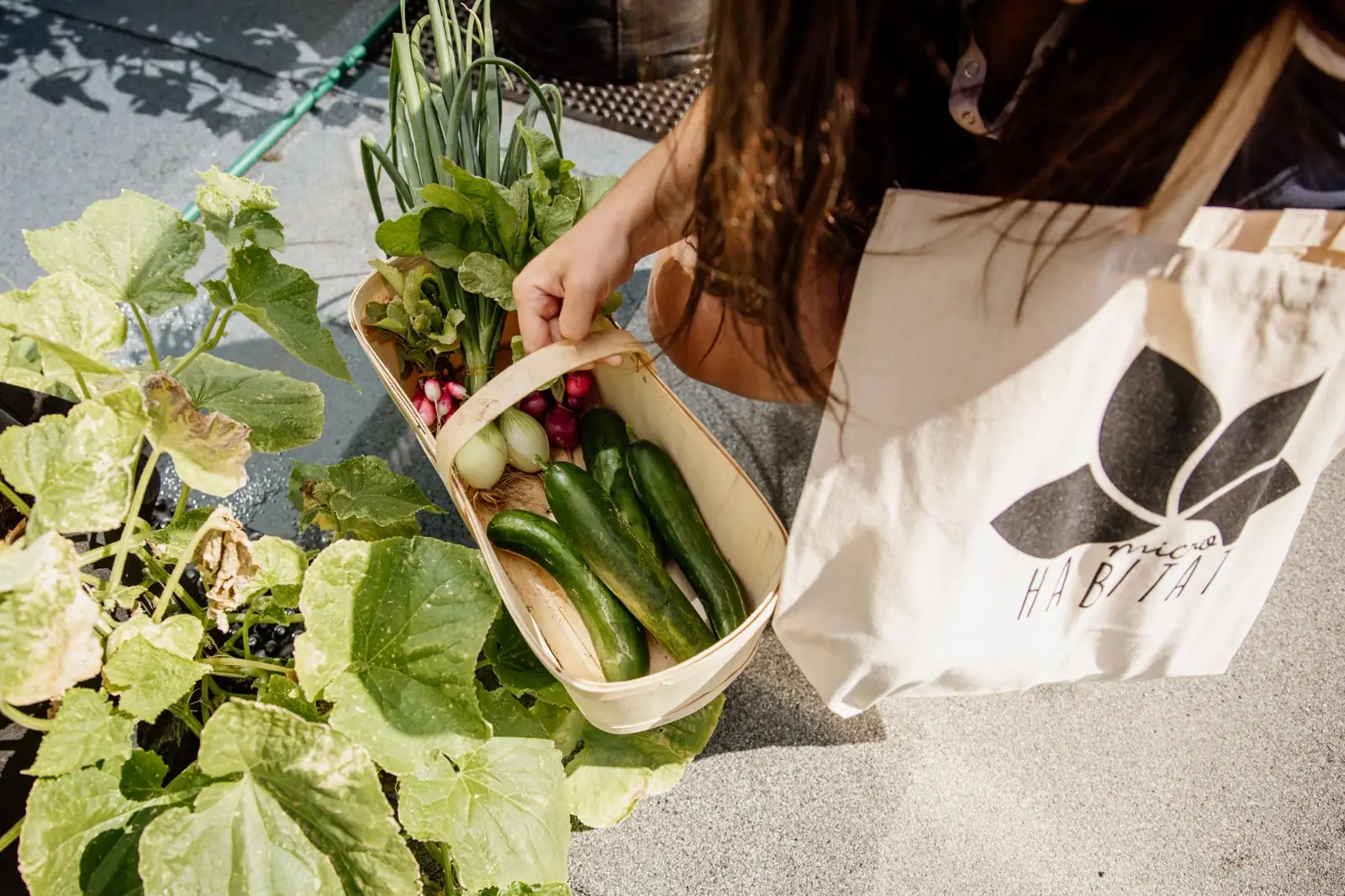
A community garden is a shared piece of land divided into individual plots where local residents grow their own fruits, vegetables, and flowers for personal use. It's organized and maintained collectively — usually by a volunteer committee or a nonprofit — and its purpose is access and connection: giving people without their own yard a place to grow food, learn, and meet their neighbors.
Community gardens are typically run by the gardeners themselves. Members apply for a plot, often pay a small seasonal fee, and take responsibility for their own patch, while shared tasks like maintaining paths, water access, and tool sheds are handled by the group. The American Community Gardening Association, the leading nonprofit supporting these spaces across North America, frames them as community-driven greening projects that strengthen neighborhoods, not as commercial food producers. That's the heart of the model: the value is in who gets to participate, not in how much a single operator can harvest. For an individual who wants their own growing space, or a municipality that wants to activate a vacant lot, a community garden is often the right answer.
How do urban farms and community gardens differ in scale, output, and management?
Urban farms differ from community gardens most sharply in scale, output, and management: a farm is professionally managed and engineered for consistent, sizable yields, whereas a community garden produces a variable harvest spread across many individual gardeners of differing skill and commitment. This is the practical dividing line for any property owner weighing the two.
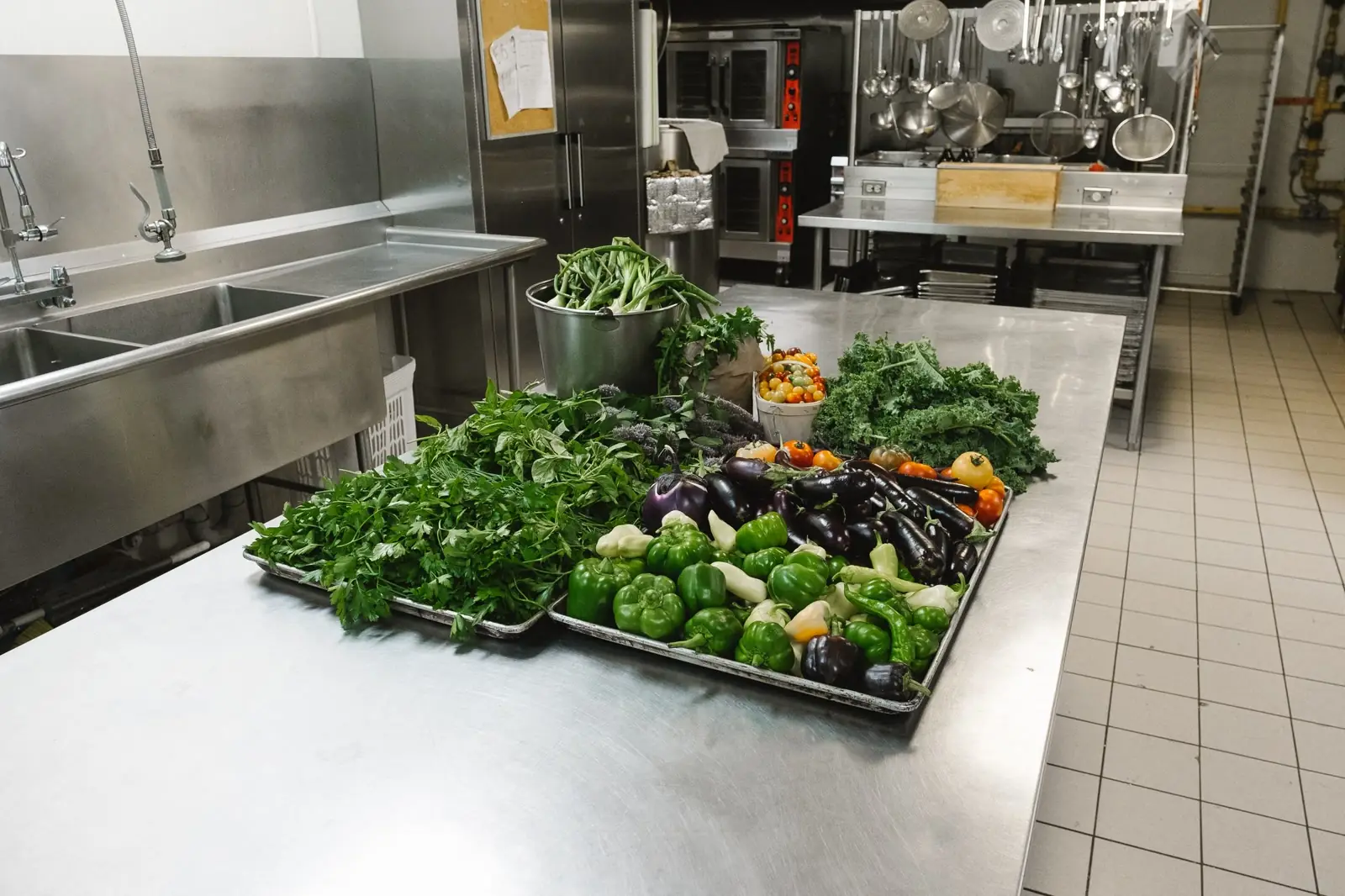
An urban farm is run by trained growers (or a managed-service provider) who plan the crop rotation, optimize the growing system, and tend the entire site to a standard. Because one team manages the whole operation, the harvest is reliable season after season and can be measured, reported, and tied to goals — tenant engagement, wellness programming, donations to a local food bank, or a building's sustainability narrative. Choosing the right crops is part of that optimization; reliable, high-yield, climate-appropriate species matter enormously, which is why what plants grow best on rooftops is one of the first questions a managed farm answers.
A community garden, by contrast, is the sum of its members. One plot might overflow with tomatoes while the one beside it goes fallow because its gardener got busy in July. That variability isn't a flaw — it's the nature of a participatory space — but it means a community garden can't promise a building a predictable harvest or a clean impact report. If consistency, accountability, and measurable output matter to your decision, that's the strongest argument for the farm model.
What do urban farms and community gardens cost, and who runs them?
The cost structures differ fundamentally: a community garden is largely funded by member fees, grants, and volunteer labor, while an urban farm is a managed service with a defined budget covering design, installation, and professional upkeep. In short, a community garden runs on volunteers, and an urban farm runs on a paid, accountable team.
A community garden's costs are modest and distributed. A coordinating body covers land access, water, and shared infrastructure — often through municipal support or grants — and individual members typically pay a small annual plot fee and supply their own seeds and labor. The trade-off is clear: low cost, but no guaranteed result and a heavy reliance on volunteers showing up.
An urban farm is a different financial proposition because someone is being paid to deliver an outcome. The budget covers the growing system, the plants, and — crucially — the trained labor that tends the site all season. Pricing scales with the size of the space, the type of system, and whether maintenance is bundled in; our guide to how much does a rooftop garden cost walks through the ranges and the factors that drive them. The managed model converts an unpredictable volunteer effort into a predictable line item with a deliverable attached: a harvest, an engaged tenant base, and the reporting to prove both.
Urban farm vs community garden: which is right for your space or building?
The right choice in the urban farm vs community garden decision depends on your goal: choose an urban farm if you need consistent food production, professional management, and measurable impact for a building or organization; choose a community garden if your aim is to give individuals their own space to grow and to build neighborhood connection. The deciding question is whether you want an outcome delivered or participation enabled.
For a residential complex, a municipality, or a neighborhood group whose goal is access, hands-on engagement, and community-building among many people, a community garden is often the better fit — it's low-cost, participatory, and meaningful by design. The American Community Gardening Association and the USDA's Urban Agriculture initiative, which funds urban growers and operates dedicated offices and grant programs, are strong starting points for that route.
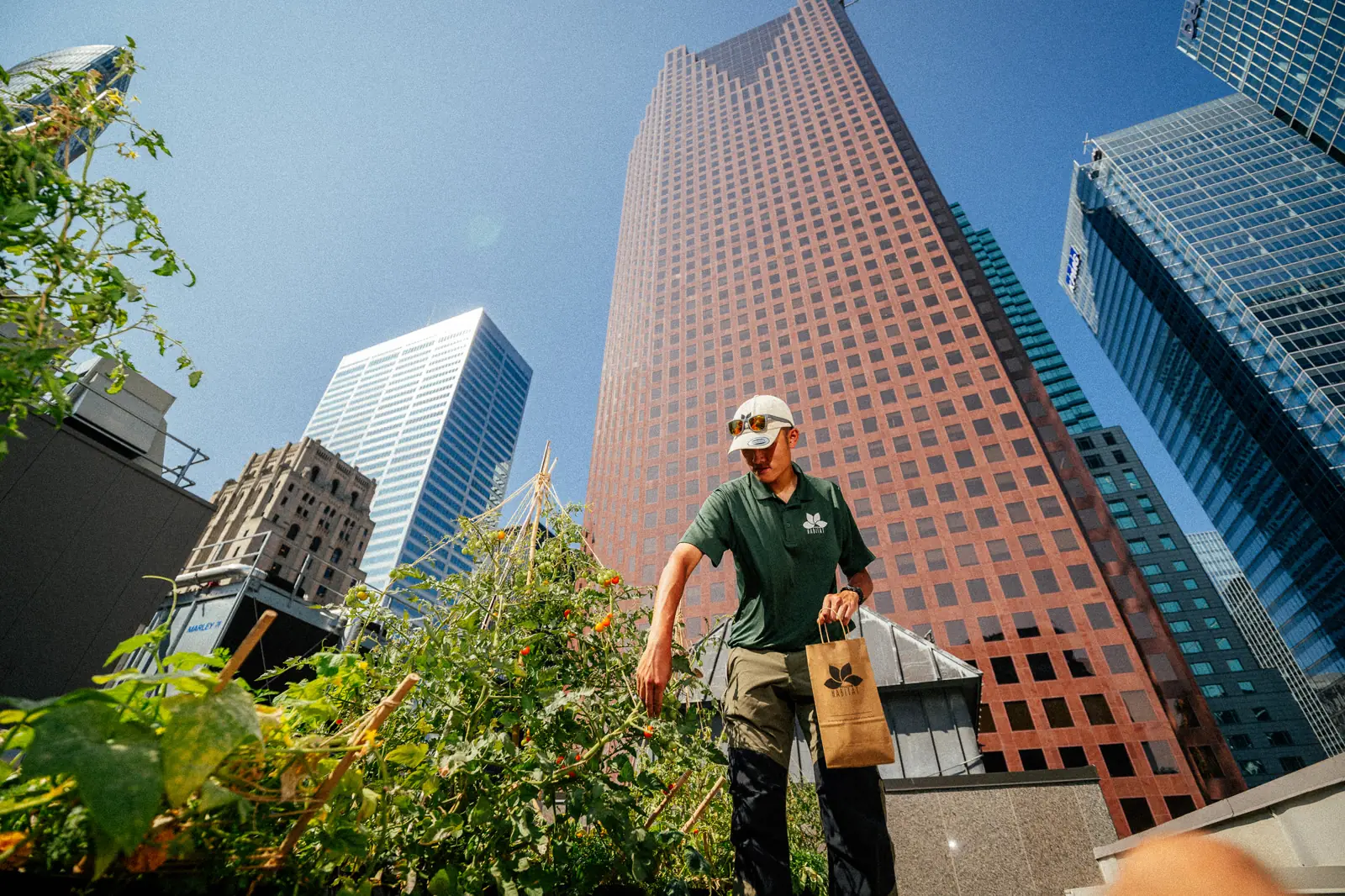
For a corporate property, an office campus, or a real-estate owner who needs a reliable harvest, professional upkeep, a polished tenant amenity, and impact data for ESG or wellness reporting, an urban farm is the stronger choice. That's the model Microhabitat operates: a fully managed on-site farm — installed and tended across our installations in North America and Europe by trained urban farmers — that delivers a consistent seasonal harvest, tenant engagement programming, and the reporting to back it up, without asking your building to rely on volunteer hours. For more on the managed approach, our urban farming FAQ answers the practical questions about installation, maintenance, and what to expect through a season.
Many properties don't have to choose just one philosophy, either — a managed farm can still be designed to invite participation, blending the reliability of professional management with the engagement of a community space. The point is to start from the outcome you want and work backward to the model that guarantees it.
Not sure which model fits your building? Contact us for a quote and we'll assess your space, your goals, and the right approach for you.