Green Jobs in Commercial Real Estate
Green jobs real estate hiring is booming. Explore the sustainability career path, the key roles, the skills, and how to break into commercial property.
On this page
Quick answer: Green jobs in real estate include sustainability managers, ESG analysts, building-performance specialists, and green-amenity operators. As reporting requirements and tenant expectations rise, commercial property owners are hiring fast for people who can deliver and document sustainability outcomes, making green jobs real estate one of the industry's clearest growth career paths.
If you want a career that is hiring, pays competitively, and lets you point at something real you helped build, green jobs in commercial real estate deserve a serious look. Office, retail, and industrial landlords used to treat sustainability as a side project. Now it sits at the center of how buildings get leased, financed, certified, and valued, and that shift has created a whole layer of roles that barely existed a decade ago. This guide walks through what these jobs actually are, what they pay attention to, the skills and credentials that open doors, and concrete steps to break in, whether you are a student, a career-changer, or already working in property and looking to specialize.
What 'green jobs' in commercial real estate means
Green jobs in commercial real estate are roles whose core purpose is to reduce a building's environmental impact and prove that reduction to tenants, investors, and regulators. The U.S. Bureau of Labor Statistics, in its Measuring Green Jobs program, broadly defines green jobs as either jobs in businesses that produce environmental goods and services, or jobs in which workers' duties involve making their establishment's processes more environmentally friendly. In property, that second category is where most of the growth lives: people who make existing buildings cleaner, more efficient, and more attractive to sustainability-minded occupiers.
That covers a wide range. Some roles are deeply technical, like commissioning a building's mechanical systems to cut energy use. Others are analytical, like assembling the carbon and water data behind an investor disclosure. Others are operational and people-facing, like running a rooftop farm or a tenant wellness program. What ties them together is a shared goal: a measurably better-performing building, with the documentation to back the claim. A green job is not a job where sustainability is a nice-to-have line in the description. It is the job.
What is the sustainability career path in real estate, and what are the roles?
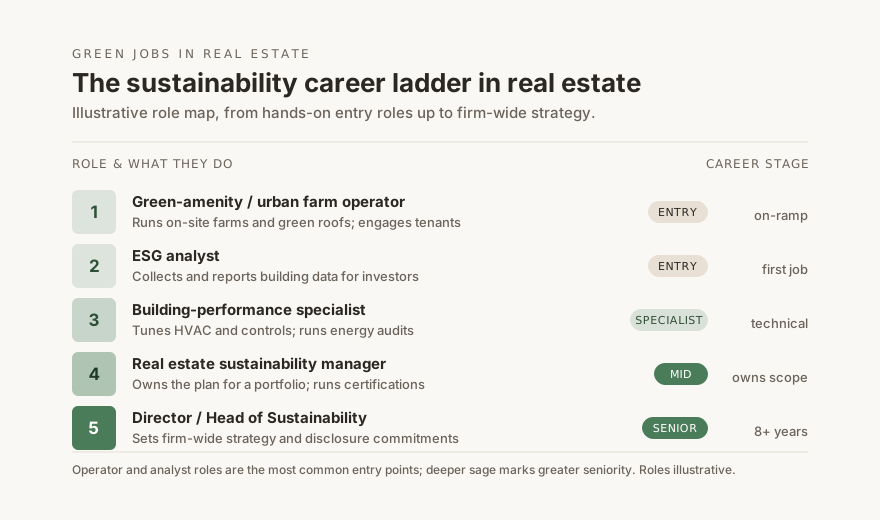
The sustainability career path in real estate runs from hands-on technical and operational roles into analytical and strategic positions, with no single mandatory route in. A common progression looks like this: start in a specialist or coordinator role tied to one building or portfolio, move into a manager role owning sustainability across more assets, then grow toward a director or head-of-sustainability seat that sets strategy for an entire firm or fund. People enter from property management, engineering, environmental science, finance, and increasingly from on-the-ground green operations like urban farming.
Here are the roles you will see most often in commercial real estate sustainability teams and the property companies they support.
| Role | What they do | Typical entry background |
|---|---|---|
| Real estate sustainability manager | Owns the sustainability plan for a building or portfolio; runs certifications, targets, and tenant programs | Property management, environmental science, engineering |
| ESG analyst | Collects, validates, and reports environmental, social, and governance data for investors and regulators | Finance, data analytics, sustainability studies |
| Building-performance / energy specialist | Tunes HVAC, lighting, and controls; runs audits and commissioning to cut energy and emissions | Mechanical or building engineering, trades, facilities |
| Green building consultant | Advises projects on LEED, BOMA BEST, or WELL certification and design choices | Architecture, engineering, sustainability consulting |
| Green-amenity / urban farm operator | Runs on-site farms, green roofs, and biophilic amenities that engage tenants and support certifications | Horticulture, agriculture, operations, hospitality |
| Director / Head of Sustainability | Sets firm-wide strategy, capital priorities, and disclosure commitments | 8+ years across the roles above |
The two ends of this table matter for newcomers. The analyst and specialist roles are the most common first jobs, and the operator roles, including running an on-site farm, are an underrated entry point because they are practical, visible, and growing fast. If the hands-on path appeals, our deeper guide to urban farming jobs breaks down those roles and what they pay.
What skills and credentials do green jobs real estate roles require?
The skills that matter most for green jobs real estate employers split into three buckets: technical literacy, data fluency, and the ability to communicate outcomes to non-experts. Green-building careers reward people who can move between a mechanical room, a spreadsheet, and a boardroom. You rarely need all three at an expert level on day one, but you need to be credible in at least one and willing to grow into the others.
On credentials, a recognized green-building qualification is the clearest signal you can put on a resume. The U.S. Green Building Council offers LEED professional credentials, starting with the LEED Green Associate as a foundational credential and LEED AP for advanced specialization. In Canada, the Canada Green Building Council administers green-building education and workforce programs and tracks the country's green-building employment landscape. These are accessible to early-career candidates and are widely understood by hiring managers across the sector.
Use this checklist to gauge your readiness and target what to learn next.
- Sustainability frameworks — working knowledge of at least one of LEED, BOMA BEST, WELL, or GRESB.
- Data and reporting — comfort with spreadsheets, basic data validation, and energy or carbon accounting concepts.
- Building systems basics — how HVAC, lighting, metering, and controls drive a building's footprint.
- A recognized credential — LEED Green Associate is the common starting point; CAGBC programs for the Canadian market.
- Communication — turning technical results into a tenant update, an investor slide, or a certification submission.
- Hands-on green operations — practical experience running a farm, green roof, or wellness amenity is increasingly valued.
You do not need a four-year environmental degree to start. Many people break in with a credential, a portfolio of practical work, and clear evidence they can deliver and document results.
How do urban farming and green amenities fit into real estate careers?
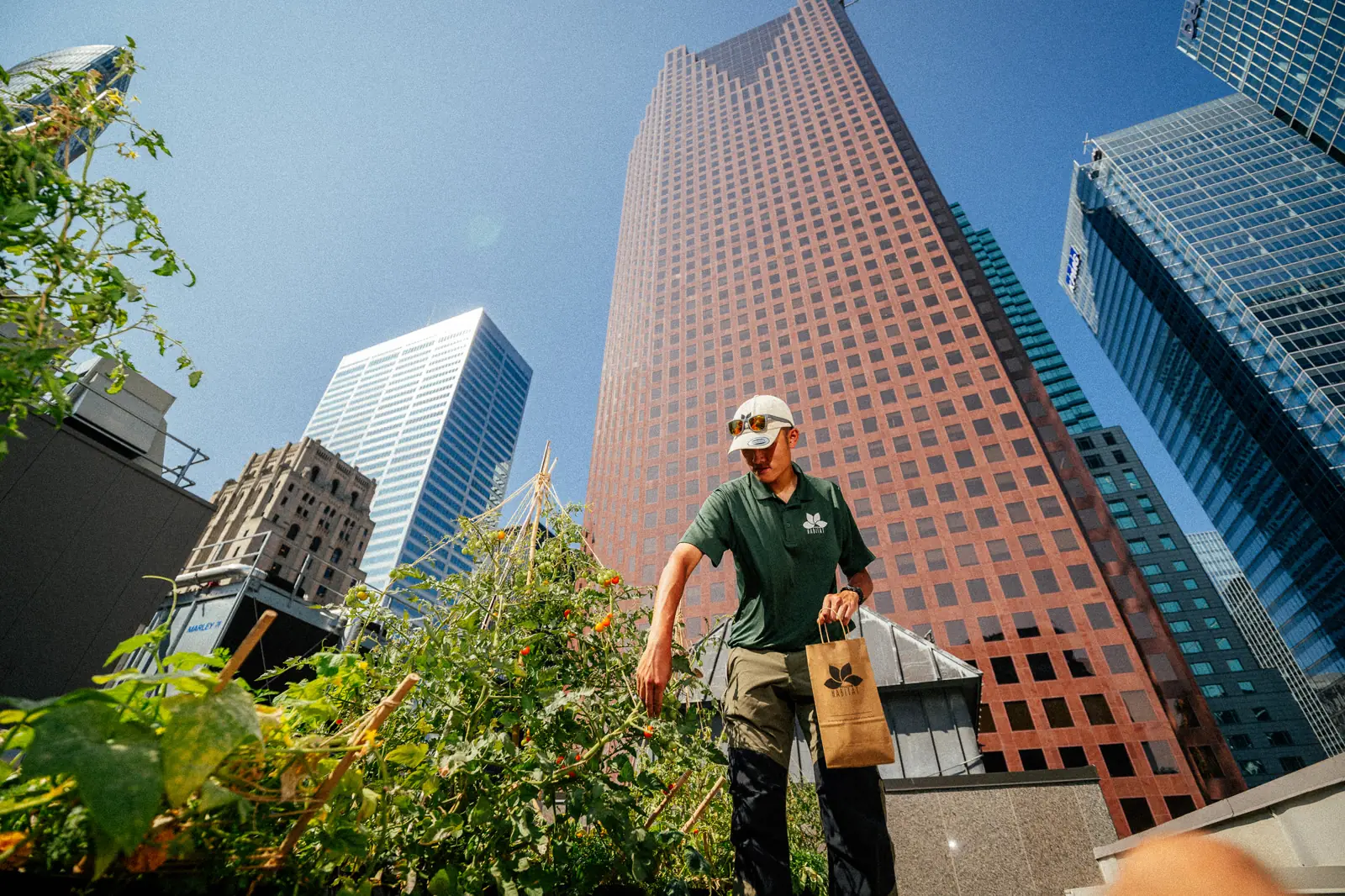
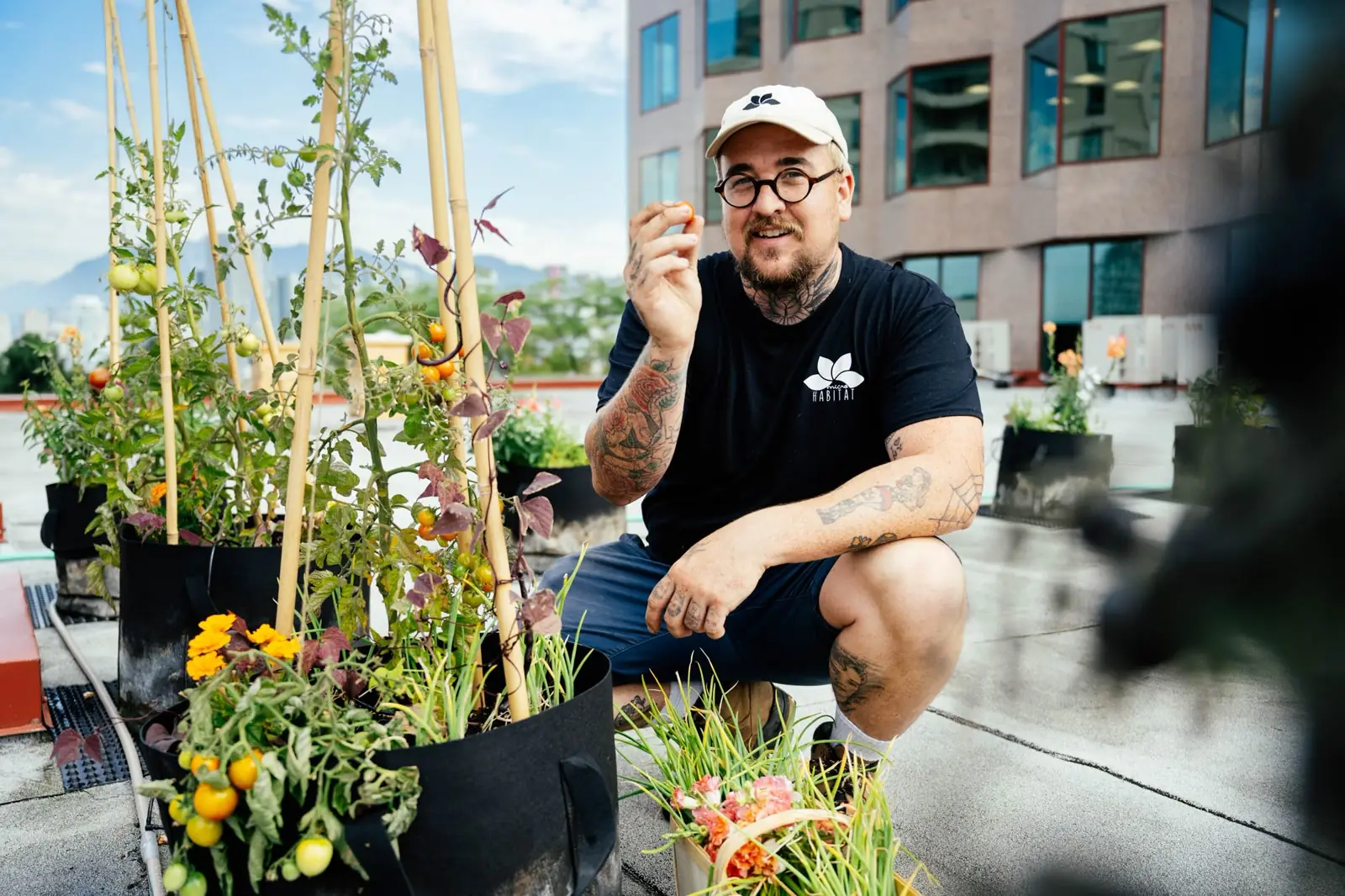
Urban farming and green amenities fit into real estate careers as one of the most accessible and fastest-growing on-ramps into the sector. On-site farms, green roofs, and biophilic spaces have moved from novelty to leasing tool, because they engage tenants, support sustainability certifications, and differentiate a building in a competitive market. That demand creates jobs that are practical and visible: someone has to design, install, operate, and report on these spaces, and increasingly that someone is a paid professional rather than a volunteer.
This is exactly the work Microhabitat does. Across Microhabitat's installations on commercial and institutional properties in North America and Europe, on-site farms are run as a managed amenity, with trained urban farmers handling the growing season, harvests, tenant events, and the data that feeds into a building's sustainability and wellness reporting. That combination, real food production plus measurable building outcomes, is why these roles bridge so naturally into broader green real estate careers. An operator who can run a farm and explain its impact to a property manager is already speaking the language of the sustainability manager and ESG analyst roles above.
It also connects directly to building value. Amenities that improve tenant attraction and retention are part of why owners invest in green space at all, a topic we cover in detail in our analysis of whether urban farms increase property value. For job-seekers, that link is the point: the work is hiring because it helps the building, and skills you build running a green amenity transfer upward into the rest of the sustainability career path. (For the full picture of the day-to-day, see what urban farming involves.)
How do you break into green jobs in real estate?
You break into green jobs in real estate by pairing one credible skill with one recognized credential and proof you can deliver outcomes, then targeting the entry roles where demand is highest. There is no single gatekeeper, which is good news for career-changers and students. Follow these steps in order.
- Pick your lane. Decide whether you lean technical (building performance), analytical (ESG and reporting), or operational (green amenities and urban farming). Aim your learning and applications at one lane first.
- Earn a starter credential. A LEED Green Associate, or a CAGBC program in Canada, is an inexpensive, widely recognized signal you can put on a resume quickly.
- Build proof. Run or document a real project: a building energy audit, a sample ESG data pack, a green-roof or farm season, a tenant sustainability event. Tangible evidence beats coursework alone.
- Target the right entry roles. Apply to analyst, coordinator, specialist, and operator openings rather than waiting for a manager seat. These are the doors that open first.
- Speak in outcomes. In applications and interviews, lead with results you delivered and documented, the same answer-first habit hiring managers in this field use every day.
- Get inside a growing operation. Practical green operations like on-site urban farming are hiring across markets and give you visible, transferable experience fast.
Do these six things and you have a realistic, dependency-free path from outsider to employed in under a year, with room to grow toward the manager and director roles as your portfolio builds.
Ready to start? View open positions → and find a green role in commercial real estate that fits the lane you want to grow in.