Urban Agriculture Internships Guide
A guide to the urban agriculture internship: where to find them, whether they pay, what you do each day, and how to turn a single season into a paid job.
On this page
Quick answer: An urban agriculture internship is hands-on, paid or unpaid seasonal training in growing food in city settings — rooftops, building grounds, and community plots. Open to students and career-changers alike, it is one of the most effective ways into the field, building the skill, network, and portfolio that often convert into a paid seasonal or full-time role.
If you want to grow food for a living and you are not sure where to start, an urban agriculture internship is usually the fastest, most credible first step. It gives you real growing reps, a reference who can vouch for you, and a season of evidence that you can do the work — the exact things employers screen for. This guide covers what these internships actually involve, who they suit, where to find them, what your days look like, and the practical path to turning a single season into a job offer. If you are ready to act now, you can View open positions → at Microhabitat, but read on first so you target the right opportunity.
What does an urban agriculture internship involve?
An urban agriculture internship involves learning to grow food in a city by doing it — seeding, transplanting, watering, scouting for pests, harvesting, and helping run the public side of an urban farm, all under the guidance of experienced growers. Unlike a classroom course, the learning is physical and seasonal: you work outdoors through the growing months and build skill week by week as the crops cycle from seed to harvest.
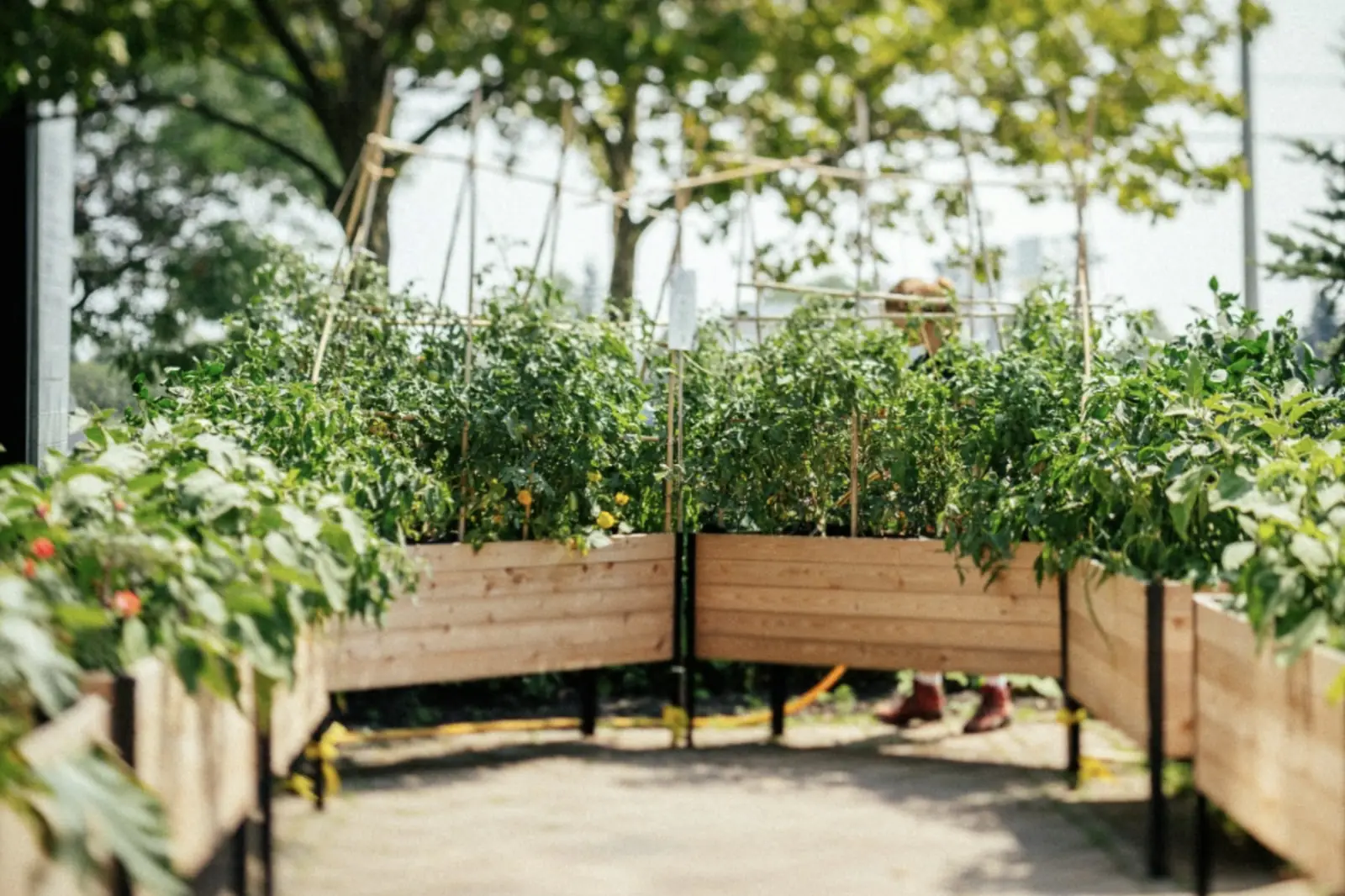
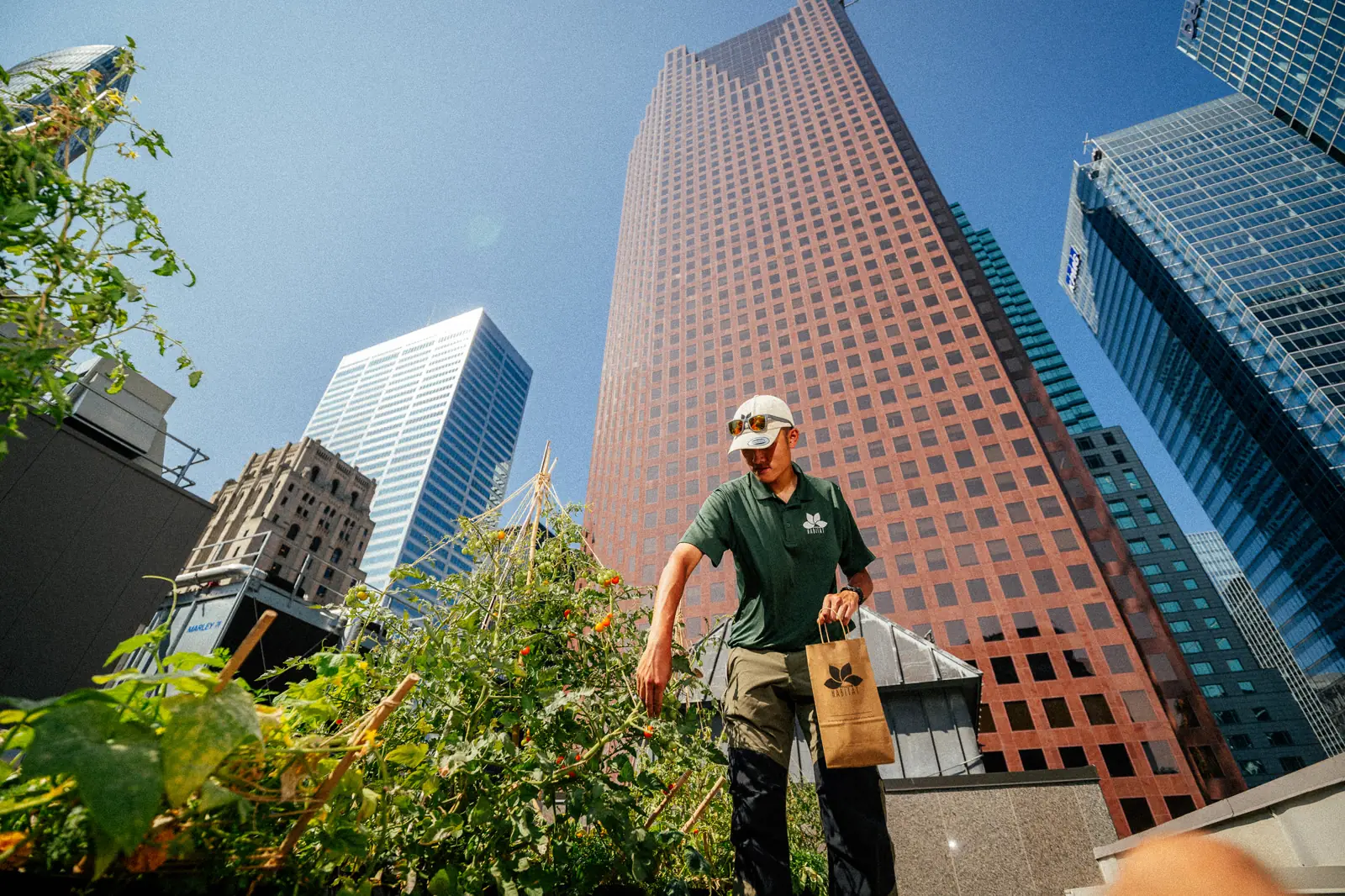
The defining feature of urban farming is that it blends agriculture with a service business operating where people live and work, so an internship exposes you to more than just plants. On a commercial site you might log crop data in the morning, fix a drip-irrigation line at midday, and help run a lunchtime harvest event for office tenants in the afternoon. That breadth is the point — you leave with growing fundamentals and the public-facing, operational instincts the sector actually hires for. To ground the rest of this guide, it helps to first understand what urban farming involves at the building level, since that installation-and-maintenance model is what most urban internships sit inside. The U.S. Department of Agriculture's Urban Agriculture and Innovative Production office reflects how seriously this field is now taken at a national level.
Who is an urban agriculture internship for?
An urban agriculture internship is for two main groups: students exploring a career in food, agriculture, sustainability, or environmental science, and career-changers who want concrete proof of hands-on ability before applying for paid roles. You do not need a farming background, a related degree, or prior experience — the entire purpose of an internship is to build that experience from a standing start.
Students use internships to convert coursework into field skill, satisfy program credit requirements, and test whether the day-to-day reality of farming fits them before committing to it. Career-changers — often arriving from hospitality, landscaping, logistics, retail, or office work — use them to bridge the credibility gap: a season on a real farm turns "I am interested in agriculture" into "I have grown crops through a full season." Both groups benefit from the same thing the field rewards across the board: demonstrated reliability and a genuine willingness to learn. If you want the longer roadmap for building skills from zero, our step-by-step guide on how to become an urban farmer pairs naturally with a first internship.
Where do I find an urban agriculture internship?
You find an urban agriculture internship by applying directly to urban farm operators, watching the careers pages of companies that install and run on-site farms, and tapping the established networks of universities, extension services, and food-systems organizations. Most postings cluster in late winter and early spring, when farms staff up for the season — so search early. Use this list of sources, roughly in order of value:
| Where to look | What you'll find | How to approach it |
|---|---|---|
| Urban farm operators' careers pages | Seasonal intern, grower, and technician roles at companies that build and maintain commercial farms (like Microhabitat) | Apply directly and early — bookmark careers pages and check them from February onward |
| University & college programs | Internships for credit in horticulture, agriculture, environmental science, and sustainability degrees | Ask your program coordinator or campus career office; many farms recruit through them |
| Cooperative Extension & land-grant universities | Local training, master-gardener programs, and connections to nearby farms | Contact your state's extension office (see USDA NIFA below) for programs and referrals |
| Community gardens & nonprofit urban farms | Volunteer-to-intern pipelines and education-focused placements | Volunteer first; many internships are filled from the existing volunteer pool |
| Municipal food & parks programs | City-run urban agriculture, food-security, and green-space internships | Check your city's food-policy or parks department job board |
| Job boards & networks | Postings on general and mission-driven boards (e.g. sustainability and food-systems job sites) | Set keyword alerts for "urban farm," "grower," and "agriculture intern" |
Two public networks are especially worth knowing. The USDA's urban grower resources hub points to training, grants, and dozens of urban county committees across the country, and the USDA NIFA Cooperative Extension system — delivered through the land-grant universities listed in NIFA's Land-grant University Website Directory — runs local programs that frequently feed directly into farm placements.
Are urban agriculture internships paid?
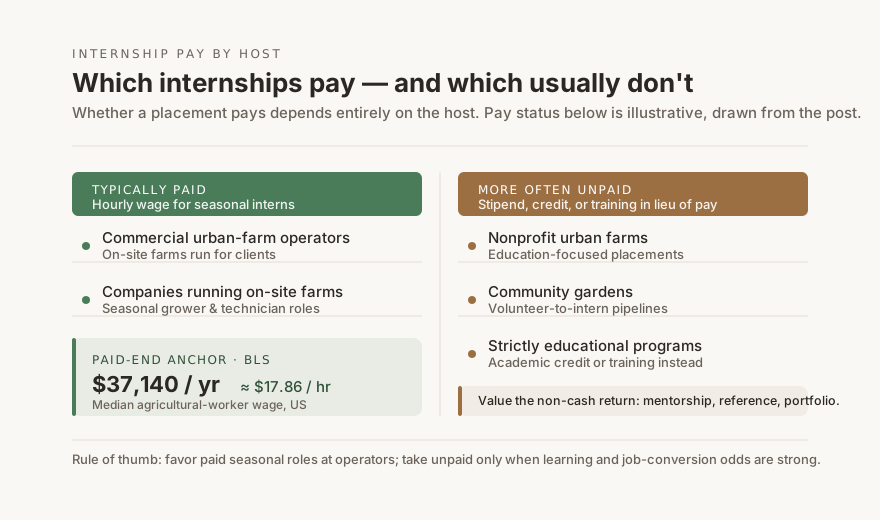
Some urban agriculture internships are paid and some are not — it depends entirely on the host. Commercial urban farm operators and companies that run on-site farms for clients typically pay their seasonal interns and growers an hourly wage, while nonprofit, community-garden, and strictly educational placements are more often unpaid or stipend-based, sometimes offering academic credit or training in lieu of wages.
As a realistic anchor for the paid end, the U.S. Bureau of Labor Statistics reports that agricultural workers earned a median wage of about $37,140 per year (roughly $17.86 per hour) in its most recent Occupational Outlook data — a reasonable benchmark for hands-on growing roles, including paid internships at commercial operators. When you weigh an unpaid placement, value what it returns beyond cash: mentorship, a credible reference, and a portfolio of real work. A clear rule of thumb is to favor paid seasonal roles at operators when you can get them, and treat an unpaid placement as worthwhile only when the learning, network, and conversion-to-job odds are genuinely strong.
What do you do day to day in an urban agriculture internship?
Day to day, you split your time between hands-in-soil growing work, site maintenance, data and record-keeping, and the public-facing programming that defines urban farms. No two days are identical, but a season follows the rhythm of the crops — heavy seeding and transplanting in spring, intensive tending and harvesting through summer, and bed turnover and wrap-up in fall. Expect physical, weather-exposed work, early starts, and steady repetition that builds genuine skill.
A typical day on a commercial urban farm might include:
- Seeding and transplanting — starting trays, moving seedlings into beds, and succession-planting so harvests stay continuous.
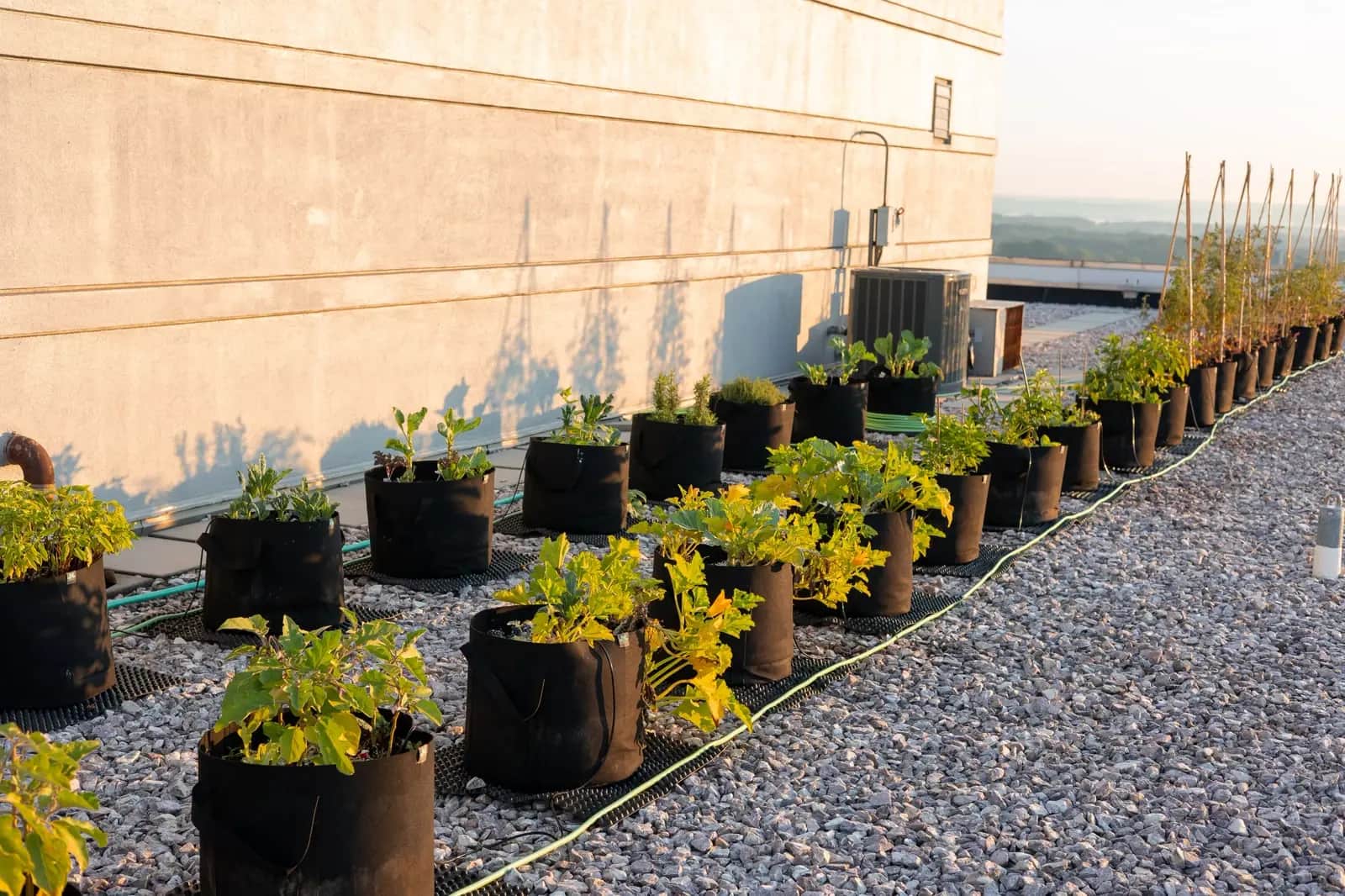
- Watering and irrigation checks — running and troubleshooting drip lines, a daily, non-negotiable task in summer heat.
- Pest and crop scouting — spotting problems early, identifying pests, and learning integrated pest management in practice.
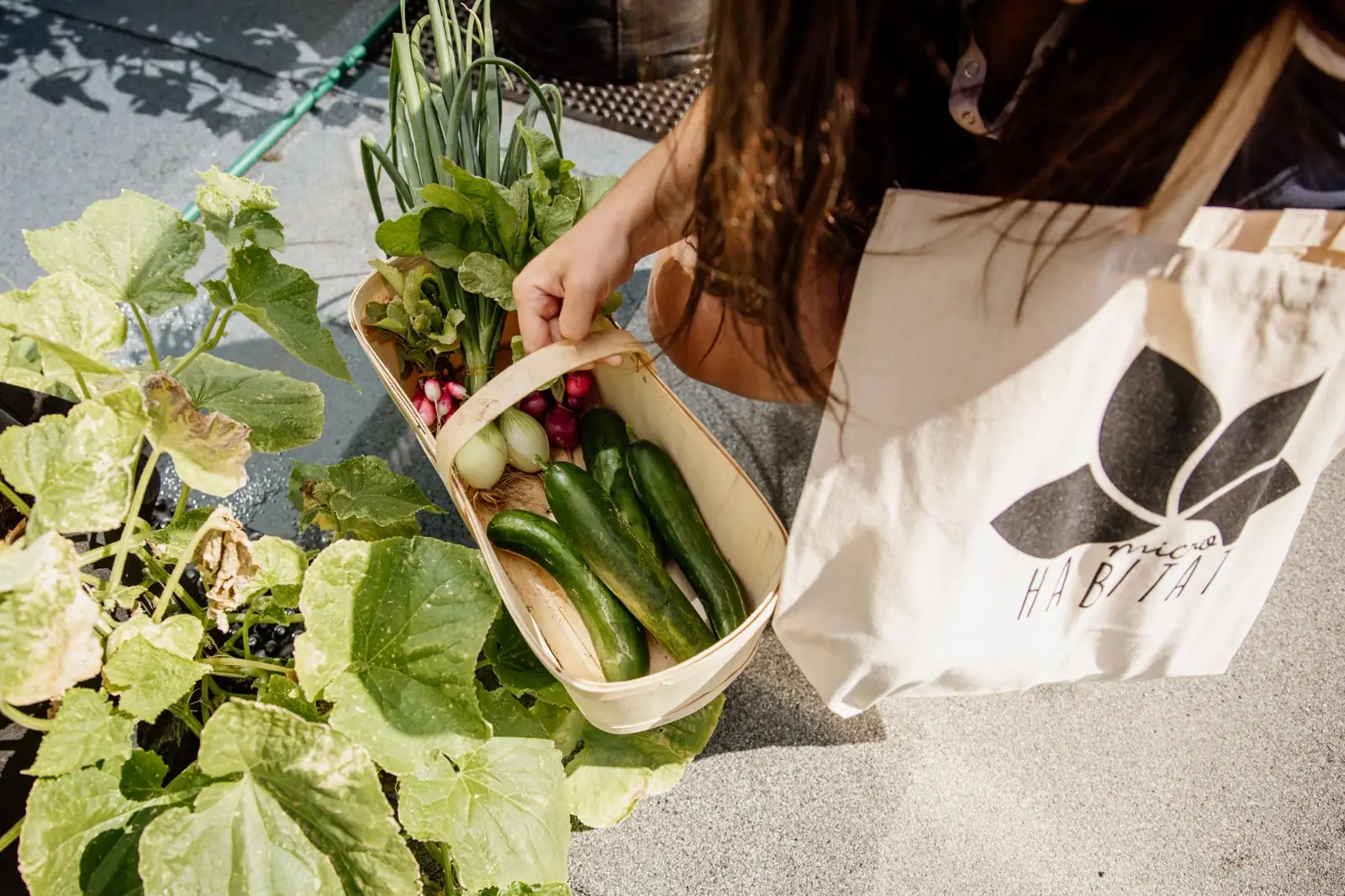
- Harvesting and post-harvest handling — cutting, cleaning, weighing, and packing produce to food-safety standards.
- Logging data — recording yields, planting dates, and crop health, increasingly via apps and sensors.
- Tenant and community programming — helping run workshops and harvest events, since urban farms are visible amenities on the buildings they serve.
Across Microhabitat's installations in North America and Europe, seasonal and intern staff learn exactly this blend — the agronomy of keeping crops thriving in tight urban footprints, plus the operational and people skills that running a farm beside offices and apartments demands.
Can an urban agriculture internship lead to a farming job?
Yes — an urban agriculture internship is one of the most reliable on-ramps to a paid farming job, because the seasonal structure of the field is built for exactly that conversion. Operators staff up for the growing season, train their interns and seasonal hires on real sites, and then keep the people who proved reliable, capable, and coachable. A strong first season frequently becomes a returning seasonal contract, a lead-grower or technician role, and a step up the ladder from there.
To maximize the odds of converting, treat the internship as an extended interview and do five things deliberately:
- Show up relentlessly. Reliability through heat, rain, and a full season is the single most-cited trait employers want. Being the person who is always there is half the job.
- Build a portfolio as you go. Photograph crops you grew, keep a harvest log, and note any workshop you helped run — concrete proof that outlasts the season.
- Learn the whole operation. Ask about crop planning, irrigation design, and client relationships, not just your assigned tasks. Breadth is what separates a returning hire from a one-season helper.
- Say you want to stay. Make your interest in a paid role explicit before the season ends, so you are top of mind when contracts are decided.
- Convert the internship into applications. Use your new experience and reference to apply broadly — your season instantly upgrades how your application reads across the wider world of urban farming jobs.
The encouraging reality is that this field hires on attitude and demonstrated skill more than on credentials, so an internship is not a detour around the front door — it is the front door.
Ready to grow your career in city food systems? View open positions → at Microhabitat and start your first season on a real commercial urban farm.