Nature-Positive Buildings: Biodiversity Net Gain Explained
What nature-positive and biodiversity net gain mean for buildings: how TNFD, CSRD and GRESB treat biodiversity, and how to evidence it on site.
Quick answer: A nature-positive building leaves more and better habitat on its site than it had at a measured starting point, and can prove it. Biodiversity net gain turns that into a number: in England, most new development must deliver at least 10% more habitat value than before. For property owners, the practical question is the same across TNFD, CSRD and GRESB — what is growing on site, how much of it, and where is the evidence.
Biodiversity used to live in the appendix of a sustainability report. It is now a named topic in European law, a scored indicator in the benchmark investors read, and a planning condition in England. ESG directors are being asked a question their energy data cannot answer: what does this building do for nature? This guide to nature-positive buildings explains what the term means at building scale, how the main frameworks treat biodiversity, what counts as on-site biodiversity, how to measure it, and how it shows up in a certification report.
Use the jump links below to navigate:
- What does “nature-positive” mean for a building?
- How do TNFD, CSRD (ESRS E4) and GRESB treat biodiversity?
- What counts as on-site biodiversity?
- How do you measure and evidence it?
- How does it appear in a certification report?
What does “nature-positive” mean for a building?
For a building, nature-positive means the site supports more habitat, in better condition, than it did at a baseline you measured — and the gain is kept, not planted once and forgotten.
The term comes from a global goal, not a building standard. The Nature Positive Initiative defines it as stopping and reversing nature loss by 2030, measured against 2020, with full recovery by 2050. That goal is aligned with the Kunming-Montreal Global Biodiversity Framework that governments adopted in December 2022. No one certifies a building as “nature-positive”. What a property can do is contribute to the goal in a way that is measured and reported.
Biodiversity net gain is the most concrete version of the idea. In England it is law. Under the UK government’s biodiversity net gain guidance, BNG has been mandatory since 12 February 2024 under Schedule 7A of the Town and Country Planning Act 1990, inserted by the Environment Act 2021. Developers must deliver a 10% gain, measured with the statutory biodiversity metric, and maintain the habitats they create or enhance for at least 30 years. Since 6 August 2026 it no longer applies to developments of 0.2 hectares or below.
Three things about BNG matter for owners outside England too:
- It starts with a baseline. The metric counts the habitat units on a site before anything changes. Without a starting number there is no gain to report.
- On-site comes first. Off-site gains and statutory credits exist, but credits are the last resort when on-site and off-site gains cannot be achieved.
- Gains must last. Thirty years of maintenance turns habitat from a project into an operating commitment.
BNG is triggered by a planning application, so it applies to new development and redevelopment, not to a building simply operating. But its logic — baseline, measured gain, long-term upkeep — is the logic every other framework now uses. That makes it a useful template even where it is not required.
How do TNFD, CSRD (ESRS E4) and GRESB treat biodiversity?
All three ask for biodiversity information, but in different forms: TNFD is a voluntary disclosure framework, ESRS E4 is a regulated EU reporting standard, and GRESB is an investor benchmark that now scores habitat gain at asset level.
TNFD. The Taskforce on Nature-related Financial Disclosures published its recommendations in September 2023. They follow four pillars — Governance, Strategy, Risk and Impact Management, and Metrics and Targets — and are supported by the LEAP approach for assessing nature-related issues. Location is central. Under Strategy, organisations are asked to disclose the locations of assets and activities that meet the criteria for priority locations. For real estate, that means nature is assessed site by site. Our guide to TNFD nature disclosure for property owners walks through LEAP in detail.
CSRD and ESRS E4. ESRS E4, Biodiversity and ecosystems, was adopted as part of Commission Delegated Regulation (EU) 2023/2772. The standard’s text sets six disclosure requirements, from a transition plan (E4-1) through policies, actions, targets and impact metrics to anticipated financial effects (E4-6). It applies where biodiversity is material. Two parts matter most for buildings. Companies must say whether they have sites in or near biodiversity-sensitive areas. And the application requirements allow land use to be reported in square metres or hectares: total use of land, total sealed area, and total nature-oriented area on site and off site. EFRAG published simplified draft standards in late 2025, so confirm which version applies to your reporting year. Our CSRD biodiversity reporting guide maps each requirement.
GRESB. GRESB treats biodiversity at two levels. In the 2026 Real Estate Assessment, indicator RM7 asks whether the entity has a strategy for biodiversity and nature-related issues; it references TNFD and is not scored. In the 2026 Asset Assessment, indicator BI1, Biodiversity & Habitat, calculates net habitat gain: habitat enhanced or restored, plus habitat protected on site and off site, minus habitat removed. The reporting-year value carries 60% of that score, and having a reporting-year target and a future-year target carry 20% each. For how an on-site farm feeds the rest of the assessment, see how urban farming improves your GRESB score.
Framework comparison
How four frameworks treat biodiversity
What each one asks for, who it applies to, and the on-site evidence it can use.
GRESB BI1 sits in the 2026 Asset Assessment; RM7 is not scored.
Read side by side, the frameworks converge. Each wants to know where your sites are, what habitat they hold, how that is changing, and what you are aiming for. One well-kept record can answer all of them.
What counts as on-site biodiversity?
On-site biodiversity is living habitat that a building creates, keeps or improves on its own land, roof or terraces — and each framework decides, by its own rules, how much of it counts.
For most commercial properties, three kinds of feature do the work:
- Pollinator planting. Flowering plants chosen to feed bees, butterflies and other insects across the season. On a roof or terrace this turns sealed surface into forage.
- Habitat features. Structures and plantings that give species somewhere to shelter, nest or feed, beyond what a lawn or ornamental bed offers.
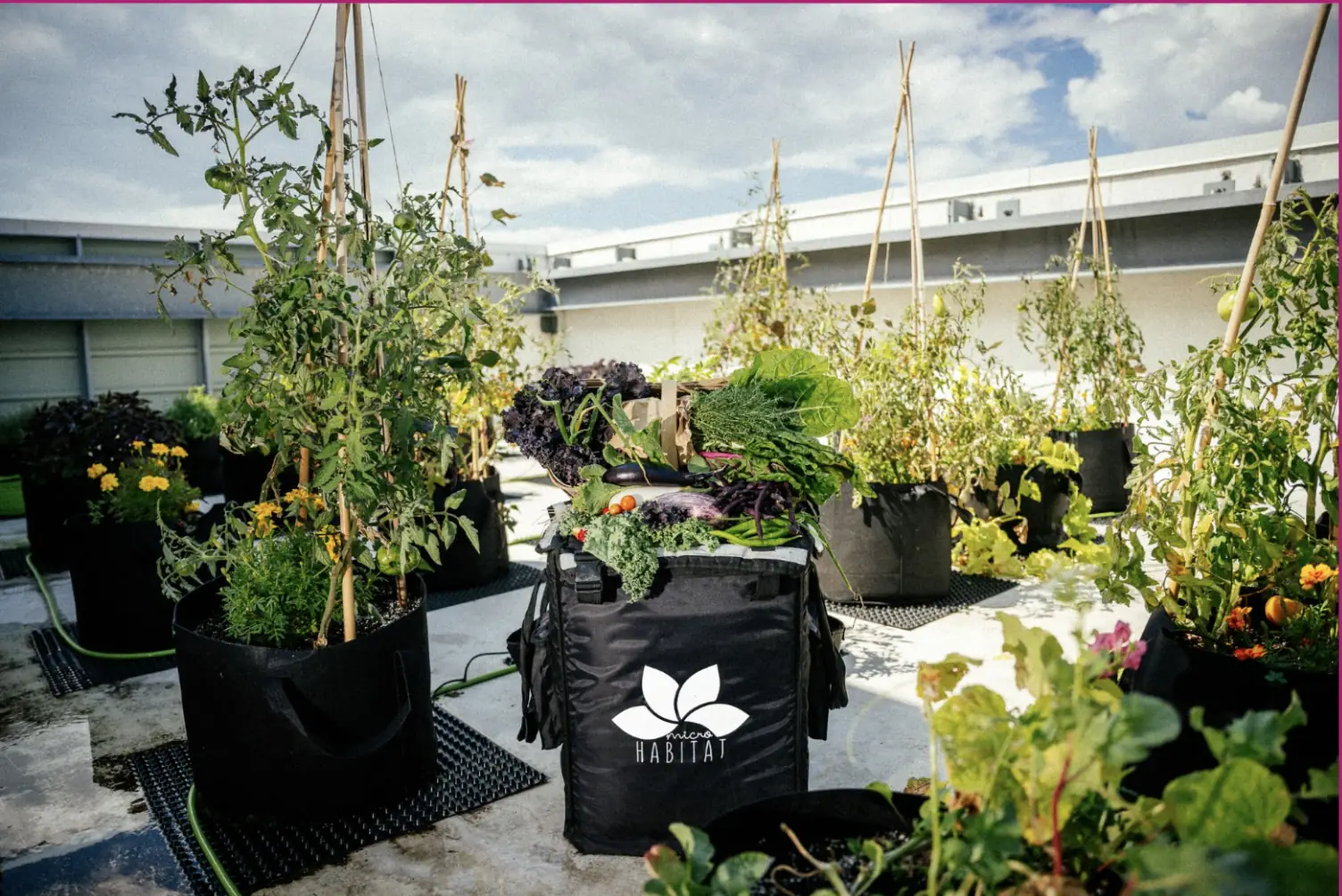
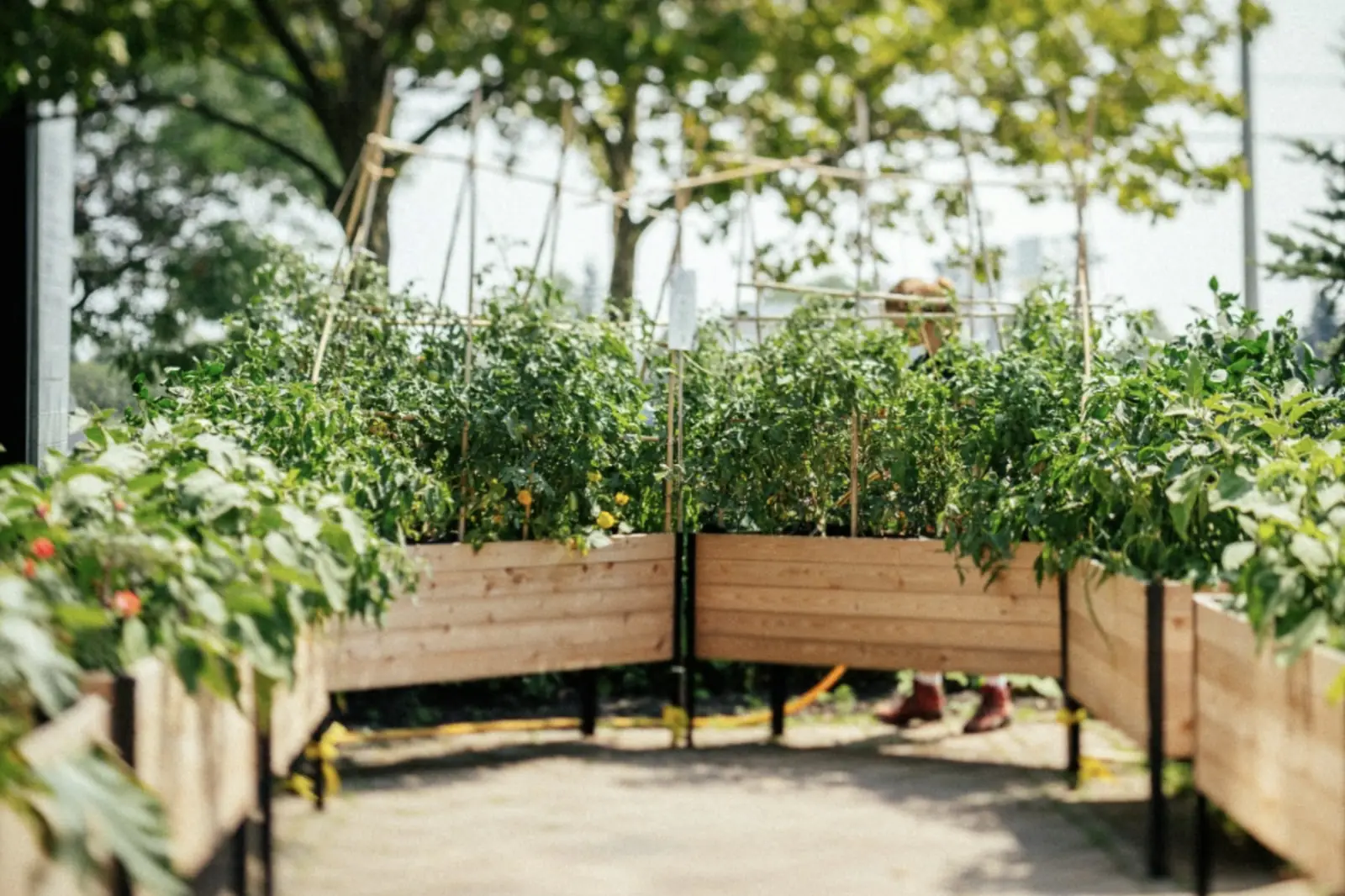
- Productive farms. Managed growing areas that combine vegetables, herbs and flowers. A working farm adds plant diversity, flowering cover and soil life to space that did nothing before — and it is looked after every week.
A farm is not a nature reserve, and it should not be presented as one. Its strength is different: it is planted area that someone manages and records all season. That record is exactly what the frameworks above ask for. The same area can be reported as nature-oriented area under ESRS E4 or as habitat enhanced under GRESB BI1, if your classification supports it. How you classify it is a judgment for you and your auditor, not something a supplier should decide for you.
The easiest gains are usually the surfaces nobody uses. Flat roofs, podiums and hard-landscaped courtyards are sealed area today. Converting part of them to planted area moves two ESRS land-use figures at once: sealed area down, nature-oriented area up. Plant choice matters too; our guide to the best plants for rooftop gardens covers what thrives at height.
How do you measure and evidence it?
You measure on-site biodiversity by recording a dated baseline, then logging planted area, species, condition and upkeep through the year — so every claim in a report points to a document.
The discipline is the one BNG enforces by law: count before you change anything. A photograph of a bare roof with a date on it is worth more at reporting time than any description written later. From there, keep a record that grows with the site. This table shows what to capture and where each item is used.
| Evidence to capture | What it shows | Where it is used |
|---|---|---|
| Dated baseline (site plan and photos before work) | The starting point any gain is measured from | BNG baseline logic, GRESB BI1, ESRS E4 targets |
| Planted area in m² or ft², by location | How much sealed surface became living surface | ESRS E4 land-use metrics, GRESB BI1 habitat enhanced |
| Species and planting list, including pollinator plants | What the habitat contains | TNFD metrics, ESRS E4 impact metrics, certification evidence |
| Maintenance logs and seasonal photos | That the habitat is kept, not just installed | GRESB, TNFD, auditor and reviewer questions |
| Year-over-year targets | Where the site is heading | GRESB BI1 target points, ESRS E4-4, TNFD Metrics and Targets |
Two rules keep the evidence credible. First, never estimate a measured figure: if an area has not been measured, the record should say so. Second, collect as you go. Reconstructing a season of habitat at filing time produces vague claims, and vague claims are what reviewers and assurance providers question first.
A managed operator should hand most of this over as standard. MicroHabitat runs more than 250 urban farms in over 20 cities in North America and Europe. Where we maintain a farm, our urban farmers log their site visits with photos through the season, which gives you a dated record to report from.
How does it appear in a certification report?
In a certification report, on-site biodiversity appears as specific credits or indicators, each with its requirement and threshold stated and the evidence listed beside it — not as a general statement about green space.
A good report takes the record above and files it against the rules. For each credit or indicator in scope it states what the framework asks, what the bar is, and which document proves your building meets it. What goes inside an audit-ready certification report explains that structure, including the evidence register that tells a reviewer exactly where to look.
Biodiversity rarely sits in one place. The same planted roof can support an ecology credit such as LEED v5’s Biodiverse Habitat, a habitat indicator in GRESB and a land-use figure in a CSRD disclosure. Which of those apply depends on your country, asset type and project stage. Which certification frameworks apply to your building sorts the 17 frameworks we cover into families, so you can see where biodiversity evidence will be read.
It also connects to commitments beyond certification, which our complete guide to ESG-aligned urban farming covers. Many owners report against the UN goals, and on-site habitat and food growing link directly to them; see urban farming and the UN Sustainable Development Goals.
A report documents performance; it does not create it. If there is no habitat on site yet, the report will say so plainly, and planting it is a separate, solvable step. Where the habitat exists, the report makes sure it is counted.
Dig deeper: how certification reports are drafted and reviewed, contribution report or full scorecard, Scope 3 cuts via nature-based solutions and TNFD nature disclosure for property owners.
Answer eight questions about your building — country, asset type, project stage, what is growing on site — and see which of the 17 certifications and disclosure frameworks you qualify for, with the reason for each. No account needed to look.