Scope 3 Cuts via Nature-Based Solutions
How Scope 3 nature based solutions in buildings cut value-chain emissions: what counts, what to measure, and where on-site farms fit a credible strategy.
On this page
Quick answer: Scope 3 nature based solutions help buildings reduce value-chain emissions by cutting food-related impact, shortening produce supply chains, and supporting credible insetting and removals narratives. On-site farming adds vegetated area and locally grown food, contributing to a documented Scope 3 reduction strategy when paired with rigorous measurement and honest carbon accounting.
For sustainability officers and property managers, Scope 3 is the category that breaks most decarbonisation plans — it is large, diffuse, and sits outside your operational control. Nature based solutions are increasingly framed as a lever here, but the claims around them are uneven and easy to overstate. This guide draws a precise line between what on-site farms and other nature based interventions genuinely do for value-chain emissions and what they do not, how to measure the contribution defensibly, and where they fit alongside the rest of a credible strategy. For the wider programme this sits inside, see our pillar guide to ESG-aligned urban farming.
What are Scope 3 emissions, and why are they the hardest category for buildings?
Scope 3 emissions are the indirect greenhouse gas emissions across a building's value chain — everything from the goods and food tenants buy to upstream transport, waste, and embodied carbon in materials — and they are the hardest category because the building owner does not directly control most of the activities that generate them. Under the GHG Protocol, Scope 1 covers direct emissions and Scope 2 covers purchased energy, but Scope 3 captures the fifteen upstream and downstream categories that typically dominate a portfolio's total footprint. The GHG Protocol's own guidance notes that Scope 3 is frequently the largest source of an organisation's emissions, which is exactly why it cannot be ignored in a serious reduction plan.
The difficulty is structural rather than technical. You can meter your own electricity; you cannot meter a tenant's lunch supply chain or a contractor's material sourcing without estimation, supplier data, and assumptions. That makes Scope 3 both the biggest prize and the easiest place to make claims that do not survive scrutiny. Any intervention pitched as reducing Scope 3 — nature based solutions included — has to clear a higher evidentiary bar than an on-site energy retrofit, because the baseline it is measured against is itself an estimate. For the authoritative definition of the fifteen categories and the accounting rules, consult the GHG Protocol Corporate Value Chain (Scope 3) Standard directly.
What are Scope 3 nature based solutions, and what can they actually do?
Scope 3 nature based solutions are interventions that use living systems — vegetation, soil, habitat, and managed land — to deliver climate and ecological benefits, and for Scope 3 they act mainly by reducing value-chain activity and supporting carbon insetting within your own supply chain rather than offsetting elsewhere. In a building context they include green roofs, on-site farms, planted grounds, and habitat features. What they can do is real but bounded: shorten the distance and processing in a food supply chain, displace some purchased produce, add sequestering vegetation, and generate the ecological data that nature-disclosure frameworks now expect.
What they cannot do is erase a building's footprint or substitute for energy and procurement decarbonisation. A planted roof sequesters a modest amount of carbon relative to a commercial building's annual emissions, and treating that sequestration as a headline offset is precisely the kind of overstatement that draws criticism. The credible framing — endorsed by bodies such as the WBCSD in its work on natural climate solutions and value-chain action — is that nature based solutions are a complementary lever: they reduce real activity inside your value chain (insetting), improve resilience and biodiversity, and produce auditable evidence, while the bulk of decarbonisation still comes from energy, materials, and supplier engagement. Understanding how on-site urban farms work operationally is the first step to sizing that contribution honestly.
How does on-site farming affect a building's value-chain emissions?
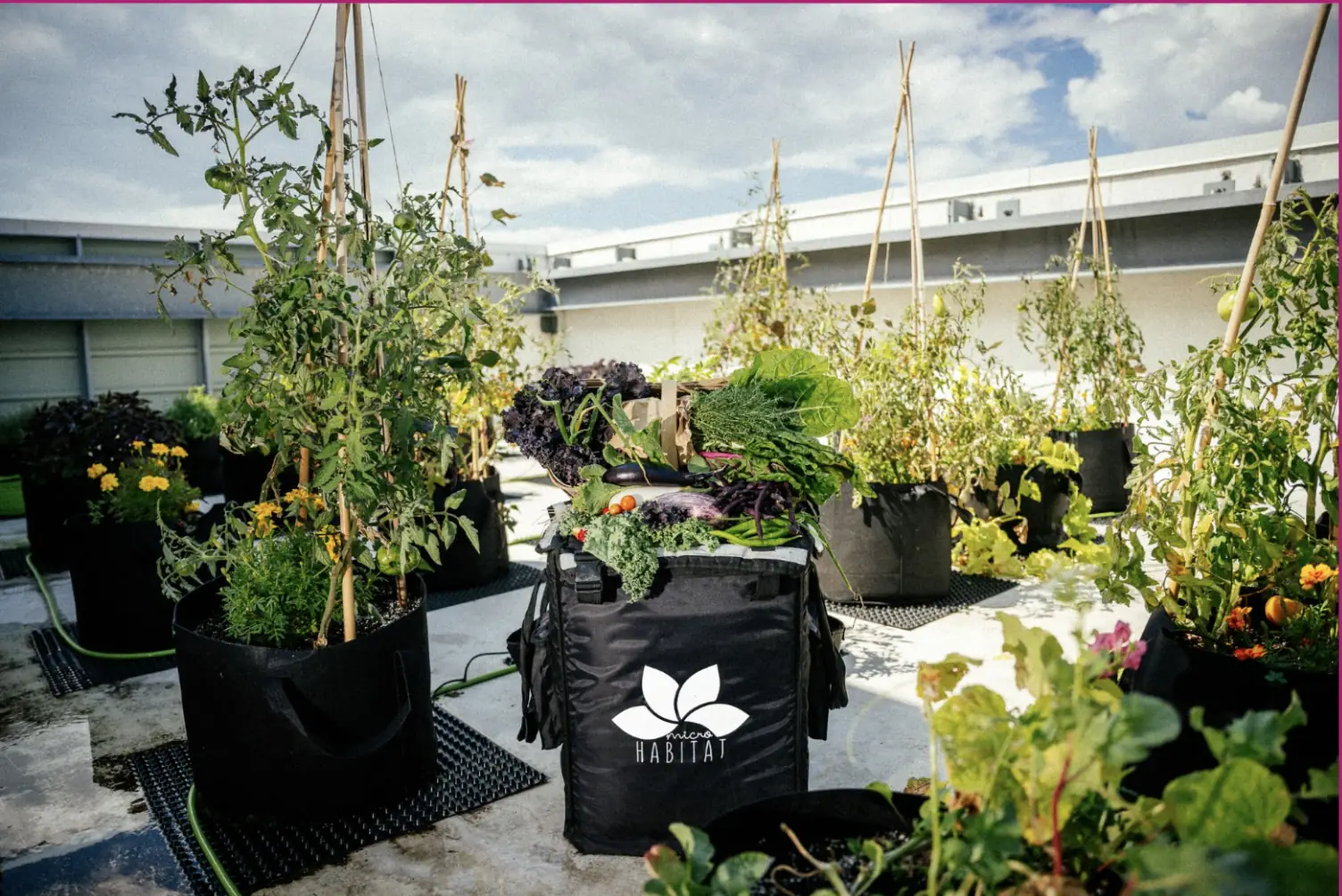
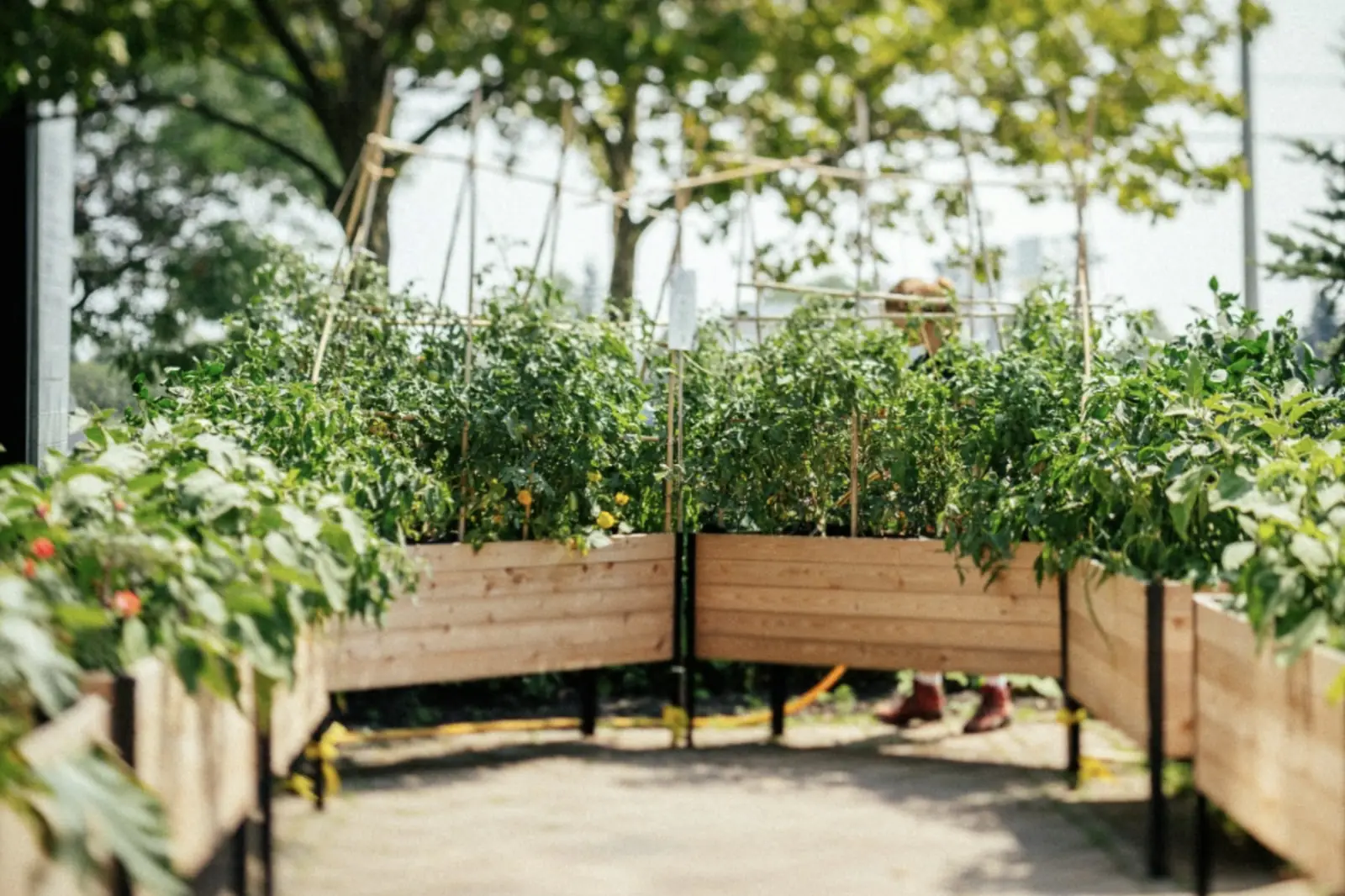
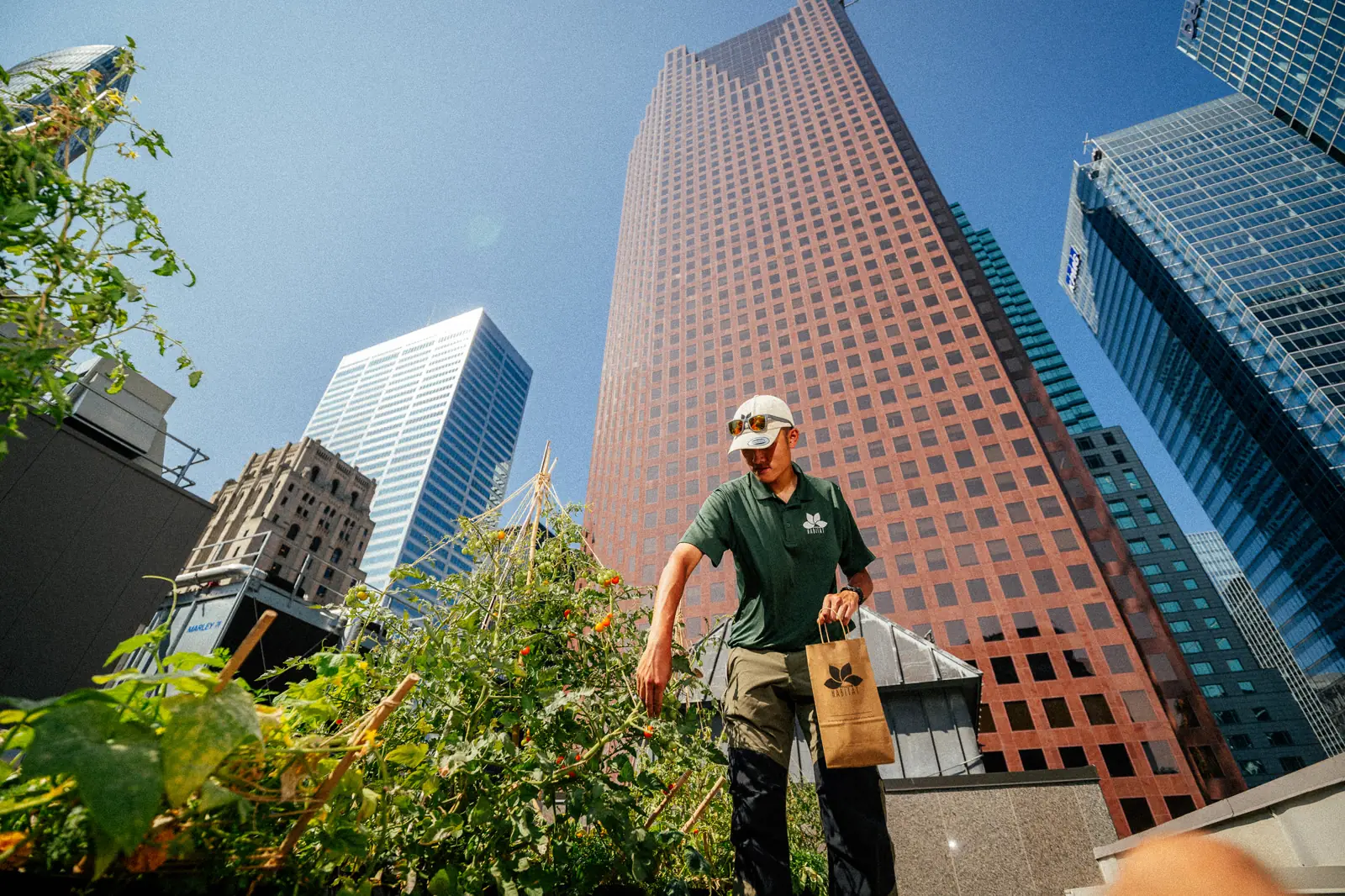
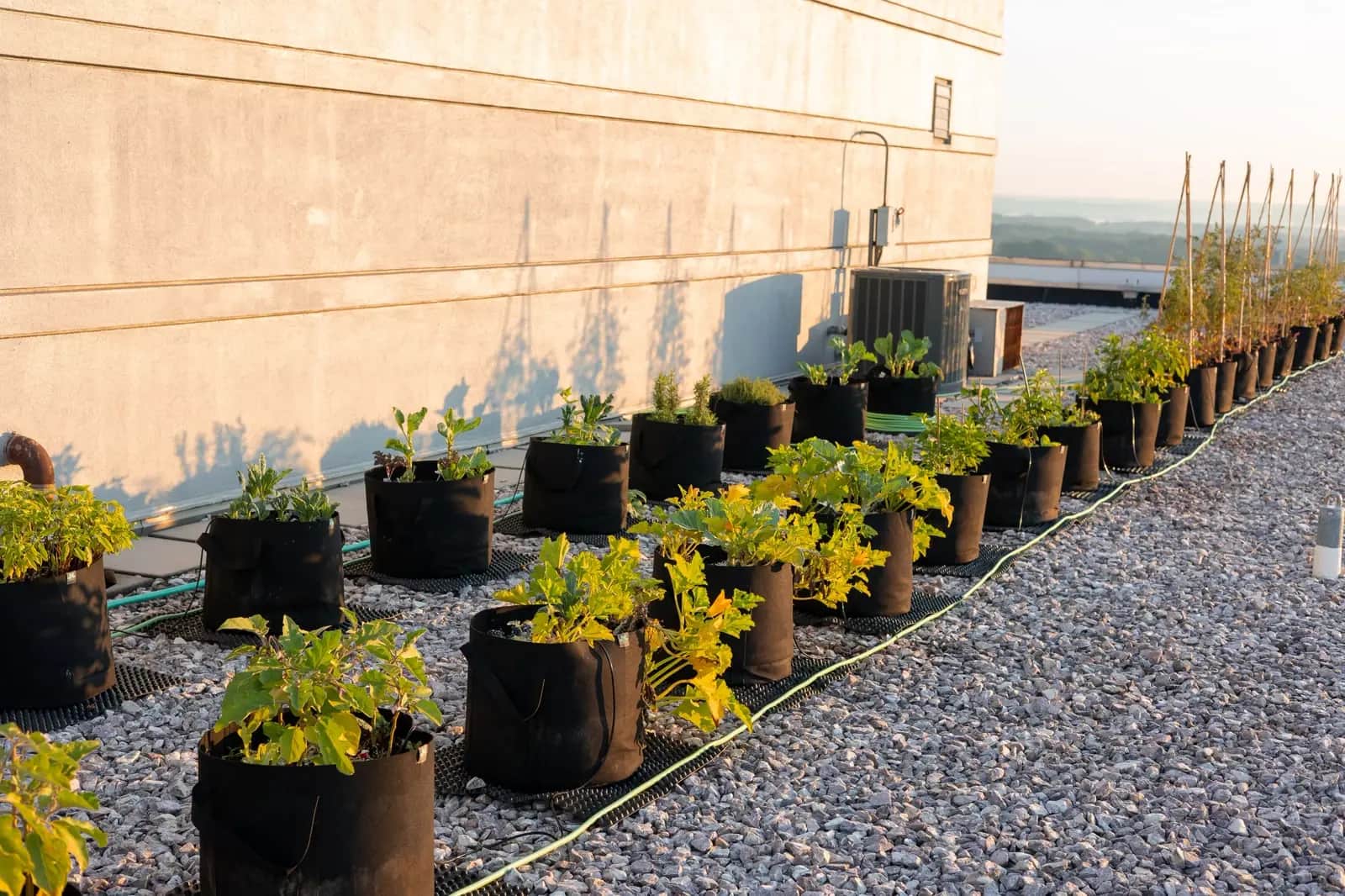
On-site farming affects value-chain emissions by producing food at the point of consumption, which removes upstream production, packaging, cold-chain transport, and a share of food waste from the building's Scope 3 inventory — the textbook definition of carbon insetting. Instead of buying herbs, greens, and vegetables that travelled through a multi-stage commercial supply chain, a property grows a portion on its own roof or grounds and distributes it metres from where it is eaten. Each of those displaced steps carries embedded emissions, and removing them is a genuine, attributable reduction rather than a purchased credit.
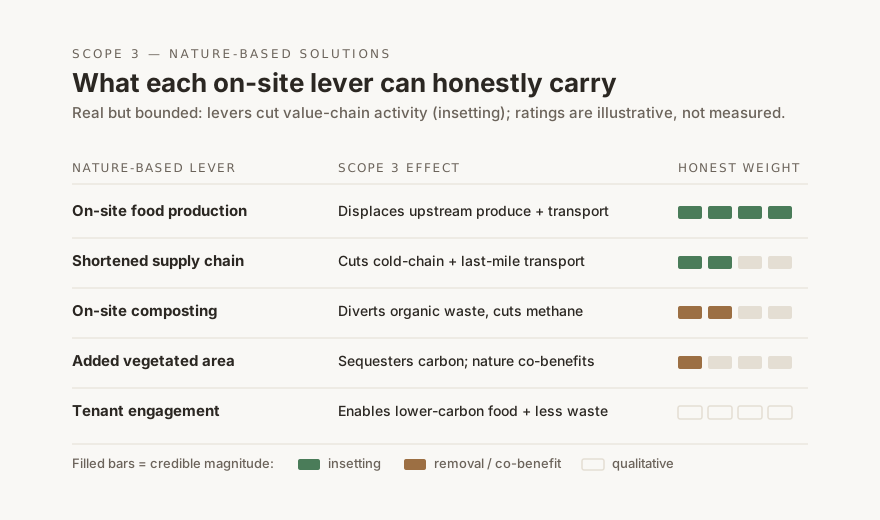
The lever is best understood as several distinct effects, each mapping to a Scope 3 category. The table below sets out where on-site farming and adjacent nature based solutions act, and — critically — how much weight each can credibly carry.
| Nature based lever | Scope 3 effect | Relevant GHG Protocol category | Honest magnitude |
|---|---|---|---|
| On-site food production (insetting) | Displaces upstream production, packaging, and transport of purchased produce | Purchased goods & services; upstream transport | Real but limited to the share of food actually grown on site |
| Shortened produce supply chain | Cuts cold-chain and last-mile transport emissions for displaced items | Upstream transportation & distribution | Modest; scales with volume distributed locally |
| On-site composting of organic waste | Diverts food/organic waste from landfill, reducing methane | Waste generated in operations | Measurable where waste is weighed and tracked |
| Added vegetated area | Sequesters carbon and provides biodiversity/adaptation co-benefits | Reported as removals/co-benefit, not an offset | Small as carbon; significant for nature disclosure |
| Tenant engagement & behaviour | Supports lower-carbon food choices and waste reduction | Indirect / enabling | Qualitative; document, do not over-claim |
Two disciplines keep this defensible. First, only the produce actually grown and consumed on site counts as insetting — you cannot claim the supply chain you did not displace. Second, the vegetation's sequestration belongs in a removals or co-benefit line, never netted against gross emissions as if it were an offset. Reported that way, the farm's contribution is small in tonnes but real, attributable, and — unlike many offsets — happening inside your own value chain.
How do you measure nature based contributions to Scope 3 credibly and avoid greenwashing?
Measure nature based contributions to Scope 3 credibly by quantifying only the activity you actually displaced, attributing every figure to a defensible method, and separating reductions (insetting) from removals (sequestration) in the disclosure — never blending them into a single "net" claim. Greenwashing risk in this space comes almost entirely from over-attribution: counting theoretical supply-chain savings, treating modest sequestration as a large offset, or implying a farm decarbonised a building it merely complemented. The Science Based Targets initiative's FLAG (Forest, Land and Agriculture) guidance is explicit that land-based reductions and removals must be tracked separately and cannot substitute for value-chain decarbonisation targets.
A workable measurement standard for an on-site programme looks like this:
- Quantify displaced produce. Record harvest weights by crop and season, and the share consumed on site, so the insetting claim is bounded by real volume — not capacity.
- Apply attributable emission factors. Use recognised factors for the produce and supply steps displaced, and cite the source; do not invent per-item savings.
- Track diverted waste. Weigh organic waste composted on site to support the waste-category reduction with data.
- Log vegetated area and sequestration separately. Report area, plant types, and any sequestration estimate in a removals/co-benefit line, clearly distinct from gross Scope 3.
- Document the ecological evidence. Capture species, habitat features, and dated photography — the same artifacts that feed nature-disclosure reporting.
- State the boundary plainly. Disclose what the farm does and does not cover, so the claim is conservative by construction.
This rigour pays off beyond the carbon ledger. The biodiversity and habitat data a farm generates feeds directly into CSRD biodiversity reporting, and the dependency-and-impact picture it supports aligns with TNFD nature disclosure for property owners — so one well-measured programme services several obligations at once, alongside the voluntary green building certifications a building may pursue. A professional operator should deliver these records as a routine output. Across Microhabitat's installations in North America and Europe, the harvest logs, waste-diversion records, and species documentation produced through normal operation are the same evidence an ESG team needs to substantiate a Scope 3 narrative without overstating it.
Where do nature based solutions fit into a credible Scope 3 strategy?
Nature based solutions fit a credible Scope 3 strategy as a complementary, evidence-rich lever that handles food-related value-chain impact and nature disclosure — sitting alongside, not in place of, the supplier engagement, procurement, and energy decisions that drive the largest reductions. The sequence matters: set science-based value-chain targets first, prioritise the categories with the biggest footprint, then deploy nature based interventions where they genuinely act, with their contribution measured conservatively and reported in the right line. Positioned this way, an on-site farm strengthens the strategy precisely because it is auditable and inside your value chain, which is rarer and more defensible than buying external credits.
Scope it for evidence from day one. Define how harvest, waste, and ecological data will be captured; choose an operating partner that delivers documentation as a deliverable; and write the boundary of the carbon claim into the brief so finance, sustainability, and any assurance provider see the same conservative figure. Done that way, the farm becomes a reliable, repeatable input to your value-chain reporting — and a visible, tenant-facing proof point that the building's nature based solutions are real rather than rhetorical. For the methodology behind credible land and food targets, the SBTi Forest, Land and Agriculture (FLAG) guidance is the authoritative reference, and the WBCSD resources on value-chain and natural climate action set the wider corporate context.
For property teams, on-site farms are a practical lever for urban farming in commercial real estate.
Ready to fit Scope 3 nature based solutions into a defensible reduction strategy? Book an ESG consultation with Microhabitat to scope an on-site farm built for credible value-chain reporting.
Already have green space on site? See which of the 17 certification reports your building qualifies for — eight questions, no account needed.