On this page
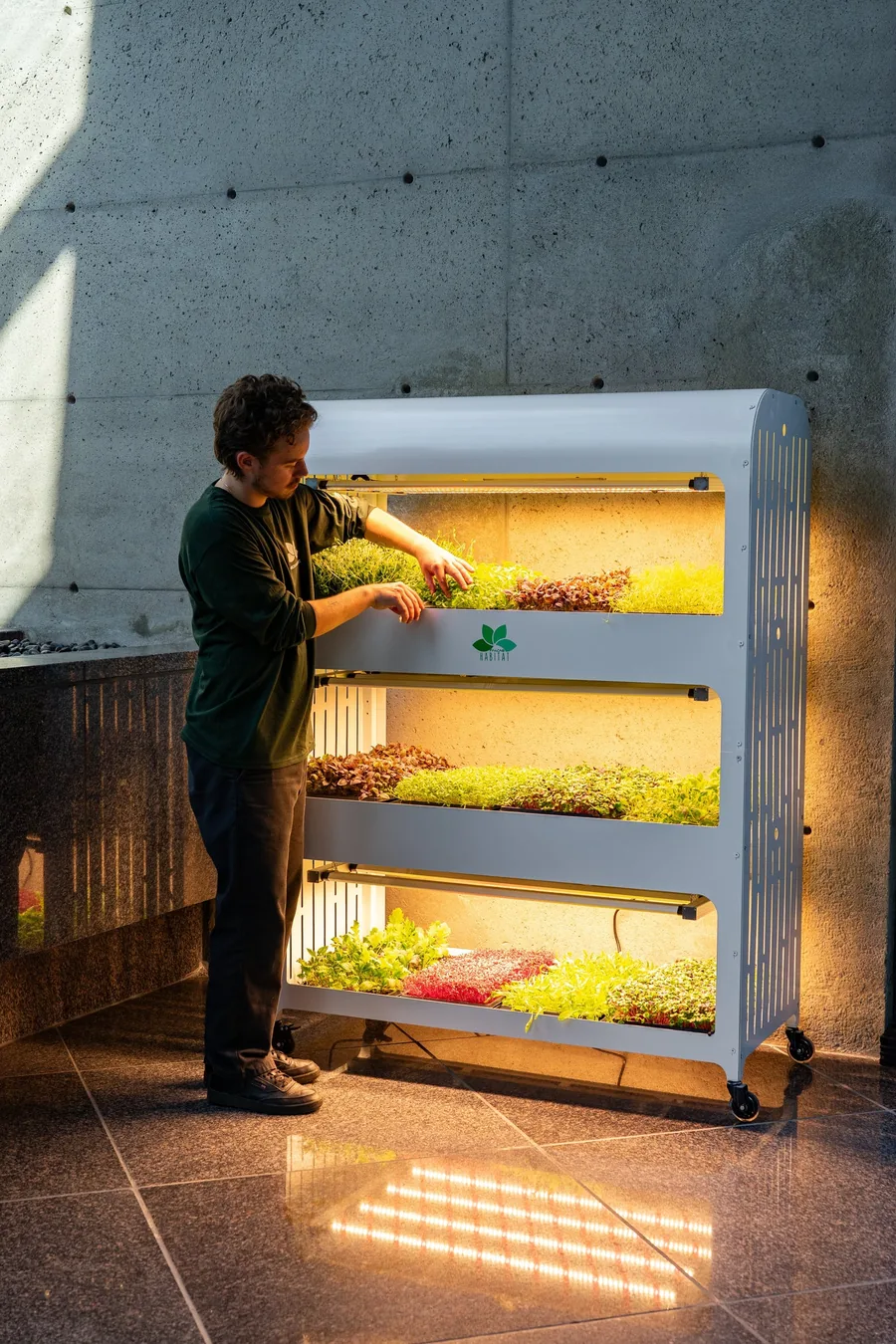
Quick answer: An indoor farm for office teams keeps a workplace growing program running while the outdoor farm is closed for winter. It is a self-contained unit with built-in grow lights that needs floor space, a standard outlet and water nearby. An urban farmer visits weekly to harvest and replant greens, herbs and microgreens, and employees join tastings and short workshops.
Part of our guide: Nature-Based Workplace Wellness Programs: The Complete Guide.
In climates with a winter shutdown, the rooftop farm has had its last harvest and is being put to bed until spring. The program around it does not have to stop. On Sunday 25 October 2026, clocks in the European Union will go back an hour, as EU summer-time rules set for the last Sunday of October, and on Sunday 1 November most of the United States will follow. In Canada, provinces set the rules, and British Columbia will not turn its clocks back this year. With darker evenings and the rooftop closed, the working day happens almost entirely indoors, and an indoor farm moves the program to where people already are.
This guide covers the practical side for workplace and facilities teams. If you are still deciding between an indoor and an outdoor farm, our guide to running an office garden program compares the two.
What happens to an office farm program in winter?
In climates with a winter shutdown, the outdoor farm is cleared and winterized after the last harvest, and the visible part of the program goes quiet until spring. The weekly visits, harvests and activities that gave people a reason to go up stop for several months. Warmer climates run on a different cycle and may keep growing outdoors, so there the question is location rather than season.
An indoor farm fills that gap. It keeps a weekly rhythm going, with a visit, a harvest and something new on the shelves, so the program does not need relaunching in spring. You can treat it as the winter half of a year-round program, or as the only farm in a building with no usable outdoor space.
Where does an indoor farm fit in an office?
An indoor farm fits best in a shared space people pass every day, such as a lobby, a café or kitchen area or an amenity floor, rather than in a meeting room or a corner nobody visits. Leave room around the unit for the urban farmer to work and for a small group to gather at harvest time.
- Lobby: seen by everyone, visitors included. Check that reception is comfortable with harvest sessions happening there.
- Café or kitchen area: the shortest path from harvest to plate. Keep the unit clear of cooking equipment and splash zones.
- Amenity floor or lounge: room for workshops. Check that people actually go there in winter.
Two site details are easy to miss. University of Tennessee Extension’s guide to small-space indoor food production advises keeping indoor growing out of the direct air flow of heating and cooling vents, and choosing a spot where a water leak would not be a serious problem; it suggests drip pans under small hydroponic systems.
What does an indoor farm need from the building?
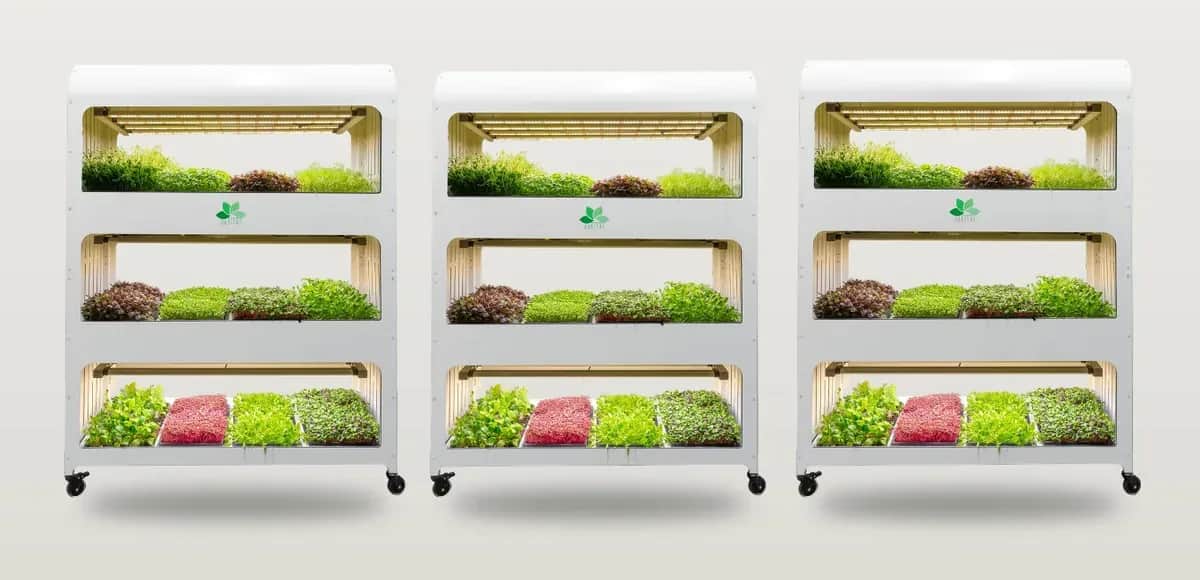
An indoor farm needs a clear patch of floor, a standard electrical outlet that stays on, water within reach for refills and a route the urban farmer can use every week; the light comes from the unit itself. Because the unit is self-contained, with plants on shelves under built-in grow lights, it does not depend on a window. That matters in winter, when the same extension guide notes that supplemental lighting is likely needed for indoor crops. MicroHabitat’s indoor farms, for example, need no plumbing connection, only a standard outlet and a water source nearby.
| Need | What to check | Who confirms |
|---|---|---|
| Floor space | The unit’s footprint, room to work and gather around it, and a floor that tolerates the odd drip | Facilities, with the provider |
| Power | A standard outlet within reach that is not switched off at night or on a timer | Facilities or the building electrician |
| Water | A tap or sink nearby for refills; no plumbing connection needed | Facilities |
| Air | Not in the direct flow of a heating or cooling vent | Facilities |
| Access | A weekly visit slot, sign-in arrangements and access during holiday closures | Office or property manager |
| Cleaning and security | Cleaners and night staff know not to unplug, move or water the unit | Office manager |
If you lease your space, ask your property manager early whether there are rules on equipment in lobbies and other shared areas.
What grows in an indoor farm in winter?
An indoor farm grows leafy greens, herbs and microgreens best, because these crops need less light and grow faster than fruiting crops. The University of Tennessee Extension guide says as much: leafy crops and herbs are simpler and faster to grow than fruiting crops and need lower light levels, while microgreens and baby greens are among the quickest crops of all. Compact fruiting plants need stronger lighting and more time, so an office unit is better used for crops that keep the shelves turning over.
In practice, that means a rotation of lettuces and other salad greens, leafy crops such as chard or kale, culinary herbs and microgreens, with the exact mix agreed with your urban farmer. Ask what will be sown ahead of the weeks you have activities planned, so there is something ready to harvest on the day. If your café or kitchen will use the harvest, bring its team into the crop choice: herbs they actually cook with are worth more than an impressive crop nobody uses.
Who looks after an indoor farm, and what happens each week?
A managed indoor farm is looked after by an urban farmer who visits every week, so your team does not water, feed or harvest it between visits. A typical visit covers the same steps each time:
- Harvest what is ready and hand it to whoever you agreed: a tasting table, the café or a donation.
- Sow or replant the shelves that were harvested.
- Check water, feeding, lights and plant health, and deal with any pests early.
- Clean the trays and the area around the unit.
- Record the visit: what was done, what was harvested and anything the building needs to do.
MicroHabitat’s urban farmers record every visit in MyUrbanFarm, and the farm’s page there carries regular posts and photos, so you can follow the farm between visits without standing next to the unit. Our guide to what a farm provider should report every week explains what a good visit report contains.
How can employees use an indoor farm in winter?
Employees use an indoor farm through short, regular moments, such as a harvest on visit day, a tasting or a lunchtime workshop, rather than by doing the growing themselves.
- Harvest moments: schedule the urban farmer’s visit on an in-office day and invite people to pick alongside them.
- Tastings: a bowl of greens or a bunch of herbs on the café counter, labelled with what it is and when it was picked. Follow your company’s food-handling and allergy rules.
- Short workshops: sowing microgreens, growing herbs on a windowsill at home or how indoor growing works. Our educational activities show the formats.
- Take-home harvests: small bags of greens or herbs, shared out with a simple sign-up sheet so nobody has to race for them.
Keep the invitation light. Post the visit day on the intranet, put a small sign on the unit saying who looks after it and when the next harvest is, and let people take part without registering for anything.
How does an indoor farm show up in reporting?
An indoor farm shows up in reporting as a record of activity, meaning visits completed, harvests and where they went, activities held and how many people took part, not as a claim about wellbeing or air quality. It runs on its own calendar, so give it its own line and its own dates rather than folding it into the outdoor season.
Side by side, the two records cover the whole year, which helps when a report follows the calendar year rather than a growing season. Our guide to urban farm impact reporting explains how to keep measured and estimated figures apart and how these records feed ESG reports and staff communication without over-claiming.
Frequently asked questions
Can the indoor farm keep running over the holiday closure?
Yes, as long as someone can let the urban farmer in or the visit is moved around the closure. Agree the dates in November, tell security and cleaning staff, and make sure the outlet stays live while the building is quiet.
Can employees pick from the farm themselves?
They can, if you agree it with your provider. Simple rules help: which shelves are ready, how much to take, and a sign showing when the next harvest is. Keeping picking to visit day is the easiest way to make sure plants are cut at the right stage.
What if someone unplugs or moves the unit?
Label the plug and tell the cleaning and night teams that the unit stays plugged in where it is. If it is moved or switched off, tell your provider so the urban farmer can check the plants. Moving it to a new spot later is possible, but plan the move with the urban farmer rather than doing it between visits.
If your rooftop farm has just closed for the season, this is a good moment to pick a spot for an indoor farm and try it this winter, while the outdoor farm is planned for spring 2027.