On this page
Quick answer: Choose a setup your room and staff can sustain: microgreen trays or windowsill pots for short projects, or a vertical growing unit with built-in grow lights for greens all winter. Before sowing, name who cares for the plants over the holidays, check power and water with facilities, and follow your school’s food and allergy policy for any tasting.
Part of our guide: Schools.
Where the outdoor season has ended, the school garden goes quiet just as the school year gets busy. An indoor garden for the classroom keeps the same questions alive through the dark months: what does a seed need, why is one tray taller than the other, and what does a pea shoot actually taste like? It can be one tray on a windowsill or a vertical growing unit by the library door.
This guide is for teachers, principals and facilities teams deciding what to set up for the winter term. It compares the main setups and what each needs, then covers safety around water and electricity, holiday care, lesson ideas and tasting rules. Warmer climates run on a different calendar, but the indoor questions are the same.
Can a classroom grow food through the winter?
Yes: with enough light, a classroom can grow microgreens, herbs and leafy greens all winter, long after the outdoor beds have been put to rest. Light is usually the limit, not cold, because classrooms stay heated while windows get less sun each week.
The clock change makes that easy to see. Clocks will go back on Sunday 25 October across the European Union, which returns to standard time on the last Sunday of October. In the United States, daylight saving time will end on Sunday 1 November. In Canada, where each province sets its own rules, provinces that change their clocks turn them back on the first Sunday of November.
The change does not shorten the day, but darker afternoons are a fair warning: a windowsill that worked in September may not be enough by December. That is why many winter setups pair plants with lights. SDSU Extension’s guide to growing microgreens suggests a full-sun spot or a place under fluorescent or LED lights, a simple comparison a class can test for itself.
Which indoor garden setup suits your classroom?
The right setup is the one your room and your team can keep going: start small if nobody has time to spare, and go bigger only when someone clearly owns the care. The four common options differ mostly in light, power and what happens during school breaks.
| Setup | Light | Water and power | Holiday care | Best for |
|---|---|---|---|---|
| Windowsill pots | The sunniest window available; weak in midwinter | Watering by hand; no power | Someone waters them, or they go home | Herbs and a single observation project |
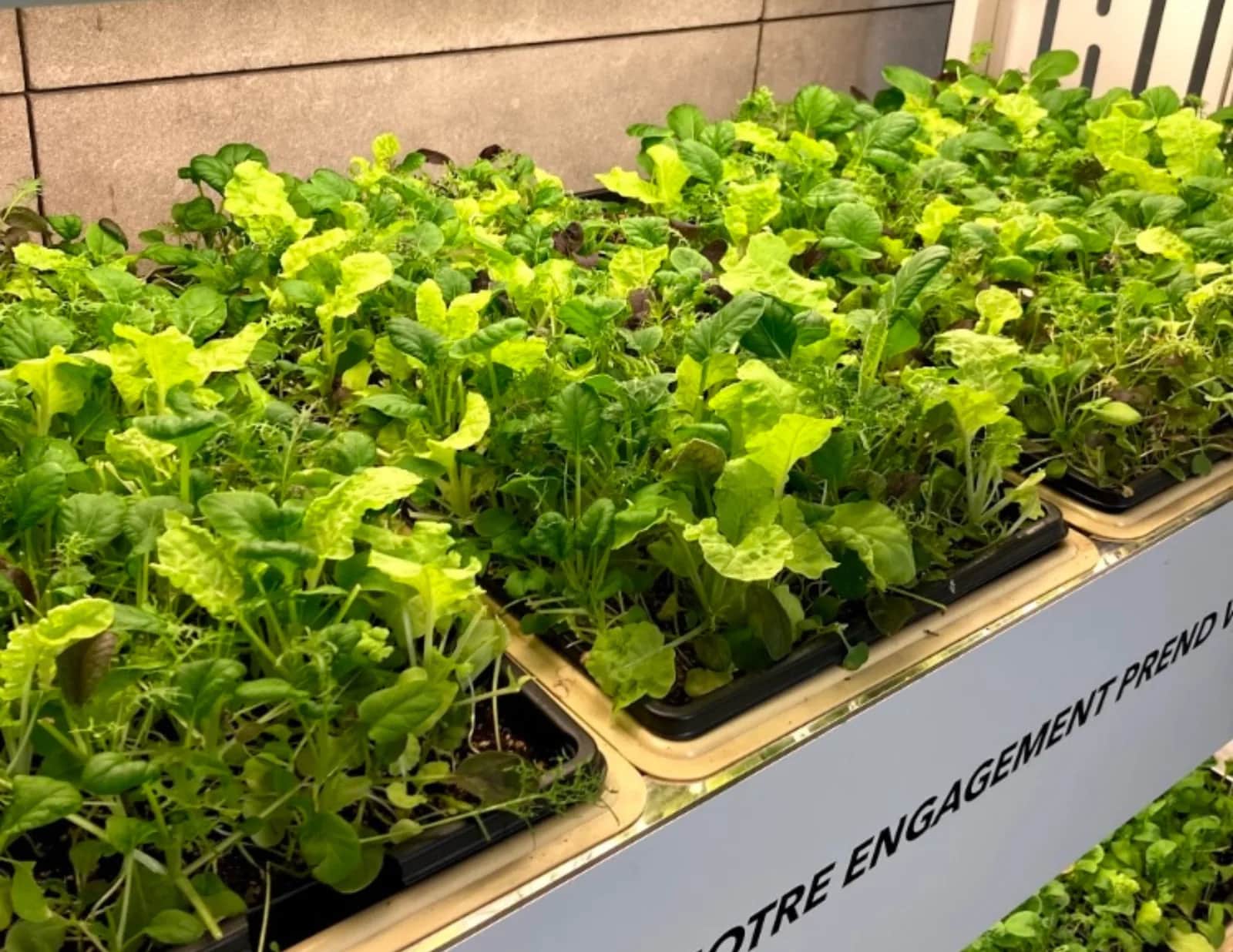
| Microgreen trays | A bright window or a shelf under LED or fluorescent lights | Spray or bottom watering; an outlet if lit | Time each sowing so the harvest falls before the break | Fast experiments and tastings |
| Countertop hydroponic kit | Built-in lights on a timer | A small reservoir to top up; a standard outlet | A check-in during long closures | A small herb or lettuce display |
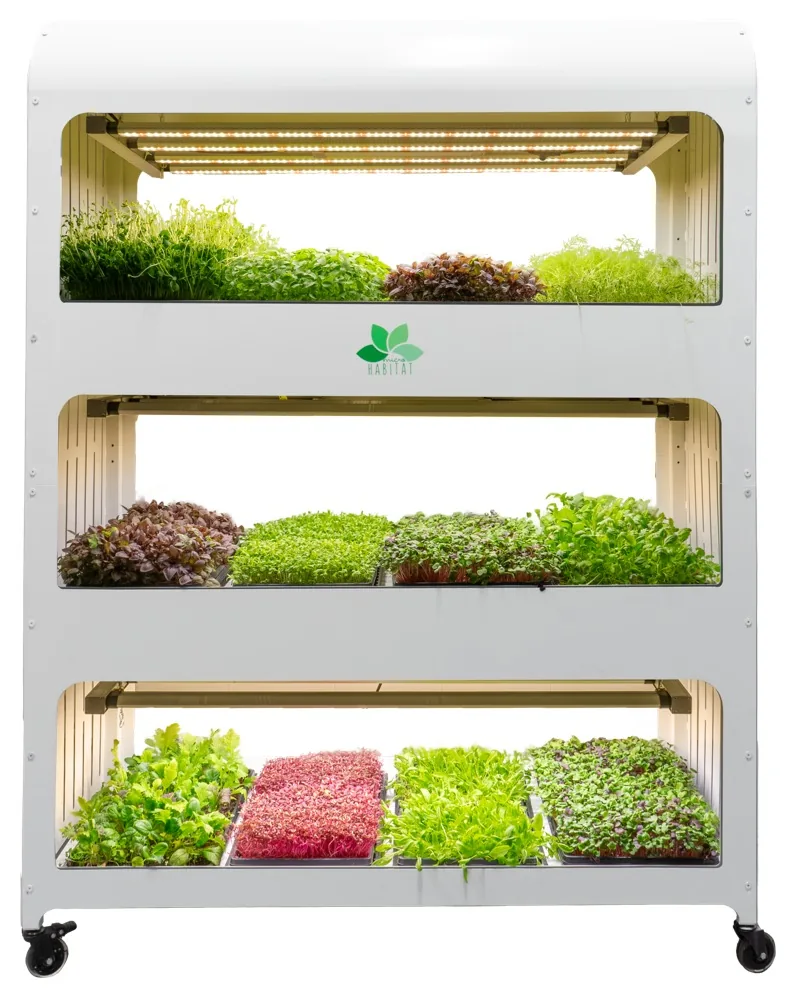
| Vertical growing unit | Built-in grow lights on several shelves | A built-in water system; a standard outlet nearby | Regular maintenance visits, often by a provider | Greens all winter, shared by several classes |
Microgreens are the quickest win. SDSU Extension notes they are usually harvested after about three weeks, which fits neatly between the start of a term and its first break. A vertical unit turns the garden into a shared feature instead: one unit in a library, science room or cafeteria can host several classes on a rota, so no single teacher carries it alone.
What does an indoor garden need to run safely in a classroom?
It needs four things: enough light, safe power, a simple water routine and a spot that blocks nobody, plus one adult who checks them. Your facilities team and school policy have the final word on electrical equipment, so treat this list as questions to bring to them.
- Power: ask whether the outlet you plan to use is protected (a GFCI outlet in North America, a circuit protected by an RCD in Europe) and whether extension cords are allowed. Keep cords out of walkways and power strips off the floor.
- Water: decide how water arrives and leaves. Carry it in a covered container, never fill anything above a plug, and set trays on a drip tray or mat.
- Space: keep units clear of exits and away from radiators, which dry trays out. Ask the supplier whether a tall unit on wheels needs locking casters or securing.
- Light: put lights on a timer so they run on a steady schedule, and place bright panels where students are not looking straight into them.
- Hygiene: wash hands before sowing and before harvesting, and use new or sanitized trays and clean scissors, as the SDSU guide recommends.
Hygiene matters more indoors than many people expect. Penn State Extension points out that the warm, moist conditions microgreens like are also the conditions bacteria like. Clean trays, clean tools and dry floors are the whole routine, and students can own most of it.
Who looks after the plants during school holidays?
A named adult or a maintenance provider should look after the plants during the holidays, chosen before the first seed goes in. Winter break is the riskiest stretch for a classroom garden: a tray left dry over the holidays teaches a lesson, but rarely the one you planned.
Schools usually pick one of four answers. A teacher or caretaker visits during the break, if the building is open and access is arranged, with a one-page care note. Windowsill pots go home with volunteer families. The class times its crops so the last harvest lands before the holidays, then leaves trays empty and clean and sows again in January. Or a provider maintains the unit on a set schedule, holidays included.
The same planning applies to shorter breaks in February or March. MicroHabitat’s indoor farms, for example, run on a standard electrical outlet with no plumbing, and an urban farmer visits every week, all year, recording each visit in MyUrbanFarm. The farm’s page there carries regular posts and photos the school can follow; the school’s own part is arranging access during closures.
What lessons can students build around an indoor garden?
An indoor garden works best as a shared experiment that several subjects borrow, with science and math the most natural fits. These are ideas to adapt to your curriculum, not a promise of results.
- Science: follow germination day by day, grow one tray under lights and one on the windowsill, change one variable at a time, and, with a hydroponic kit, look at roots growing in water instead of soil.
- Math: measure plant height each week, graph it, work out the average for each tray and weigh the harvest in grams.
- Food and nutrition: trace where salad greens usually come from and compare the flavours of different crops, within the tasting rules below.
- Language and art: keep an observation journal, draw plants at each stage, and write the care note for whoever looks after the garden over the break.
Give students a real say, too. World Children’s Day will fall on Friday 20 November; UNICEF describes it as its global day of action for children, by children. This year’s theme, “My day. My rights. My future.”, asks children to tell world leaders what future they want, and letting the class choose the next crop or design the next experiment is a small, practical answer. For ready-made material, Texas A&M AgriLife publishes open classroom hydroponics lessons for grades K–5 and 6–12. MicroHabitat’s urban farmers also lead hands-on workshops adapted to different grade levels.
Can students eat what they grow in class?
Yes, as long as tasting follows your school’s food and allergy policy and the crop was grown for eating from the start. Agree the rules with your principal before the first harvest, not on the day.
- Check the policy: follow your school’s food and allergy policy, including any permissions it requires before students taste anything.
- Start with the right seed: SDSU Extension recommends buying seed that has not been chemically treated, so check the packet before you sow.
- Harvest cleanly: wash hands, use clean scissors and cut just above the growing medium.
- Decide where the harvest goes: a class tasting, small take-home bags if policy allows, or the cafeteria only if the food service team agrees.
- Close the loop: compost roots and spent growing medium if the school has a compost bin, and clean trays before the next sowing.
In the United States, USDA’s Patrick Leahy Farm to School Program makes local food and agricultural education available to children in its child nutrition programs, through grants, research, technical assistance and training. Its resources are worth reading before you plan anything bigger than a tasting.
How does winter growing fit into the school year?
Winter growing bridges two outdoor seasons: it keeps students growing now and gives the school time to plan the spring garden. Where the outdoor season restarts in spring, a shelf with lights is also a place to start seedlings for the outdoor beds.
Use these months to settle the questions spring will raise, starting with the hardest: who looks after the outdoor garden once classes end. Our guide to school garden maintenance over the summer compares the options. If your school shares a building with offices, or a corporate partner supports your program, see how indoor farms keep office programs going in winter.
Frequently asked questions
What grows best under classroom grow lights?
Microgreens, leafy greens such as lettuce, and herbs suit a classroom best because they are quick and compact. Fruiting crops such as tomatoes need more light, space and time, so they fit a longer project better than a winter term.
How much teacher time does an indoor garden take?
It depends on the setup and on who maintains it. A tray of microgreens needs a few minutes a day that students can share, while a professionally maintained unit leaves teachers free to focus on the lessons.
Can younger students take part safely?
Yes, with adult supervision and a clear split of tasks. Younger students can sow, water with a spray bottle, observe and draw, while adults handle scissors, electrical equipment and anything to do with the reservoir.
If you want students growing this winter, start with one setup, one class and one named person for the holidays, then build from there. If you are also planning an outdoor garden for spring 2027, the winter months are the right time to ask for a site assessment.