On this page
Quick answer: A corporate food bank partnership lasts all year when it follows the food bank’s calendar, not the company’s. If your building has a MicroHabitat farm, you do not have to find the food bank: MicroHabitat finds one near the farm and arranges the produce donations. Your company adds the rest of the year: volunteer shifts, funds or collections the partner asks for, one named contact, and reporting only what the partner confirms.
Part of our guide: ESG and Urban Farming: The Complete Guide.
For many companies, the next few weeks are the main giving season of the year. U.S. Thanksgiving falls on Thursday 26 November 2026, GivingTuesday will follow on Tuesday 1 December, and the UN will mark International Volunteer Day on 5 December, in a year it has named the International Year of Volunteers for Sustainable Development. A cheque, a food drive or a team shift in those weeks is welcome. Too often, it is also the whole corporate food bank partnership.
This guide is for the people who organize that giving: sustainability, CSR and workplace teams, and property managers whose buildings have an urban farm. It shows how to turn a single gesture into a relationship that runs all year, including the months when the outdoor farm is resting.
Why does a one-off holiday donation fall short?
A one-off holiday donation falls short because food banks serve people every month, while much corporate giving arrives in a few weeks at the end of the year. Food Banks Canada runs its national count in March because, as its HungerCount 2025 report explains, March is an ordinary month with no predictable rise or dip in use. That ordinary month still produced nearly 2.2 million visits to food banks in Canada in March 2025, the highest number in the network’s history.
The same report describes lower-income households relying on food banks as an ongoing resource rather than a temporary solution. A partnership designed around one date cannot match that pattern. A steady contribution the partner can count on is easier to plan around than a large gift that arrives once and stops.
Who finds the food bank partner?
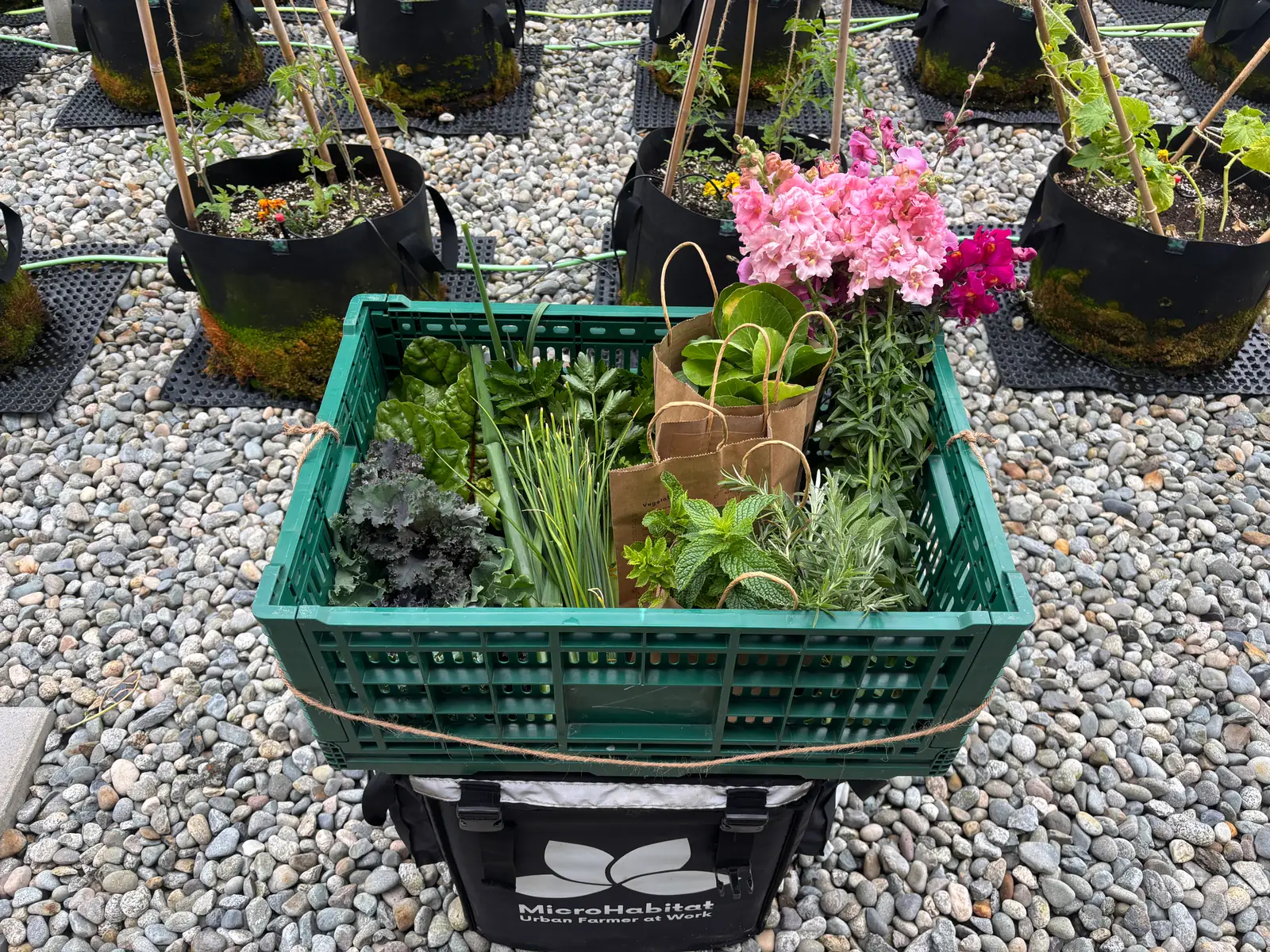
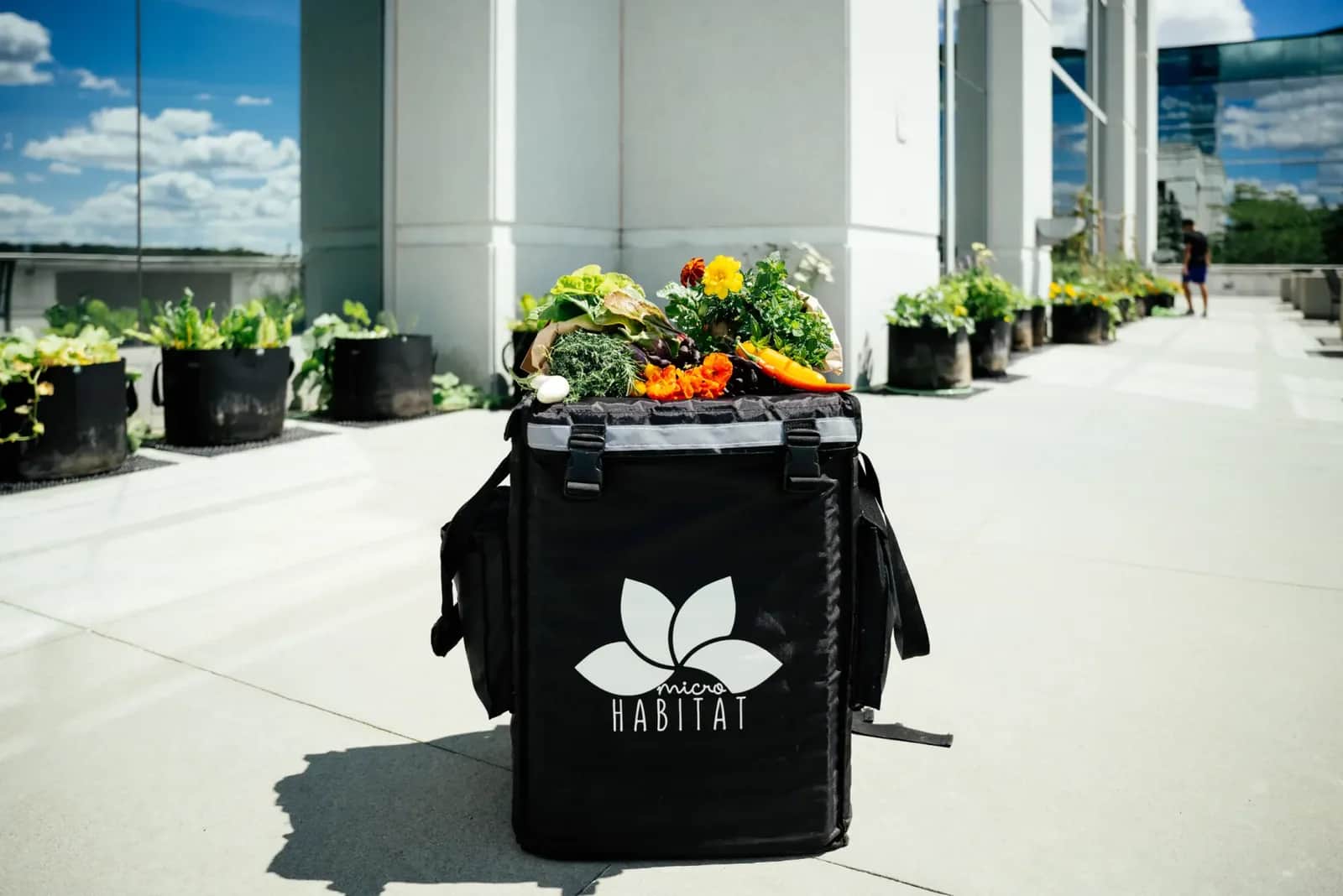
If your building has a MicroHabitat farm, MicroHabitat does. Through its Urban Solidarity Farms program, MicroHabitat matches the farm with a food bank or community organization near the building that can take fresh produce, and arranges the deliveries during the donation weeks. You do not need to search for a partner, check what it accepts or negotiate delivery days.
The match is made close to the farm for a reason. Fresh produce is best delivered over short distances, and volunteers are more likely to return to a site they can reach in a lunch break.
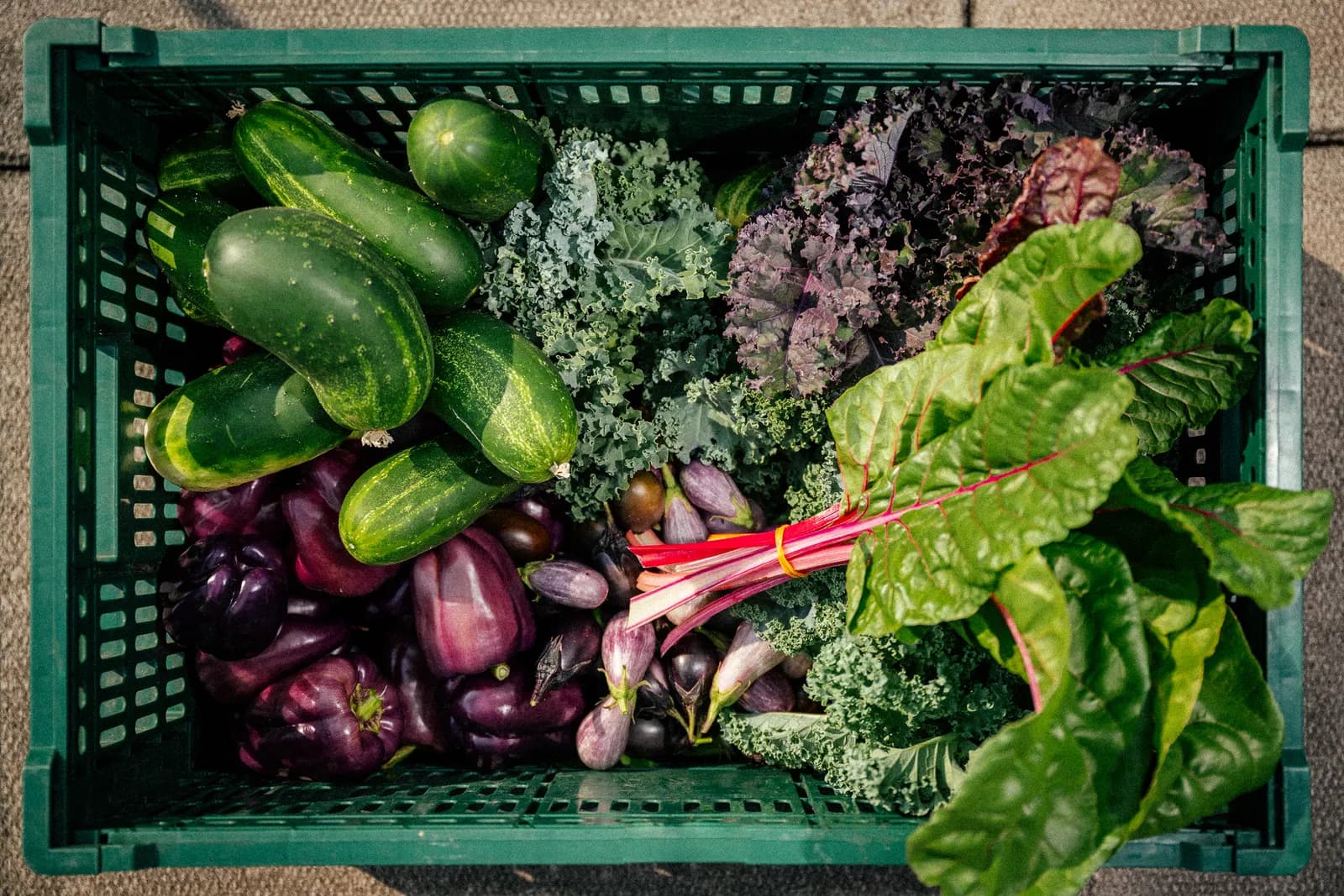
The crops themselves are planned by MicroHabitat’s urban farmers for each farm, and the food bank receives what the farm harvests during the donation weeks. The food bank is not asked to plan the farm. Its job is what it already does well: getting fresh food to the people who need it.
That leaves your company free to focus on what only it can add. Once you know which organization your farm supports, these questions help you plan the rest of the year:
- On which days can it host volunteers, and how much notice does it need?
- What does it need when the outdoor farm is closed: volunteers, specific skills, funds or particular items?
- Is it a food bank, a community kitchen or a meal program? Each one uses help differently.
- Does it belong to a regional or national network with its own rules for donations and volunteers?
- Who will be your contact, and who covers when that person is away?
What should your company agree with the food bank?
Agree on five things: what the partner needs and when, who the contacts are, how volunteers will be booked, what you may say in public, and when you will review the arrangement. One page is enough; this is a working agreement, not a legal contract. The produce donations are arranged by MicroHabitat, and the step-by-step handover from picking to confirmed delivery is covered in our World Food Day guide to harvest donations.
| What to agree | Questions to settle | Who usually decides |
|---|---|---|
| Needs and timing | Which items, skills or volunteer help are most useful, and in which months? | The food bank |
| Contacts | One named person on each side, plus a backup for holidays and sick days | Both |
| Produce donations | Delivery days during the donation weeks, and how the partner hears about changes | MicroHabitat, with the food bank |
| Volunteer shifts | Group size, onboarding, and the dates the partner actually needs help | The food bank sets the terms; the company fills the shifts |
| Public communication | Can you name the partner? Which photos, figures and wording are approved? | The food bank approves |
| Review | A short check-in each season and a full review once a year | Both |
Date that one-page agreement and keep it where both sides can find it. When a contact changes jobs or a new property manager arrives, that page stops the partnership from starting over.
What does a year-round partnership calendar look like?
A year-round calendar gives each season a job: commit in the giving season, volunteer in winter, confirm the donation window in spring, donate through summer and early autumn, and review together when the season closes. The table assumes a climate with a winter shutdown for outdoor growing. In warmer climates, shift the months to the local growing cycle.
| Period | On the farm | In the partnership |
|---|---|---|
| November to December | Outdoor farm closed for winter | Give as planned and confirm next year’s commitment |
| January to March | MicroHabitat plans next season’s crops | Volunteer shifts, skills support, and a collection once holiday giving has passed |
| April to June | Installation of new farms, then planting | A planting activity for employees or tenants; MicroHabitat confirms the food bank and the donation weeks |
| July to October | Main harvest weeks | Produce donations arranged by MicroHabitat, plus harvest volunteering |
| October to November | Season closes | Joint review: what arrived, what helped, what to change |
Winter is when next season takes shape. If your building is planning its first outdoor farm, this is the time to choose a provider, book the roof check and sign, so the farm can be installed in spring 2027. You do not need to find a food bank as well. In North America, for example, MicroHabitat’s Urban Solidarity Farms program runs from July to October and lets clients dedicate their harvest to a local food bank that MicroHabitat finds, which gives the partner a known window to plan for. Where the season runs differently, MicroHabitat sets the donation window to match the local calendar.
What can your company do for a food bank in winter?
In winter, your company can give time, skills, collections and, if it has one, greens from an indoor farm, as long as each matches what the food bank asks for. The outdoor farm may be resting, but the food bank’s work is not. Many food banks publish separate ways to give food, money and time, so ask which one they need most this quarter.
- Volunteer shifts spread across the season. Sorting, packing and distribution need people in January as well as December. Ask whether a small team every month would help more than one large group in the busiest week.
- Skills as well as hours. Colleagues in finance, logistics, design or IT can take on a specific project the food bank names, such as a volunteer rota or a donor newsletter.
- Collections timed to the partner’s gaps. A food or fund drive in late winter, once holiday giving has passed, may be more useful than another one in December. Ask for their current list of most-needed items.
- Indoor greens. An indoor farm in the office keeps leafy greens and herbs growing through winter. Its harvest is small, so treat it as a regular gesture that keeps the partnership visible, and check first that the partner can use it.
- Learning sessions. Short educational activities, such as a seed-saving or food-waste workshop, can run indoors and introduce the partnership to colleagues who missed the giving-season events.
Respect the partner’s capacity. A food bank that has to train a new group every week, or find room for a delivery nobody announced, is doing work for you. Ask what onboarding it requires and how much notice it needs, then plan around the answer.
How do you report a food bank partnership honestly?
Report a food bank partnership honestly by publishing only figures the partner can confirm, for everything you gave: produce, time, funds and activities. The test is simple: would the food bank recognize your sustainability report as accurate if it read it?
Useful figures are plain and verifiable. Each one should be something the partner could check:
- Produce delivered and accepted, by weight, with dates
- Volunteer shifts and hours, taken from the sign-up sheet
- Funds or items given, as recorded by the partner
- Workshops or activities held, and how many people attended
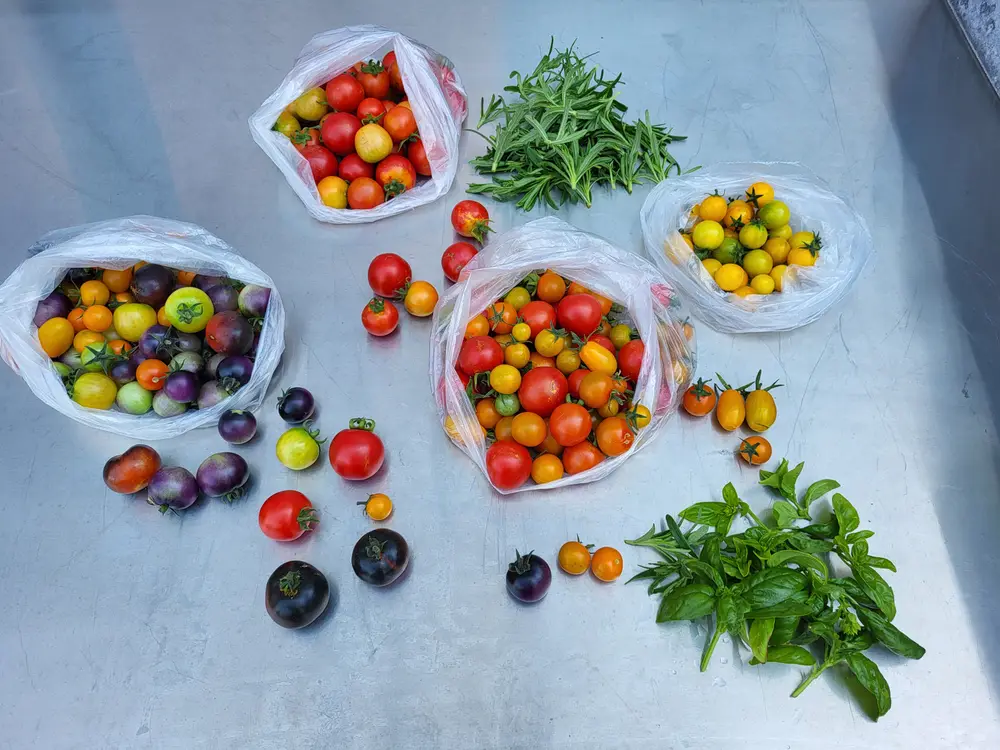
For produce, keep harvested, donated and received quantities apart, as the World Food Day guide explains, and do not convert pounds or kilograms into meals unless the partner supplies its own conversion and agrees that you can use it. For how these figures fit into a wider program report, with measured and estimated values clearly labelled, see our guide to urban farm impact reporting.
Send the draft to the food bank before it is published. The courtesy catches errors and often surfaces a better story, such as what the kitchen made with the produce.
Frequently asked questions
Do we need to find a food bank ourselves?
No. If your building has a MicroHabitat farm, MicroHabitat finds a food bank or community organization near the farm and arranges the produce donations during the donation weeks. Your company can then add volunteering, funds or collections that the partner asks for.
Should a company give money, food or time to a food bank?
Ask the food bank, because the answer changes between organizations and through the year. Many accept all three. A partnership that combines a predictable financial gift with regular volunteering and seasonal produce gives the partner several ways to rely on you.
Can a small rooftop farm make a real difference to a food bank?
One farm’s harvest is modest, and it is best described that way. Its value lies in regular, fresh produce and in the volunteers it brings to the partner. Across its network, MicroHabitat has worked with 35+ food banks and donated 59,400 lbs of produce, which shows what many small farms can add up to.
Can employees volunteer at a food bank as a team?
Usually, yes, but on the food bank’s terms. Ask about group size, any onboarding or safety briefing, and the days when help is most needed, then book dates across the year rather than all in December. Check your own volunteering policy so people can take part during working hours.
If your building is planning a farm for spring 2027, tell us you want its harvest to go to a food bank, and MicroHabitat will find one near the building. If you would rather start now, book one volunteer shift with a local food bank for January and ask what it will need next summer.