Team Building With Purpose: Planting, Harvest, Donations
Purpose-driven team building activities that last: six urban farm formats, a 90-minute run of show, and a way to measure what your team leaves behind.
Quick answer: Purpose-driven team building activities put a team to work on something real, like planting a farm, harvesting food or packing produce for a local food bank, instead of a game that ends when the room empties. They fit in 90 minutes, need no gardening experience, and leave a result you can count: beds planted, pounds harvested, produce donated.
Most HR and workplace wellness leads have run the same calendar for years: an escape room in spring, a cooking class in the fall, drinks when the budget is tight. People enjoy them. Few remember them a quarter later. This article is for the people who plan those events and want the next one to count for more, for the team and for the neighbourhood around the office. It is part of our guide to nature-based workplace wellness and covers six urban farm formats, a minute-by-minute plan for 90 minutes, and how to measure the result without inventing numbers.
Jump to a question:
- Why do conventional team-building events fade?
- What makes purpose-driven team building different?
- What are six purpose-driven team building formats that work?
- How do you run a purpose-driven team event in 90 minutes?
- What do participants take away?
- How do you measure purpose-driven team building?
Why do conventional team-building events fade?
Conventional team-building events fade because they are built around a moment rather than an outcome: when the activity ends, nothing continues, so there is nothing to come back to.
The context matters. Gallup's State of the Global Workplace 2026 report found that 20% of employees worldwide were engaged at work in 2025. No single event will move a number like that, and it would be dishonest to claim otherwise. But it explains why an afternoon of fun struggles to register. It competes with everything else that shapes how people feel about work, and it usually loses.
Three patterns make the typical event forgettable:
- No link to what the company says it values. A trivia night is pleasant, but it says nothing about sustainability, community or the way the team wants to work.
- It rewards the same people. Competitive and performance formats suit confident, outgoing colleagues. Quieter people, new hires and anyone with a physical limitation often sit at the edge.
- Nothing is left afterwards. There is no result to report, no follow-up, and no reason to talk about it next month. The photo gets posted once and the story stops there.
None of this means fun is the problem. Fun is necessary. It just is not enough on its own to justify the calendar space it takes from real work.
What makes purpose-driven team building different?
Purpose-driven team building is different because the work itself produces something useful for someone outside the team, so the event has a result that outlasts the afternoon.
Employees say this matters to them. In a 2024 Deloitte survey of 1,000 US office professionals, 87% said workplace volunteer opportunities are a factor when they decide whether to stay with their employer or move on. Among people who had taken part in such programs, 52% said they joined to improve morale and teamwork, and 49% said it helped them build connection with their colleagues.
An urban farm is a practical place to run this kind of event. The work is physical but gentle, there is a task for every ability, and the result is visible: a bed that was empty at 9 a.m. is planted by 10:30. When the harvest goes to a food bank, the team can see exactly where its effort went. Here is how the two approaches compare:
| Conventional event | Purpose-driven farm day | |
|---|---|---|
| What people do | Play a game or attend a class | Plant, harvest, pack or build something that stays |
| Who benefits | The participants, for the afternoon | The team, the building and a local community group |
| Who is included | Often the most outgoing or competitive | Everyone, with seated and standing tasks side by side |
| What is left afterwards | Photos | A growing farm, a harvest log and produce donated |
| What you can report | Attendance | Attendance, output and a documented community contribution |
What are six purpose-driven team building formats that work?
Six formats cover the whole growing season: a planting day, a harvest and cook, a donation harvest for a food bank, a pollinator workshop, a seed-to-table challenge and a winterization day.
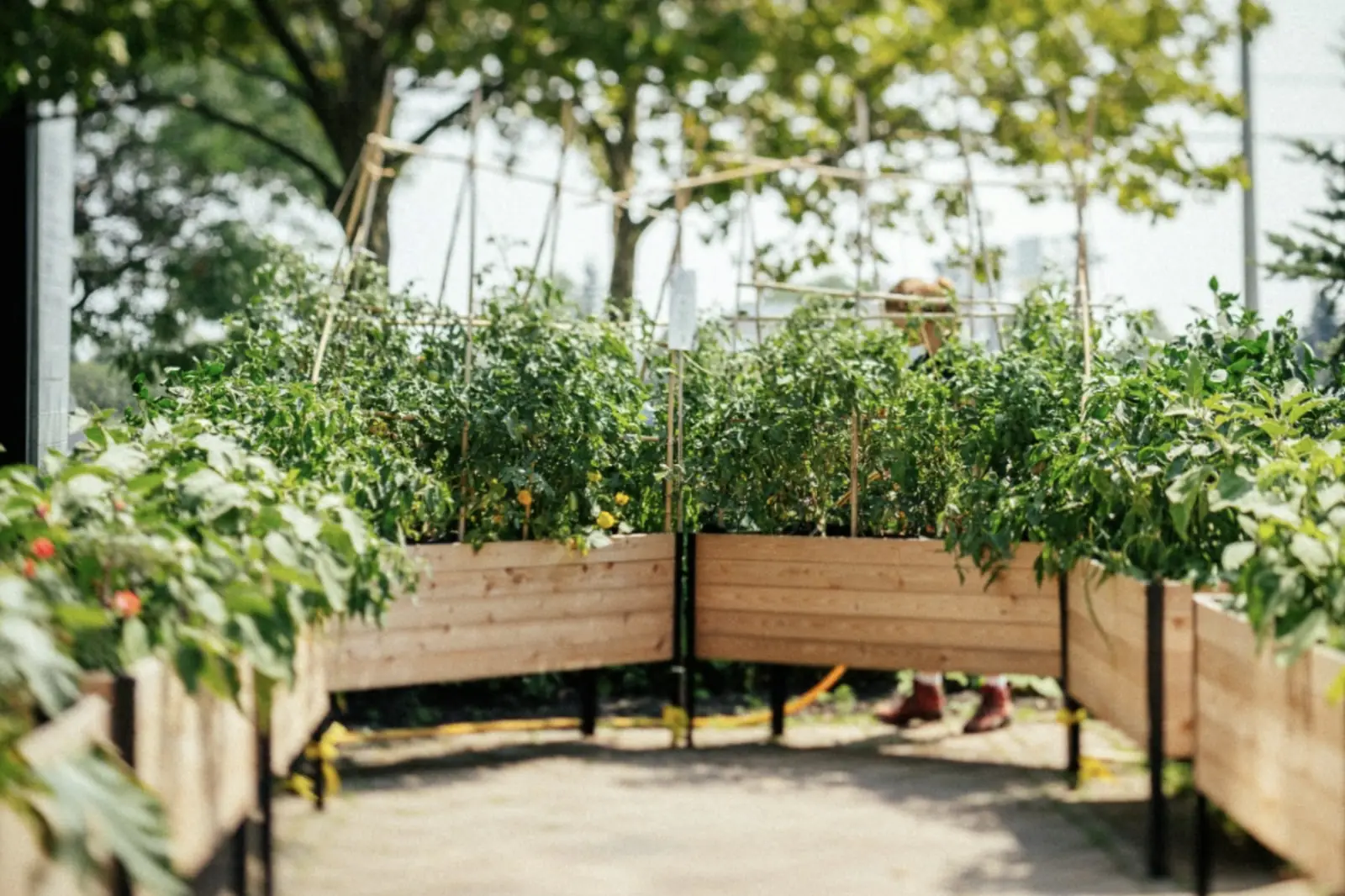
Each one can run on a rooftop, terrace or ground-level farm at your own building. Pick the format that matches the season and the story you want the team to tell.
1. Planting day
Best in: spring. The team sows seeds and plants seedlings in the farm's beds, guided by the urban farmer who will look after them all season. The value is in what happens next: people walk past the beds for months and watch what they planted grow. A planting day is the natural opener for a season of activities, because every later event builds on it.
2. Harvest and cook
Best in: mid to late summer. Crews pick vegetables, herbs and edible flowers, then turn them into a simple shared dish or salad. It works best where there is a café, kitchen or event space nearby. Where there is not, a no-cook tasting of just-picked produce does the same job. Eating together is the part people describe to colleagues afterwards.
3. Donation harvest for a food bank
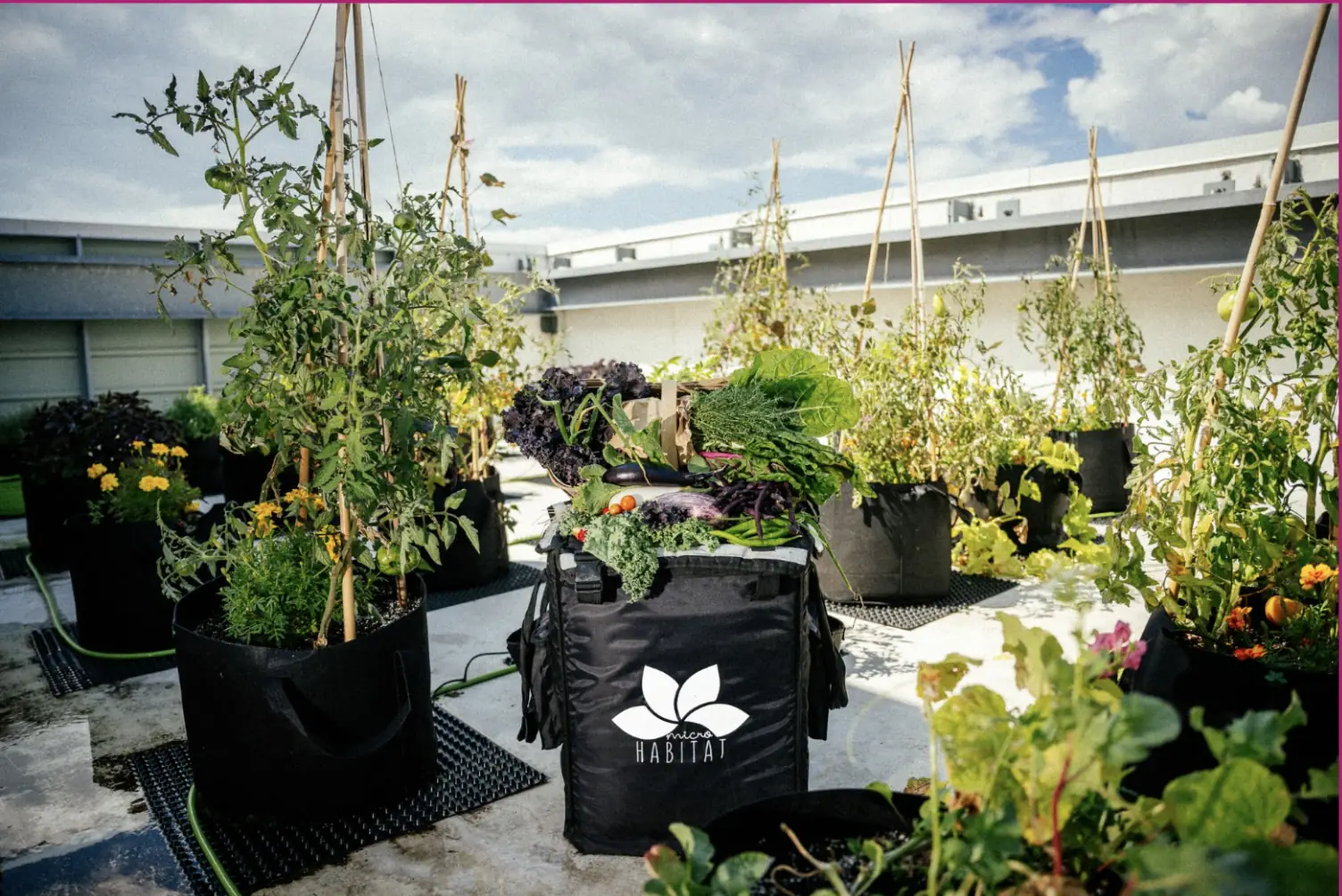
Best in: summer and early fall. The team harvests, weighs, packs and labels produce for a local food bank or community organisation. The need is real: according to Food Banks Canada's HungerCount 2025, there were nearly 2.2 million visits to food banks in Canada in March 2025, the highest number in its history and double the level of March 2019. MicroHabitat works with 35+ food banks and has donated 59,400 lbs of produce, so a donation harvest plugs into an existing route rather than a one-off delivery. Read how that program works in our story on urban solidarity farms supporting food banks.
4. Pollinator workshop
Best in: late spring and summer. The group learns which flowers and herbs feed bees and other pollinators, then plants or refreshes a pollinator bed on the farm. It is a strong fit for teams working on biodiversity or sustainability goals, and it gives people something they can repeat on a balcony at home. Pollinator gardens are one of the workshop topics in our educational activities.
5. Seed-to-table challenge
Best in: spring, with a follow-up at harvest. Crews each get a bed and a short crop list, plan what they would grow to make one dish, plant it, and explain their choice to the group. Weeks later, the same crews come back to harvest and cook what they planted. The competition is light and collaborative, and the second visit gives the event a sequel people look forward to.
6. Winterization day
Best in: fall. The team clears spent plants, adds them to compost, protects the beds for winter and saves seeds for next year. It closes the season with a clear before-and-after, and it pairs well with composting and seed-saving lessons. Teams who planted in spring get to finish what they started.
How do you run a purpose-driven team event in 90 minutes?
Split the 90 minutes into five blocks (welcome, farm walk, hands-on work, weigh-pack-or-cook, and debrief) and give more than half the time to the hands-on part.
Run of show
A 90-minute team event, block by block
55 of the 90 minutes are hands-on work.
0–10 min
1. Welcome and safety
Split into crews, gloves on, one clear goal for the day.
10–25 min
2. Farm walk
The urban farmer shows what grows here and where the food goes.
25–65 min
3. Hands-on work
Plant, harvest, build or winterize, depending on the format.
65–80 min
4. Weigh, pack or cook
Log the harvest for the food bank, or turn it into a shared dish.
80–90 min
5. Debrief
Share the result, one takeaway each, and the photo for the team.
- Welcome and safety (0 to 10 min). Split into small crews so everyone has a task. Hand out gloves, explain the tools and set one clear goal, such as "plant all six beds" or "fill the food bank crates".
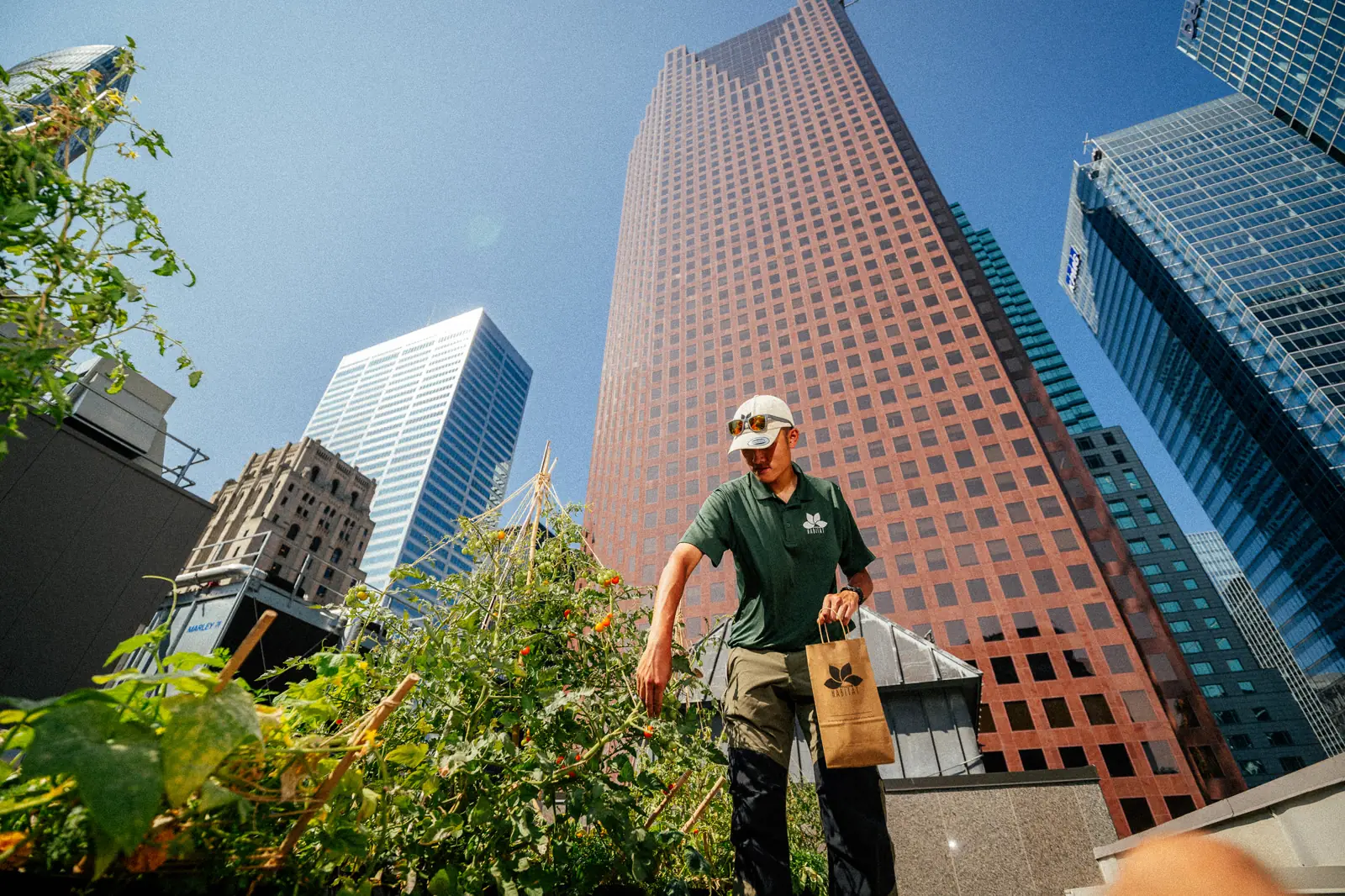
- Farm walk (10 to 25 min). The urban farmer shows what grows on the farm, how it is cared for and where the harvest goes. This is where the purpose becomes concrete.
- Hands-on work (25 to 65 min). The core of the event: planting, harvesting, building a pollinator bed or preparing beds for winter. Rotate tasks so nobody spends 40 minutes on one job.
- Weigh, pack or cook (65 to 80 min). For a donation harvest, weigh and log every crate. For a harvest and cook, prepare the shared dish.
- Debrief (80 to 90 min). Share the result in numbers, ask each person for one takeaway, and take the group photo.
A few details decide whether the day runs smoothly:
- Confirm the food bank pickup or drop-off in advance, so produce goes out the same day it is picked.
- Plan for weather. Agree on a rain date, or an indoor version such as a seed-saving or composting workshop.
- Make it accessible. Offer seated tasks like potting, labelling and weighing next to standing ones.
- Tell people what to wear and ask for photo consent before the event, not during it.
What do participants take away?
Participants take away a practical skill they can use at home, a result they helped produce, and time with colleagues they rarely work beside.
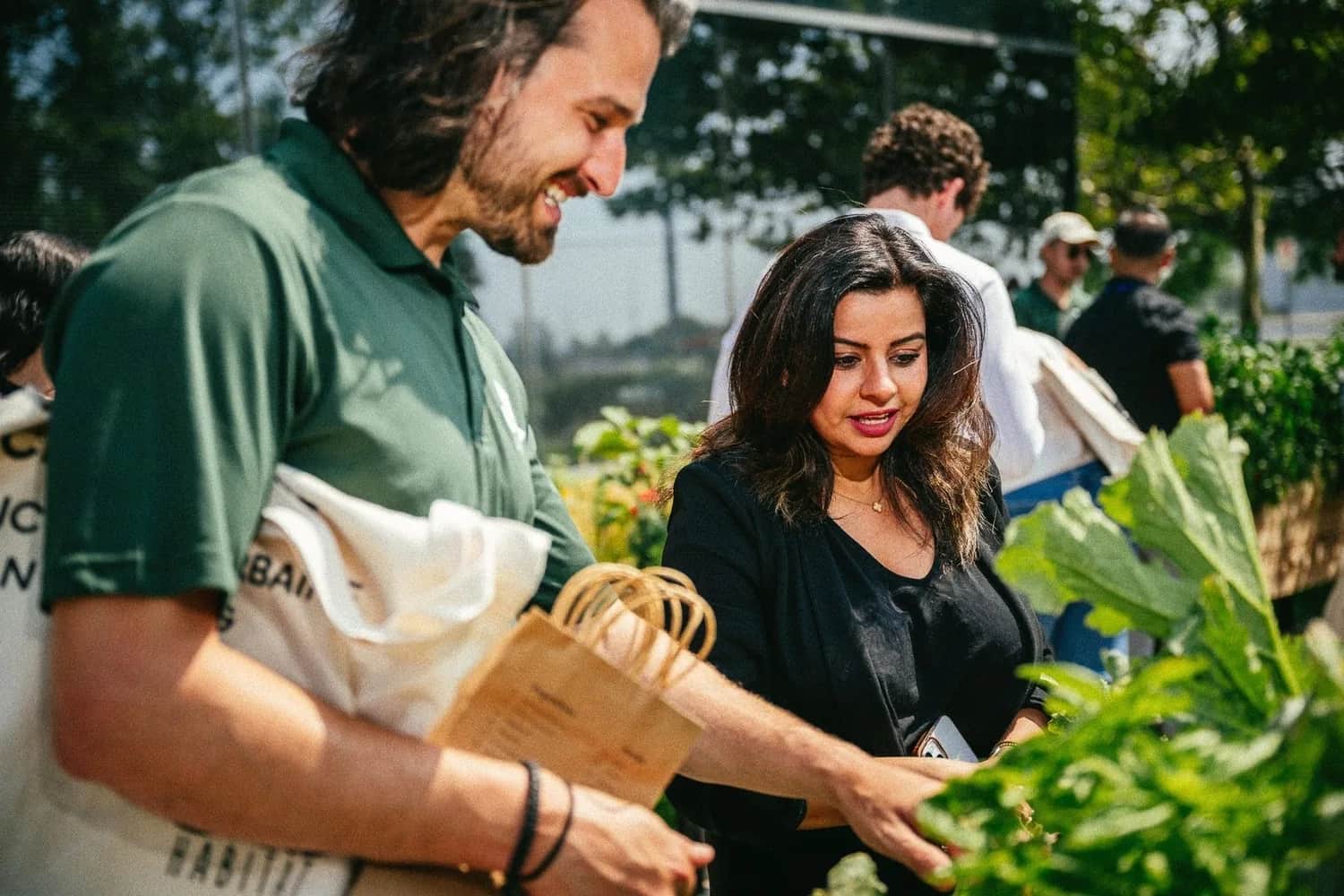
The skill is small but real: how to plant a seedling, when a tomato is ready, which flowers feed bees. Our garden visits end with a MicroHabitat tote bag of seed packets, so people can keep growing at home. The result is the part people repeat. "We packed produce for a food bank this morning" is a sentence employees share with family and friends in a way they never share "we did an escape room".
The social benefit is often the biggest one. Crews mix departments and seniority, and the tasks are simple enough that nobody needs to perform. People who stay quiet in a workshop or a quiz often lead in a bed of tomatoes. For HR teams building corporate wellness programs, that is the point: a shared experience that includes everyone, not just the people who enjoy the spotlight.
How do you measure purpose-driven team building?
Measure it on three levels: what the team produced, how participants felt, and whether anything changed in the months that followed.
- Output. Count what the event produced: beds planted, pounds harvested, pounds donated. The urban farmer logs harvest weights, and the food bank can confirm what it received. These numbers belong in a CSR or impact report, as evidence of employee engagement in corporate sustainability.
- Experience. Send a two-question pulse survey the same day: a rating from one to five, and one open question such as "What will you remember from today?" Short surveys sent quickly get honest answers.
- Follow-through. A quarter later, look at repeat participation, sign-ups for the next farm event, and whether the event shows up in engagement survey comments.
Be careful about attribution. One event does not raise an engagement score on its own, and a report that claims it did will not survive a sceptical reader. Report what you actually measured: who took part, what they produced, what they said, and whether they came back. Repeated over a season, those numbers tell a credible story on their own.
Dig deeper: the complete guide to nature-based workplace wellness, corporate wellness program ideas beyond the app, corporate sustainability employee engagement, how our urban solidarity farms support food banks and our educational and team building activities.
Ready to plan a team event that leaves something behind? See urban farming for corporations or contact us to book a planting, harvest or donation day at your building.