10 Corporate Wellness Program Ideas Beyond the App
Corporate wellness program ideas beyond the app: 10 initiatives, from time outdoors to manager training, each with a measure and evidence where it exists.
Quick answer: The corporate wellness program ideas with measurable impact go beyond the app: scheduled time outdoors, an on-site farm people can visit, restorative green spaces, harvest shares, hands-on workshops, volunteering during work hours, team days built around real work, manager training for mental health, flexible working, and a review of workload and working conditions. Give each one a reach measure, an experience measure and an outcome measure, and take a baseline before you start.
Most corporate wellness program ideas start with a subscription: a meditation app, a step challenge, a webinar series. They are easy to buy and easy to report. What sign-ups cannot show is whether anyone is better off. This list is for HR, people and wellness leads who need initiatives employees use and results they can stand behind: 10 ideas beyond the app, what each one should change, how to measure it, and where published evidence exists. It is part of our complete guide to nature-based workplace wellness.
On this page: Why apps fall short · What makes it measurable · Nature in the workday · Food and hands-on learning · Connection and purpose · How work is organized · Comparison table · The first 90 days
Measuring a wellness program
Three levels of measurement
Count who takes part, ask how it felt, then track what changed.
Level 1Reach
Who took part?
Sign-ups, attendance and repeat participation
When to read itEvery week
Level 2Experience
Did it help?
One or two pulse questions after each session
When to read itEvery month
Level 3Outcome
What changed?
Wellbeing survey scores, sick days, voluntary turnover and in-office attendance, compared with a baseline
When to read itEvery quarter or year
Why do app-based wellness programs fall short?
App-based programs often fall short because they give employees a new resource while the demands that cause strain stay the same.
A large UK study looked at this. Using survey data from 46,336 workers in 233 organisations, a 2024 paper in the Industrial Relations Journal compared people who took part in common individual-level interventions, including resilience training, mindfulness and wellbeing apps, with colleagues who did not. Across several measures of subjective wellbeing, participants appeared no better off. The data is cross-sectional, so it shows an association rather than cause and effect.
The lesson is not to cancel every app. It is to stop treating sign-ups as the result and to fund initiatives that change the working day itself.
What makes a wellness initiative measurable?
An initiative is measurable when you decide, before it starts, what it should change and how you will see that change at three levels: reach, experience and outcome.
Reach answers who took part: sign-ups, attendance and repeat participation. Experience answers whether it helped, with one or two pulse questions after each session. Outcome answers what changed: wellbeing survey scores, sick days, voluntary turnover or in-office attendance, compared with a baseline taken before launch. Reach is the easiest to collect and tells you the least. Outcome takes longest and is the level that justifies a budget.
Sick days and turnover move for many reasons at once, so report what you measured and do not credit one initiative with a company-wide change.
Which initiatives bring nature into the workday?
Three initiatives bring nature into the workday: scheduled time outdoors, an on-site farm people can visit, and restorative green spaces indoors.
1. Scheduled time outdoors
Move some meetings and lunches outside: a walking one-to-one on a set route, an outdoor lunch slot, a team check-in on the terrace. The goal is a weekly habit, not a one-off event.
Measure: a monthly pulse question on minutes spent in nature during the working week, and uptake of the walking-meeting route.
Evidence: in a national survey of 19,806 people in England, those who spent at least 120 minutes a week in nature were more likely to report good health and high wellbeing than people with no nature contact. It did not matter whether that time came in one visit or several. The study counted recreational visits, not working time, and shows an association rather than proof of cause.
2. An on-site farm employees can visit
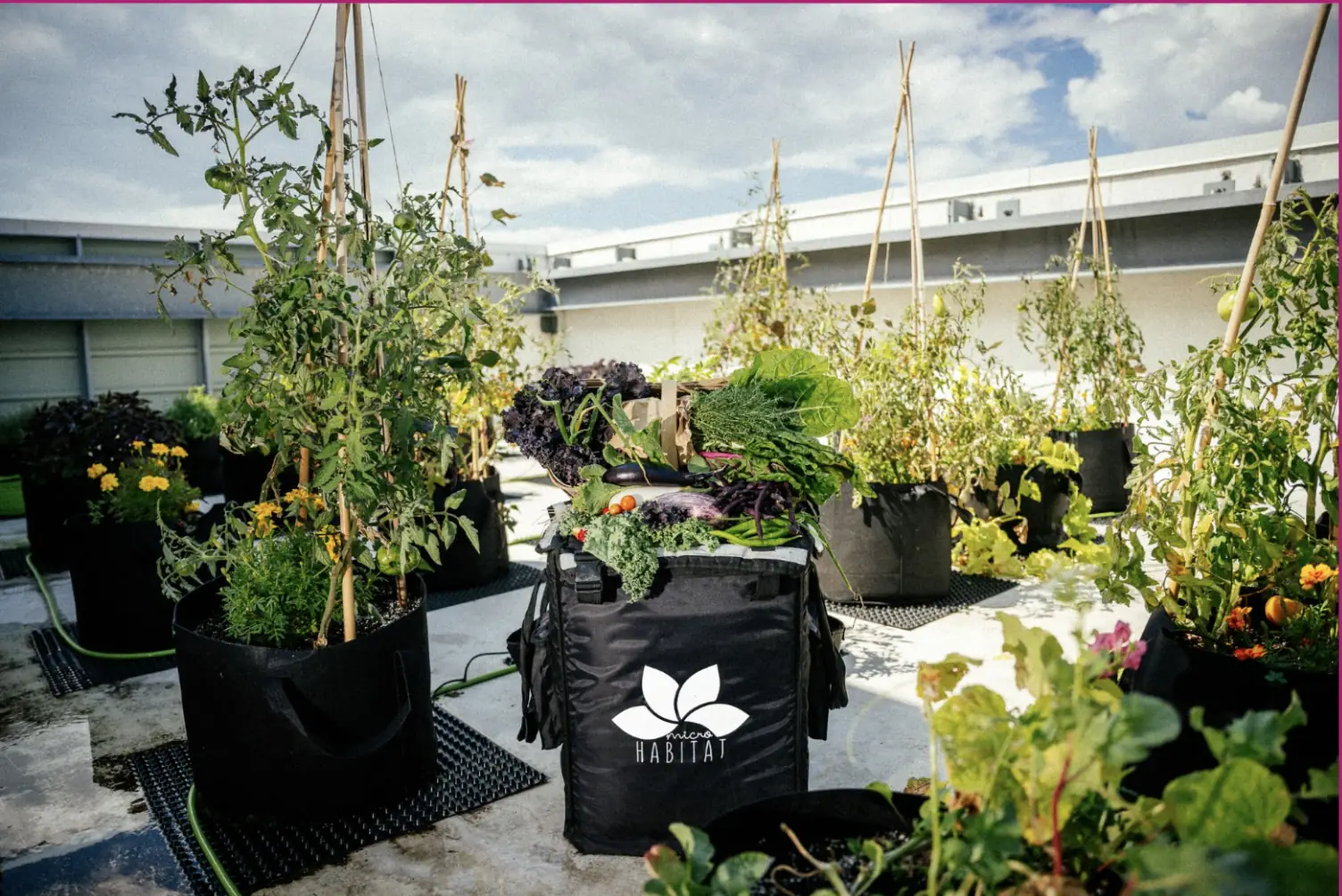
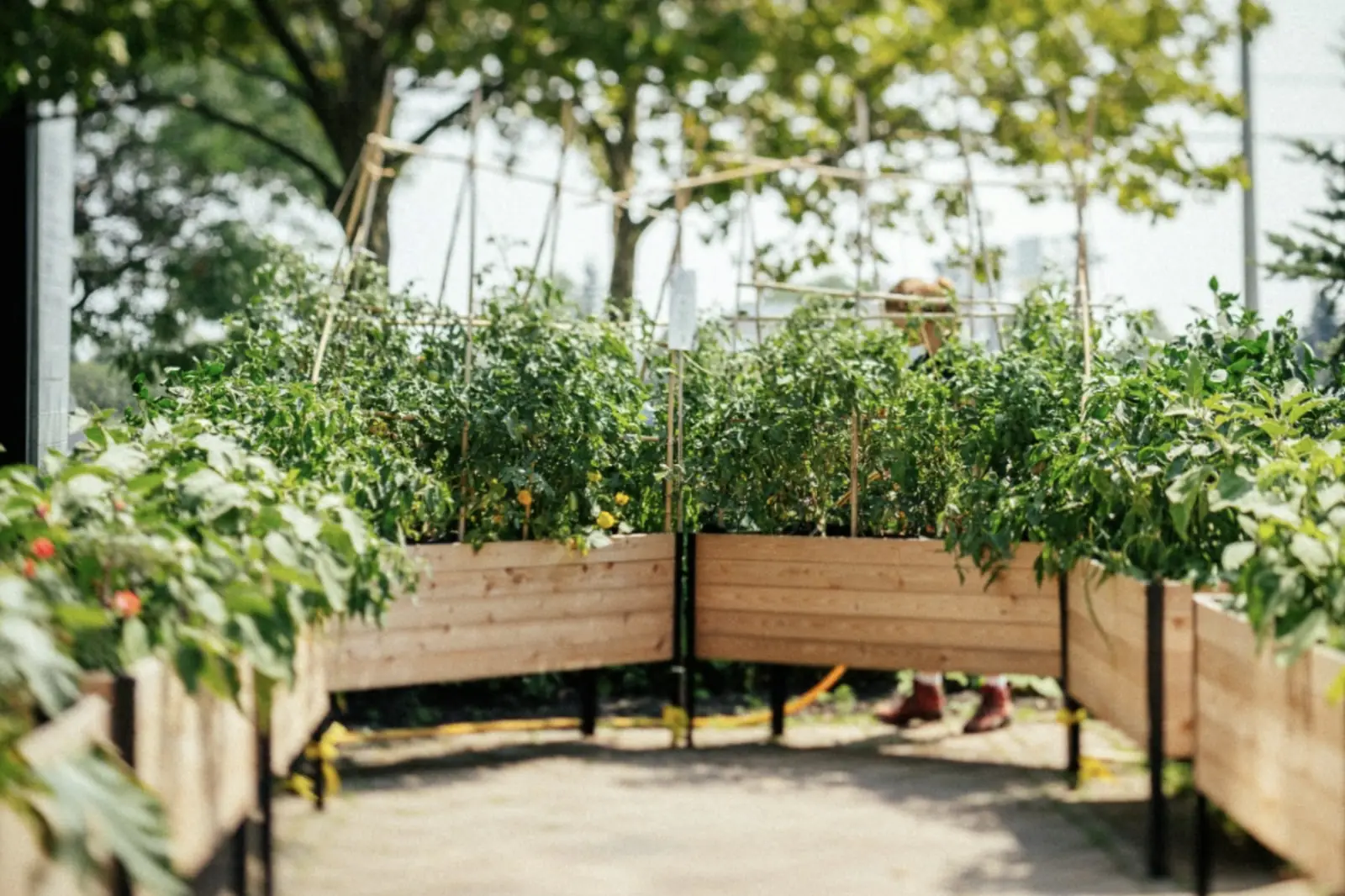
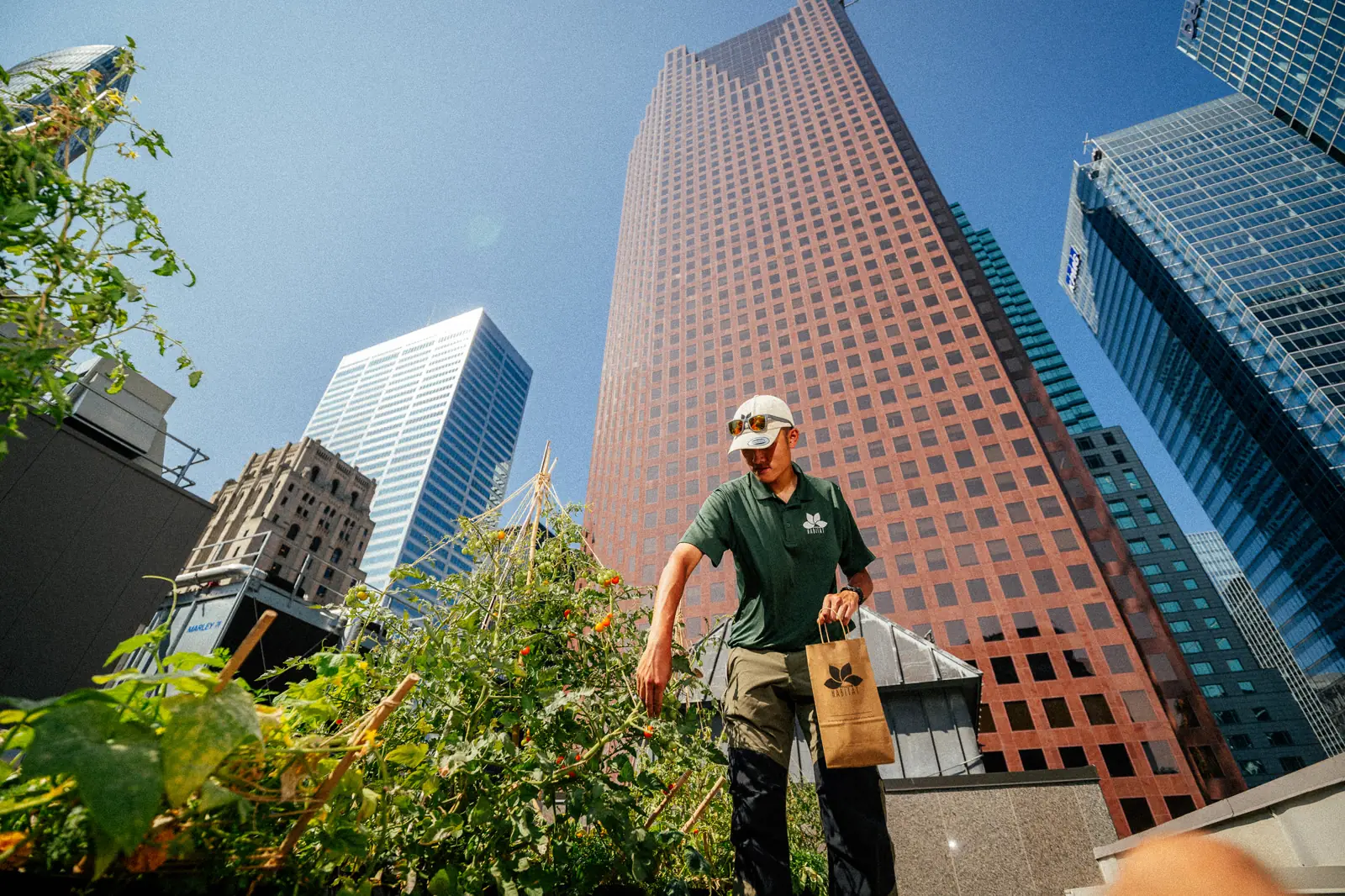
A rooftop or terrace farm gives people a reason to step outside during the day, and an indoor farm keeps something growing all year. Either way, an urban farmer does the growing while employees visit, harvest and learn. See our office garden program guide.
Measure: unique visitors per month, the share who come back, and whether visitors report more minutes in nature than non-visitors in the same pulse survey.
Evidence: visits can add to weekly time in nature, the measure in the study above. We cite no trial of workplace farms here, so compare your own before-and-after figures.
3. Restorative green spaces indoors
Not everyone can get outside. A quiet room with living plants, or seating that looks onto greenery, offers a short break indoors. See biophilic design in the workplace.
Measure: room bookings or occupancy counts, and one pulse question: "Did you have a place to recover during the day?"
Evidence: none cited here. Pilot it on one floor and compare the pulse answers with a floor without it.
Which initiatives use food and hands-on learning?
Harvest shares and hands-on workshops turn wellness from something people are told about into something they do and take home.
4. Harvest shares and fresh food at work
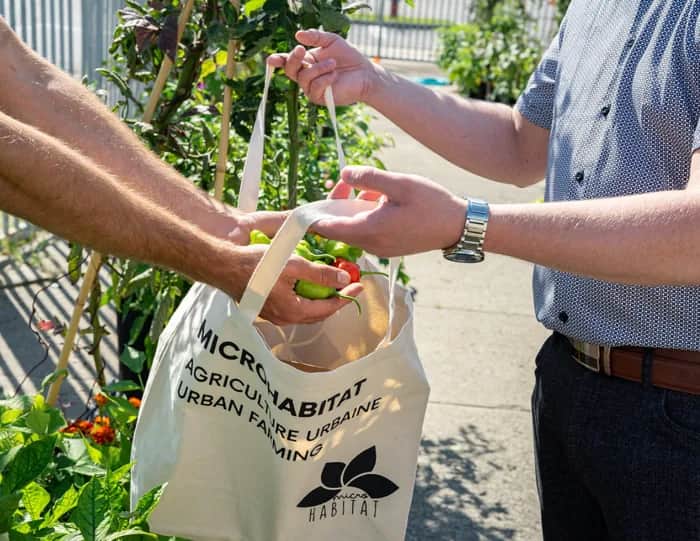
Put what the farm grows into people's hands: a weekly harvest table in the lobby, bags delivered to teams, or a stand where employees pick up greens on their way out.
Measure: pick-ups per week, the share of employees who collect at least once a month, and pounds of produce shared.
Evidence: none cited here. These counts show within weeks whether the idea is reaching people.
5. Hands-on workshops
Short expert-led sessions on planting, pollinators, growing herbs at home or cooking with the harvest give people a skill they keep. See the formats on our educational activities page.
Measure: attendance, repeat attendance, and a post-session question such as "Will you use what you learned this week?"
Evidence: none cited here. Repeat attendance is the most honest early sign of value.
Which initiatives build connection and purpose?
Volunteering during work hours and team days built around real work give people time with colleagues and a result they can point to.
6. Volunteering during work hours
Give each employee paid time to volunteer, and make it easy to use. One format that works on site is a donation harvest, where a team picks produce for a local food bank. MicroHabitat works with 35+ food banks and has donated 59,400 lbs of produce.
Measure: the share of the volunteering allowance used, participation by team, and pounds donated on harvest days.
Evidence: in the same UK study, volunteering was the only intervention whose participants showed signs of better wellbeing, and they also reported a stronger sense of belonging. The author cautions that this may be overstated, because happier workers may be more likely to volunteer.
7. Team days built around real work
Replace one games-based event a year with a planting day or a harvest day, where the team finishes with something done. Our guide to purpose-driven team building sets out six formats and a 90-minute plan.
Measure: attendance across teams, sign-ups for the next event, and a same-day question on whether people met someone new.
Evidence: none cited here. Count what the team produced and who came back.
Which initiatives change how the work is organized?
The last three change the work itself: how managers respond, when and where people work, and how much they are asked to do, which is the kind of change the World Health Organization's guidelines on mental health at work recommend.
8. Manager training for mental health
Train managers to notice distress, talk about it openly and point people to support.
Measure: the share of managers trained, and a team pulse item such as "I could talk to my manager if I were struggling," tracked before and after.
Evidence: WHO's 2022 guidelines on mental health at work give manager training a strong recommendation, based on moderate-certainty evidence.
9. Flexible working arrangements
Let people adjust when and where they work: flexitime, telework days or protected no-meeting blocks. For hybrid teams, see return-to-office incentives that work.
Measure: uptake by team, a pulse item on control over working hours, and in-office attendance on the days that matter most.
Evidence: the same guidelines give flexible working as an example of an organizational intervention, a conditional recommendation based on very low-certainty evidence.
10. A review of workload and working conditions
Ask employees what makes the job harder than it needs to be, such as workload, unclear roles or missed breaks, and fix the top issue before adding a new perk. Involve them in the fix: the guidelines include participatory approaches.
Measure: scores on the survey items you chose to act on, overtime hours and sick days, compared year on year.
Evidence: WHO's recommendation on organizational interventions covers job design, workload and breaks; it is also conditional, based on very low-certainty evidence.
How do the 10 initiatives compare?
Manager training has the strongest backing here; time in nature, volunteering, flexible working and a workload review have weaker support; the other five rely on your own measures.
| Initiative | Outcome it targets | Main measure | Evidence cited here |
|---|---|---|---|
| 1. Scheduled time outdoors | Health and wellbeing | Minutes in nature per week | Survey of 19,806 people |
| 2. On-site farm visits | Time outdoors, connection | Monthly visitors and return visits | None direct; counts toward row 1 |
| 3. Restorative green spaces | Recovery during the day | Room use and a recovery question | None (pilot on one floor) |
| 4. Harvest shares | Fresh food, participation | Weekly pick-ups, pounds shared | None |
| 5. Hands-on workshops | Skills people keep | Repeat attendance | None |
| 6. Volunteering during work hours | Purpose and wellbeing | Allowance used, participation | UK study: positive, possibly overstated |
| 7. Team days built around real work | Connection across teams | Cross-team attendance | None |
| 8. Manager training | Support and help-seeking | Managers trained, team pulse item | WHO: strong recommendation |
| 9. Flexible working | Control over working hours | Uptake, control pulse item | WHO: conditional recommendation |
| 10. Workload review | Less strain | Survey items acted on, overtime, sick days | WHO: conditional recommendation |
How do you measure a wellness program in its first 90 days?
Measure the first 90 days by taking a baseline, starting with a few initiatives, and reading reach weekly and experience monthly while outcomes build.
- Take a baseline before launch. Run a short wellbeing survey and pull the last 12 months of sick days, voluntary turnover and in-office attendance.
- Start with three initiatives, not ten. Choose at least one that changes how work is organized (8 to 10) and at least one people can see and join (1 to 7).
- Write the measures next to each one. One reach measure, one experience question and one outcome, with an owner and a review date.
- Read reach every week and experience every month. If reach is low after the first month, change the time, the place or the invitation before you drop the idea.
- Report outcomes at the end of the quarter. Share what moved against the baseline, note what else changed in the same period, and decide what to keep, change or stop.
An on-site farm makes the weekly invitation easy, because the season supplies a new reason to show up: planting, the first harvest, a donation day. MicroHabitat runs 250+ urban farms in 20+ cities across North America and Europe.
Dig deeper: the complete guide to nature-based workplace wellness, employee stress reduction programs, purpose-driven team building, and corporate sustainability employee engagement.
Building next year's wellness plan? See urban farming for corporations or contact us — tell us about your team and your space, and we'll help you shape a program you can measure.