On this page
Quick answer: A green roof is part of the roof: an engineered build-up of protective layers, drainage, growing medium and hardy plants that stays in place all year. A rooftop farm grows food, usually in containers placed on the existing roof, and is tended by urban farmers through a season. Purpose, weight, upkeep and paperwork all differ.
Part of our guide: Outdoor Farm.
When property teams plan next year’s roof, the green roof vs rooftop farm question often goes unasked, because the two terms are used as if they meant the same thing. Even the U.S. Environmental Protection Agency’s guide to green roofs describes a green roof as a vegetative layer grown on a rooftop and treats “rooftop garden” as another name for it. For a building owner, the difference is not about vocabulary: the two need different consultants, drawings, budgets and people on the roof.
In climates with a winter shutdown, the outdoor season is over, so the coming months are the time to decide what the roof should become in 2027 and to brief the right people before spring. Warmer climates run on a different cycle. Buildings will also be on the international agenda: on Thursday 12 November 2026, COP31 in Antalya will hold a thematic day on resilient cities and the built environment. This guide sets out what separates the two, so the brief you write this winter asks for the right one.
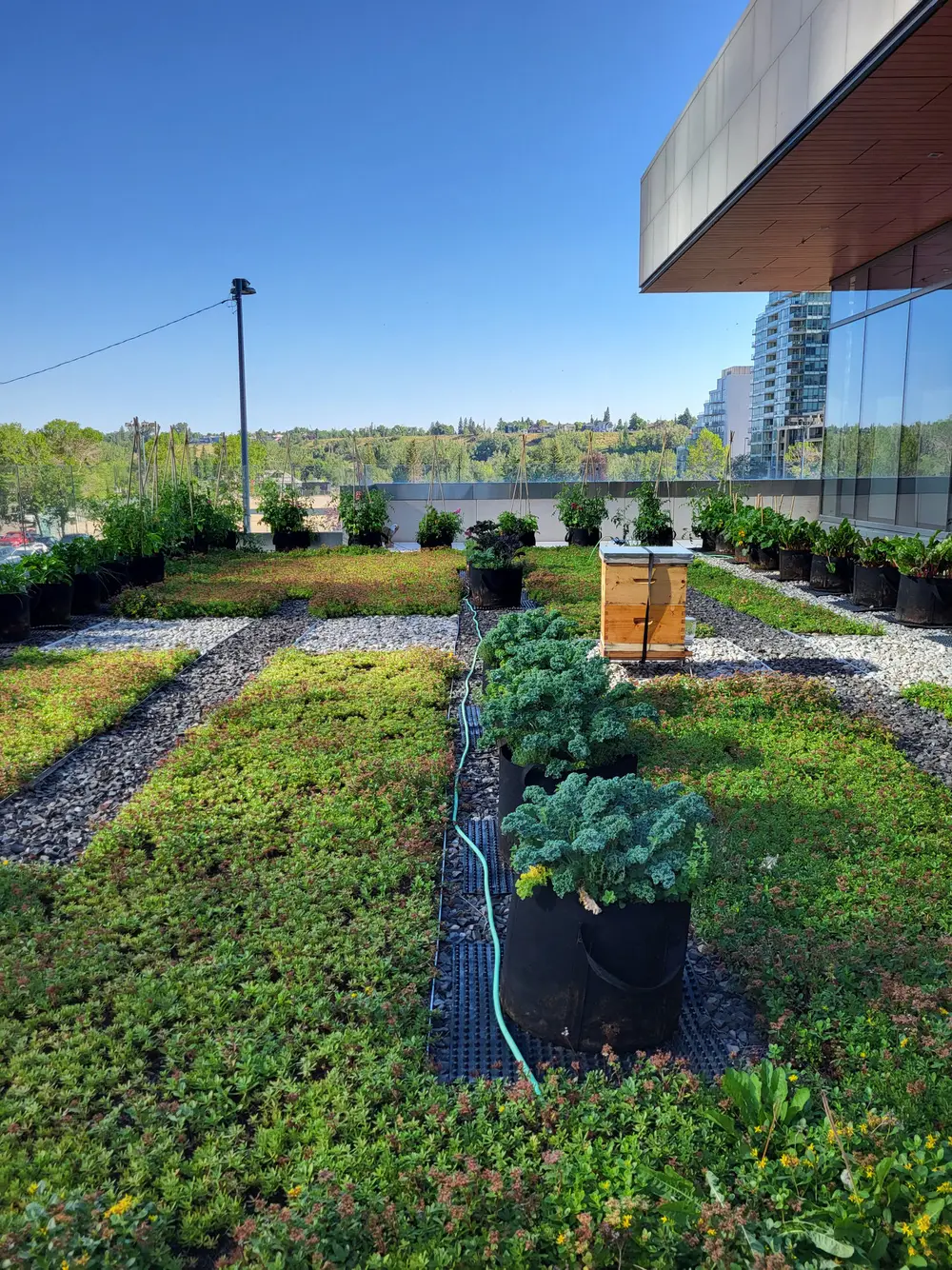
What is the difference between a green roof and a rooftop farm?
A green roof is a roofing system designed to carry vegetation permanently, while a rooftop farm is a food-growing program placed on top of a roof and run season by season. The first is specified by architects, landscape architects and roofing specialists, and it becomes part of the building. The second works more like a managed service: someone plans the crops, visits the site, harvests and reports on what happened.
Neither is an upgraded version of the other. They answer different briefs, as the table below shows.
| Question | Engineered green roof | Container rooftop farm |
|---|---|---|
| Main purpose | Permanent vegetation as part of the roof, often tied to planning, water or biodiversity goals | Growing food and running activities with the people in the building |
| What it is | Layers built into or onto the roof assembly | Pots or planters standing on the existing roof surface |
| Typical plants | Hardy, low-care species on extensive roofs; lawns, shrubs or trees on intensive ones | Vegetables, herbs, edible flowers and other crops planned each season |
| Main weight factor | The saturated build-up across the planted area | Wet growing medium and water in each container, plus people at activities |
| Upkeep | Periodic inspection and care, more for intensive roofs | Regular site visits through the growing season |
| Who goes up | Mostly maintenance staff, unless designed as an accessible garden | Urban farmers, plus tenants, employees or students at activities |
| What it leaves on file | Design drawings, permits, maintenance records | Visit logs, harvest records, donations, activities, photos |
If the real question is who does the growing, members or professionals, see our comparison of an urban farm and a community garden.
How is each one built on the roof?
A green roof is built as a set of layers that become part of the roof, while a container farm stands on top of the finished roof surface. According to the EPA, extensive and intensive green roofs share the same basic components: barriers that protect the structure from water and root damage, a drainage layer, a growing medium and the plants themselves. That is why a green roof is designed with the roofing system rather than added to it later.
The EPA distinguishes two families. Extensive green roofs tend to be simpler, with hardy plants in two to four inches of growing medium, and need little maintenance once established. Intensive green roofs are more complex and closer to a garden or park that can include trees; they are heavier and need more maintenance.
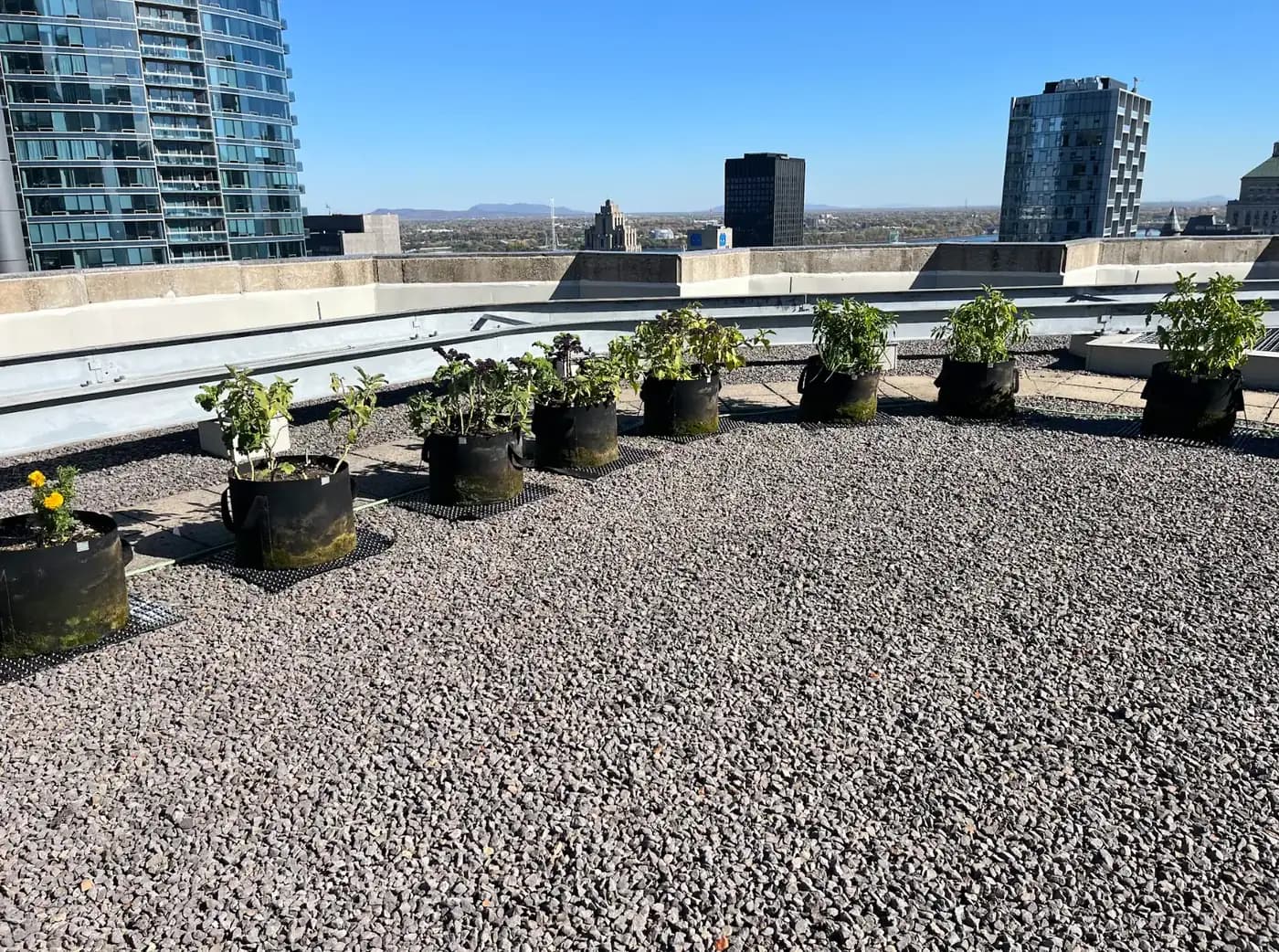
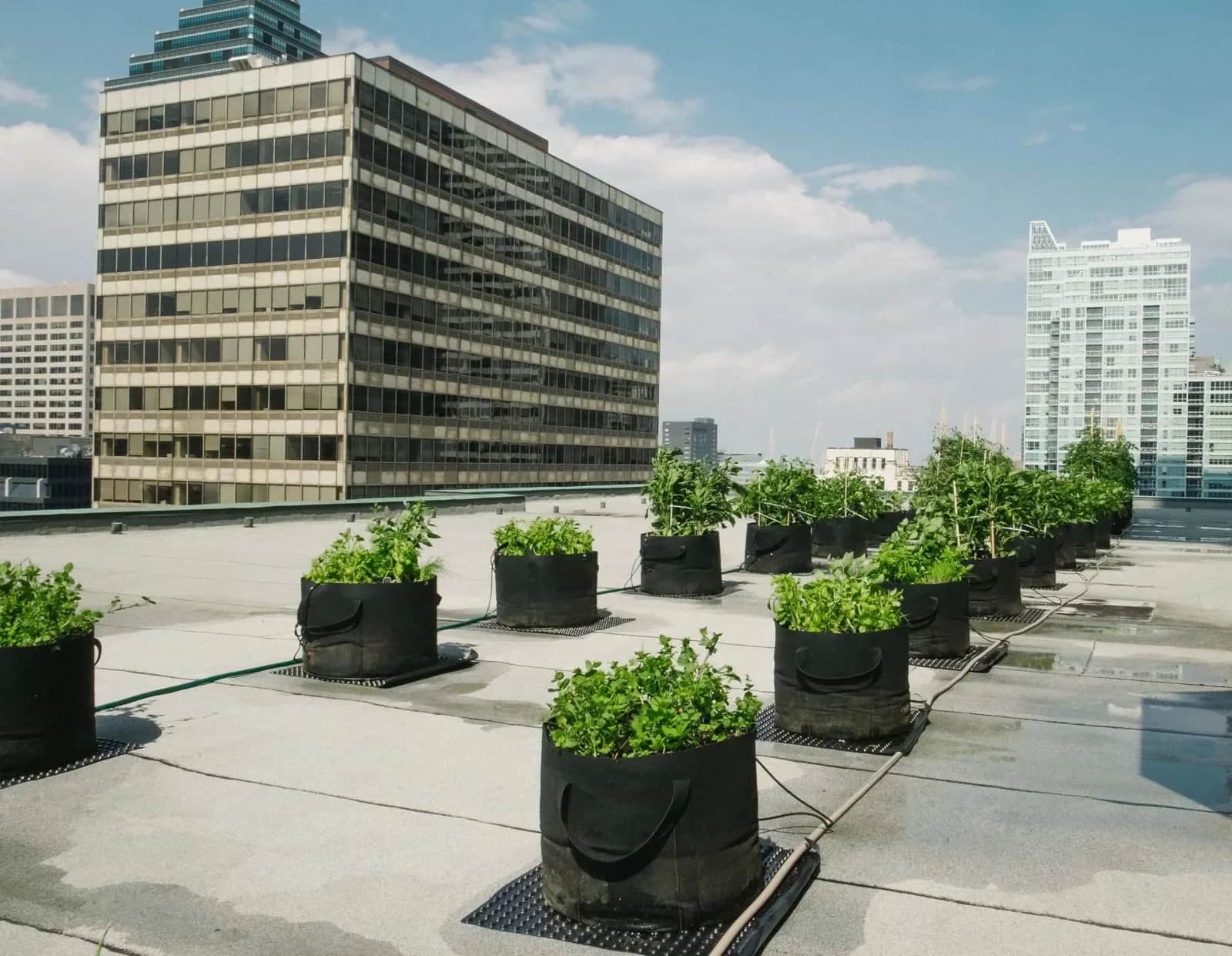
A container farm works the other way round. Fabric pots or planters filled with growing medium stand on protective mats, pavers or gravel, and nothing is fixed through the waterproofing. MicroHabitat’s outdoor farms, for example, are container-based and sit on the roof without modifying it, so the layout can change from one season to the next. The plant palettes differ as well: our guide to the best plants for rooftop gardens covers what does well at height, from sedums to tomatoes.
What drives the weight of each option?
On a green roof the weight is designed into the build-up and spread across the planted area; on a container farm it is concentrated in each pot and in the people who use the space. Both need a professional answer before anything goes up.
For a green roof, the designer works with the weight of the layers when they are fully saturated, and intensive systems weigh more than extensive ones. For a farm, the questions are how much wet growing medium and water each container holds, where the containers stand, where people walk and gather during a harvest or a workshop, and how the layout copes with wind. Placing pots where the structure is strongest, with clear paths between them, is decided before anything is planted.
Only a structural engineer can say what a particular roof can carry. Our guide to how much weight a roof can hold lists the documents to pull and what the engineer will check, and winter is a good time to book that review.
Who looks after each one, and who uses it?
A green roof needs periodic care from roofing or landscape contractors, while a rooftop farm needs an urban farmer on site regularly through the growing season and is designed for people to use. That difference shapes the contract, the access plan and the calendar.
Green roof care typically means checking drains and edges, removing unwanted plants and filling gaps in the vegetation, with more work on intensive roofs. Many extensive roofs are not open to building users at all. A farm is the opposite: its value depends on people coming up to harvest, taste and learn, so access routes, guardrails, supervision and booking rules are part of the plan, settled by your property team, your insurer and the provider.
In a climate with a winter shutdown, a farm program usually follows a rhythm like this:
- Spring: the crop plan is agreed, the farm is installed or reopened, and the first planting goes in.
- Summer: weekly site visits, regular harvests and activities with tenants, employees or students.
- Autumn: final harvests, clearing the pots and a written review of the season.
- Winter: the outdoor farm rests while contracts, roof checks and next year’s plan are settled.
A green roof has no such season of activity. It stays in place all year, as it was designed to.
Does a rooftop farm count as a green roof under local rules?
Not automatically: where cities regulate green roofs, they define them as a system built into the roof, and planters or containers may not qualify. The City of Toronto’s Eco-Roof Incentive Program page quotes the city’s Green Roof Bylaw, which defines a green roof as an extension of the roof built to the Toronto Green Roof Construction Standard, and notes that planter boxes on rooftops do not meet that definition because they are not an extension of the roofing system. Every green roof built in Toronto also needs a building permit.
New York City takes a similar line in a different form. Under Local Laws 92 and 94 of 2019, new buildings, new roofs on enlargements and existing buildings replacing an entire roof deck or roof assembly must provide a “sustainable roofing zone” of solar panels, a green roof system or both, subject to exceptions, as the Department of Buildings explains in Buildings Bulletin 2019-010, which also requires green roof systems to be installed under the Building Code’s green roof section. Whether anything on your roof satisfies a rule like these is for your architect and the local authority to confirm. Ask them early where a farm can sit beside the compliant area, and never assume the farm itself counts.
The two also leave different records, as the table shows. A green roof leaves drawings and permits; a farm leaves a running record of the season. MicroHabitat’s urban farmers, for example, record every site visit in MyUrbanFarm; those records feed the End of Season Report, and clients follow the farm through regular posts and photos on its page. The same records can support a certification report, currently offered through a waitlist: we produce the report you submit; we are not a certifying body.
Can a green roof and a rooftop farm share the same roof?
Yes, a green roof and a rooftop farm can share a roof, as long as the farm goes where the roof’s designer and structural engineer agree, usually on paved or gravel areas rather than on the planted layers. The photo above shows the idea: low green-roof planting with a row of farm pots on a gravel strip beside it.
Before you combine them, ask who maintains the green roof, whether its warranty sets conditions on loads, access or foot traffic, and how farm visits will avoid damaging the planting. Then turn the decision into a brief. For a spring 2027 start, the winter steps are:
- Write down what the roof should do in 2027: carry vegetation to meet a rule, grow food with people, or both.
- Pull the roof drawings, the roofing warranty and any earlier structural reports.
- Ask a structural engineer to review the areas you have in mind.
- For a green roof, brief an architect or landscape architect and a green roof specialist; for a farm, brief a provider who will run the whole season.
- Settle access, safety and insurance questions with your property team and broker.
- Sign before spring, so installation can follow when the outdoor season opens.
Frequently asked questions
Can an existing green roof be turned into a farm?
Not by setting pots on top of the vegetation without a review. Ask the green roof’s designer or maintenance contractor and a structural engineer which areas can take containers and foot traffic. Often the simplest answer is to place the farm on paved or gravel zones next to the planting and leave the green roof as it is.
Do you need a permit for a rooftop farm?
It depends on the city and on what is installed. Toronto, for example, requires a building permit for a green roof, while the rules for movable containers vary from place to place. Ask your architect or the local building department before you plan a spring installation.
What happens to each option over the winter?
A green roof stays in place all year. Where the outdoor season ends, a rooftop farm is cleared after the last harvest and rests until spring, while warmer climates may keep growing on their own cycle. If you want food growing through the cold months, an indoor farm is the option that keeps running.
If you are weighing both options for 2027, use the winter to pull the roof documents and ask for a roof check, so a farm can be installed when spring arrives.