Urban Farming in Your City
How Microhabitat designs, installs and runs rooftop and on-site farms for commercial buildings — seasons, fit and pricing.
On this page
Quick answer: Urban farming in your city is the practice of growing food on-site at commercial buildings — on rooftops, terraces, and ground-level plots. Microhabitat designs, installs and operates these urban farms in your city end to end, from setup to seasonal harvests. This page covers local climate and growing conditions, the building types we serve in your city, and how to request a quote.
Urban farming has moved from a novelty to a standard amenity for forward-looking buildings, and your city is part of that shift. Property owners, asset managers, and sustainability teams across your city are converting underused rooftops and courtyards into productive farms that grow real food, engage tenants, and feed measurable data into ESG reporting. This is the hub page for everything related to urban farming in your city — what grows here, which buildings are a good fit, what to expect from an installation, and how to get started.
If you want the broader picture of how on-site farming works before zooming into your city, start with our complete guide to urban farming. Otherwise, read on for local context, growing conditions, building types, costs, and how to get a quote.
Is urban farming in your city a good fit? Local context
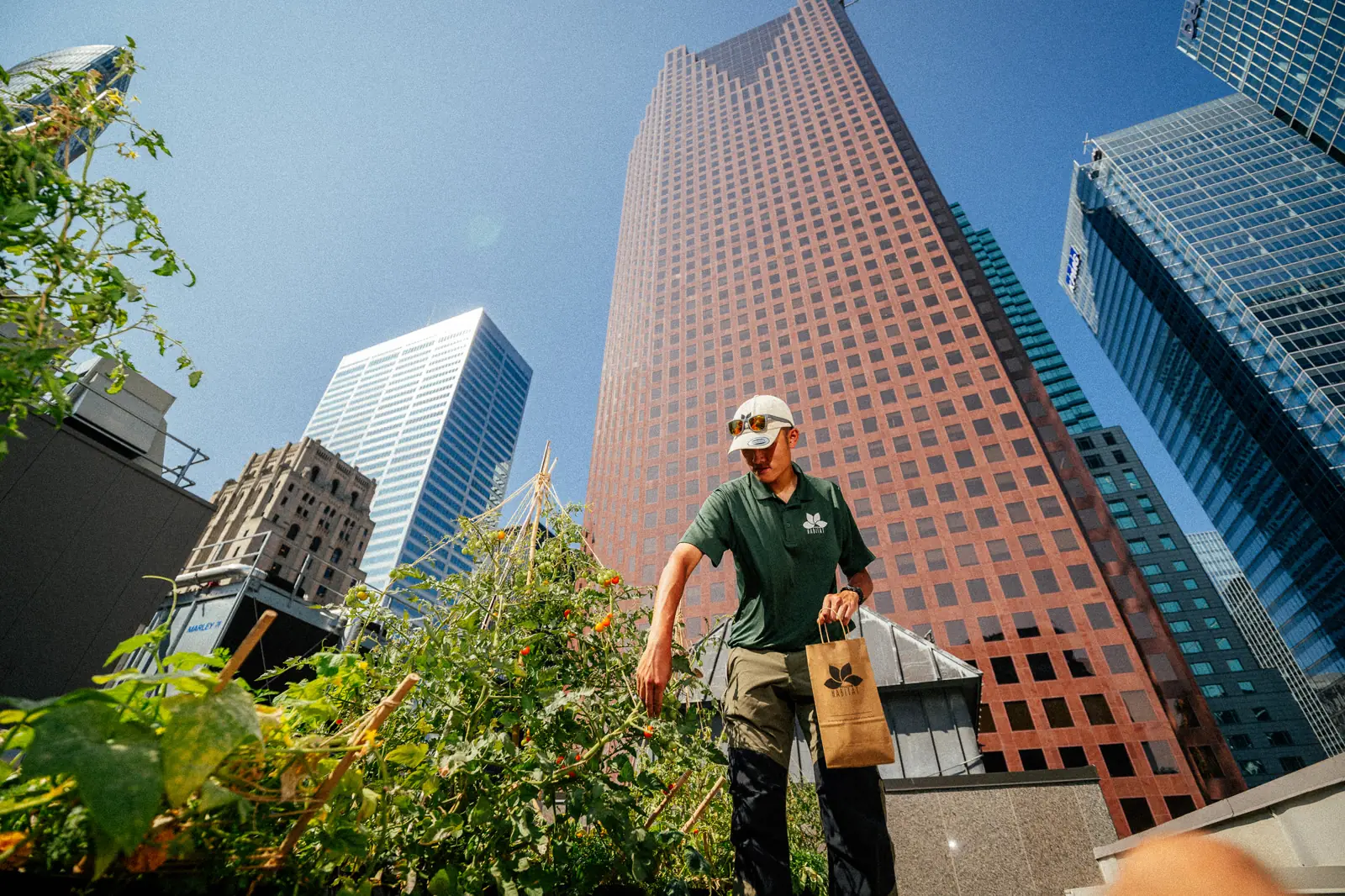
Urban farming in your city is well-suited to the city's mix of commercial rooftops, corporate campuses, and dense real estate, where on-site food production turns idle square footage into a living amenity. Your city has the two ingredients that make on-site farming work: a stock of flat or accessible rooftops on office, retail, and multi-residential buildings, and a tenant base — employees, residents, customers — who value visible sustainability. Microhabitat operates farms across this exact profile of building, in your city and in cities throughout North America and Europe.
The case for a farm in your city rests on three local pressures that building owners already feel. First, sustainability expectations keep rising — tenants, investors, and municipal programs increasingly ask what a building is doing for its environment and community. Second, tenant attraction and retention is competitive, and a working farm is a differentiator a competing tower down the street cannot copy overnight. Third, reporting frameworks reward biodiversity, community engagement, and green space, and an on-site farm produces documented, auditable contributions to those scores.
Your city also sits within a wider municipal and regional sustainability agenda. Many cities now run climate and greening programs — a local sustainability plan, green-roof incentives, or biodiversity targets — and global networks such as C40 Cities coordinate climate action across major urban centres. An on-site farm is a concrete, photographable way for a building in your city to align with those local goals rather than just report against them. The United Nations Food and Agriculture Organization treats urban and peri-urban agriculture as a serious lever for resilient, local food systems — not a hobby — which is the same lens we bring to every local property.
Growing conditions and seasons in your city
Your city's climate determines exactly what we plant and when, and a well-designed urban farm produces fresh harvests through every frost-free week of the local season. The single most important input is the local growing window — the stretch between the last spring frost and the first fall frost — which we confirm against the USDA Plant Hardiness Zone Map (or the regional equivalent for cities outside the United States) before designing any local farm. From there we select crops that thrive in your city's temperature range, sunlight hours, and microclimate, including the wind and heat exposure specific to rooftops.
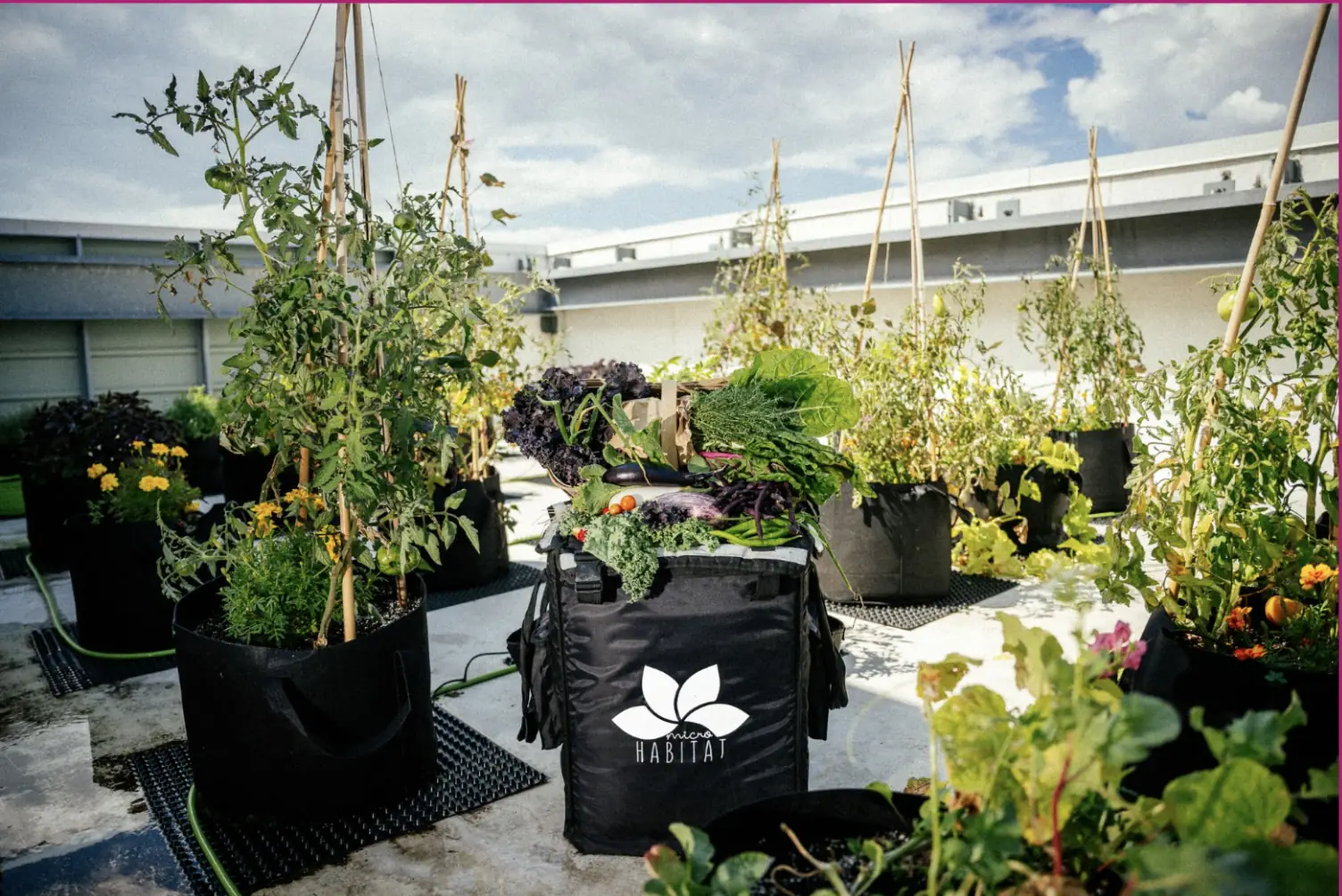
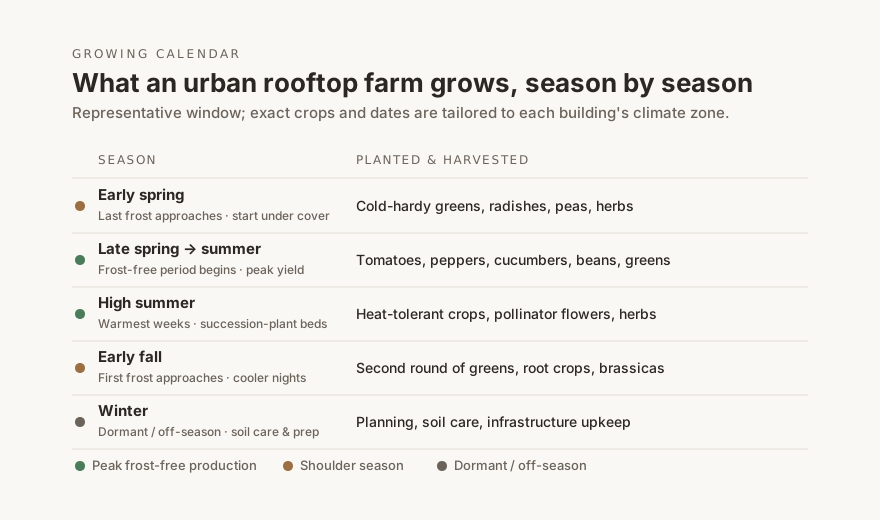
A rooftop in your city is its own microclimate: more sun and wind than ground level, faster-draining beds, and warmer surface temperatures. We design for that — choosing resilient, productive varieties and staggering plantings so the farm yields continuously rather than all at once. The table below shows a representative local growing calendar; we tailor the exact crop list and dates to your building's orientation, shading, and elevation.
| Season in your city | Typical window | What we grow | Notes for rooftop sites |
|---|---|---|---|
| Early spring | Last frost approaches | Cold-hardy greens, radishes, peas, herbs | Start under cover; protect from wind chill on exposed roofs |
| Late spring → summer | Frost-free period begins | Tomatoes, peppers, cucumbers, beans, leafy greens | Peak sun and yield; manage irrigation for fast-draining beds |
| High summer | Warmest weeks | Heat-tolerant crops, pollinator flowers, herbs | Shade-sensitive greens may bolt; succession-plant to keep beds full |
| Early fall | First frost approaches | Second round of greens, root crops, brassicas | Cooler nights improve flavour; extend season with row cover |
| Winter | Dormant / off-season | Planning, soil care, infrastructure maintenance | Beds rested or covered; we prep for the next local season |
Is urban farming viable in your city? Yes — across the full range of climates Microhabitat operates in, a properly designed and managed farm produces edible harvests every frost-free week of the local season, and the model adapts to short-season and long-season cities alike. The work that makes it viable is operational: matching crops to your city's zone, designing for rooftop wind and drainage, and managing the farm weekly. That is precisely what we handle, so a viable local farm does not depend on in-house horticultural expertise from the building owner.
Building types we serve in your city
Microhabitat installs and operates urban farms on commercial and institutional buildings across your city — offices, corporate campuses, retail and mixed-use centres, multi-residential towers, hotels, hospitals, schools, and industrial sites with usable rooftop or ground space. If a building in your city has a structurally sound flat roof, an accessible terrace, or an underused courtyard, it is a candidate. The common thread is not the sector but the space: square footage that currently produces nothing and could produce food, engagement, and reporting value instead.
Here is how the most common local building types tend to use an on-site farm:
- Office and corporate buildings — A rooftop or courtyard farm becomes a tenant amenity and a wellness draw, hosting harvest events and giving sustainability teams a flagship initiative. Strong fit for buildings competing for tenants in your city's office market.
- Real estate and asset portfolios — Owners and managers deploy farms across multiple local properties to lift green-building credentials and feed portfolio-level ESG and certification scores. (See how farms support GRESB sustainability reporting.)
- Multi-residential and mixed-use — Residents get a shared green space and, often, a share of the harvest; the farm differentiates the property in your city's rental and condo market.
- Hotels and restaurants — On-site herbs and produce supply the kitchen and become a guest-facing story about local, hyper-fresh food in your city.
- Hospitals, schools, and institutions — Farms double as therapeutic, educational, and community spaces while advancing the institution's local sustainability commitments.
- Industrial and logistics sites — Large flat roofs and yards in your city offer some of the best untapped growing area in the city.
Not sure your roof qualifies? The two questions that matter most are structural load capacity and access. Our local site assessment answers both — we evaluate the roof or ground area, confirm what it can carry, and design a farm that fits the building rather than forcing the building to fit a template.
Local installations and results
Across Microhabitat's installations in North America and Europe, on-site farms reliably deliver fresh harvests, tenant engagement events, and documented sustainability contributions — and local sites follow the same playbook. We design each local farm, install it, and then operate it all season: our team plants, tends, harvests, and maintains the farm so the building owner is never left with an abandoned planter. That operate-it-for-you model is the difference between a farm that produces for years and a one-time installation that fails by August.
What a local building can expect from an active Microhabitat farm:
- Real harvests — Vegetables, herbs, and edible flowers grown on-site through the local season, shared with tenants, donated, or used on-site.
- Tenant and community engagement — Workshops, harvest days, and hands-on programming that make sustainability visible and participatory rather than abstract.
- Reporting-ready contributions — Biodiversity, green space, and community-engagement data your team can carry into ESG disclosures and certification frameworks.
- Professional operation — Weekly care by trained urban farmers, so the farm stays healthy and photogenic without burdening building staff.
We keep specific local client names, yields, and figures to verified references — ask us for local examples and the most relevant case studies during your assessment, and we will share what we can substantiate rather than rounded-up marketing numbers.
How much does a rooftop farm cost in your city?
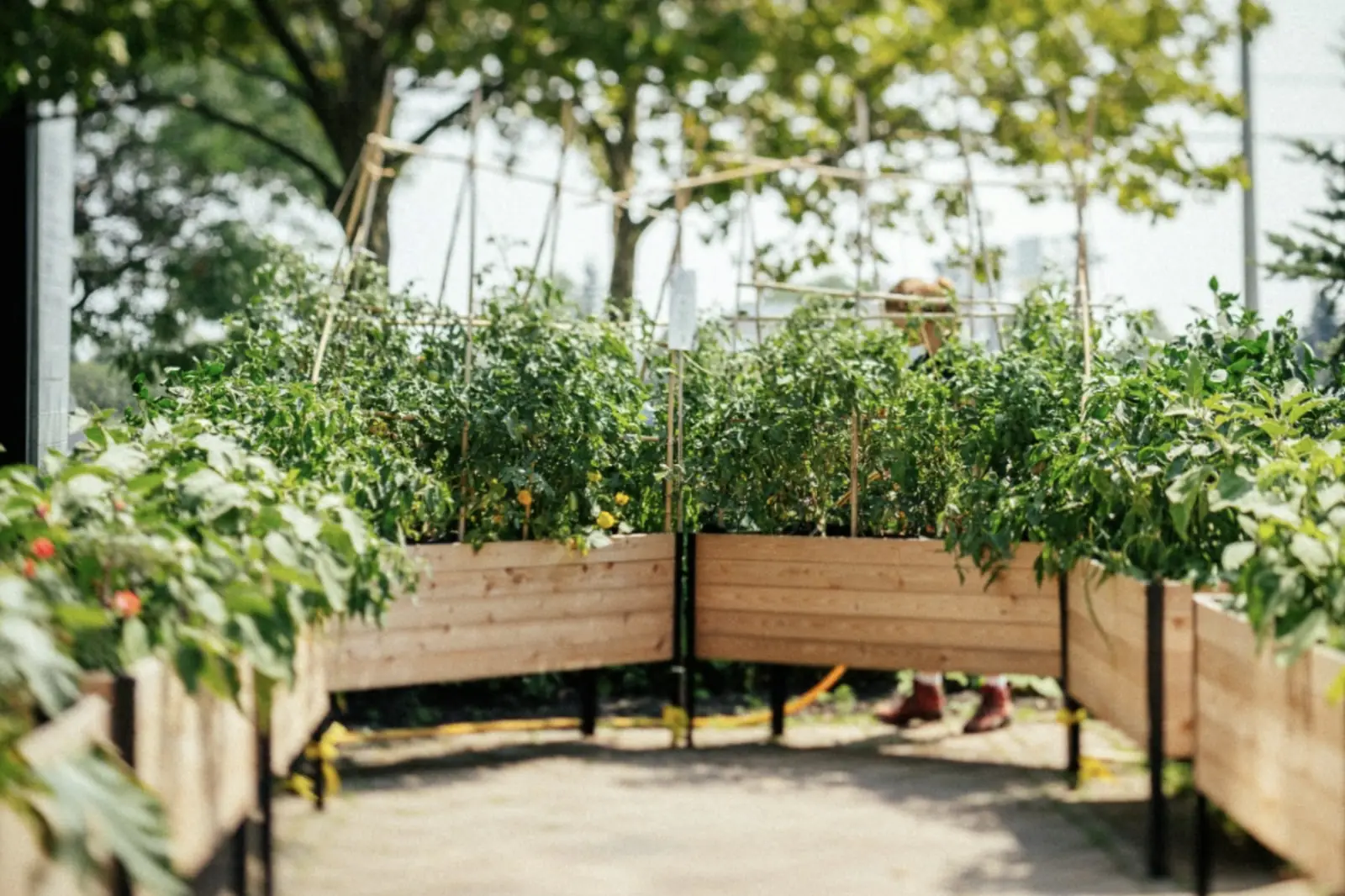
A rooftop farm in your city is priced per project, driven mainly by the growing area, the system and infrastructure required, and the level of programming you want — not by a single flat sticker price. Because every roof, load capacity, and goal differs, we quote each local property individually after a site assessment. As a rule of thumb, the biggest cost drivers are square footage of growing space, the type of growing system (raised beds, containers, or more built-up infrastructure), site access and logistics, and the engagement programming layered on top.
The major levers that move a local quote up or down:
| Cost driver | Lower cost | Higher cost |
|---|---|---|
| Growing area | Smaller terrace or courtyard | Large multi-roof or full-rooftop deployment |
| Growing system | Modular raised beds / containers | Built-up infrastructure, irrigation systems |
| Site access | Easy roof access, simple logistics | Crane access, complex load paths |
| Programming | Core farm operation | Frequent events, workshops, custom branding |
| Portfolio scale | Single building | Multiple properties across your city |
For a full breakdown of what drives pricing and the typical ranges to budget against, see our guide on how much a rooftop garden costs. For your city specifically, the most accurate number comes from a quote — request one below and we will scope it to your actual roof, goals, and season.
Request a quote for your city
To start an urban farm in your city, request a quote and we will assess your building, confirm what your roof or grounds can support, and design a farm scoped to your city's climate and your goals. The process is simple: you tell us about your property, we run a site assessment, and we return a tailored proposal covering design, installation, and full-season operation. There is no in-house expertise required on your end — Microhabitat handles the farming so your building gets the harvests, the engagement, and the reporting value.
Whether you manage a single office tower or a portfolio of properties across your city, we can build and operate a farm that fits. Local tenants increasingly expect visible sustainability, and an on-site farm is one of the few amenities that grows more valuable every season it runs.
Find Microhabitat in your city and request a quote for your local property today.