On this page
Quick answer: A well-run urban farm brings flowers, heirloom crops and helpful insects to a building. It does not draw rats, mice or pigeons in. Those animals come for garbage, food waste and places to nest. Our urban farmers visit every week, pick ripe crops and clear spent plants, so the farm offers them very little. Where rodents or birds already live on a property, the building's own pest control continues, and our urban farmers protect the crops.
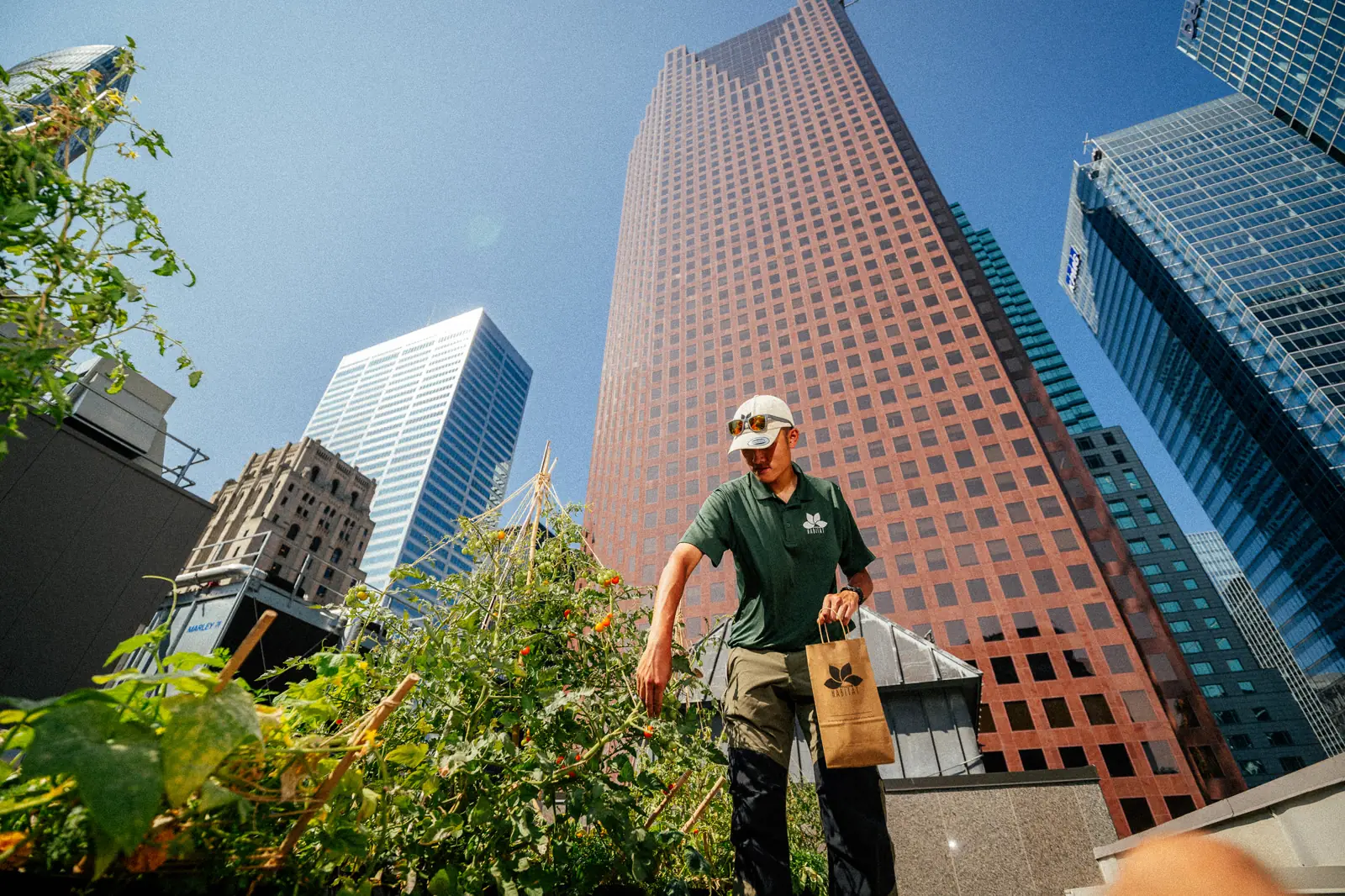
When a property team considers a farm on its roof or beside its building, two questions come up early. What will it do for nature? And will it bring pests? Both answers come from the same place: what is planted, and how the farm is looked after, week after week.
The questions are timely. With the UN Biodiversity Conference, COP17, meeting in Yerevan from 19 to 30 October 2026, many property teams are being asked what their buildings do for nature.
This guide answers both with what MicroHabitat actually does on its 250+ urban farms, what our urban farmers recorded on those farms in 2026, and what public health agencies and researchers say. It is written for property managers, sustainability leads and anyone who has to explain a farm to tenants, owners or a board.
Is an urban farm a nature-based solution?
Yes, when it is designed and run as one. In 2022 the UN Environment Assembly agreed a definition: nature-based solutions are actions to protect, conserve, restore, sustainably use and manage natural or modified ecosystems that address social, economic and environmental challenges, while providing human well-being, ecosystem services, resilience and biodiversity benefits. An urban farm is a modified ecosystem in the plainest sense: soil, plants, water and insects brought back to a roof or a courtyard that had none.
It also answers several challenges at once, which is the point of the idea. The same pots grow food close to where people work and live, feed pollinators, and give tenants and employees a reason to spend time outdoors together. If your company reports nature-based work across its value chain, our guide to Scope 3 and nature-based solutions for buildings covers how.
Do not overstate it. A farm of 30 or 100 pots is not a restored wetland, and it should not be described as one. Its value is that it adds living, flowering habitat to a building where there was gravel or concrete, every season, with a professional responsible for it.
How does an urban farm support biodiversity on a building?
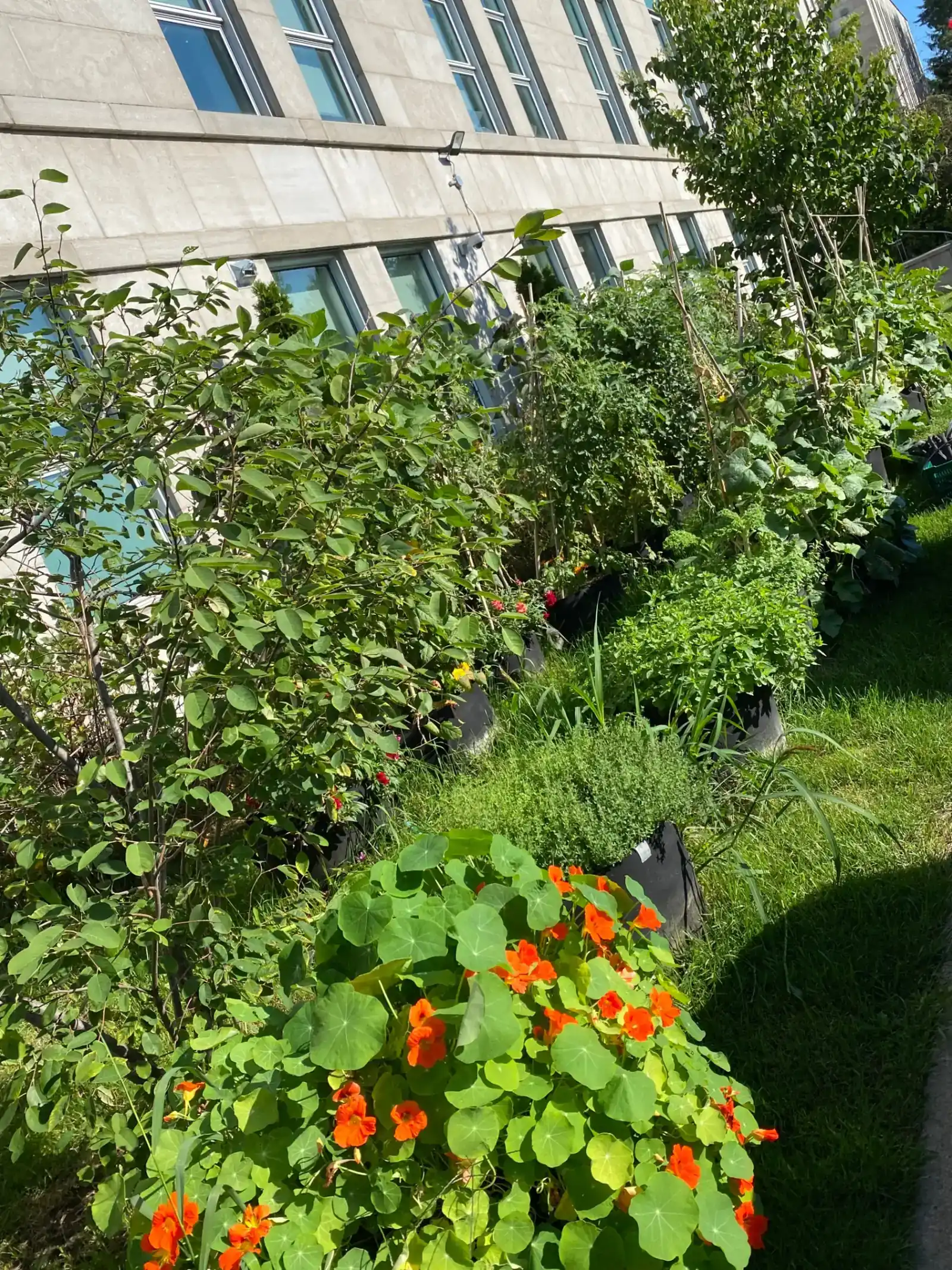
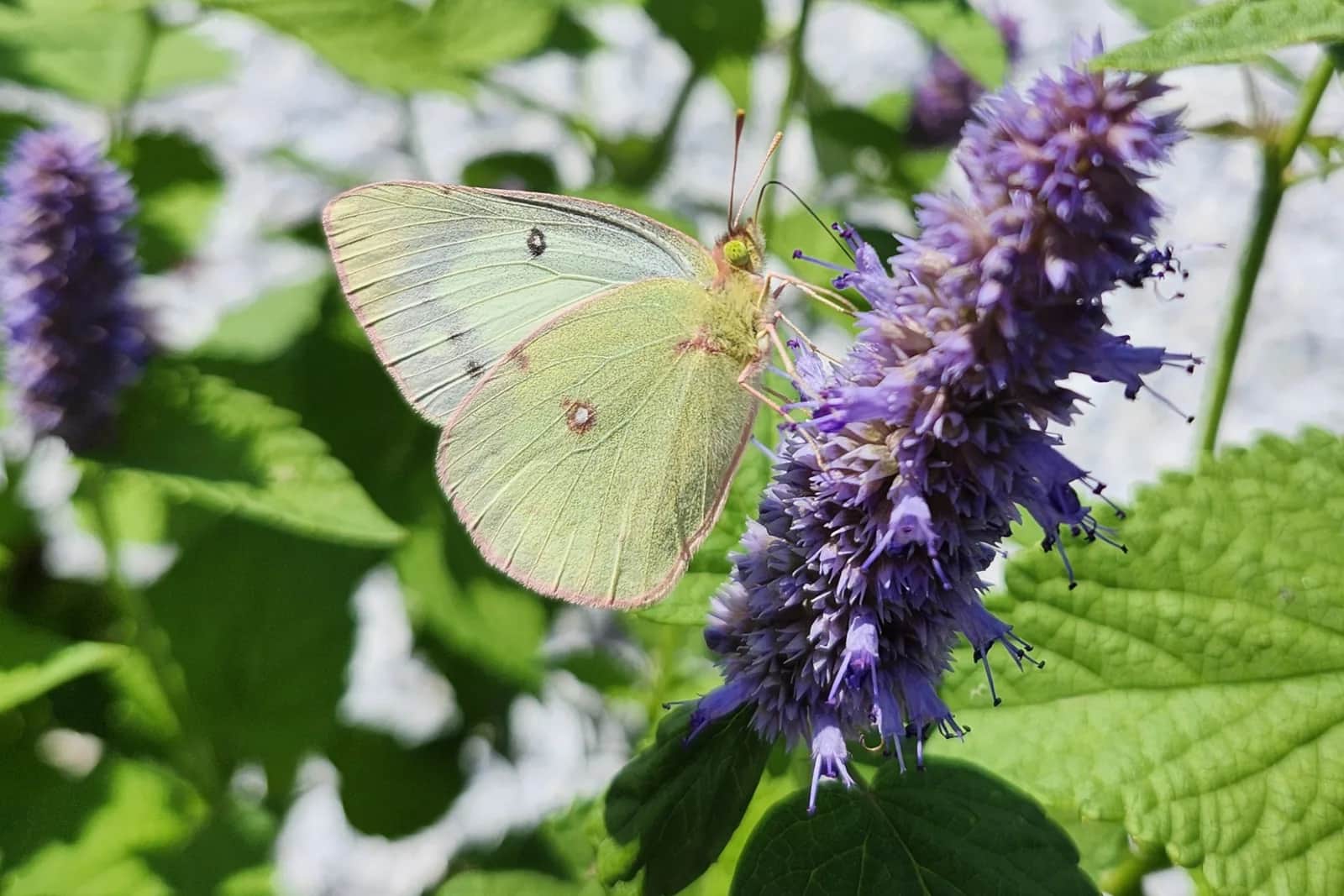
An urban farm supports biodiversity mainly by flowering. Bees, butterflies and other pollinators need nectar and pollen from late spring to autumn, and a city roof usually offers none. A farm fills that gap. Tomatoes, squash, beans, eggplants and strawberries flower before they fruit. Herbs such as basil, chives, oregano and mint flower among the crops, as our farm photos show. And flowers are planted among the vegetables on purpose. On our farms those are mainly marigolds, nasturtiums, snapdragons and anise hyssop.
Research backs the idea that small, flowering urban spaces count. A study of pollinators across four British cities, published in Nature Ecology & Evolution, found that allotments, the shared food gardens of British towns, and residential gardens were pollinator hotspots. Food gardens are similar to the farms MicroHabitat grows on buildings. Rooftop food farms count too: researchers who studied three rooftop farms in downtown St. Louis found 38 bee species using them. A roof does not replace habitat on the ground, but it adds to it.
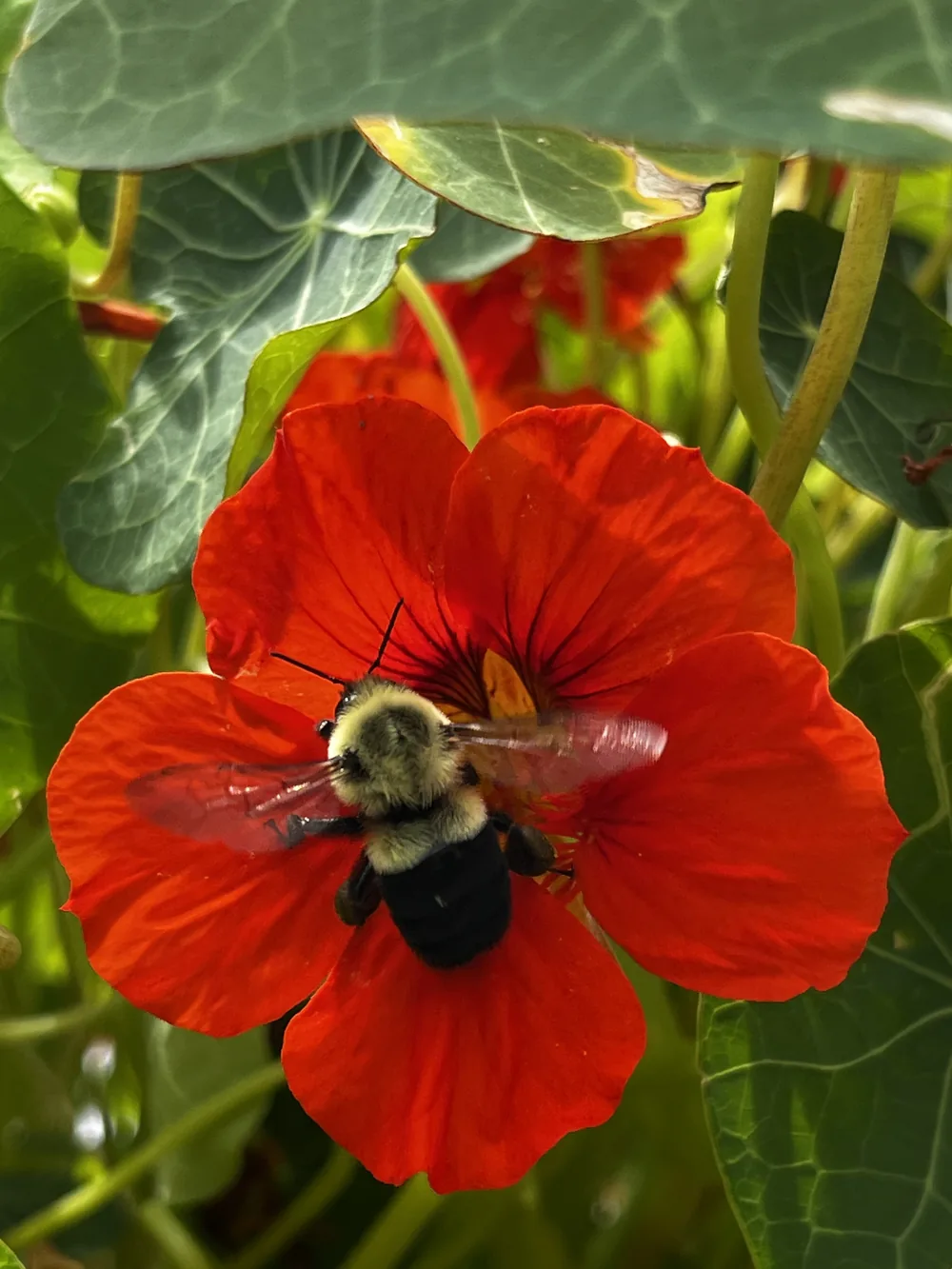
We also keep a record. MyUrbanFarm, the platform our urban farmers work in, checks farm photos for helpful insects and spiders. A sighting is one insect or spider identified in one photo, and the sightings the software is surest of appear on the farm's own page. From April to early October 2026, it recorded 226 sightings on 82 farms:
| Helpful insect or spider | Sightings | Farms |
|---|---|---|
| Bumblebees | 111 | 49 |
| Ladybugs (adults) | 54 | 30 |
| Other wild bees | 39 | 22 |
| Spiders and harvestmen | 16 | 10 |
| Ladybug larvae | 5 | 5 |
| Hoverflies | 1 | 1 |
The larvae are the most telling sign, though there are only five so far. An adult ladybug may only be passing through. Larvae mean ladybugs are breeding on the farm, and each one eats aphids as it grows.
Read these figures with three cautions. Software identifies the sightings, and our staff have confirmed 26 of the 226 so far. They are groups of insects, not a species survey. And they show what visits the farms; they do not measure a change in a city's biodiversity.
Do the farms grow heirloom and native plants?
The farms grow heirloom tomatoes, and native plants can be added to any farm's crop plan. The two protect different kinds of biodiversity. Heirloom varieties keep diversity alive inside our food crops. Native plants feed the wild insects that evolved with them.
Heirloom varieties are older, open-pollinated varieties that gardeners have saved and passed down, so their seed grows true year after year. They matter because crop diversity has narrowed. The UN Food and Agriculture Organization has estimated that about 75 percent of crop diversity was lost between 1900 and 2000, as farmers replaced many local varieties with a few uniform ones. Every heirloom grown keeps a little of that variety in use. Our crop plans include heirloom tomatoes alongside cherry and hybrid varieties, so one farm's harvest can include tomatoes in many colours, shapes and sizes.
Native plants are the species that grew in a region before people brought others in. As the US Forest Service explains, native plants are adapted to the local climate, soil and native pollinators. Most vegetables are not native to the cities where we farm, which is one more reason the flowers between the crops matter. Anise hyssop, a flowering herb whose wild form is native to North America, was harvested on 74 of our farms between August and October 2026, and bumblebees appear on it often in our farm photos. Crop plans are drawn up farm by farm, so a building that wants native wildflowers in its pots can ask for them, and our farming team reviews each request.
| What we plant | Examples on our farms | What it does for biodiversity |
|---|---|---|
| Flowering vegetables and fruit | Tomatoes, squash, beans, eggplants, strawberries | Pollen and nectar through the summer, as well as food |
| Flowering herbs | Basil, chives, oregano, mint, anise hyssop | Nectar for bees while they are in flower |
| Companion flowers | Marigolds, nasturtiums, snapdragons | Colour and nectar among the crops, and shelter for helpful insects |
| Heirloom varieties | Heirloom tomatoes | Keep older crop varieties, and their genetic diversity, in use |
Can a rooftop farm be a biodiversity sanctuary?
A rooftop farm can be a small biodiversity sanctuary if the word means a refuge: a place where insects find food and shelter, and where synthetic pesticides are not used. It is not a protected area, and it should not be reported as one. Three things make the difference:
- Food all season. Something in flower from planting in late spring to the first frost.
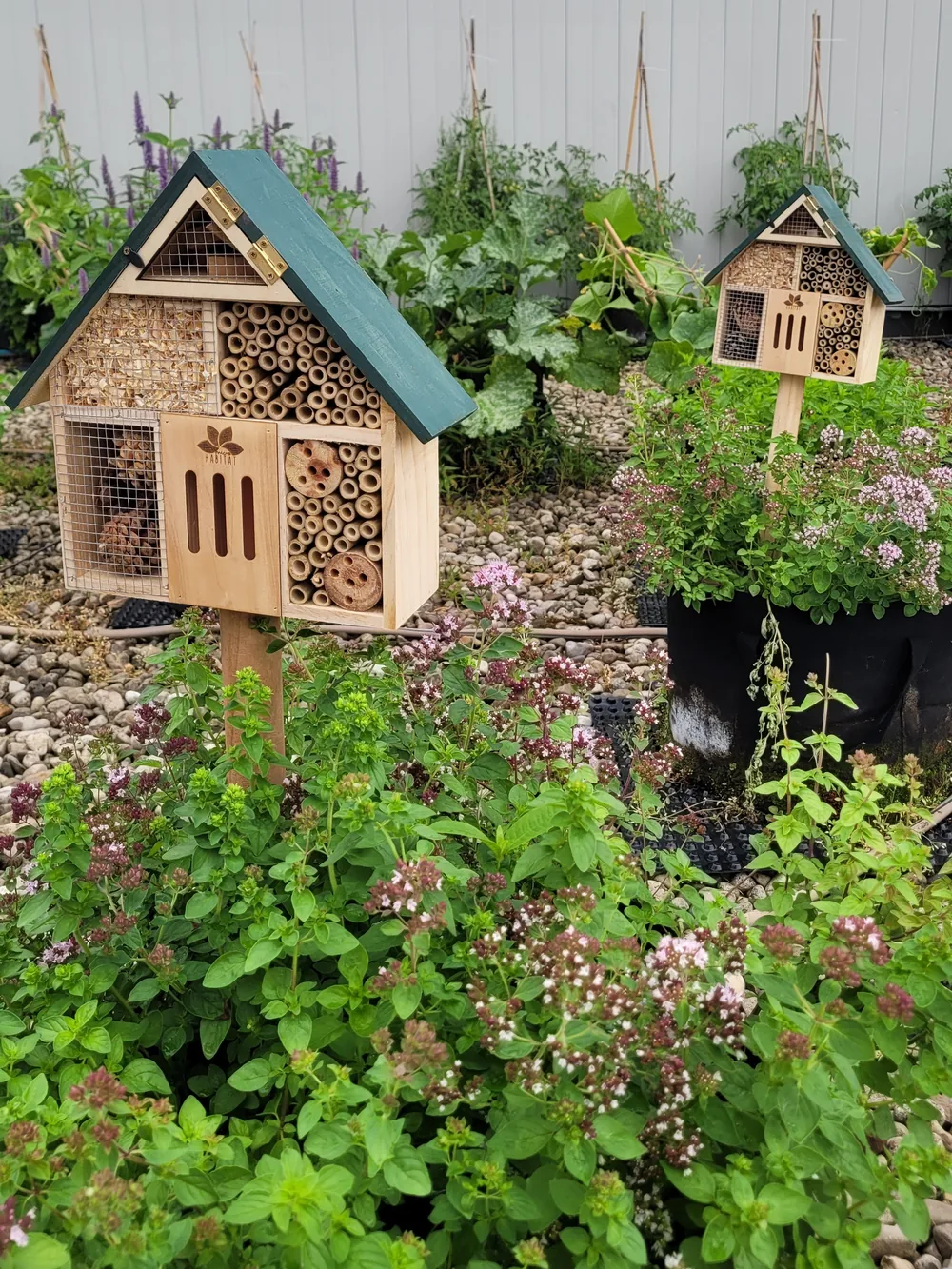
- Shelter. Leafy plants and soil in every pot give insects places to rest and hunt. Insect hotels can add more: this summer, one of our Toronto farms received two MicroHabitat bee hotels.
- No synthetic pesticides. Sprays are a last resort, limited to products of the kind sold for organic gardening.
Governments have also agreed to expand green space in cities. Target 12 of the Kunming-Montreal Global Biodiversity Framework asks them to increase the area, quality and connectivity of urban green spaces, and people's access to them. A single farm does not meet a global target, but many flowering roofs and courtyards give pollinators more places to feed between the parks.
Do urban farms attract rats, mice or pigeons?
A well-run urban farm does not draw rats, mice or pigeons to a building. Those animals follow garbage, food waste, water and shelter. New York City's health department puts it simply: rats look for places that give them food, water and shelter, and making those harder to find keeps them away. Pigeons gather where people feed them and where buildings give them places to roost, as UK council guidance on feral pigeons explains.
A farm that is looked after every week gives them very little of those things. The table shows how.
| What draws rats, mice and pest birds | What our urban farmers do about it |
|---|---|
| Garbage and food waste | Compost comes in as a finished soil amendment. Spent and diseased plants are bagged and taken away. |
| Ripe or fallen produce left to rot | Crops are harvested at every weekly visit, and damaged or fallen fruit is removed when it is found. |
| Grain and seed | No grain or seed crops appear in our 2026 harvest records. |
| Places to hide over winter | Spent plants are cleared promptly, so pests have fewer places to spend the winter. |
| Winter | Before closing, everything ripe is harvested, plants are cut back, plant waste is bagged and removed, and the area is cleaned. |
Our records bear this out. Insects such as aphids are by far the most common pests. From August to October 2026, our urban farmers logged 353 problems with insects and 24 involving birds or mammals. None of our farms has reported a problem with pigeons. Animals eating crops were reported at 6 of the 143 rooftop farms that filed weekly records in that period.
There are honest exceptions. Where rats, mice, squirrels or rabbits already live around a building, they may nibble crops or chew a pot. This happens mostly in ground-level gardens, which meet more wildlife than rooftops. In coastal cities such as Vancouver, gulls already nest on flat roofs, and crows sometimes peck at ripe tomatoes. UK council guidance describes flat commercial roofs as gulls' favourite nesting sites, and notes that a roof garden in frequent use can discourage a colony from settling. The farm does not bring these animals in, but where they already live, the crops need protecting. Our urban farmers respond site by site: picking ripe fruit sooner, pinwheels that unsettle crows, fencing against rabbits at ground level, and netting where a client wants it.
How does MicroHabitat manage pests without synthetic pesticides?
MicroHabitat manages pests with integrated pest management, or IPM: prevent problems first, check often, and use the gentlest response that works. The US Environmental Protection Agency describes IPM as an approach that combines prevention, monitoring and control, chooses effective, less risky controls first, and keeps broad pesticide spraying as a last resort. Our farming team's standing instruction to every urban farmer is to lead with it: remove pests by hand, and improve spacing and airflow first.
Each weekly visit follows the same order:
- Check. Leaves, stems and fruit are inspected for insects and disease at every visit, and MyUrbanFarm reviews each visit's photos for signs of trouble a farmer might miss.
- Prevent. Plants are spaced and pruned for airflow, and cleared promptly when they are spent, so pests and disease have fewer places to spend the winter.
- Remove by hand. The most common response in our records: pests picked off, damaged leaves and fruit cut away.
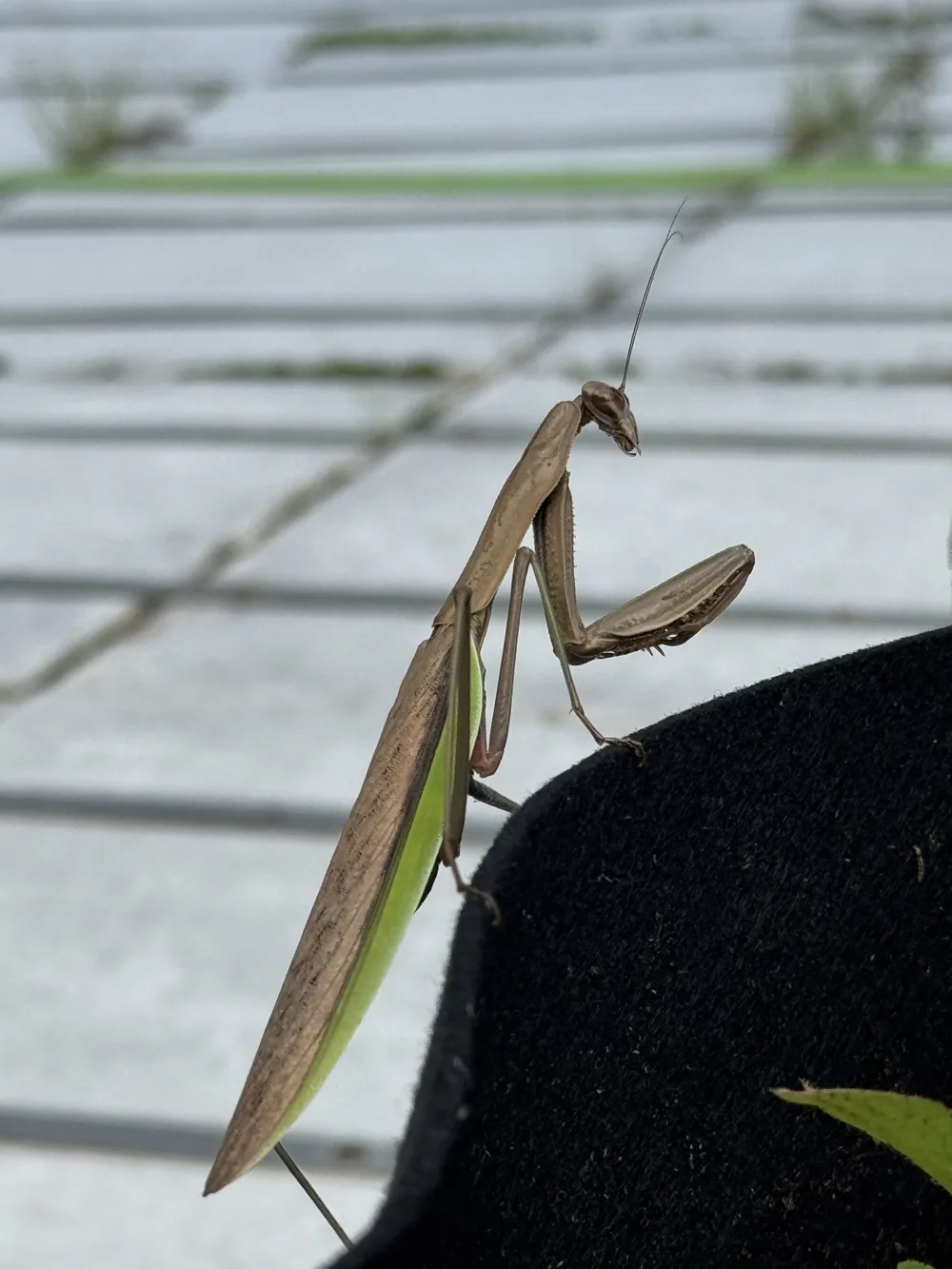
- Let predators work. Ladybugs, hoverflies, spiders and the occasional praying mantis eat aphids and other plant-eating insects, and the flowers among the crops help keep them on the farm.
- Treat only if needed, and only after the harvest. When hand work is not enough, farmers use low-impact products of the kind sold for organic gardening, such as insecticidal soap. At each visit, the harvest is picked first and any treatment comes after. We do not use synthetic pesticides.
What social impact comes with the biodiversity?
The social impact is the other half of a nature-based solution: the people who meet the farm. A farm on a building gives tenants, employees and neighbours somewhere to see pollinators up close, and the World Health Organization's Regional Office for Europe has reviewed the evidence that urban green spaces support health and well-being.
Each MicroHabitat farm program includes educational activities every year, and two in our catalogue are about biodiversity directly:
- Pollinators and Urban Farming: how pollination works, which plants help pollinators, what threatens them, and what farms and gardens can do.
- BioBlitz: participants find and log the plants, insects, birds and fungi on the farm with the iNaturalist app, adding their records to a global citizen-science database. At one BioBlitz in June 2026, the winning team identified 73 different species.
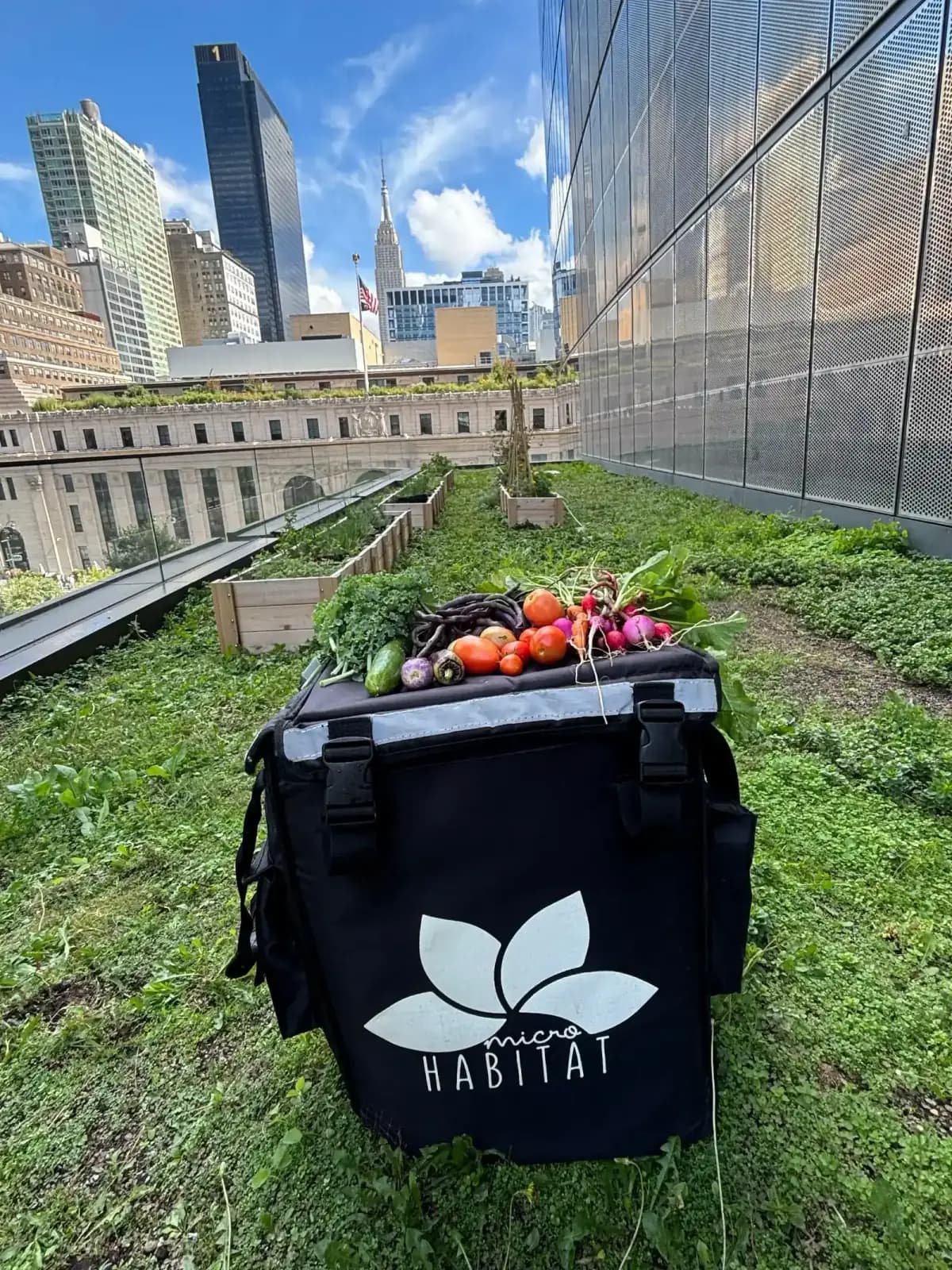
The harvest has a social impact of its own. Through our Urban Solidarity Farms program, MicroHabitat has worked with more than 35 food banks and donated 59,400 lbs of produce, so the same farms that feed pollinators help feed people nearby.
How should a property team talk about its farm's biodiversity?
Talk about what the farm does and what was seen on it, and claim only what the evidence shows. That makes the story easy to repeat and hard to challenge:
- Say what is planted and when it flowers. That is a fact you control.
- Report sightings as observations. "Bumblebees and ladybugs were recorded on the farm in July and August" is accurate; a species count from photos is not.
- Describe pest prevention, not a guarantee. Say how the farm is kept clean and harvested, rather than promising that no animal will ever visit.
- Do not call the farm "nature positive" or "biodiversity net gain" without a formal assessment. Those labels need a defined boundary, a baseline and an ecologist behind them; our article on nature-positive buildings explains why.
Our guide to the evidence behind a building's nature story shows how to keep that record, and the complete guide to ESG and urban farming shows where it fits in wider reporting.
Frequently asked questions
Will a rooftop farm attract rats?
No. Rats look for garbage, food waste, water and shelter, and a farm that is harvested and cleaned every week offers very little of them. In our records, animals eating crops are uncommon on rooftops. If a building already has rats, its usual pest control program should continue as before, and our urban farmers report any sign of animals in their weekly visit notes.
Will the farm attract pigeons or seagulls?
Pigeons have not been a problem: none of our farms has reported a problem with pigeons. In coastal cities, gulls already nest on flat roofs, and they may peck at ripe fruit. Picking sooner, pinwheels or netting help protect the crops where that happens.
Do you use pesticides on the farms?
We do not use synthetic pesticides. Pests are prevented and removed by hand first. When that is not enough, farmers use low-impact products of the kind sold for organic gardening, such as insecticidal soap, and only after that visit's harvest is picked.
What happens to the farm over winter?
At the end of the season, everything ripe is harvested, plants are cut back, plant waste is bagged and taken away, and the area is cleaned. The pots and their soil stay in place over winter. Ripe produce and spent plants are removed, so no crop is left to rot.
Can the farm count toward our biodiversity goals?
It can support them with real evidence: what was planted, what flowered and when, the helpful insects recorded on the farm, and the activities people joined. It does not replace an ecological survey. For how biodiversity is reported, see our guide to CSRD biodiversity reporting for real estate.
If your building is planning a farm for spring 2027, ask us for the crop plan, the flowers in it, and how the farm will be kept clean through the season and over winter. If you already have a farm with us, its page in MyUrbanFarm shows any helpful insects recorded on it this year.